
JL Collins’ The Simple Path to Wealth is highly useful for investors in the Philippines, but only if you treat it as a philosophical guide rather than a step-by-step manual. The book’s core philosophy—high savings rates, avoiding debt, and long-term index fund investing—applies perfectly to building wealth in any economy. However, its specific recommendations, such as Vanguard mutual funds, 401(k) accounts, and US tax strategies, cannot be directly replicated locally. To make the book work for you, you must translate these US-centric tools into Philippine equivalents.
Separating Universal Wealth Principles from US-Specific Tools
The true value of JL Collins’ work lies in its psychological foundation. The concept of “F-You Money”—a financial cushion that grants the freedom to walk away from toxic jobs, bad situations, or unexpected crises—is universally applicable. Whether you live in Manila or Miami, maintaining a high savings rate and aggressively avoiding high-interest consumer debt are the absolute bedrocks of financial independence. These principles require no specific passport or bank account to implement.
However, the operational chapters of the book are heavily anchored in the US financial infrastructure. Collins repeatedly champions the Vanguard Total Stock Market Index Fund (VTSAX), alongside tax-advantaged accounts like the 401(k), Traditional IRA, and Roth IRA. These specific vehicles do not exist in the local financial system.
Products mentioned in this guide

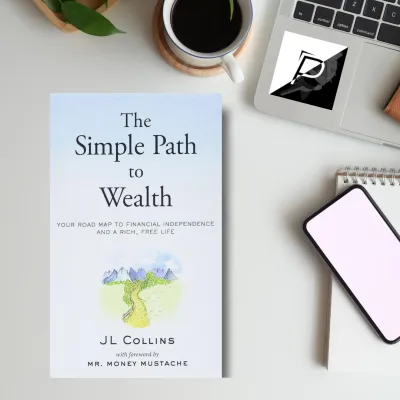





Prices are valid at publication and may change. Please refer to the product page for the latest price.
Filipino readers must approach these chapters with a translator’s mindset. Instead of looking for a direct way to open a US Roth IRA, the goal is to understand why Collins recommends these accounts—primarily for tax efficiency and automated, low-cost compounding—and then seek out the closest local equivalents.
Adapting the Index Fund Strategy for the Philippine Market
Collins’ core investment strategy is simple: buy a broad-market index fund, hold it forever, and reinvest the dividends. In the Philippines, executing this strategy requires evaluating local investment vehicles. Local investors can look into Unit Investment Trust Funds (UITFs) offered by major local banks, or mutual funds managed by local investment houses. However, you must carefully check the expense ratios. While US index funds often boast expense ratios below 0.05%, local equity funds frequently charge 1% to 2% annually, which can significantly eat into long-term compounding returns.

Another option is the local Exchange-Traded Fund (ETF) tracking the Philippine Stock Exchange Index (PSEi). While this offers a convenient way to invest in the country’s largest corporations, the local market is relatively small and lacks the global diversification of the US market.
To achieve the broad global exposure Collins advocates, many local investors look toward international brokerage platforms. Using a global broker allows you to purchase US-listed ETFs, which serve as excellent alternatives to the book’s recommended mutual funds. However, this route introduces other variables to verify. You must factor in foreign exchange fees when converting pesos to US dollars, international telegraphic transfer fees from local banks, and minimum funding requirements. Balancing the convenience of local banking against the lower fees of global markets is a crucial decision every local investor must make.
Adjusting Tax Optimization and Retirement Rules for Local Realities
Tax optimization is a major theme in The Simple Path to Wealth, but the US tax code differs vastly from local regulations. The closest local equivalent to a tax-advantaged retirement account is the Personal Equity and Retirement Account (PERA). While PERA offers tax exemptions on investment income and a small tax credit, it has strict annual contribution limits (currently capped at ₱200,000 for local residents, or ₱400,000 for Overseas Filipino Workers) and limited fund options. Investors must verify these limits and the associated administrative fees before committing funds.
The book also heavily relies on the “4% rule” for retirement withdrawals, which suggests you can safely withdraw 4% of your investment portfolio annually in retirement without running out of money. In the Philippines, applying this rule blindly is risky. Local inflation rates historically run higher than those in the US, and currency depreciation can erode purchasing power over a multi-decade retirement.
Furthermore, the local safety net is structured differently. Without a comprehensive public healthcare system, a medical emergency can quickly deplete a retirement portfolio. Local retirees generally need a much larger cash emergency fund or dedicated health insurance coverage to protect their investment portfolios from sudden liquidation. Additionally, you must account for local tax laws, such as the 20% final tax on local interest income and varying tax treatments for foreign-sourced dividends, which differ from the US capital gains tax brackets discussed in the book.
Should You Read This Book or Look for Local Alternatives?
Ultimately, The Simple Path to Wealth is highly recommended for Filipino investors who need to build a strong psychological foundation for long-term investing. If you struggle with market volatility, find yourself constantly trying to time the stock market, or need a clear explanation of why simple index investing beats active stock picking, this book is invaluable. The behavioral advice alone is worth the purchase.
However, if you are looking for a step-by-step operational guide that tells you exactly which local bank to visit, which local stock tickers to buy, or how to navigate local tax forms, this book will disappoint you. It does not contain ready-to-use peso-denominated strategies.
A practical reading strategy is to absorb the chapters on investment psychology, debt avoidance, and the power of compounding with full attention. When you reach the chapters detailing specific US tax codes, Vanguard account setups, and US-specific retirement accounts, treat them as conceptual case studies. Use them to understand the underlying financial mechanics, then close the book and research how to replicate those mechanics using the financial tools available in the local market.
Frequently Asked Questions (FAQ)
Can I buy VTSAX if I live in the Philippines?
Generally, no. VTSAX is a US-domiciled mutual fund, and Vanguard typically restricts direct mutual fund accounts to US residents. However, you can easily access the exact same underlying portfolio by purchasing Vanguard’s Total Stock Market ETF (VTI) through an international brokerage platform that accepts clients from the Philippines. Before opening an account, verify the platform’s minimum deposit requirements, transaction fees, and the costs associated with funding the account from a local bank.
Is the 4% withdrawal rule safe for retirees in the Philippines?
The 4% rule should be treated as a loose guideline rather than a guarantee. Because of higher local inflation trends, currency fluctuations, and the high cost of private healthcare, a 4% withdrawal rate may expose your portfolio to premature depletion. Local retirees should consider a more conservative withdrawal rate, maintain a larger cash buffer, and secure comprehensive health insurance to avoid being forced to sell equities during a market downturn.
Community discussion
Share your experience or ask a question. Comments are reviewed before publication.