
For readers of classic horror, finding a book that genuinely unnerves the modern mind can be a challenge. Robert W. Chambers’ 1895 collection, the king in yellow, stands as one of the most influential yet misunderstood cornerstones of weird fiction. If you are deciding whether to invest your time and money into this classic, the short answer is yes—but only if you know exactly what you are buying.
While its reputation as a legendary precursor to cosmic horror is entirely justified, the book is not a singular, cohesive novel. Instead, it is a fragmented literary experiment that transitions from terrifying psychological decay to late-Victorian bohemian romance. Understanding this structural division is key to appreciating its brilliance without falling victim to mismatched expectations.
For classic horror fans in the Philippines, reading this text offers a fascinating look at the roots of modern speculative fiction. However, navigating the various physical and digital editions requires some care, particularly when dealing with import availability and the preservation challenges of a tropical climate. This guide will help you determine if this classic aligns with your reading preferences, which edition is worth your investment, and how its themes of atmospheric dread find a unique echo in Philippine gothic literature.
Products mentioned in this guide
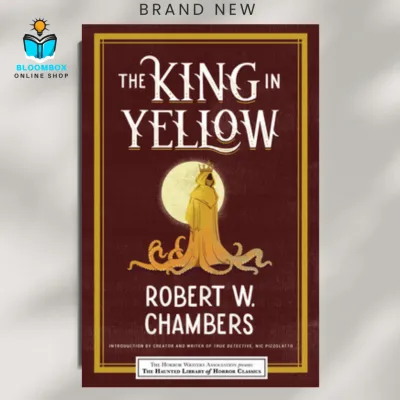
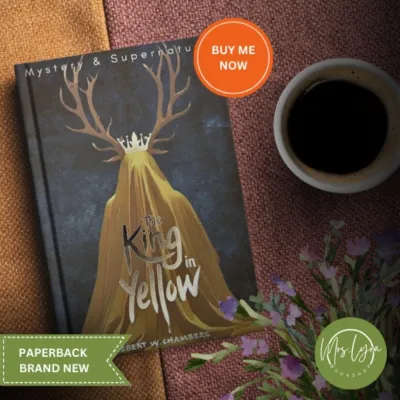

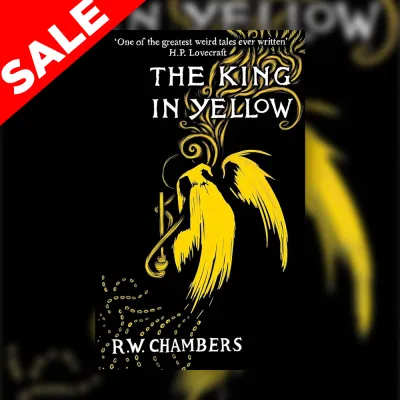
![[Audible and ebook in CDs] The King in Yellow (AmazonClassics Edition)](https://img.lazcdn.com/g/p/aeb2b61162bf0da547eaf14402766da0.jpg_400x400q80.jpg_.webp)
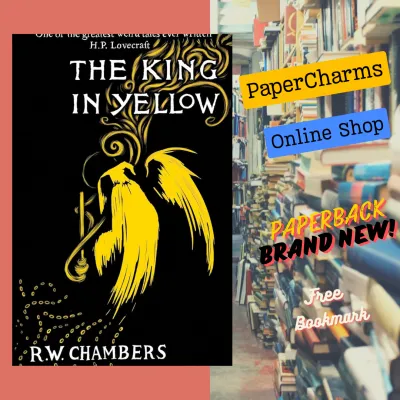
Prices are valid at publication and may change. Please refer to the product page for the latest price.
The Legacy of Dread: Why This 1895 Classic Still Matters
To understand why the king in yellow continues to haunt readers more than a century after its publication, one must look at how Robert W. Chambers revolutionized the mechanics of literary terror. Before this collection, much of Victorian gothic horror relied on external, tangible threats: ancestral ghosts, vampires, or physical monsters. Chambers bypassed these conventions by pioneering a form of psychological dread centered on cosmic insignificance, existential decay, and the terrifying fragility of human sanity.
At the heart of the book’s enduring legacy is the brilliant invention of the “cursed play” trope. Within the stories, Chambers introduces a fictional, two-act theatrical play also titled The King in Yellow. The first act is mundane and harmless, but reading the second act inevitably drives the reader to madness, revealing truths about the universe that the human mind is simply not equipped to handle. By never fully revealing the contents of this fictional play—only offering tantalizing, poetic fragments of the text—Chambers forces the reader’s imagination to fill in the blanks. This technique of leaving the ultimate horror unseen became a foundational pillar of modern weird fiction.
This atmospheric, slow-burn approach heavily influenced H.P. Lovecraft, who read the collection in the late 1920s and integrated Chambers’ mythic elements—such as Hastur, Carcosa, and the Yellow Sign—into his own expanding Cthulhu Mythos. Decades later, this same dread-infused mythology found its way into mainstream modern pop culture, serving as the thematic backbone for the acclaimed first season of the television series True Detective. The haunting imagery of a decadent, alien city under twin suns continues to inspire writers, game designers, and filmmakers worldwide.
For the modern reader, the book’s appeal lies not in cheap jump scares or graphic violence, but in its oppressive, feverish atmosphere. Chambers masterfully evokes a sense of beautiful decay, where art, madness, and supernatural corruption intertwine. If you appreciate horror that lingers in the mind like a half-remembered nightmare, this historical masterpiece remains an essential touchstone.
Managing Expectations: The "First Half" Phenomenon and Pacing
The most common source of frustration for first-time buyers of the king in yellow is its highly unusual structure. Many readers purchase the book expecting a continuous, novel-length horror narrative. In reality, it is a collection of ten distinct short stories, and the horror elements are concentrated almost entirely in the first half of the volume.

This structural split is often referred to by literary scholars and enthusiasts as the “First Half” phenomenon. The first four stories—”The Repairer of Reputations,” “The Mask,” “In the Court of the Dragon,” and “The Yellow Sign”—are the masterpieces that contain the core mythos of the cursed play. These narratives are set in a dystopian, alternate-future New York or the eerie streets of Paris, tracking characters who have fallen under the ruinous influence of the mysterious text. They represent the absolute peak of Chambers’ weird fiction output, delivering a masterclass in unreliable narration and escalating paranoia.
Immediately following these horror stories is “The Demoiselle d’Ys,” a haunting, bittersweet ghost story that acts as a bridge, followed by “The Prophets’ Paradise,” a series of surreal prose poems. From that point onward, the book undergoes a dramatic tonal shift. The final four stories—”The Street of the Four Winds,” “The Street of the First Shell,” “The Street of Our Lady of the Fields,” and “Rue Barrée”—are romantic, realistic dramas focused on the lives of young American art students living in the Latin Quarter of Paris. There are no supernatural entities, cursed plays, or cosmic horrors in these final chapters; instead, they reflect Chambers’ own youthful experiences as an art student in France.
To avoid disappointment, you must approach the collection with a clear reading strategy. Rather than forcing yourself to read the book cover-to-cover as a single narrative, treat the second half as a separate, historical bonus. Enjoy the first five stories for their unmatched weird horror, and if you find yourself exhausted by the psychological tension, take a break before exploring the romantic Parisian sketches. Adjusting your pacing in this manner ensures you can appreciate Chambers’ versatile writing style without feeling cheated by the sudden departure from horror.
Which Edition to Buy: A Guide for Philippine Readers
Because the king in yellow was published in 1895, the text is firmly in the public domain. This means that anyone can print, package, or distribute the book, resulting in a vast array of physical and digital editions available on the market. For readers in the Philippines, choosing the right edition involves balancing budget, aesthetic preferences, and the practicalities of book preservation in a highly humid tropical environment.
When shopping through local physical retailers like Fully Booked or National Book Store, or browsing reputable online book importers, you will encounter three primary tiers of editions. It is crucial to verify the publisher and the table of contents before purchasing, as some cheap print-on-demand versions found on online marketplaces are notorious for bad formatting, severe typographical errors, or silently omitting the non-horror stories entirely.
Budget-Friendly and Mass-Market Paperbacks
For casual readers, students, or those simply wishing to test the waters, mass-market paperbacks—such as those published by Dover Thrift Editions or standard library classics—offer an incredibly affordable entry point. These editions are highly portable and lightweight, making them perfect for reading during daily commutes or while relaxing in a local café.
However, these budget-friendly options come with distinct trade-offs. They are printed on high-acid wood pulp paper, which is highly susceptible to rapid yellowing, spotting (foxing), and warping when exposed to the intense humidity of the Philippines. Furthermore, they contain no annotations, introductory essays, or historical context, leaving you to decipher the 19th-century slang and French artistic terms entirely on your own.
Annotated Editions for Deep Mythos Exploration
If you want to fully unpack the historical context of the text and trace its deep connections to Lovecraftian lore, investing in an annotated or critical edition is highly recommended. These mid-range trade paperbacks or hardcovers feature extensive footnotes, scholarly introductions, and supplementary essays written by weird fiction historians.
An annotated edition is particularly valuable for explaining the real-world historical events, Parisian geography, and artistic movements that Chambers references. Understanding these details transforms what might seem like obscure Victorian filler into rich, world-building context. These editions are typically printed on acid-free paper, offering much better longevity and resistance to tropical degradation than mass-market alternatives.
Premium Hardcovers for Collectors
For dedicated collectors, horror bibliophiles, or those looking to give a memorable gift, premium hardcover editions are the ultimate choice. Publishers specializing in classic horror and speculative fiction frequently release deluxe editions featuring stunning cover art, custom illustrations, ribbon markers, and high-quality cloth or faux-leather bindings.
These collector’s editions are built to last. Their sturdy bindings and heavy, acid-free paper stocks are highly resilient against the moisture and heat that typically ruin paperbacks in local climates. Beyond their physical durability, they serve as beautiful display pieces on any bookshelf, capturing the decadent, gothic aesthetic that Chambers championed in his writing.
Local Chills: Filipino English and Tagalog Horror Alternatives
If the atmospheric dread, psychological instability, and haunting historical weight of Chambers’ work resonate with you, exploring how these same themes manifest in Philippine literature can greatly enrich your reading journey. Filipino writers have long excelled at crafting gothic and weird fiction, blending the country’s rich folklore, colonial trauma, and intense tropical landscapes into stories that rival the classic horror of the West.
To experience a local parallel to Chambers’ atmospheric decay and temporal distortion, look no further than Nick Joaquin’s Tropical Gothic. Joaquin, one of the Philippines’ greatest literary giants, masterfully captures the heavy, decaying grandeur of old Manila. In stories like “May Day Eve” and “Guardia de Honor,” Joaquin utilizes a lush, baroque prose style that mirrors the decadent beauty of Chambers’ writing. His characters are often haunted by ancestral curses, illusions, and the terrifying realization that the past is never truly dead. The oppressive tropical heat and humidity in Joaquin’s tales act as a physical manifestation of psychological tension, much like the misty, alien landscapes of Carcosa.
For a more contemporary exploration of psychological unease and urban weirdness, Yvette Tan’s collection Waking the Dead offers a brilliant modern counterpart. Tan’s stories delve into the unsettling spaces where everyday Philippine reality collides with the supernatural. Rather than relying on simple folklore tropes, her work focuses on the quiet, creeping madness of characters confronting the inexplicable. The sense of isolation and the fragile boundary between sanity and the supernatural in her stories share a direct thematic DNA with the tragic figures in “The Yellow Sign” or “The Repairer of Reputations.”
Reading these domestic works alongside Chambers’ classic highlights a fascinating cross-cultural literary truth: whether set in the bohemian art studios of 19th-century Paris or the shadow-drenched ancestral homes of Intramuros, the most powerful horror always stems from the internal collapse of the human mind when confronted with things it cannot comprehend.
Final Verdict: Is It Worth Your Time and Money?
Ultimately, the king in yellow is absolutely worth reading, but its value depends heavily on your expectations as a reader. It is a vital piece of literary history that bridges the gap between the classic gothic horror of Edgar Allan Poe and the cosmic, alien terrors of H.P. Lovecraft.
You will love this book if:
- You appreciate slow-burn, atmospheric, and psychological horror.
- You are fascinated by the history of weird fiction, the Cthulhu Mythos, or the literary origins of modern pop culture.
- You enjoy beautiful, poetic prose and unreliable narrators who slowly descend into madness.
You should skip this book if:
- You are looking for a fast-paced, action-heavy modern slasher or creature feature.
- You demand a single, cohesive, novel-length horror story and dislike abrupt genre shifts.
- You have no interest in 19th-century Victorian romantic drama or bohemian art culture.
If you are still on the fence, a highly practical approach is to start by reading the first four stories online via public domain platforms like Project Gutenberg or listening to a free audiobook recording on LibriVox. This allows you to experience Chambers’ unique brand of horror without spending a cent. If those initial stories captivate your imagination and leave you craving a physical copy to treasure, you can then confidently invest in a high-quality annotated or hardcover edition to grace your personal library.
Frequently Asked Questions (FAQ)
Is The King in Yellow a novel or a short story collection?
It is a collection of ten independent short stories, not a single continuous novel. The book is famous for its distinct structural divide: the first half of the collection features weird cosmic horror and psychological dread connected to a fictional, madness-inducing play, while the second half consists of realistic, romantic dramas set among young art students in late-19th-century Paris.
Do I need to read it to understand Lovecraft's Cthulhu Mythos?
No, you do not need to read it to understand H.P. Lovecraft’s work, but doing so will greatly enrich your appreciation of cosmic horror. Lovecraft was deeply inspired by Chambers’ atmospheric dread and incorporated several of his terms—such as Hastur, Carcosa, and the Yellow Sign—into his own mythos. Reading this book allows you to experience the original, more poetic origins of these famous horror concepts.
Is there an official Tagalog translation of the book?
There is currently no official, widely distributed, standalone Tagalog translation of the entire collection available in the mainstream Philippine market. Because the original English text is in the public domain, local readers almost exclusively access the book through imported English editions or free digital public-domain archives. If you encounter translated versions on local online marketplaces, verify the publisher carefully to ensure the translation is complete and of high quality.
Community discussion
Share your experience or ask a question. Comments are reviewed before publication.