
Quick Answer: Assessing the CPD 1000 for Beginners
Deciding whether the CPD 1000 is a suitable first acoustic drum kit depends heavily on verifying its specific build materials, hardware stability, and standard sizing. Entry-level drum kits vary widely in quality, and a good beginner kit must balance affordability with the physical durability required to withstand early learning curves. For aspiring drummers in the Philippines, environmental factors like tropical humidity and temperature fluctuations also play a critical role in how well wood shells and metal hardware hold up over time. Before making a purchase, you should use a structured diagnostic checklist to evaluate the exact configuration of the CPD 1000 you are considering. This ensures you do not end up with an instrument that hinders your progress or requires immediate, costly repairs.
Playability and Ergonomic Setup
The physical layout of a drum kit directly impacts how quickly a beginner can develop proper technique and muscle memory. Adjustable hardware is the foundation of an ergonomic setup. You must be able to adjust the height and angle of the drum throne, the snare stand, and the cymbal booms to match your body proportions. If a kit lacks sufficient adjustability, you may find yourself slouching or stretching awkwardly to reach the cymbals, which leads to rapid fatigue and potential repetitive strain injuries.

When evaluating the CPD 1000, verify the drum shell depths and diameters to ensure they match standard configurations. A standard beginner setup typically features 10-inch and 12-inch rack toms, a 14-inch floor tom, and a 20-inch or 22-inch kick drum. These dimensions are highly manageable for most teenagers and adults. If the kit features non-standard or scaled-down junior sizes, it might feel cramped, and transitioning to a standard-sized kit later will require a significant physical adjustment.
Products mentioned in this guide
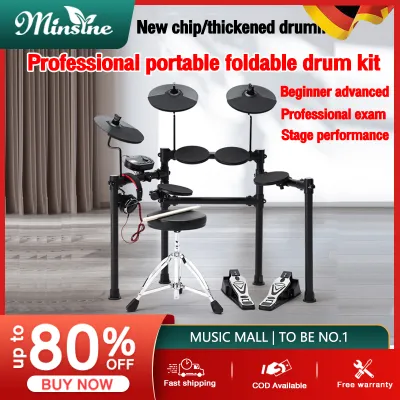
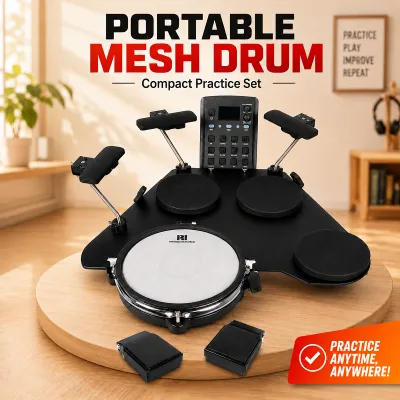
Prices are valid at publication and may change. Please refer to the product page for the latest price.
The kick drum pedal is another critical component that requires close inspection. A stiff, unresponsive pedal can severely hinder early bass drum technique development, such as learning the heel-up or heel-down methods. Look for a pedal that offers adjustable spring tension. This allows you to loosen or tighten the resistance to match your foot speed and strength. If the pedal action feels rough or lacks a smooth pivot point, it will make keeping a steady tempo incredibly frustrating.
Additionally, check the adjustability of the hi-hat stand. The clutch must grip the top hi-hat cymbal firmly without slipping, and the footboard should have a smooth, predictable rebound. If the hi-hat stand feels flimsy or wobbles when you step on it, it will compromise your ability to keep time with your left foot, which is a fundamental skill every beginner must master.
Durability and Hardware Stability Checks
Acoustic drum shells are typically constructed from layered wood plies, and entry-level kits commonly use poplar, basswood, or mahogany. While these woods offer decent resonance at an affordable price point, you must inspect the bearing edges of the shells. The bearing edge is the top rim of the wooden shell where the drumhead makes contact. It must be perfectly smooth and flat. Rough, uneven, or splintered bearing edges prevent the drumhead from seating properly, making it nearly impossible to tune the drum or eliminate harsh, unwanted overtones.
In the Philippines, the high relative humidity can cause poorly sealed or low-quality wood plies to absorb moisture, leading to warping or delamination over time. Inspect the interior of the shells to ensure the wood is clean, dry, and free of visible gaps between the plies. If the interior wood looks rough or unfinished, it may be highly susceptible to moisture damage, especially in non-air-conditioned practice spaces.
The sturdiness of the stands and mounting hardware is just as important as the shells themselves. Look for double-braced hardware, which features two metal support bars on each leg of the tripod stands. Double-braced stands provide a wider, heavier base that prevents the cymbals and snare drum from tipping over during energetic practice sessions. Single-braced hardware is lighter and easier to transport, but it often lacks the stability needed to withstand the heavy, inconsistent strikes of a novice drummer.
Finally, examine the tension rods and lugs. These metal components hold the drumhead in place and allow you to adjust the pitch. The rods should turn smoothly within the lugs without grinding or sticking. Cheaply manufactured lugs are prone to stripping their internal threads under high tension, which prevents the drum from holding its tune. If you notice any metal shavings or if the rods feel loose and wobbly in their casings, the hardware may fail prematurely.
Sound Potential and Cymbal Quality
The stock drumheads that come pre-installed on budget-friendly kits are typically thin, single-ply heads designed primarily for display rather than performance. They often produce a plasticky, hollow tone with excessive ring and very little low-end warmth. To achieve a satisfying sound, you will likely need to replace these stock heads with high-quality aftermarket options, such as double-ply heads for the toms and a specialized dampening head for the kick drum.
Before purchasing the CPD 1000, verify that the shells use standard diameters, such as 10, 12, 14, and 22 inches. Standard sizing ensures you can easily find replacement heads from major brands at local music stores or online marketplaces. If the shells use proprietary or odd sizes, finding replacement heads will be incredibly difficult and expensive.
Cymbals are another area where entry-level kits often compromise. The cymbals included with budget packages are frequently made of brass or low-grade sheet alloys. These cymbals tend to sound harsh, tinny, and choked, meaning they do not sustain or decay musically. Furthermore, thin brass cymbals are highly prone to denting, warping, or cracking under heavy playing.
Evaluate the included cymbals with realistic expectations. If you find that the stock cymbals sound like metallic pot lids, you should budget for an aftermarket cymbal set made of B8 or B20 bronze. Upgrading to a decent pair of hi-hats and a versatile crash-ride cymbal will dramatically improve your playing experience and keep you motivated to practice. To manage volume and ring in small rooms, you can also invest in inexpensive drum dampening gels or rubber mute pads.
Long-Term Value and Compatibility
When buying your first drum kit, you must consider whether the instrument can grow with you as your skills advance. Standardized components are crucial for long-term compatibility. Ensure the CPD 1000 uses standard tom mounting systems, such as L-rods or standard-diameter pipe mounts, and standard cymbal tilters. If a component breaks or if you want to expand your setup—such as adding a second crash cymbal or a cowbell—standardized hardware allows you to buy universal clamps and arms without needing proprietary parts.
To evaluate the true value of the CPD 1000, calculate its total cost of ownership. The initial purchase price of an entry-level kit in the Philippines typically ranges from ₱15,000 to ₱25,000. However, if you must immediately replace the drumheads (approximately ₱4,000 to ₱6,000 for a full set) and the cymbals (approximately ₱8,000 to ₱12,000 for a basic bronze set), the actual investment increases significantly.
Compare this total cost against intermediate-tier kits available at local music retailers. Sometimes, spending slightly more upfront on a mid-range shell pack that already includes durable hardware and decent heads is more cost-effective than buying a budget kit and upgrading every single component within the first six months.
If the CPD 1000’s shells and basic stands are sturdy, and you are comfortable upgrading the heads and cymbals gradually as your budget allows, it can serve as an excellent, cost-effective platform for learning. However, if the hardware feels flimsy, the wood plies show signs of separation, or the sizes are non-standard, it is wiser to save your money and invest in a higher-tier intermediate kit that will last for years.
Frequently Asked Questions (FAQ)
Do I need to buy additional accessories with the CPD 1000?
Yes, most entry-level drum packages do not include all the necessary accessories to start playing immediately. You will need to purchase a pair of drumsticks (5A or 7A wood-tip sticks are ideal for beginners), high-quality hearing protection to prevent long-term ear damage, and a sturdy drum throne if the included one lacks sufficient padding or height adjustment. A practice pad is also highly recommended for quiet rudiment practice when you cannot play the full acoustic kit.
Can I upgrade the CPD 1000 as my skills improve?
You can absolutely upgrade the CPD 1000 as your playing skills advance, provided the kit utilizes standard shell dimensions and hardware mounts. Replacing the cheap stock drumheads with professional double-ply heads and swapping out the brass cymbals for bronze alternatives will instantly transform the kit’s sound. While the underlying wood shells will remain entry-level, these targeted upgrades can easily extend the useful life of your kit by several years.
Community discussion
Share your experience or ask a question. Comments are reviewed before publication.