
Deciding whether Lee Strobel’s The Case for Christ is the right book for your spiritual journey depends entirely on the specific questions keeping you awake at night. If your doubts are rooted in historical evidence, the reliability of ancient manuscripts, and the legal-style cross-examination of biblical claims, this investigative work offers a structured, highly accessible starting point. However, if your struggles stem from deep emotional pain, philosophical dilemmas like the problem of suffering, or a desire for mystical experience, you may find that this book addresses a different set of questions than the ones you are asking.
Identifying Your Type of Religious Skepticism
Wrestling with faith can feel incredibly isolating, especially in a highly relational and culturally vibrant environment like the Philippines, where community life and family traditions are deeply intertwined with religious practice. When doubts arise, it is common to feel as though you are the only one questioning long-held beliefs, but identifying the exact nature of your skepticism is the first step toward finding clarity.
Historical and evidential doubts focus primarily on the “what” and “how” of ancient history. You might find yourself questioning whether the New Testament documents were altered over centuries of copying, whether there is an external historical footprint confirming the life of Jesus, or if the accounts of the resurrection can withstand modern scrutiny.
Products mentioned in this guide
![[Brand New] The Case for Christ: A Journalists Personal Investigation of the Evidence for Jesus by Lee Strobel (Paperback)](https://img.lazcdn.com/g/p/cb67716a50034cc8f4b406b9892866cc.jpg_400x400q80.jpg_.webp)
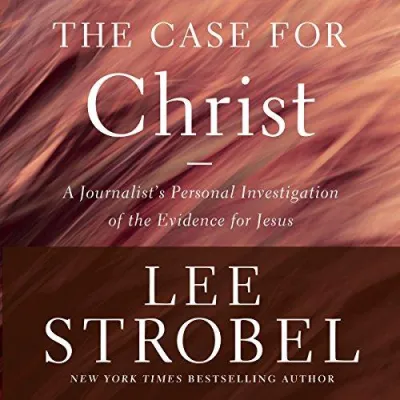
Prices are valid at publication and may change. Please refer to the product page for the latest price.
Emotional or relational doubts, on the other hand, usually stem from personal experiences rather than historical data. If you are dealing with the pain of a broken relationship, institutional disappointment, or the heavy burden of personal trauma, your questions are likely less about manuscript reliability and more about trust, safety, and emotional healing.
Philosophical or existential doubts deal with grand, overarching frameworks of reality. You might be struggling to reconcile the existence of an all-powerful, loving Creator with the stark reality of natural disasters, typhoons, and human suffering, or trying to understand how modern scientific discoveries align with ancient theological accounts.
How The Case for Christ Approaches Intellectual Doubt
Lee Strobel, a former legal editor for the Chicago Tribune, frames the book as a personal, journalistic investigation into the claims of Christianity. Using his legal training, he interviews various conservative scholars, treating the search for faith as a courtroom trial where historical evidence must be weighed beyond a reasonable doubt.

Instead of relying on subjective feelings or abstract theological theories, the chapters are organized around specific categories of proof. You will encounter discussions on eyewitness evidence, documentary evidence, corroborating evidence, and psychological profiles, making the text feel more like a legal brief than a traditional devotional.
This structured approach is designed for seekers who appreciate a logical, systematic layout, as well as believers looking to articulate the historical reasons for their faith. It appeals to those who want clear, structured arguments that can be easily digested during a daily commute or a quiet evening at home.
Self-Assessment: Is This Book the Right Fit for You?
If you are looking for a straightforward defense of the resurrection or want to understand how scholars argue for the reliability of the Gospels, this book is highly effective. It breaks down complex academic concepts into readable, conversational chapters that do not require a prior degree in theology or ancient languages.
However, the book may fall short if your primary struggle is “church hurt” or the emotional weight of unanswered prayers. The analytical, courtroom-style prose might feel cold or dismissive of your pain, as it does not deeply explore the emotional nuances of suffering, nor does it engage extensively with non-Christian philosophical traditions.
When deciding whether to invest around ₱400 to ₱800 on a new paperback copy from a local bookstore or online marketplace, it is also important to manage your expectations regarding the book’s age. Originally published in the late 1990s, the text represents a specific, conservative Protestant spectrum of scholarship, meaning some of the scientific and archaeological discussions have evolved since its release.
Complementary Resources for Unanswered Questions
If you find that Strobel’s journalistic approach does not fully satisfy your philosophical questions, you might want to look into works that focus specifically on the problem of evil or the intersection of science and faith. Authors who specialize in philosophical theology can offer deeper intellectual frameworks for these complex issues.
For those dealing with relational doubts or institutional trauma, pairing an evidential book with a personal memoir or a guide to spiritual healing can provide a more balanced path. Reading about someone else’s lived experience of doubt and recovery can soothe the heart while apologetics engages the mind.
When choosing your next read, let your self-assessment guide your selection. If you need rigorous, peer-reviewed academic debates, look for books formatted as counterpoint discussions between scholars of differing views; if you need comfort, prioritize narrative-driven spiritual memoirs.
Frequently Asked Questions (FAQ)
Is the student edition or youth version better for younger skeptics?
The student edition simplifies the vocabulary and shortens the chapters, making it highly suitable for teenagers who are beginning to ask hard questions about their faith. It retains the core investigative structure but presents the arguments in a more fast-paced, visually engaging format that fits a younger reader’s lifestyle.
If the reader is an older teenager or a young adult preparing for university, the original edition is generally a better choice. It provides the full depth of the scholarly interviews, which helps build stronger critical thinking skills necessary for navigating secular academic environments.
Should I read the book or watch the movie adaptation first?
The movie adaptation focuses heavily on the dramatic, emotional narrative of Lee Strobel’s marriage and his personal journey from atheism to faith. If you appreciate visual storytelling and want to understand the human element behind the investigation first, watching the film is an excellent, low-pressure introduction.
For those who are actively wrestling with specific intellectual doubts, starting with the book is highly recommended. The film must condense hours of scholarly arguments into brief cinematic scenes, whereas the book provides the detailed, chapter-by-chapter evidence needed to thoroughly evaluate the historical claims.
Community discussion
Share your experience or ask a question. Comments are reviewed before publication.