
The Quick Verdict: Is the Hype Actually Justified?
The sheer volume of online quotes attributed to investor Naval Ravikant can make any discerning reader skeptical. On platforms like X (formerly Twitter), LinkedIn, and various productivity blogs, his words are frequently shared as ultimate truths for modern living. However, The Almanack of Naval Ravikant—compiled by Eric Jorgenson—is indeed worth reading, provided you approach it with the correct expectations. It is not a step-by-step instruction manual for financial success, nor does it offer a rigid morning routine to copy. Instead, its value lies in its dense, high-signal compilation of mental models and philosophical frameworks that challenge how we view labor, time, and contentment.
For readers tired of repetitive self-help tropes, this compilation offers a refreshing departure from standard motivational literature. It strips away the fluff often found in traditional personal development books, delivering concentrated insights instead. If you are looking for a tactical, day-by-day blueprint to launch a business next week, this book will likely disappoint you. But if you want to reshape your fundamental understanding of leverage, wealth, and internal peace, it is one of the most efficient volumes available.
Beyond the Viral Quotes: What the Book Actually Teaches
To truly appreciate this book, one must look past the bite-sized social media graphics and examine the underlying structure of Ravikant’s philosophy. The book is divided into two distinct halves: Wealth and Happiness. This division is intentional, reflecting the author’s belief that financial freedom and mental tranquility are separate skills that must be cultivated independently. Rather than presenting these concepts as mystical secrets, the text frames them as practical disciplines governed by logic, observation, and self-awareness.
Products mentioned in this guide

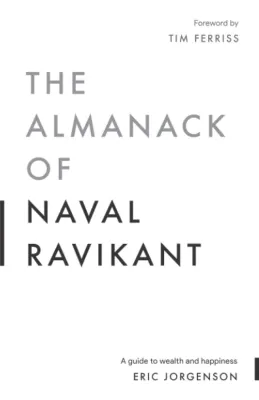




Prices are valid at publication and may change. Please refer to the product page for the latest price.

By synthesizing years of podcasts, essays, and tweets, the book creates a cohesive worldview where intellectual curiosity and emotional stability are the ultimate assets. It does not promise overnight transformation but instead asks the reader to audit their daily habits, career choices, and internal narratives.
The Mechanics of Wealth Creation
The first half of the book dismantles the traditional relationship between labor and income, arguing that renting out your time will never lead to true financial freedom. Instead, the text introduces several core concepts that serve as the foundation for modern wealth generation:
- Specific Knowledge: This refers to the unique combination of your natural talents, genuine curiosity, and lived experiences. It cannot be taught in a school, but it can be found by paying attention to what you did effortlessly as a child or teenager. It is the intersection of your authentic self and what the market values, making it nearly impossible for others to compete with you directly.
- Leverage: Ravikant identifies four primary forms of leverage: labor, capital, code, and media. While labor and capital require permission and management, code and media are permissionless forms of leverage that allow your work to scale infinitely while you sleep. This concept is particularly relevant in the digital age, where a single piece of software or content can reach millions without incremental production costs.
- Equity: To build real wealth, you must own a piece of a business—whether through equity, stock, or intellectual property—rather than just selling your hours. Working a standard salary job means your upside is capped and your downside is your job security, whereas ownership aligns your earnings with the scalable growth of an asset.
- Accountability: Taking personal responsibility under your own name is essential for building a reputation that attracts high-leverage opportunities, even though it comes with inherent career risks.
By focusing on these principles, the book encourages readers to transition from linear workers to leverage-driven builders who focus on long-term judgment rather than short-term hustle.
The Philosophy of Happiness and Peace
The second half of the book shifts its focus inward, presenting happiness not as a mystical state of euphoria, but as a highly logical, learnable skill. Drawing heavily from Stoicism, Buddhist philosophy, and evolutionary psychology, the text argues that happiness is essentially the absence of desire for external changes. When we realize that our desires are simply contracts we make with ourselves to be unhappy until we get what we want, we can begin to manage our expectations.
- Desire Management: Choosing one primary desire at a time rather than scattering focus across dozens of conflicting wants. This deliberate focus prevents the chronic dissatisfaction that comes from wanting everything at once.
- Internal Peace: Recognizing that peace is happiness in repose, while joy is happiness in motion. The book highlights how modern society conditions us to constantly seek external validation, which ultimately disrupts our natural baseline of peace.
- Mind Training: Viewing meditation and self-reflection not as spiritual chores, but as practical tools to quiet the mind's constant background noise. It is about becoming aware of your thoughts rather than being controlled by them.
Ultimately, this section teaches that external circumstances have very little to do with long-term contentment. By mastering our internal reactions and accepting reality as it is, we can cultivate a default state of peace that remains undisturbed by the chaos of daily life.
Where the Book Delivers (and Where It Falls Short)
Evaluating The Almanack of Naval Ravikant requires a balanced look at both its exceptional clarity and its structural limitations. On the positive side, the book boasts an incredibly high signal-to-noise ratio. Unlike many contemporary self-help books that stretch a single concept across three hundred pages, this compilation delivers distinct, thought-provoking ideas on almost every page. The editing by Eric Jorgenson successfully organizes disparate thoughts into a flowing conversation, making complex economic and philosophical ideas highly accessible. It functions beautifully as a reference book—one that you can open to any random page and find a concept worth reflecting on during your morning coffee.
Furthermore, the timeless nature of the principles discussed ensures that the book remains relevant long after its initial publication. Instead of focusing on temporary platform trends or fleeting business tactics, the text concentrates on fundamental human behavior, decision-making, and economic structures that do not change rapidly over time.
However, the book’s unique origin is also the source of its greatest weaknesses. Because it is a curated compilation of tweets, podcast transcripts, and blog posts, readers will notice a fair amount of repetition. Certain ideas, phrases, and anecdotes appear multiple times in slightly different contexts, which can feel redundant if you attempt to read the book cover-to-cover in a few sittings.
Furthermore, the book lacks actionable, step-by-step frameworks. It tells you what specific knowledge is and why leverage is crucial, but it does not provide a worksheet to help you find yours or a technical guide on how to build a software product. Additionally, some of Ravikant’s personal routines and lifestyle choices reflect the immense privilege of a highly successful Silicon Valley venture capitalist. His advice on sleeping, eating, and working schedules may not easily translate to someone working a strict nine-to-five job or managing family obligations under tight financial constraints. Recognizing these boundaries prevents the reader from feeling frustrated when certain high-level philosophies do not immediately fit their current reality.
Who Will Get the Most Value Out of This Book?
To avoid buyer’s remorse, it is helpful to identify whether your current life stage and professional goals align with the book’s core themes. This is not a universal crowd-pleaser, and its impact depends heavily on who is reading it.
- The Ideal Reader: This book is exceptionally well-suited for aspiring entrepreneurs, software developers, digital creators, freelancers, and knowledge workers. If you feel trapped in a "time-for-money" cycle—where taking a day off means earning zero income—the chapters on leverage and equity will provide a vital mental roadmap for transition. It is also an excellent read for individuals who enjoy practical philosophy, rational decision-making, and secular mindfulness.
- Who Should Skip It: If you are looking for highly structured, traditional self-help books with daily habit trackers, goal-setting templates, or emotional encouragement, you should pass on this one. Similarly, those looking for immediate, tactical financial advice—such as stock picks, day-trading strategies, or real estate flipping guides—will find the high-level philosophical concepts frustratingly abstract. Lastly, if you prefer narrative-driven biographies, memoirs, or linear storytelling, the fragmented, conversational structure of this compilation may feel disjointed and dry.
How to Read a Compilation Without Getting Burned Out
Because of its non-linear structure, reading this book like a traditional novel is a recipe for mental fatigue. To get the maximum return on your time investment, consider adjusting your reading strategy to match the book’s unique format.
First, avoid the temptation to rush through the pages. The ideas are dense, and reading too quickly can lead to cognitive overload or a feeling of superficial familiarity without actual comprehension. Instead, try reading just five to ten pages a day, allowing yourself time to contemplate how each mental model applies to your current career or personal life.
Second, do not feel obligated to read the book chronologically. If you are currently facing career stagnation or financial stress, dive straight into the “Wealth” section and spend a few weeks digesting those concepts. Conversely, if your professional life is stable but you feel anxious, overwhelmed, or unfulfilled, start with the “Happiness” section.
Finally, treat this book as an active study guide rather than passive entertainment. Keep a physical highlighter or a digital note-taking app open as you read. Mark the mental models that challenge your current assumptions, and revisit your highlights every few months. The book’s value increases exponentially when you use it as a personal encyclopedia for decision-making rather than a one-time read.
Finding and Reading the Book in the Philippines
For readers in the Philippines, accessing The Almanack of Naval Ravikant is relatively straightforward, though there are a few local factors to keep in mind. Physical copies are frequently stocked in major local bookstores such as Fully Booked and National Book Store, typically priced between ₱600 and ₱1,200 depending on whether you choose the paperback or hardcover edition. When purchasing from online marketplaces or local e-commerce platforms, always verify the seller’s authenticity to avoid low-quality, unauthorized reprints that often suffer from missing pages, poor binding, and illegible text.
If you prefer digital formats, the Kindle edition and audiobook are widely available through global digital storefronts. It is also worth noting that the creator, Eric Jorgenson, has made the digital PDF version of the book officially available for free on the book’s dedicated website. This makes it incredibly accessible for budget-conscious readers who want to evaluate the content before investing in a physical copy for their bookshelf.
In the Philippine context, the book’s core principles are highly relevant to the rapidly growing community of local freelancers, remote virtual assistants, software developers, and digital content creators. As the local economy shifts towards global remote work, understanding how to transition from selling cheap hourly labor to building scalable digital assets (like code or media) can be a significant career differentiator. The tropical humidity and long daily commutes in metro areas also make the audiobook format an excellent companion for long transit times, allowing you to absorb high-signal ideas while navigating traffic.
Final Decision: Buy, Borrow, or Skip?
To wrap up this review, your decision to invest in The Almanack of Naval Ravikant should depend on how you plan to use the information.
- Buy the Physical Copy: Choose this option if you are a tactile reader who loves highlighting, writing in margins, and building a permanent home library of reference books. The physical book is highly durable and serves as an excellent visual reminder to practice long-term thinking.
- Borrow or Read Digitally: Opt for this if you are on a budget, prefer reading on an e-reader, or want to test the concepts first using the free PDF online. It is also the best choice for those who prefer listening to audiobooks during their daily workouts or commutes.
- Skip: Let go of this book if you are currently looking for a step-by-step business plan, a structured daily productivity planner, or a narrative-driven biography. Your time and resources would be better spent on books that align directly with those specific needs.
Frequently Asked Questions (FAQ)
Is The Almanack of Naval Ravikant a biography?
No, it is not a traditional chronological biography. While it contains a short biographical sketch and a list of recommended reading at the back, the vast majority of the book is a curated thematic compilation of Ravikant’s thoughts, interviews, and public writings.
Do I need a background in tech or investing to understand it?
Not at all. While the author uses examples from the technology and venture capital sectors, the core principles of leverage, specific knowledge, and mental clarity are explained in plain, non-technical language. Anyone looking to optimize their career and mental well-being can easily apply these concepts.
Community discussion
Share your experience or ask a question. Comments are reviewed before publication.