
Robert Greene’s Mastery is not a quick-fix manual or a collection of superficial career hacks; rather, it is a deep, historically grounded blueprint for long-term professional excellence. For Filipino professionals navigating a rapidly evolving job market, deciding whether to invest time and money into this dense volume depends heavily on your current career stage, your willingness to commit to long-term skill acquisition, and how effectively you can translate its Western and historical concepts into the relationship-driven dynamics of the local workplace. If you are looking for immediate salary negotiation scripts or overnight productivity tricks, this book will likely frustrate you. However, if you are planning a major mid-career pivot, seeking to transition from a generalist to a highly specialized expert, or trying to build enduring professional influence, Mastery offers a rigorous framework that can serve as a valuable strategic guide. It challenges the modern obsession with instant gratification and forces you to look at your career through the lens of decades rather than quarters.
Core Concepts of Mastery and Career Advancement
The foundational philosophy of Mastery rests on the idea that genius is not an innate genetic gift, but rather the result of intense focus, deliberate practice, and time. Greene structures this journey into distinct phases, beginning with the “apprenticeship phase.” During this initial period, the primary goal is not to earn a high salary or gain immediate recognition, but to acquire deep, foundational skills and understand the rules of your chosen industry. This phase requires a high degree of humility, as you must observe, practice, and submit to the guidance of those who have already attained expertise. In a world that constantly demands immediate results, embracing this phase means accepting temporary obscurity in exchange for permanent competence.
Following the apprenticeship is the “creative-active phase.” Once you have internalized the rules and skills of your field, you begin to experiment, combine disparate ideas, and inject your unique perspective into your work. This transition is critical for professionals who want to move beyond routine execution and start driving innovation within their organizations. By synthesizing different skills, you create a unique professional niche that makes you highly valuable and difficult to replace. It is during this phase that you transition from a passive consumer of knowledge to an active creator of value.
Products mentioned in this guide
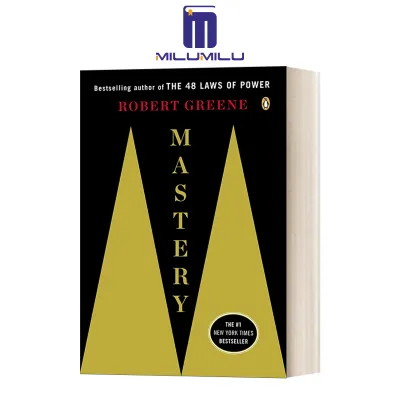

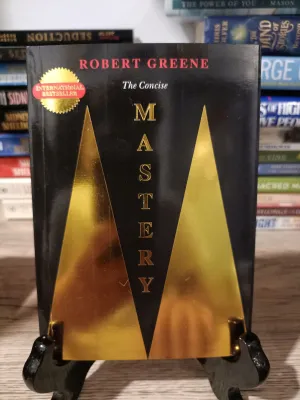
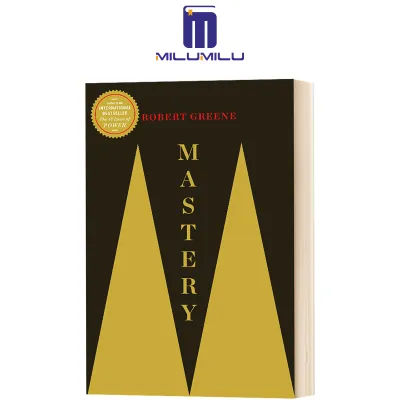


Prices are valid at publication and may change. Please refer to the product page for the latest price.
Central to this entire journey is the concept of identifying your “life’s task.” Greene argues that everyone has an innate inclination toward certain subjects or activities. For mid-career professionals who feel stuck in corporate routines or are considering a major career pivot, reconnecting with this life’s task is essential. It provides the intrinsic motivation needed to sustain focus through difficult transitions and helps you filter out distracting opportunities that do not align with your long-term goals. Without this clarity, you risk climbing a career ladder only to realize it is leaning against the wrong wall.
However, internalizing these concepts requires a massive cognitive and time commitment. Greene does not present his ideas in simple bullet points or easily digestible summaries. Instead, he builds his arguments through dense, detailed biographical narratives of historical figures such as Leonardo da Vinci, Michael Faraday, and Temple Grandin. Reading this book is an active intellectual exercise; you must dedicate significant mental energy to unpack these historical anecdotes and extract the underlying principles, which can be challenging if you are already balancing a demanding work schedule.
Is This Book Right for Your Current Career Stage?
To determine if Mastery is a worthwhile investment, you must honestly evaluate your current professional needs and career stage. The ideal reader is someone who is playing the long game. If you are a junior professional willing to prioritize learning over immediate financial gain, or a mid-level manager aiming to develop deep, irreplaceable expertise over the next decade, this book aligns perfectly with your trajectory. It is also highly beneficial for creative professionals, engineers, and strategists who rely on deep focus and complex problem-solving to excel in their roles. It provides a roadmap for those who are willing to invest years into perfecting a craft.

Conversely, there are many scenarios where you should skip this book. If your immediate priority is surviving the next quarter, securing a quick salary increase to cover rising living costs, or learning how to format a spreadsheet or write an email template, Mastery will feel like an impractical luxury. It does not contain quick productivity hacks, immediate salary negotiation scripts, or short-term networking tactics. It is a strategic philosophy, not an operational checklist, and expecting it to solve immediate, tactical problems will only lead to frustration. If you need immediate relief from a toxic workplace or urgent financial stress, your time is better spent on direct action rather than historical philosophy.
Gauging your personal readiness also requires assessing your reading habits and tolerance for analytical writing. If you prefer fast-paced, action-oriented business books that you can finish in a single weekend, Greene’s narrative-heavy style might feel tedious. You must be prepared to read slowly, take notes, and reflect on how the historical lessons apply to your modern professional life. If you are not ready to commit to this level of active reading, the book may end up sitting unfinished on your shelf, serving as a source of guilt rather than guidance.
Navigating the Philippine Workplace Context with Mastery
Applying the principles of Mastery within the local professional landscape requires careful cultural translation. Greene’s concept of “apprenticeship” often assumes a highly structured, meritocratic environment where mentors are eager to pass down their secrets. In many local corporate cultures, hierarchies are deeply entrenched, and professional advancement is heavily tied to personal relationships and smooth interpersonal dynamics, often referred to as pakikisama. To navigate this, you must adapt the apprenticeship model by seeking out informal mentors and demonstrating loyalty and utility within existing hierarchies without appearing overly aggressive or self-serving. Building trust locally often requires patience and a genuine respect for seniority.
“Social intelligence” is another core pillar Greene discusses, which is incredibly relevant to the local workplace. In a collaborative, relationship-driven corporate culture, your technical skills are only half the equation. You must develop the ability to read office politics, understand the unspoken motivations of your superiors and peers, and build genuine rapport. Applying social intelligence in this context means practicing active listening, respecting local workplace hierarchies, and learning how to present your ideas in a way that preserves harmony while still driving progress. It is about finding the balance between professional excellence and cultural integration.
Furthermore, readers must acknowledge the limitations of the book’s historical and Western-centric examples. The realities of modern local industries—such as the fast-paced business process outsourcing sector, tech startups, or traditional family-owned conglomerates—differ significantly from the guild systems of Renaissance Italy or the industrial laboratories of nineteenth-century Europe. You cannot copy-paste the actions of historical figures; instead, you must extract the core psychological truths and adapt them to a landscape where digital transformation, remote work, and local economic factors shape career opportunities. The path to mastery in a developing economy requires a high degree of adaptability and resourcefulness.
Buying Guide: Formats, Editions, and Reading Commitment
When purchasing Mastery, choosing the right format is essential for integrating it into your daily routine. For professionals dealing with long daily commutes in urban centers—whether spending hours in utility vehicles, riding the commuter trains, or sitting in slow-moving traffic—the audiobook format can turn wasted transit time into productive learning. However, if you choose the audiobook, you must verify whether you are purchasing the unabridged version. Abridged audiobooks often strip away the rich historical biographies, leaving only the bare concepts, which deprives you of the context needed to fully appreciate Greene’s arguments.
If you prefer physical books, a high-quality paperback or hardcover is excellent for active reading, allowing you to highlight passages, write notes in the margins, and easily flip back to reference historical anecdotes. E-books offer a convenient middle ground, providing portability and searchability on compatible e-readers or tablets, which is highly practical if you want to avoid carrying a heavy, thick volume in your commuter bag.
Regardless of the format, vigilance is required when shopping online. The local digital marketplace is flooded with counterfeit, pirated, or poorly printed physical books, as well as unauthorized digital copies. These pirated editions often suffer from missing pages, illegible text, formatting errors, and low-quality paper that degrades quickly in tropical humidity. To ensure content completeness and support authorized distribution, always verify seller credentials on online marketplaces. Look for official publisher stores, established local brick-and-mortar bookstore accounts, or highly rated sellers with verified purchase reviews. Avoid listings with suspiciously low prices, as these are almost always unauthorized reproductions that will hinder your reading experience.
Frequently Asked Questions (FAQ)
How long does it typically take to read Mastery by Robert Greene?
Mastery is a substantial volume, typically running over three hundred pages in standard print editions, with unabridged audiobook versions lasting over fifteen hours. Because of its dense historical narratives and analytical depth, it is not a book to be rushed. Instead of setting a strict deadline to finish it in a week, a more sustainable approach is to read one chapter or biographical profile at a time, allowing yourself several weeks or even a couple of months to fully digest and reflect on the material. This slower pace ensures you can actively apply the lessons to your daily work rather than just skimming through the pages.
Are there better alternatives for quick career tips?
Yes. If you need immediate, tactical advice on resume writing, interview preparation, or basic productivity frameworks, Mastery is not the right tool. For these urgent needs, look for short-form resources, industry-specific blogs, or tactical career guides. You can search online marketplaces or local libraries for books focusing specifically on business communication, salary negotiation tactics, or time management frameworks to find highly actionable, step-by-step guides that address your immediate professional challenges. These resources are designed for rapid implementation, allowing you to address pressing career hurdles while you slowly work through Greene’s long-term strategic philosophy.

Community discussion
Share your experience or ask a question. Comments are reviewed before publication.