
A Lumanog acoustic guitar can be a highly practical choice for a complete beginner in the Philippines, provided you know how to select the right individual unit. These locally manufactured or sourced instruments offer an incredibly low barrier to entry, allowing you to test your interest in music without making a massive financial commitment. However, because these guitars are built to a very accessible price point, quality control can vary significantly from one instrument to the next. Success with a budget guitar depends heavily on your willingness to inspect the physical build, verify its playability, and understand how tropical humidity affects entry-level wood construction.
Assessing Your Beginner Needs and Budget
Defining your primary goal is the first step in choosing your first instrument. If you are testing the waters to see if you enjoy playing, spending a large sum on an imported guitar might not make sense. A budget-friendly local option lets you discover if you have the dedication to build finger calluses and practice chords daily without a heavy financial burden.
For those with strict budget constraints, entry-level guitars represent a highly accessible tier in the local market. While premium imported brands require a significant investment of several thousand pesos, a local budget guitar keeps your initial risk low, making it excellent for students or casual hobbyists. This financial breathing room allows you to allocate funds for essential accessories like a gig bag, extra strings, or a digital tuner.
Products mentioned in this guide
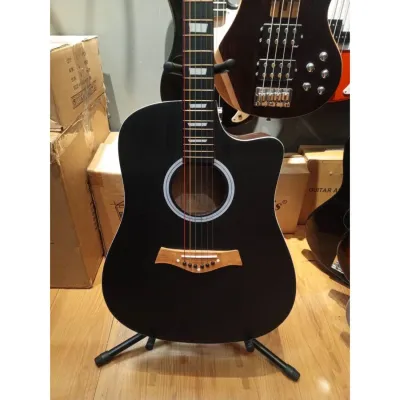
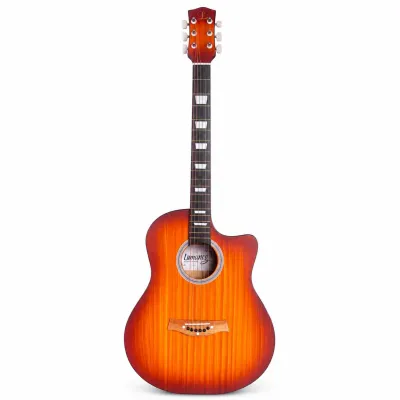
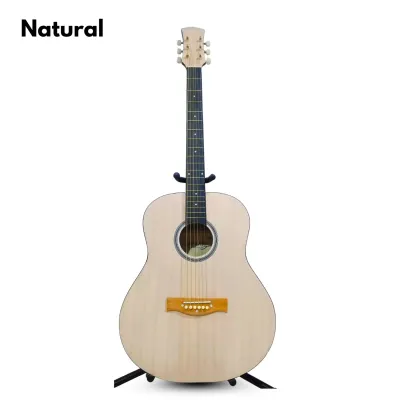

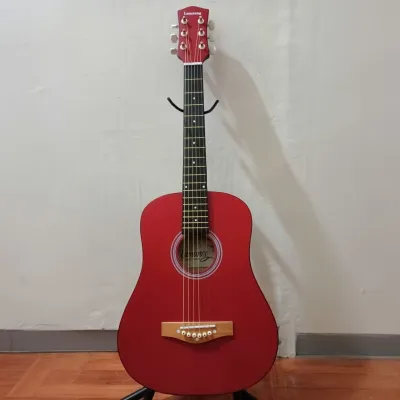
Prices are valid at publication and may change. Please refer to the product page for the latest price.
However, you must consider the trade-offs between ultra-affordable instruments and mid-tier beginner guitars. Ultra-affordable models often sacrifice refined cosmetic finishes, premium hardware, and advanced wood seasoning. A mid-tier beginner guitar might offer smoother fretwork and more reliable tuning pegs out of the box, but it comes at a much higher price. Understanding these trade-offs helps you manage your expectations; you are paying for a functional tool to learn the basics, not a lifetime heirloom.
Key Playability Checks for a Lumanog Guitar
The “action” refers to the distance between the guitar strings and the fretboard, and it is the most critical factor for a beginner. If the strings are too high, you must press down incredibly hard to produce a clean note, leading to finger pain and early discouragement. To check this, look at the twelfth fret; the gap between the top of the fret wire and the bottom of the string should be comfortable—ideally around the thickness of a standard coin. If the gap is excessively wide, the guitar will be highly difficult to play.

Neck straightness and fret condition require a careful visual inspection. Hold the guitar body and look down the edge of the neck from the headstock to the bridge, much like sighting a line. The neck should be straight or have a very slight, almost imperceptible forward curve. A neck that is visibly bowed or twisted will cause strings to buzz against the frets or make certain notes completely unplayable.
Additionally, run your fingers gently along the sides of the neck to check the fret ends. On budget instruments, metal fret wires can sometimes protrude, feeling sharp or rough against your hand. Smooth fret edges are essential for comfortable shifting up and down the neck during practice.
Tuning stability is another crucial factor, as a guitar that cannot stay in tune will ruin your practice sessions. Inspect the machine heads (the tuning pegs at the headstock) and turn them slowly to ensure they rotate smoothly without slipping, grinding, or feeling excessively loose. When tuning the strings to pitch, observe if the pegs hold the tension. If a peg slips back on its own or feels completely loose, the guitar will constantly fall out of tune, making basic practice highly frustrating.
Evaluating Build Quality and Durability
Examine the exterior of the guitar closely under good lighting to assess the overall construction. Look for visible gaps where the top, back, and sides meet, as these can indicate weak glue joints. Check the internal bracing if you can peer inside the soundhole; there should be no loose wooden struts or excessive glue squeeze-out. Minor cosmetic flaws are common on budget instruments and do not affect playability, but structural gaps can worsen over time.
The bridge is the wooden block glued to the top of the guitar body that holds the strings in place. Because the strings exert massive tension, the bridge must be perfectly flush with the body. Try to slide a thin piece of paper under the back and sides of the bridge; if the paper slides underneath, the bridge is lifting and may eventually rip off. Similarly, inspect the joint where the neck meets the body. Any visible separation or cracking in the finish around this joint indicates structural weakness.
The tropical climate of the Philippines, with its high relative humidity, presents unique challenges for wooden instruments. Budget guitars are typically constructed from laminated woods, which are actually more resistant to cracking from humidity changes than solid woods. However, the glues and hardware used in entry-level instruments are highly susceptible to tropical conditions. High humidity can soften cheap glues, causing joints to fail, while moisture in the air can quickly rust standard steel strings and cheap metal tuning gears. Keeping the guitar in a dry, well-ventilated area and wiping down the strings after every practice session is essential to prolonging its lifespan.
When to Choose a Lumanog vs. When to Look Elsewhere
A Lumanog guitar is an excellent choice if you find a specific unit that passes your basic playability checks: it has a straight neck, comfortable action, smooth fret edges, and stable tuning pegs. If your primary goal is to learn basic chords and see if you have the discipline to practice regularly, this highly affordable option is a smart, low-risk investment. It serves as a perfect stepping stone before you commit to a more expensive instrument.
You should walk away from any unit that exhibits major structural defects. A severely warped neck, a lifting bridge, or deep cracks in the wood are immediate red flags. If the action is so high that it hurts to press a single string, or if the tuning pegs slip constantly, the instrument will actively hinder your learning progress. A guitar that is painful to play or impossible to tune will likely end up gathering dust in a corner, defeating the purpose of your purchase.
If your budget allows for a slightly higher investment, or if you cannot find a budget unit that passes your physical inspection, consider looking at entry-level models from established international brands. Alternatively, searching the used market for a well-maintained mid-tier guitar can yield excellent value. A used instrument from a reputable brand often provides superior playability and tone for a price comparable to a brand-new budget guitar, though it still requires careful inspection before purchase.
Frequently Asked Questions (FAQ)
Do I need to pay for a professional setup on a budget acoustic guitar?
A professional setup involves adjusting the nut, saddle, and truss rod to optimize playability. For an entry-level guitar, a setup can transform a stiff, painful instrument into a highly comfortable one. However, you must weigh the cost of the setup against the price of the guitar itself. If a professional setup costs nearly as much as the instrument, it might not seem practical, but if the action is too high, a setup is highly recommended to prevent you from giving up. If you can find a local guitar tech who offers affordable adjustments, it is often a worthwhile investment that dramatically improves your learning experience.
Will a Lumanog guitar sound good enough for recording or performing?
For casual bedroom practice and learning the basics, the sound of a budget laminated guitar is perfectly adequate. However, for professional recording or live performance, these instruments generally fall short. The laminated woods and simple construction limit the guitar’s resonance, sustain, and tonal depth, often resulting in a boxy or thin sound. If you eventually need to perform or record, you will likely want to upgrade to an instrument with a solid wood top. Installing a temporary soundhole pickup can help amplify the sound for small gatherings, but it will not replicate the rich tone of a higher-end acoustic instrument.
Community discussion
Share your experience or ask a question. Comments are reviewed before publication.