
A mini drum kit, such as a compact electronic setup, can be an excellent entry point for beginners who face severe space constraints or need to keep noise to an absolute minimum. If you live in a compact studio apartment in Metro Manila or a shared household where a full-sized acoustic kit is impractical, these scaled-down instruments offer a quiet, space-saving way to practice basic rhythms. However, they do come with trade-offs, including restricted physical movement, smaller striking surfaces, and potential compatibility limits with standard hardware. If your goal is to transition quickly to a traditional acoustic drum set, a mini kit might hinder your spatial muscle memory, making a standard-sized electronic or acoustic kit a better long-term investment.
Self-Check: Your Space, Budget, and Learning Goals
Before purchasing a compact kit, you must evaluate your physical environment. A standard drum set typically requires a dedicated space of at least 1.5 by 1.5 meters, whereas a mini drum kit can often squeeze into a 1 by 1 meter corner or be folded away after practice. If you live in high-density housing where neighbors share concrete walls, the physical thud of drumsticks hitting rubber pads can still transmit structural noise. You will need to consider whether you have space for a noise-dampening mat to absorb these vibrations, especially during late-night practice sessions.
Tropical climates also play a role in where you store your instrument. In the humid environment of the Philippines, electronic components and rubber pads can degrade or become sticky if left in non-airconditioned, damp spaces. Ensuring you have a dry, well-ventilated corner for your mini kit is essential for preserving its longevity and maintaining the playability of the pads.
Products mentioned in this guide
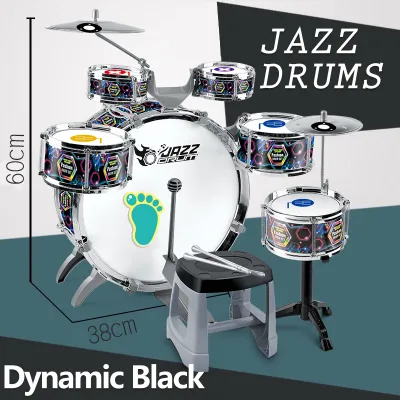
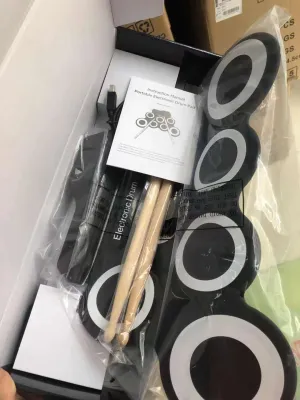
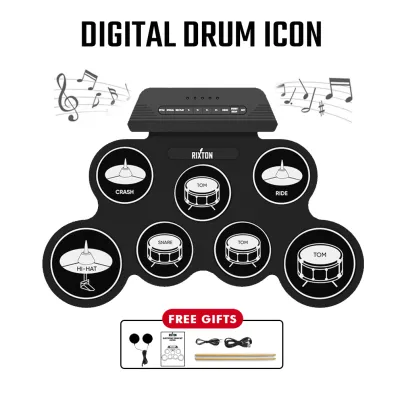
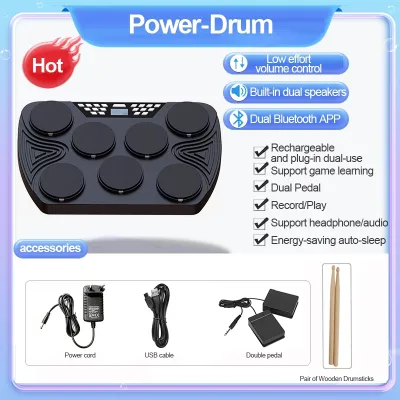
Prices are valid at publication and may change. Please refer to the product page for the latest price.
Your musical objectives should dictate the size of your first kit. If you are exploring drumming as a casual hobby, learning basic coordination, or recording simple MIDI patterns into a computer, a mini kit provides a cost-effective and highly functional solution. Conversely, if you aspire to play in a live band or sit behind a traditional acoustic kit in a studio, the tight spacing of a mini kit may cause you to develop cramped playing habits that are difficult to unlearn.
Budget is another critical factor to weigh against your long-term commitment. While a mini kit often represents a lower initial investment—frequently costing significantly less than a full-sized electronic setup—you must compare this price to entry-level standard kits available on local ecommerce platforms. If a standard electronic kit is only slightly more expensive in terms of Philippine Pesos (₱), saving up for the larger model might prevent you from needing an upgrade just a few months into your learning journey.
Understanding Mini Drum Kits: What Beginners Must Verify
When evaluating a mini drum kit, the physical characteristics of the pads will directly impact your learning experience. Smaller striking surfaces, often ranging from 6 to 8 inches in diameter, require much higher precision to hit consistently. While this can train you to be an accurate player, it also leaves very little room for error, which can be frustrating for absolute beginners who are still mastering basic stick control.

The material of the pads also dictates the rebound, which is how the stick bounces back after a strike. Rubber pads are common on budget-friendly mini kits, offering a firm bounce but producing a distinct acoustic tapping sound. Mesh heads, if available on the model you are considering, provide a more realistic rebound that closely mimics an acoustic drumhead and allows you to adjust the tension to your liking.
The drum module, or the “brain” of the kit, is responsible for translating your physical strikes into digital sounds. You should verify the variety and quality of the built-in drum kits, as playing with realistic sounds makes practice far more engaging. Look for modules that include a built-in metronome to help you develop a steady sense of time, as well as auxiliary inputs or Bluetooth connectivity so you can play along with backing tracks or instructional apps on your phone.
Hardware stability is a frequently overlooked aspect of compact drum sets. Because mini kits use lightweight frames and smaller rack systems, they can slide or wobble when subjected to energetic playing. You should check user reviews or product specifications to ensure the rack has sturdy, non-slip rubber feet and secure clamps that keep the pads from sagging mid-song.
When a Mini Kit Is Not the Right Choice
There are distinct scenarios where a beginner should bypass a mini drum kit entirely. Proper ergonomic setup is crucial for preventing strain and injury over long practice sessions. If you are a taller individual, a mini kit may not adjust high enough to allow your thighs to sit parallel to the floor, leading to lower back discomfort and poor posture.
Limb independence and pedal spacing are also compromised on highly compact setups. Standard drum kits place the hi-hat pedal and the bass drum pedal a comfortable distance apart, allowing your hips to open naturally. On a mini kit, these pedals are often positioned very close together, which can make it difficult to develop the independent leg control required for complex patterns.
Dynamic control is another area where mini kits often fall short. Standard-sized electronic kits feature multi-zone pads that produce different sounds depending on where you strike them, such as the bow or the edge of a cymbal. Many mini kits utilize single-zone pads, meaning a strike on the edge sounds exactly the same as a strike on the middle, which limits your ability to practice expressive techniques like cymbal chokes or subtle ghost notes on the snare.
If you are highly committed to the instrument and have the budget to spare, investing in a standard-sized kit from the start is usually the wiser financial decision. You will avoid the hassle of trying to sell a starter kit on local online marketplaces once your skills outgrow its physical limitations, saving you both time and money in the long run.
Pre-Purchase Checklist for Mini Drum Kits
To ensure the specific mini kit you are eyeing meets your technical and practical needs, use this verification checklist before finalizing your purchase:
- Pedal Compatibility: Check the manufacturer's specifications to see if the bass drum pad accepts a standard mechanical kick pedal and beater. Some mini kits rely on simple, button-like foot controllers that do not feel like real pedals, which can hinder your foot technique development.
- Expandability Options: Verify if the drum module has extra input jacks on the back. Having one or two spare inputs allows you to add an extra cymbal or tom pad later, extending the lifespan of your kit as your playing style evolves.
- Power and Connectivity: Confirm that the kit comes with a compatible power adapter suitable for local voltage standards. Additionally, ensure there is a standard 3.5mm or 6.35mm headphone jack for silent practice, as well as a USB-MIDI port if you plan to connect the kit to a computer or tablet for recording.
- Portability and Storage: If you need to pack the kit away after every session, verify how easily the rack folds down. Some models require you to loosen every single clamp with a drum key, while others feature quick-release mechanisms designed for rapid storage.
Frequently Asked Questions (FAQ)
Can I learn proper drumming technique on a mini drum kit?
You can certainly learn the fundamentals of rhythm, hand-to-hand coordination, and basic stick control on a mini drum kit. However, mastering advanced drumming technique requires a transition to standard-sized pads or an acoustic set. The cramped spacing of a mini kit can cause you to develop a narrow playing stance, which can lead to accuracy issues when you eventually play on a full-sized setup where the drums and cymbals are spaced further apart. It is best to use a mini kit as a stepping stone for coordination before moving to a standard layout.
Do mini drum kits work with standard drum pedals?
Compatibility varies significantly depending on the design of the mini kit. Many ultra-compact or tabletop drum pads use proprietary, electronic foot switches that cannot be replaced with standard hardware. However, some high-quality mini electronic kits feature a dedicated bass drum tower that is wide enough to accommodate a standard single or even double bass drum pedal. Always consult the manufacturer’s product manual or specifications sheet to verify the pedal mount type and ensure your preferred pedal will function correctly with the kit.
Community discussion
Share your experience or ask a question. Comments are reviewed before publication.