
Choosing your first musical instrument is an exciting milestone, but the sheer number of options can feel overwhelming. If you are browsing local music shops or online marketplaces in the Philippines, you have almost certainly encountered the davis acoustic guitar. Known for its highly accessible price point, this brand is often the first recommendation for budget-conscious buyers. However, a low price tag often raises questions about whether the instrument is actually playable or if it will simply end up as a frustrating obstacle to your musical journey.
To determine if a Davis acoustic guitar is the right choice, you need to look beyond the price tag. A beginner’s guitar must meet specific physical and structural benchmarks to support your learning. If the strings are too high, the frets are sharp, or the wood warps easily in tropical humidity, practicing will become a chore rather than a joy. This assessment breaks down playability, build quality, tone, and overall value to help you make an informed decision.
Setting Expectations: The Davis Brand Positioning
In the local musical instrument market, Davis has established a clear reputation as an entry-level brand. You will find these guitars prominently displayed in the music rows of Raon in Manila, in neighborhood malls, and across various online retail platforms. They are specifically designed to lower the financial barrier to entry for aspiring musicians, offering students, casual hobbyists, and parents a low-risk starter option.
Products mentioned in this guide

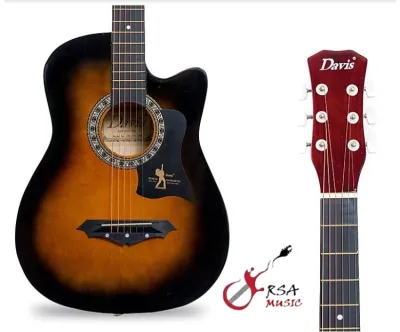

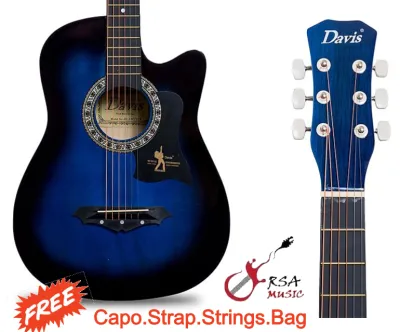


Prices are valid at publication and may change. Please refer to the product page for the latest price.
When you are not yet certain if you will stick with the instrument long-term, spending a significant sum on a premium brand is often impractical. A budget-friendly option allows you to test the waters without a heavy financial commitment. However, because the brand offers a wide range of models—varying in body shape, size, and wood composites—it is crucial to evaluate each specific guitar on its own merits rather than relying solely on the brand name.
Playability Check: Will It Hurt Your Fingers?
When learning to play, your fingertips will inevitably experience some discomfort as you build up calluses. However, there is a significant difference between normal muscle soreness and the unnecessary physical pain caused by a poorly constructed instrument. Playability is the single most critical factor in determining whether a beginner continues to practice or gives up in frustration.

Neck Profile and Fretboard Comfort
The neck of the guitar is where your hand will spend all of its time, making its shape and finish incredibly important. Most entry-level Davis models feature a standard C-shaped neck profile. This shape is generally thin and rounded, which tends to fit comfortably in smaller hands and allows beginners to wrap their fingers around the fretboard without excessive stretching.
When evaluating a guitar in person, perform a physical check of the fretboard edges. Run your thumb and index finger gently along both sides of the neck, moving from the body up to the headstock. In budget-manufactured guitars, the metal fret wires are sometimes cut hastily, leaving sharp ends that stick out. Smooth, well-filed fret ends are essential to prevent painful scratches when you transition between chords.
String Action and Intonation
String action refers to the physical distance between the guitar strings and the fretboard. If this distance is too large, you will have to exert an immense amount of finger pressure just to press the strings down to make a clean sound. This causes rapid hand fatigue and can make learning simple chords feel nearly impossible.
To check the action, look closely at the gap between the strings and the frets at both the first fret and the twelfth fret. On many budget guitars straight out of the box, the action is set high by default to prevent any potential string buzzing. While this avoids one problem, it creates a much larger obstacle for a beginner’s physical comfort. Furthermore, high action can negatively affect the guitar’s intonation, bending the string slightly out of pitch as you play higher up the neck.
Build Quality: Inspecting a Davis Acoustic Guitar's Materials and Hardware
Evaluating the physical construction of an entry-level instrument requires a realistic understanding of budget manufacturing. You should not expect premium, rare tonewoods, but you should absolutely look for structural integrity and reliable hardware that can withstand daily use.
Most entry-level Davis models are constructed using laminate wood, such as linden or spruce laminates, rather than solid wood. While purists often favor solid wood for its rich resonance, laminate wood offers a distinct practical advantage in the tropical climate of the Philippines. High humidity and sudden temperature shifts can cause solid wood to swell, shrink, or even crack if not kept in a strictly climate-controlled environment. Laminate wood is far more resilient to these environmental changes, making it a durable, low-maintenance choice for everyday household storage.
The tuning machines, or tuning pegs, are another critical hardware component to inspect. Turn each peg slowly to feel its resistance; the rotation should feel smooth and consistent without any slipping, grinding, or sudden loose spots. If the tuning gears are loose or poorly made, the strings will quickly lose tension while you play, forcing you to stop and retune every few minutes, which severely disrupts your practice flow.
Next, examine the bridge, which is the wooden piece glued to the top of the guitar body that holds the strings in place. Look closely at the edges where the bridge meets the wood of the body. There should be absolutely no visible gaps, lifting, or peeling, as the tension of the steel strings exerts immense pulling force on this joint. Additionally, peer inside the soundhole with a light to inspect the internal bracing; the wooden struts should be firmly attached with no massive, messy globs of dried glue.
Sound and Tone: Evaluating Acoustic Projection
While playability should always be a beginner’s top priority, the sound of the instrument plays a major role in keeping you motivated. A guitar that produces a pleasing, clear tone is much more rewarding to practice on than one that sounds muffled or dead.
Because these guitars primarily utilize laminate construction, the tonal profile is typically bright, clear, and direct, though it may lack the deep warmth, complex overtones, and long sustain of high-end solid-wood instruments. The sound can sometimes carry a slightly “boxy” or thin quality, especially in smaller body sizes. However, for learning basic open chords, strumming patterns, and simple melodies, this bright and straightforward tone is perfectly adequate.
To test the acoustic projection, find a quiet space and strum a few open chords. Listen to how the sound projects outward; a decent instrument should feel lively and vibrate noticeably against your body. If the sound dies out almost instantly or feels heavily compressed, the internal bracing may be too thick or the wood may be damp.
The physical size of the guitar body also heavily influences both the sound and your physical comfort. A classic Dreadnought body shape is large and deep, offering excellent volume and a robust bass response, but it can feel incredibly bulky to hold, especially for younger players or when sitting down. In contrast, Concert or Auditorium body shapes feature a narrower waist and a shallower depth; while they produce slightly less bass and volume, they offer a highly balanced mid-range and are much more comfortable to cradle in your lap during long practice sessions.
Lastly, perform a quick check for structural sound flaws by playing every single note up the neck. Press down on each fret of every string individually and pluck it clearly. Listen closely for any harsh, metallic rattling—known as fret buzz—or “dead notes” where the string fails to ring out entirely. These issues indicate that the frets are uneven or that the neck requires adjustment.
Value Assessment: What You Get for Your Budget
When purchasing a beginner instrument, you must weigh the upfront price against what is actually included in the package, as well as any potential secondary expenses required to make the guitar truly playable.
One of the primary appeals of the Davis brand is that many of their guitars are sold as complete starter bundles. These packages typically include essential accessories such as a soft gig bag, a guitar strap, a clip-on digital tuner, spare strings, and a handful of picks. For a complete novice, this is incredibly convenient, as it saves you the hassle and extra cost of sourcing these individual items separately before you can even begin your first lesson.
However, you must also factor in the potential “hidden” cost of a professional setup. Because budget guitars are mass-produced, they rarely receive detailed, individual setup attention before leaving the factory. If you find that the action is too high or the frets are slightly uneven, taking the guitar to a local luthier or technician for a professional setup—which may involve adjusting the truss rod, filing down the nut slots, and lowering the bridge saddle—is highly recommended. This service typically costs between ₱500 and ₱1,500, but it can transform a stiff, painful instrument into a remarkably smooth and comfortable one.
It is also helpful to frame this purchase as a practical stepping stone rather than a lifetime investment. A budget acoustic guitar is a low-risk financial commitment that allows you to discover if you have a genuine passion for the instrument. If you find yourself practicing consistently and progressing into advanced fingerstyle, complex classical arrangements, or public performance, you will likely outgrow the tonal limitations of a laminate guitar within a year or two. At that stage, you can confidently invest in a higher-tier instrument, knowing that your starter guitar has already served its purpose beautifully.
Final Verdict: Is a Davis Guitar Right for You?
Ultimately, deciding whether to purchase a Davis guitar depends on your personal budget, physical needs, and long-term musical goals.
You should consider buying a Davis acoustic guitar if you are working with a strict budget (typically under ₱4,000), are purchasing an instrument for a child or a casual hobbyist, or simply want a complete, hassle-free starter bundle to test your interest. If you have access to a local guitar technician or are willing to budget for a professional setup, these guitars can be adjusted to serve as highly capable, comfortable learning tools that will comfortably guide you through your first chords and songs.
On the other hand, you may want to look elsewhere if you have a larger budget (above ₱8,000) and want to start with a richer, warmer tone, or if you require flawless playability straight out of the box without needing any aftermarket adjustments. Serious students who are fully committed to long-term classical study, intricate fingerstyle techniques, or recording projects from day one will likely find the tonal limitations of a budget laminate instrument restrictive and may prefer to invest in a solid-top guitar immediately.
As a next step, the best approach is to visit a physical music store where you can physically hold the instrument. Pay attention to how the neck feels in your hand and how comfortably the body rests against your torso. If you prefer the convenience of ordering online, make sure to buy from an authorized or highly-rated seller with a clear return policy, and remember to factor the cost of a professional setup into your initial budget to ensure the best possible start to your musical journey.
Frequently Asked Questions (FAQ)
Do Davis acoustic guitars come with a case and accessories?
Many Davis acoustic guitars are packaged and sold as comprehensive starter bundles, which typically include a soft gig bag, a strap, a clip-on digital tuner, spare strings, and picks. However, this is not universal, as some retailers sell the guitar as a standalone instrument. Always read the product description carefully before finalizing your purchase to confirm exactly what is included in the package.
What size Davis guitar is best for a child or smaller adult?
For younger players, children, or smaller adults, a full-sized Dreadnought guitar can feel incredibly bulky and difficult to play. Instead, look for Davis models with a Concert or Auditorium body shape, or look for specific 3/4-size travel models if available. These designs feature a narrower waist and a shallower body depth, allowing smaller players to wrap their arms comfortably around the instrument and reach the fretboard without straining.
How do I fix string buzzing on a new Davis guitar?
If you experience string buzzing on a new guitar, first ensure your playing technique is correct by pressing your fingers firmly just behind the fret wires, and verify that the guitar is tuned to standard pitch. If the buzzing persists across multiple frets, the neck may require a truss rod adjustment, or the saddle may need to be raised. Because making incorrect adjustments can permanently damage the neck, it is highly recommended to take the instrument to a qualified local guitar technician or luthier for a proper setup.
Community discussion
Share your experience or ask a question. Comments are reviewed before publication.