
Choosing the right adjustable piano bench is essential for maintaining proper posture, preventing fatigue, and ensuring comfortable practice sessions. The decision between a hydraulic and a knob-adjustable mechanism primarily depends on whether the bench will be used by a single pianist or shared among multiple players of varying heights. While both styles serve the fundamental purpose of aligning your elbows and wrists with the keyboard, they employ vastly different engineering designs to achieve this height adjustment.
A hydraulic bench utilizes a pressurized gas cylinder to provide near-instant, effortless height changes with the pull of a simple lever. Conversely, a traditional knob-adjustable bench relies on a manual mechanical system where turning side knobs rotates a threaded spindle to raise or lower the seat. For shared households, music studios, or multi-user environments, the speed and convenience of a hydraulic system are highly advantageous. For solo pianists who rarely need to alter their seating height once it is set, a traditional knob-adjustable bench offers exceptional mechanical simplicity, long-term stability, and excellent value.
Evaluating these two mechanisms requires looking closely at how they operate, their long-term durability under regular use, and how they perform in daily practice environments. By understanding the mechanical differences and structural limits of each type, you can select a bench that supports your musical journey for years to come.
Products mentioned in this guide
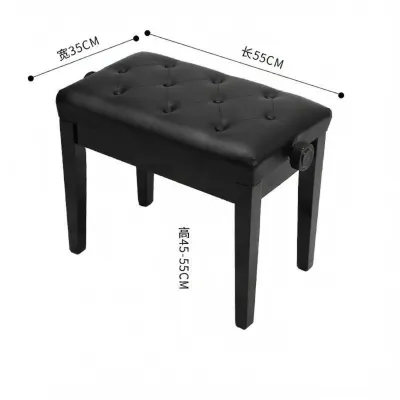
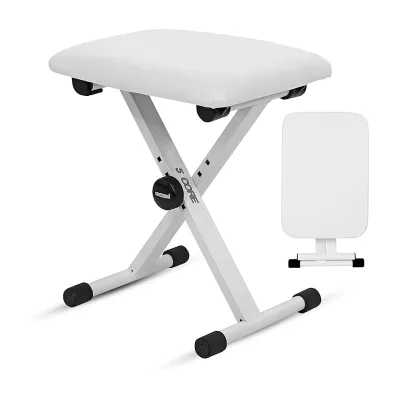
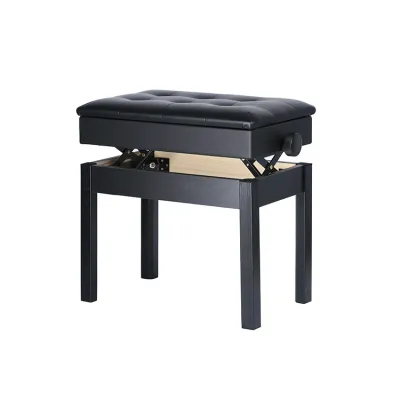
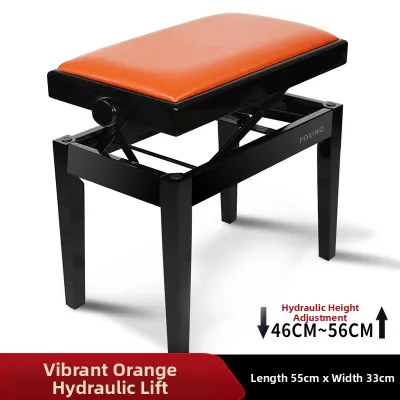
Prices are valid at publication and may change. Please refer to the product page for the latest price.
How Hydraulic and Knob-Adjustable Mechanisms Work
The core difference between these two bench types lies in the physical engineering of their lifting systems. A hydraulic piano bench features a pneumatic gas lift cylinder integrated into its central support structure, operating similarly to an office chair. When you pull the adjustment lever, the pressurized gas inside the cylinder is allowed to expand or compress. To lower the bench, you sit on it and pull the lever, using your body weight to compress the gas; to raise it, you stand up slightly and pull the lever, allowing the pneumatic pressure to lift the seat smoothly.
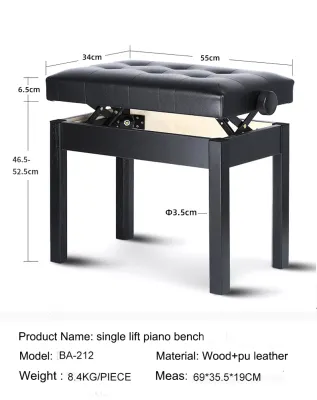
A traditional knob-adjustable bench, often referred to as a mechanical or scissor-lift bench, uses a purely physical rotational system. On either side of the bench frame, you will find wooden or metal knobs connected to a threaded metal rod, or spindle, running horizontally beneath the seat. Turning these knobs rotates the spindle, which slowly expands or contracts a metal scissor-joint mechanism to change the height. Once you stop turning the knobs, the physical threading of the screw locks the bench securely in place.
These mechanical differences result in distinct visual and structural profiles. Hydraulic benches typically feature a modern aesthetic with a heavy central column or a dual-pedestal steel base to house the gas cylinder. Knob-adjustable benches usually retain a classic, traditional appearance, featuring four independent wooden or metal legs that blend seamlessly with acoustic upright and grand pianos.
Convenience and Adjustment Speed for Daily Practice
In a daily practice routine, the ease of adjusting your seat height directly impacts your playing posture and overall comfort. Changing the height on a knob-adjustable bench requires manual effort, as you must turn the knobs on both sides repeatedly to raise or lower the seat even a few centimeters. This process can take up to a minute of continuous twisting, which can feel tedious if you need to make frequent adjustments. For young children, elderly players, or individuals with limited hand strength, turning tight mechanical knobs against the weight of the bench can be physically demanding.

A hydraulic bench completely eliminates this physical strain by offering instantaneous height changes. With a simple pull of the lever, the seat glides effortlessly to the desired level in less than a second. This rapid adjustment is incredibly convenient for households where multiple family members share the same piano, or in professional music studios where teachers and students frequently swap seats during lessons. It ensures that every player actually takes the time to set the correct ergonomic height, rather than practicing with poor posture out of sheer convenience.
Furthermore, hydraulic mechanisms offer continuous, infinite adjustment within their vertical range. You can stop the seat at the exact millimeter that aligns your forearms perfectly parallel to the piano keys. While high-quality knob-adjustable benches also allow for precise positioning, some budget-friendly mechanical models may have stepped notches or require significant manual tightening to prevent the seat from slipping slightly under weight.
Durability, Maintenance, and Long-Term Stability
The long-term reliability of a piano bench is a crucial consideration, especially when subjected to daily practice sessions. Hydraulic benches rely on pressurized gas cylinders and rubber seals to maintain their lifting force. Over several years of regular use, particularly in warm and humid tropical climates, these rubber seals can slowly degrade and lose their airtight seal. This wear can lead to a gradual loss of pressure, causing the bench to slowly sink when you sit down. Once a hydraulic cylinder fails, it generally cannot be repaired at home and must be replaced entirely.
Knob-adjustable benches, being purely mechanical, have different wear points but are often highly durable over decades. The primary risks for these benches include thread stripping on the metal spindle, loose bolts, or wood warping around the mounting brackets due to seasonal humidity changes. If the metal threads are kept clean and free of debris, a mechanical bench can last a lifetime with minimal intervention. However, if the internal scissor joints loosen over time, the bench can develop a distracting lateral sway or wobble during vigorous playing.
To maintain stability and safety, both types of benches require periodic inspection. For knob-adjustable models, you should regularly check the tightness of the leg bolts and apply a light lubricant to the threaded spindle if recommended by the manufacturer. For hydraulic models, inspect the central column for any signs of fluid leaks or unusual resistance when pulling the lever. If you ever experience structural creaking, uneven sinking, or loose joints that cannot be tightened, stop using the bench immediately and consult the manufacturer for replacement parts or professional guidance.
Weight Capacity and Ergonomic Support
When selecting an adjustable bench, it is vital to verify its structural limits rather than assuming performance based on appearance. Always check the manufacturer’s stated weight capacity on the product label, user manual, or official store listing before purchasing. Because hydraulic cylinders operate under high pressure, exceeding their rated weight limit can cause premature seal failure or sudden sinking. Mechanical knob benches also have strict weight limits, as excessive load can strip the metal threads or bend the scissor-lift arms.
The overall stability of the bench is also influenced by its base footprint and leg design. Traditional four-legged knob benches distribute your weight across a wide, rectangular area, which provides excellent stability on various flooring types. Hydraulic benches, with their central pedestal designs, rely on heavy, solid steel base plates to prevent tipping. A wider, heavier base plate generally offers superior resistance against lateral movement, which is essential when playing expressive, high-energy classical pieces.
It is important to remember that seating comfort and ergonomic support are independent of the adjustment mechanism itself. A premium hydraulic bench and a budget-friendly knob bench can both feature either thin, stiff foam or thick, high-density resilient padding. When practicing for hours, look for high-quality, breathable upholstery that resists moisture buildup, which is especially important in humid environments to prevent the material from cracking or developing mold. If a bench exhibits uneven sinking or fails to hold your weight comfortably, its internal support structure may be compromised, and it should be inspected.
Cost and Value Considerations
From a financial perspective, hydraulic piano benches typically command a premium price over traditional knob-adjustable designs. The precision engineering required to manufacture reliable gas cylinders, heavy-duty steel frames, and smooth lever mechanisms increases production costs. Investing several thousand pesos (₱) in a high-quality hydraulic bench is often a significant upfront commitment, but it offers unmatched convenience for serious musicians and busy studios.
For a casual hobbyist or a solo pianist who is the primary user of the instrument, a traditional knob-adjustable bench offers outstanding value. Since you will rarely need to change the height once it is set to your personal preference, the manual adjustment process is not a daily inconvenience. This makes the mechanical bench a highly cost-effective choice that allows you to allocate more of your budget toward the instrument itself or sheet music.
When shopping for either type of bench, always check authorized retailers or official brand stores to verify the warranty coverage, particularly for moving parts like the lift cylinder or the threaded spindle. A reputable manufacturer will stand behind their product with a clear warranty that protects against premature mechanical failure. Avoid assuming that a higher price tag automatically equates to better comfort; always evaluate the build quality, frame materials, and cushion density independently of the adjustment mechanism.
Decision Framework: Which Adjustable Piano Bench Fits Your Needs?
To finalize your decision, consider how the bench will be used in your specific practice space. This quick framework can help guide your purchase:
- Choose Hydraulic If: You share the piano with multiple family members or students of different heights, require rapid and effortless micro-adjustments, or have younger children or elderly players who struggle with heavy manual knobs.
- Choose Knob-Adjustable If: You are the sole user of the piano and rarely need to change the height, prefer a classic aesthetic that matches a traditional acoustic piano, want a highly durable mechanical system with minimal failure points, or are working within a stricter budget.
- Verify First If: You have specific weight capacity requirements, limited floor space that might not accommodate a wide hydraulic base plate, or need to match a specific wood finish or leather texture to your existing instrument. Always check the manufacturer's official specifications and warranty terms before making your final selection.
Community discussion
Share your experience or ask a question. Comments are reviewed before publication.