
The choice between a hydraulic and a knob-adjustable piano bench chair adjustable depends on how frequently you need to change the height, who is using the instrument, and your specific stability preferences. Hydraulic benches provide rapid, effortless height changes with the pull of a lever, making them highly suitable for shared environments, music schools, or multi-instrumentalist setups. Conversely, knob-adjustable benches utilize a traditional threaded mechanism that offers absolute rigidity and millimeter-level precision, which is ideal for solo pianists who prefer a set-and-forget configuration. In tropical climates like the Philippines, where high humidity can affect wood, metal, and synthetic materials differently, understanding these mechanical differences is crucial for ensuring long-term comfort and durability. By evaluating how each mechanism handles daily wear, weight distribution, and height adjustments, you can select the bench that best supports your posture and playing style.
How Hydraulic and Knob Mechanisms Actually Work
To make an informed decision, it is essential to understand the physical principles that drive these two popular bench designs. A hydraulic piano bench relies on a pressurized gas cylinder or a heavy-duty spring-loaded mechanism housed within the central support column. When you pull the integrated release lever, the valve opens, allowing the gas to expand or compress based on the weight applied to the seat. To raise the bench, you slightly lift your body weight off the cushion while pulling the lever, allowing the pneumatic pressure to push the seat upward. To lower it, you sit fully on the bench and engage the lever, using your body weight to compress the cylinder to the desired level.
A knob-adjustable bench, often referred to as a traditional or mechanical bench, operates on a completely mechanical threaded spindle system. On either side of the bench frame, you will find one or two rotating knobs connected to a metal scissor lift or a central threaded rod inside the wooden or metal housing. As you turn these knobs clockwise or counterclockwise, the rotational force is converted into vertical lift, slowly raising or lowering the seat. This classic design has been the standard in concert halls and homes for generations due to its simple, gear-driven physics.
Products mentioned in this guide
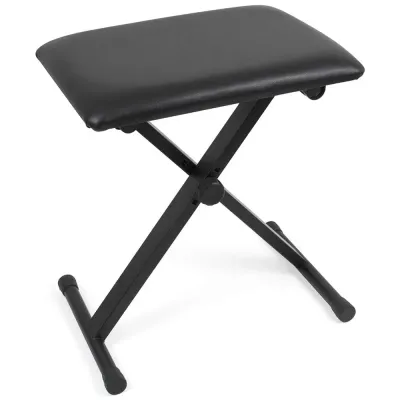
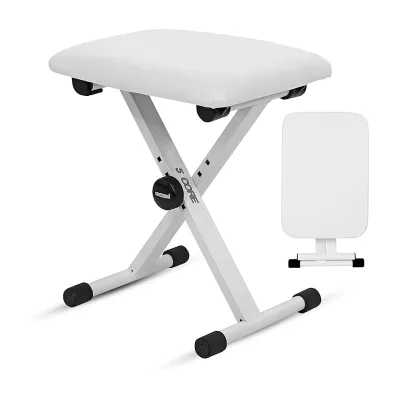
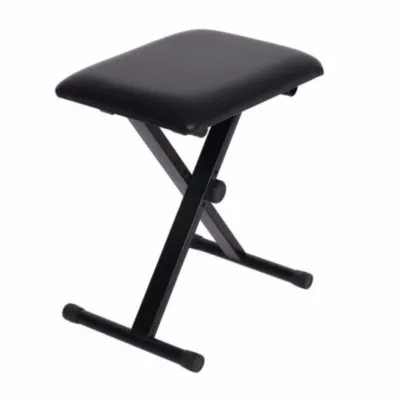
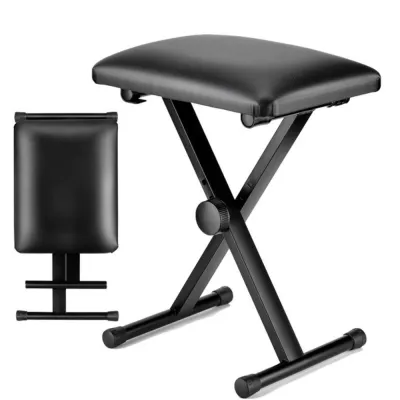

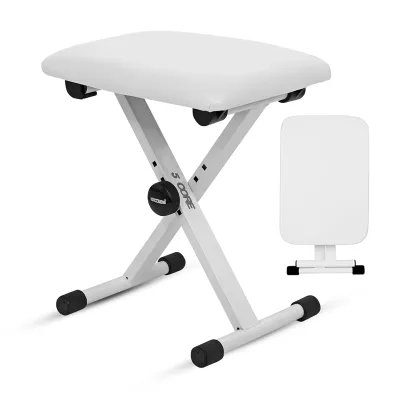
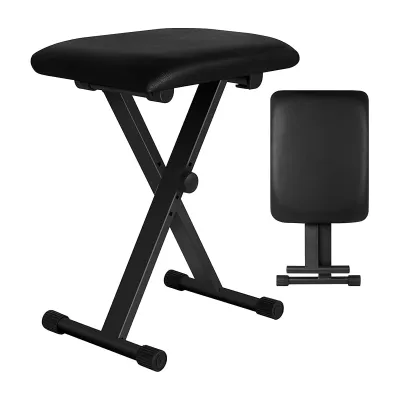
Prices are valid at publication and may change. Please refer to the product page for the latest price.
While both mechanisms aim to position your forearms parallel to the keyboard and your feet flat on the floor, they achieve this ergonomic alignment through fundamentally different mechanical pathways. The hydraulic system uses fluid or gas dynamics for instant movement, whereas the knob system relies on mechanical leverage and physical threads for gradual, controlled elevation.
Comparing Adjustment Speed, Precision, and Stability
When evaluating a piano bench chair adjustable for daily practice, the immediate user experience comes down to three main factors: speed, precision, and stability.

In terms of speed and convenience, the hydraulic mechanism is the clear leader. Adjusting a hydraulic bench takes only a second or two and can easily be done with one hand while sitting down or standing beside the instrument. This rapid adjustment is incredibly convenient in teaching studios where students of varying heights succeed one another every hour, or in households where multiple family members share a single digital piano.
In contrast, adjusting a knob-adjustable bench is a slower, two-handed process that requires multiple full rotations of the knobs on both sides of the frame. If you need to transition the bench from a low setting for an adult to a high setting for a child, you may find yourself turning the knobs for a minute or more, which can become tedious if done multiple times a day.
However, when it comes to micro-adjustments and precision, the threaded knob system offers a distinct advantage. Because the height changes gradually with every turn of the screw, you can make minute, millimeter-level adjustments to find the exact height that aligns perfectly with your keyboard. Hydraulic benches, particularly entry-level models, can sometimes feel slightly jumpy or may rely on specific notches, making it harder to lock in an ultra-precise, customized height.
Playing stability is another critical area where the two mechanisms diverge. A knob-adjustable bench physically locks the seat in place using solid metal threads and a rigid scissor frame, resulting in a highly stable platform that does not yield, even during intense, high-energy performances.
Hydraulic benches rely on the integrity of the cylinder lock to maintain their height. While high-quality hydraulic cylinders provide excellent support, some users may experience a slight “bounce” or cushion-like give when sitting down, which can be distracting for classical pianists who require a completely static base. It is important to verify the specific model’s anti-sink design and weight capacity limits to ensure the cylinder remains firm under continuous load.
Durability, Maintenance, and Long-Term Reliability
Investing in a piano bench chair adjustable means considering how the mechanism will perform over years of regular use, especially under varying environmental conditions.
The primary vulnerability of a hydraulic bench lies in its pressurized gas cylinder and internal seals. Over time, exposure to dust, moisture, and natural wear can cause the rubber seals to degrade, leading to gradual gas leakage or a loss of pressure. If the cylinder loses its seal, the bench may begin to sink slowly while you play, eventually requiring a complete replacement of the hydraulic cartridge. In warm, humid environments like the Philippines, keeping the metal shaft clean and free of dust buildup is essential to prevent premature seal failure.
Knob-adjustable benches are generally considered highly durable due to their purely mechanical nature, but they are not entirely maintenance-free. The metal threads can suffer from wear, stripping, or rust if they are not periodically lubricated. Additionally, in wooden-framed benches, the friction between moving wooden parts and metal brackets can lead to squeaking or loosening of the structural joints over time.
To maintain a knob-adjustable bench, you should occasionally inspect the underside, tighten any loose bolts, and apply a small amount of silicone-based lubricant to the threaded spindle.
When shopping for either type of bench, always check the manufacturer’s warranty terms specifically covering the adjustment mechanism. A longer warranty period on the gas cylinder or the mechanical lifting gears is a strong indicator of the brand’s confidence in the component’s long-term durability and build quality.
Decision Framework: Which Adjustable Piano Bench Should You Choose?
To determine which piano bench chair adjustable is the right fit for your music room, consider your specific playing habits, household setup, and budget.
You should choose a hydraulic bench if your piano setup is shared by multiple players of different heights, such as in a music school, a church, or a multi-generational household. The ability to change heights instantly with a single lever ensures that every player can establish proper posture without wasting practice time. It is also an excellent choice for keyboardists who frequently switch between different instruments in a home studio, such as a low-profile digital piano and a higher synthesizer stand.
You should choose a knob-adjustable bench if you are the sole user of the piano and rarely need to alter the height once it is set. This mechanism is also ideal for traditionalists who prefer the classic aesthetic of a wooden bench that matches an acoustic upright or grand piano. Furthermore, knob-adjustable benches are often more budget-friendly than their hydraulic counterparts, making them a practical choice for students and hobbyists who want a reliable, stable seat without a premium price tag.
Before making a final decision, always verify the weight capacity of the bench. This is especially critical for hydraulic models, as exceeding the maximum load threshold can cause the cylinder to compress prematurely or fail entirely. If you plan to play duets or if the bench will be used by heavier individuals, a heavy-duty knob-adjustable bench or a dual-cylinder hydraulic bench is highly recommended to ensure safety and stability.
Pre-Purchase Verification Checklist
Before finalizing your purchase on any online marketplace or at a local music store, run through this verification checklist to ensure the bench meets your physical and spatial requirements.
First, measure the height range of the bench and compare it to your keyboard setup. Ensure the minimum height allows your feet to rest flat on the floor, and the maximum height positions your elbows slightly above the keys. This is particularly important if you are purchasing a bench for a child who will need a higher seat to maintain proper hand posture.
Second, evaluate the seat dimensions and padding quality. Look for high-density foam padding that offers firm support rather than soft cushioning that bottoms out after a few minutes of sitting. If you live in a humid climate, consider breathable upholstery materials or high-quality synthetic leather that is easy to wipe down and resistant to moisture absorption.
Third, check the base footprint and the overall weight of the bench. A heavier bench with rubberized feet or non-slip pads will provide a more secure foundation, preventing the chair from sliding on smooth tile or polished wooden floors during expressive playing. Ensure the physical footprint fits comfortably within your designated practice space without obstructing walkways or pedal access.
Frequently Asked Questions (FAQ)
Can a hydraulic piano bench sink while playing?
Yes, a hydraulic piano bench can sink while playing if the internal gas cylinder has suffered a seal failure or if the user’s weight exceeds the manufacturer’s specified load limit. To prevent this issue, always verify the maximum weight capacity before purchasing and avoid sudden, heavy impacts on the seat. If you notice gradual sinking on a new bench, it may indicate a defective cylinder that should be addressed under the manufacturer’s warranty.
Are knob-adjustable benches harder to assemble?
Knob-adjustable benches are generally straightforward to assemble, but they do require careful alignment of the threaded spindles and scissor mechanisms during setup. It is crucial to follow the manufacturer’s instructions closely to avoid cross-threading the metal bolts or damaging the wooden frame. Periodic checks to ensure all structural screws remain tight will keep the bench stable and squeak-free for years to come.
Community discussion
Share your experience or ask a question. Comments are reviewed before publication.