
To determine if a Mogami guitar cable is authentic or counterfeit, you must perform a systematic physical inspection of its outer jacket, internal shielding, and connector assembly, while verifying the seller’s credentials. Genuine Mogami cables are highly regarded for their pristine signal transfer and durability, making them frequent targets for counterfeiters on online marketplaces. Because these cables are often sold as bulk wire and assembled by third-party custom shops, verifying authenticity requires looking at both the raw cable markings and the quality of the termination. By examining the specific print fonts, checking the unique internal conductive polymer layers, and evaluating the soldering work inside the connector boot, you can confidently distinguish a genuine studio-grade cable from a cheap imitation.
Inspect the Outer Jacket and Print Markings
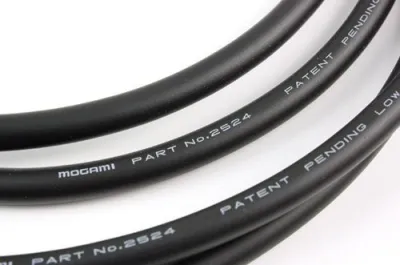
The first line of defense when verifying a Mogami guitar cable is a close visual and tactile examination of the outer jacket. Genuine Mogami bulk cables feature highly distinct, precise, and consistent print markings along the length of the cable. Counterfeiters often struggle to replicate the exact font, spacing, and ink quality used by the manufacturer. When inspecting the cable, look closely at the model numbers printed on the jacket, such as “2524” for standard high-impedance instrument cables or “2549” for balanced line cables. The lettering on an authentic cable is crisp, clean, and resistant to light rubbing, whereas fake cables often display blurry, smudged, or unevenly spaced characters that scratch off easily with a fingernail.
Beyond the text itself, the physical characteristics of the outer jacket provide critical clues. Mogami utilizes proprietary, high-grade PVC compounds designed to offer maximum flexibility and durability while maintaining a matte finish. In the tropical, high-humidity climate of the Philippines, low-quality counterfeit plastics often degrade rapidly, becoming sticky, overly stiff, or unusually greasy to the touch. A genuine Mogami cable feels smooth, supple, and highly flexible, easily coiling without retaining stiff kinks or memory loops. If the cable feels rigid, plasticky, or has a strong chemical odor characteristic of cheap recycled plastics, it is highly likely a counterfeit.
Products mentioned in this guide
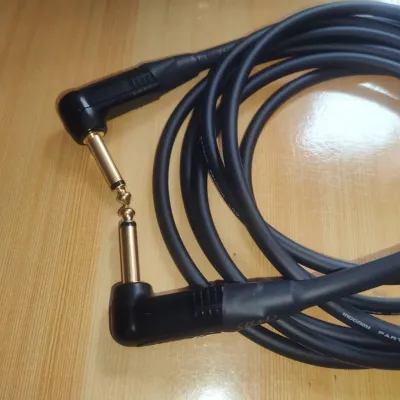
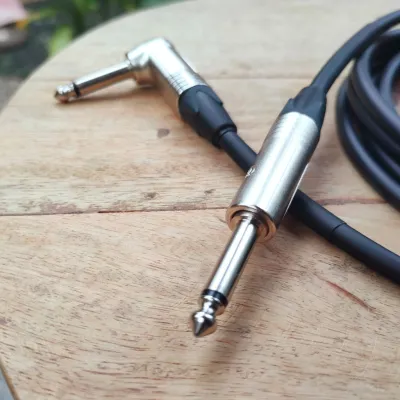
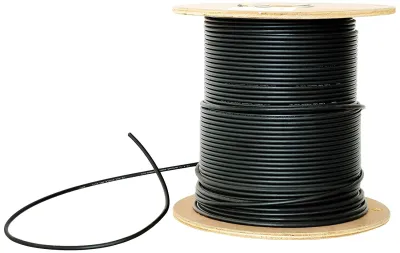
Prices are valid at publication and may change. Please refer to the product page for the latest price.
Additionally, authentic Mogami jackets typically include specific material declarations printed directly on the exterior, such as “NEGLEX” or references to Oxygen-Free Copper (OFC). These markings are aligned perfectly with the cable’s length and follow a standardized layout. When purchasing, compare the exact wording and font style of these declarations against high-resolution images from verified distributors. Any spelling errors, missing trademark symbols, or unusual font variations are immediate indicators of a counterfeit product.
Examine the Internal Wiring and Shielding
If you have access to an unassembled cable end, or if you are comfortable unscrewing the connector boot of a pre-assembled cable, inspecting the internal physical structure is the most reliable way to confirm authenticity. A signature engineering feature of genuine Mogami instrument cables, particularly the popular 2524 model, is the inclusion of a black conductive carbon PVC sub-shield layer. This conductive polymer layer sits directly beneath the copper spiral shield and immediately surrounds the inner conductor’s clear insulation. This dual-shielding design is expensive to manufacture, and counterfeiters almost always omit the black conductive PVC layer entirely, using only a standard plastic filler or a cheap foil wrap instead.

The quality and density of the copper shield itself serve as another vital verification point. Authentic Mogami cables utilize an extremely dense, tightly wound spiral or braided copper shield made from ultra-pure copper strands. When you peel back the outer jacket, this shield should appear uniform, bright, and neatly wrapped without gaps or loose, frayed wires. Counterfeit cables often feature sparse, uneven shielding with visible gaps that expose the inner insulation, which significantly compromises noise rejection and signal integrity.
Furthermore, you should verify that the internal conductor structure matches the official technical specifications of the specific model number. For instance, the Mogami 2524 features a single coaxial conductor made of 50 strands of high-purity copper, while the 2534 Neglex Quad cable features a distinct four-conductor star-quad configuration with color-coded insulation. If you open a cable labeled as a specific model and find a different conductor count, incorrect insulation colors, or cheap aluminum-clad copper wires instead of pure copper, the cable is a fake.
It is important to note that you should avoid performing destructive testing—such as cutting or stripping the jacket—on fully assembled, newly purchased cables unless you are certain the seller’s return policy permits returns of altered items. Instead, focus on non-destructive inspection methods first, such as unscrewing the connector housing to view the exposed wire ends where they meet the solder joints.
Evaluate the Connectors and Soldering Quality
Because Mogami primarily distributes its products as bulk cable rolls, many of the pre-assembled Mogami cables available in the market are terminated by third-party custom shops or individual technicians. This business model makes evaluating the connectors and the quality of the assembly work absolutely essential. Authentic pre-assembled cables from authorized custom builders typically feature premium, industry-standard connectors from reputable brands like Neutrik or Switchcraft. Counterfeiters frequently pair fake Mogami bulk wire with cheap, unbranded connectors or counterfeit replicas of Neutrik plugs that lack the precise tolerances and robust metal housing of the originals.
If the connector boot can be safely unscrewed without damaging the assembly, examine the soldering joints inside. Professional custom shops and official manufacturers use high-quality lead-free or silver solder, resulting in clean, shiny, and perfectly rounded solder joints that securely bond the wire to the terminal contacts. In contrast, counterfeit or poorly assembled cables often exhibit dull, pitted, or “cold” solder joints, excessive exposed wire strands, and messy flux residue left splattered across the contacts. In humid tropical environments, these poorly soldered connections oxidize rapidly, leading to crackling noises, signal dropouts, and eventual joint failure.
Pay close attention to the strain relief mechanism and the application of heat shrink tubing. Genuine professional assemblies feature a robust strain relief boot that firmly grips the cable jacket, preventing tension from pulling on the internal solder joints. If heat shrink tubing is used to protect the internal connections, it should be neatly cut, perfectly shrunk, and properly aligned. Loose, unevenly cut, or missing heat shrink tubing is a clear sign of amateur assembly, indicating that even if the bulk wire itself happens to be genuine, the overall product is not a factory-standard or authorized custom build.
Verify the Seller and Pricing Context
Analyzing where you buy and how much you pay is just as important as inspecting the physical cable. To protect yourself from counterfeit products, always cross-reference the seller with the official list of authorized Mogami distributors and dealers. In the Philippines, purchasing from established, reputable music retail stores or their verified online storefronts is the safest way to guarantee authenticity. Be highly skeptical of independent sellers on general e-commerce platforms or social media marketplaces who cannot provide verifiable proof of their supply chain.
Pricing is a highly reliable indicator of authenticity. Mogami cables are premium professional tools, and their retail prices reflect the high cost of Japanese manufacturing and quality materials. If you encounter a pre-assembled Mogami cable or bulk wire priced significantly lower than the standard market rate—such as a 10-foot cable offered for only a few hundred pesos (₱)—it is almost certainly a counterfeit. While occasional promotions or used gear sales occur, genuine Mogami products do not sell at deep, unrealistic discounts.
When shopping on online marketplaces, navigate the risks of unauthorized third-party listings by carefully reading seller ratings and business details. Avoid listings that use generic stock photos instead of actual product images, or those with vague descriptions that fail to specify the exact Mogami model number. Do not hesitate to message the seller directly to request clear, high-resolution photos of the cable jacket print, the connector solder joints, and proof of purchase or authorization certificates from official distributors. A legitimate seller will gladly provide these details, while a counterfeit seller will often offer excuses or ignore the request.
What to Do If You Suspect a Counterfeit
If you suspect that you have purchased a counterfeit Mogami cable, stop using it immediately. Using a poorly manufactured cable with substandard shielding and weak solder joints can introduce severe hum, radio frequency interference, and signal degradation into your signal chain. In worst-case scenarios, a short circuit caused by loose internal wire strands touching the connector housing can potentially damage sensitive guitar amplifiers, audio interfaces, or active pickup systems.
Next, document the physical discrepancies thoroughly. Take clear, well-lit photos of the blurry jacket print, the lack of a conductive carbon PVC layer, messy soldering joints, or counterfeit connector markings. Compare these photos directly with official technical specifications and product images from authorized Mogami sources to build a solid case.
Once you have gathered your evidence, initiate a formal return and refund request through the buyer protection policies of the e-commerce platform or payment processor you used. Most major online marketplaces have strict policies against the sale of counterfeit goods and will refund your money if you provide clear photographic proof of the fraud. Finally, report the fraudulent listing and the seller’s account to the platform’s customer support team to help protect other musicians in the community from falling victim to the same scam.
Frequently Asked Questions (FAQ)
Can I verify a Mogami cable using an official app or serial number?
Mogami does not currently offer an official mobile authentication app, QR code verification system, or individual serial number tracking for their bulk cables or standard pre-assembled lines. Because bulk cable is manufactured in continuous rolls and cut to length by various distributors and custom shops, tracking individual cables via serial numbers is logistically impractical. Therefore, you must rely on physical inspection of the jacket markings, internal shielding layers, connector build quality, and the authorized status of the seller to verify authenticity.
Do all genuine Mogami cables come with Neutrik connectors?
No, not all genuine Mogami cables feature Neutrik connectors. While Neutrik is the standard choice for many official factory-assembled Mogami Gold and Platinum series cables, Mogami primarily operates as a bulk cable manufacturer. Many authorized custom shops, professional studios, and independent technicians purchase genuine Mogami bulk wire (such as the 2524 or 2549) and assemble the cables themselves using other premium connector brands like Switchcraft, G&H, or Amphenol. The presence of a non-Neutrik connector does not mean the cable is fake, provided the connector itself is a genuine, high-quality brand and the bulk wire meets all of Mogami’s physical design specifications.
Community discussion
Share your experience or ask a question. Comments are reviewed before publication.