
Finding the right kids guitar size depends primarily on your child’s height and arm span, rather than their age alone. While age provides a rough starting point, matching their physical dimensions to fractional guitar sizes ensures they can reach the frets comfortably without straining their hands or shoulders.
Choosing an appropriately sized instrument prevents physical fatigue and helps young beginners build proper playing habits from their very first chord.
Quick Diagnostic: Matching Guitar Sizes to Your Child's Dimensions
Age is often the first metric parents look at, but it can be highly misleading. Children grow at vastly different rates, and two eight-year-olds might have completely different arm spans and hand sizes.
Products mentioned in this guide

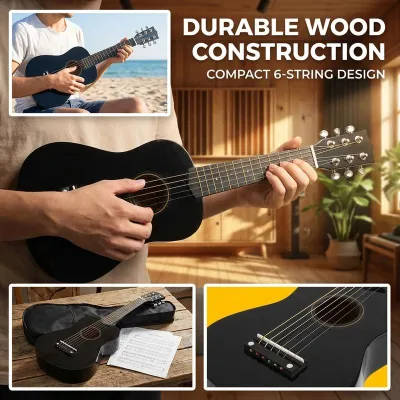
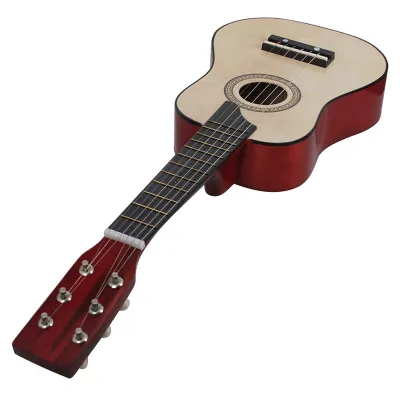
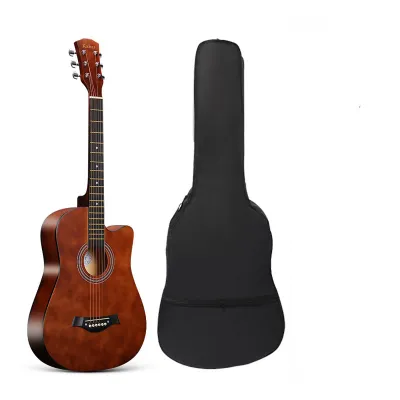

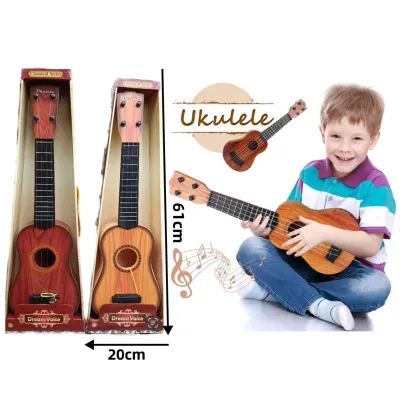
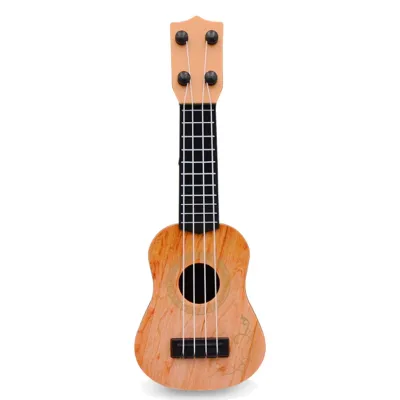

Prices are valid at publication and may change. Please refer to the product page for the latest price.
Instead, physical height and reach serve as the most reliable indicators for choosing a kids guitar. A guitar that is too large forces the child to overextend their fretting arm, leading to discomfort and rapid fatigue.
The general progression of fractional guitars serves as a conceptual baseline to narrow down your options:
- 1/4-Size: Generally suitable for very young children, typically around 3 to 5 years old or under 100 cm in height.
- 1/2-Size: Often fits children aged 5 to 8, or those measuring roughly 100 cm to 125 cm tall.
- 3/4-Size: Frequently ideal for kids aged 8 to 11, or heights between 125 cm and 145 cm.
- Full-Size (4/4): Typically appropriate for children aged 12 and older, or those who have reached at least 145 cm to 150 cm in height.
Because these categories are approximate, you should always check the specific manufacturer’s sizing chart before purchasing. Different brands design their fractional instruments with unique body shapes and neck profiles that can alter how the guitar fits your child.
Understanding Fractional Sizes and Scale Lengths
The fractional labels like 1/2 or 3/4 do not mean the guitar is literally half or three-quarters the physical volume of a standard instrument. Instead, these fractions refer to a scaled-down proportion, primarily affecting the scale length.

Scale length is the distance between the nut and the bridge—essentially the playable portion of the strings. A shorter scale length means the frets are spaced closer together, which allows smaller hands to transition between chords without painful stretching.
Shorter scale lengths also require less string tension to tune to standard pitch. This lower tension makes the strings much easier to press down, which is highly beneficial for young beginners building up finger strength.
It is important to distinguish between the total body length of the instrument and its playable scale length. A guitar might have a compact body but a relatively long neck, or vice versa, which changes how the instrument balances on a child’s lap.
Additionally, different kids guitar models feature varying body depths, neck widths, and factory string gauges. A classical guitar with nylon strings, for instance, typically has a wider neck than a steel-string acoustic, which can make fretting more challenging for narrow hands despite a shorter scale.
How to Measure Your Child for a Proper Fit
Before browsing online marketplaces or visiting a local music store, taking a few quick measurements at home will save you from the hassle of returning an ill-fitting instrument.
Start by measuring your child’s total height. Have them stand flat against a wall without shoes, and mark their height lightly with a pencil to get an accurate reading in centimeters.
Next, measure their arm span from fingertip to fingertip with their arms fully extended to the sides. If their arm span is significantly shorter than their height, they may struggle with the neck length of a larger guitar size.
Measure their hand size by calculating the distance from the base of the wrist to the tip of the middle finger. This measurement helps determine if they can comfortably wrap their fingers around the guitar neck to press individual strings.
Finally, assess their torso length while they are seated. A child with a shorter torso might find the deep body of a standard acoustic guitar highly uncomfortable, as it forces their strumming arm to drape awkwardly over the top edge.
Physical Fit Checks to Ensure Comfortable Playability
If you have the opportunity to try out instruments in person, there are several physical checks you can perform to ensure the kids guitar is a perfect match.
The first position test is the most critical check for the fretting hand. Have your child hold the guitar and attempt to place their fingers on the first fret (the one closest to the headstock). If they can wrap their hand around the neck and reach this position without straining their wrist or bending their elbow to an extreme angle, the neck length is appropriate.
Observe the angle of their strumming arm over the lower bout of the guitar body. The elbow should rest comfortably near the top edge of the instrument, allowing the forearm to move freely. If their shoulder is forced upward or their elbow is pushed far back, the guitar body is too deep or too wide for them.
Evaluate the weight and balance of the instrument while your child is seated in a proper playing posture. The child should be able to support the guitar on their thigh without slouching forward or letting the headstock dip toward the floor.
In humid tropical climates like the Philippines, wood can expand and contract, which sometimes affects the action—the height of the strings above the fretboard. Ensure the setup allows for low action so your child does not have to press unnecessarily hard to produce a clean sound.
When to Size Up or Consider Alternative Instruments
As children grow, their physical relationship with their instrument changes. You will know it is time to size up when you observe a cramped fretting hand, their knees bumping against the guitar body, or a persistent slouch during practice sessions.
For very young beginners, starting directly on a kids guitar might still feel overwhelming. In these cases, a ukulele serves as an excellent, highly ergonomic alternative. The four nylon strings are gentle on small fingers, and the compact body fits easily in a young child’s lap.
Another option is a specialized short-scale travel guitar. These instruments often combine a full-size neck feel with a highly compact body, making them portable and easy to handle for older children who are not quite ready for a bulky dreadnought.
Avoid the temptation to buy a guitar that is “too big to grow into.” While this strategy works well for school uniforms, an oversized instrument causes immediate physical strain, leading to poor technique, hand pain, and ultimate frustration that may cause your child to quit playing altogether.
Frequently Asked Questions (FAQ)
Can a child play a full-size acoustic guitar if they are tall for their age?
While a tall child might seem ready for a full-size acoustic guitar, their hand span and arm length are the true deciding factors. If their fingers cannot comfortably reach across the fretboard or if their arm cannot drape naturally over the body, they will struggle to form chords. It is always best to test the neck width and body depth in person to ensure they can play comfortably without straining.
Do electric guitars come in smaller sizes for kids?
Yes, many manufacturers produce short-scale and mini electric guitars specifically designed for younger players. These instruments offer narrower necks and shorter scale lengths that mirror their acoustic counterparts. However, keep in mind that solid-body electric guitars can be significantly heavier than fractional acoustic models, so you should always verify the physical weight to ensure your child can hold it comfortably.
Community discussion
Share your experience or ask a question. Comments are reviewed before publication.