
Finding a Tagalog Catholic prayer book that contains the Lord of Pardon prayer requires a systematic approach to verifying the table of contents, publisher credentials, and ecclesiastical approvals. This specific prayer, known for its deep focus on repentance and divine mercy, is not always included in standard, simplified prayer booklets. Instead, it is typically found in comprehensive devotional books, specialized novenas, or diocesan-approved prayer collections. To ensure you purchase a book that truly meets your spiritual needs, you must know how to identify the prayer under its local titles, evaluate the book’s physical and doctrinal quality, and source it from authorized Catholic distributors in the Philippines.
Identifying the Correct Tagalog Title for the Lord of Pardon
To find this prayer in local publications, you must first recognize its various Tagalog titles. The Lord of Pardon prayer is most commonly translated as “Panalangin sa Panginoon ng Kapatawaran” or “Panalangin sa Poong Tagapagpatawad.” In some regional dioceses, particularly in Tagalog-speaking provinces, it may also be listed as “Panalangin ng Pagsisisi sa Panginoon” or simply “Panginoon ng Pagpapatawad.” Knowing these variations is essential because a simple search for the English title will rarely yield results in local parish bookstores or regional publishing catalogs.
It is equally important to distinguish the Lord of Pardon from other structurally similar devotions popular in the Philippines. For instance, devotions to the Divine Mercy (Dakilang Habag) or the Black Nazarene (Poong Hesus Nazareno) also center on mercy, repentance, and the Passion of Christ. However, the Lord of Pardon is a distinct prayer with its own specific theological focus on seeking forgiveness for personal sins and the sins of the world. When browsing a book’s index or table of contents, look for dedicated sections labeled “Mga Panalangin ng Pagsisisi” (Prayers of Repentance) or “Mga Debosyon sa Mahal na Pasyon” (Devotions to the Holy Passion), as the Lord of Pardon is frequently categorized under these headings.
Products mentioned in this guide

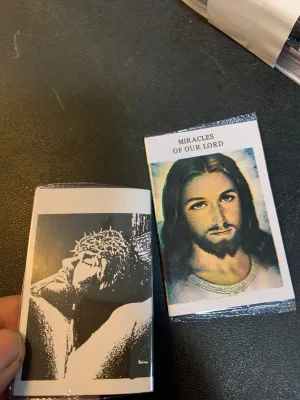
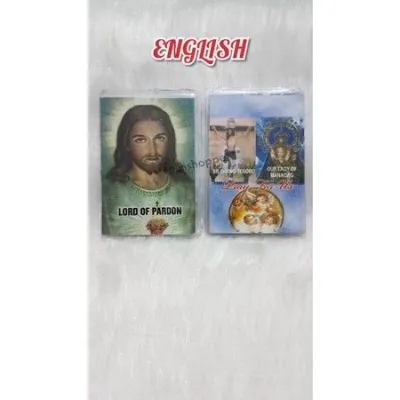


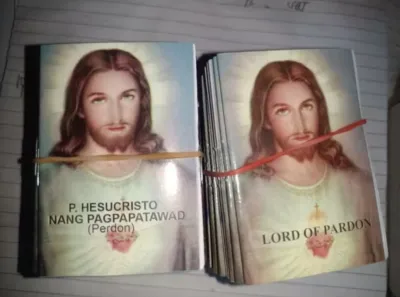
Prices are valid at publication and may change. Please refer to the product page for the latest price.
Evaluating Tagalog Prayer Books for Daily Devotion
When selecting a prayer book for daily use, the purity and style of the Tagalog translation deserve close attention. Some modern publications use a blend of Tagalog and English, often referred to as Taglish, or feature parallel bilingual translations. While bilingual editions can be helpful for younger family members, a pure Tagalog edition offers a traditional, poetic, and immersive devotional experience. The language should feel natural yet reverent, avoiding overly archaic terms that make reading difficult, while steering clear of overly casual modern slang that might detract from the solemnity of your prayer time.

Doctrinal alignment is another critical factor when purchasing any Catholic devotional material. To guarantee that the prayers and reflections are doctrinally correct and free from theological error, always check the first few pages of the book for ecclesiastical approvals. Look for the Nihil Obstat, which indicates that a diocesan censor has reviewed the text and found no doctrinal errors, and the Imprimatur, which is the official permission from a bishop to publish the work. These approvals are especially important for devotions like the Lord of Pardon, ensuring that the localized translation aligns perfectly with official Catholic teachings.
Beyond the specific prayer itself, consider what other devotions are included in the volume. A well-rounded prayer book often features daily Mass readings, guides for the Holy Rosary, novenas to various saints, and morning and evening family prayers. Choosing a comprehensive book means you will not need to carry multiple booklets during parish visits or family altar gatherings.
Finally, do not overlook the physical quality of the book. The tropical climate of the Philippines, characterized by high humidity and seasonal heat, can take a toll on printed materials. Look for books printed on high-quality, acid-free paper that resists yellowing and ink bleeding. The binding should be sturdy enough to withstand daily handling, especially if the book will be passed around among family members during evening prayers.
Sourcing Authentic Catholic Books in the Philippines
To ensure you are purchasing an authentic, complete, and authorized edition of a Tagalog prayer book, it is best to buy directly from established Catholic bookstores and religious publishers. In the Philippines, physical retail outlets operated by religious congregations—such as St. Pauls, Pauline Publishing House, Claretian Publications, and Word & Life Publications—are the most reliable sources. These shops are staffed by knowledgeable personnel who can assist you in finding specific prayers within their inventory. Additionally, diocesan bookshops and gift shops located within major shrines and basilicas, such as the Quiapo Church or the National Shrine of the Divine Mercy, frequently stock specialized devotional booklets that may not be available in mainstream commercial bookstores.
If you prefer shopping online, look for the official digital storefronts of these recognized religious publishers. Many of these organizations maintain verified stores on major e-commerce platforms or operate their own independent websites. Purchasing from these official channels guarantees that your money supports the religious community’s mission and that you receive a genuine product rather than a poorly scanned, unauthorized photocopy. Authentic devotional booklets often range from ₱50 to ₱300 depending on the size and binding, so be cautious of prices that seem too good to be true.
Mainstream commercial book retailers also frequently feature dedicated religious and spiritual sections. While their inventory of specialized devotions may be more limited than that of a dedicated Catholic bookshop, they often carry popular, comprehensive Tagalog prayer books published by major local Catholic presses.
Be cautious when browsing general online marketplaces. Avoid unverified third-party sellers offering suspiciously low prices, as these listings often involve pirated reproductions. These unauthorized copies frequently suffer from missing pages, illegible text, poor binding, and a lack of official ecclesiastical approvals, which can severely disrupt your devotional practice.
Verifying the Prayer's Inclusion Before Purchase
Because the Lord of Pardon is a specific devotion, you should always verify its inclusion in a prayer book before finalizing your purchase. If you are buying from an online seller or a publisher’s digital storefront, do not hesitate to send a direct message requesting a clear photograph of the table of contents or the index pages. Reliable sellers are usually willing to accommodate these requests to ensure customer satisfaction.
Another effective strategy is to thoroughly read customer reviews on the product page. Look for reviews that explicitly mention the Lord of Pardon or “Panalangin sa Panginoon ng Kapatawaran.” Other buyers often share their specific experiences, noting whether the book met their expectations for family devotions or if it contained the exact prayers they were searching for.
Many official publisher websites also offer digital previews or sample pages of their books. Take advantage of these previews to scan the table of contents, check the layout, and read a few paragraphs to assess the translation quality.
If you are shopping in a physical store, feel free to ask the staff or parish volunteers for assistance. You can ask them directly: “Does this book contain the Tagalog Lord of Pardon prayer?” or “Mayroon po bang Panalangin sa Panginoon ng Kapatawaran dito?” They are often familiar with their inventory and can quickly point you to the correct page or recommend an alternative volume if the one you are holding does not include the prayer.
Comparing Physical Formats and Bindings for Family Use
The physical format of the prayer book plays a significant role in how comfortably it can be integrated into your daily routine. Hardcover editions offer the greatest durability, making them ideal for books that will remain on a family altar, undergo frequent daily handling, or be used by multiple generations. While they are generally heavier and more expensive, their robust construction protects the pages from folding, tearing, and the wear and tear of tropical humidity.
Softcover or paperback editions, on the other hand, are lightweight and highly portable, making them perfect for carrying in a bag to daily Mass or parish prayer meetings. They are also easier to hold for extended periods during personal meditation.
Font size and layout are critical considerations, particularly if the book will be used by elderly family members or in the low-light environments typical of evening family devotions. Look for books that utilize clear, legible typefaces with adequate spacing between lines. A clean layout with distinct headings and bold labels helps readers follow along without straining their eyes, ensuring that the focus remains entirely on the prayer itself.
Additionally, practical design features like ribbon markers and lay-flat bindings can greatly enhance your prayer experience. A lay-flat binding allows the book to remain open on an altar or table without requiring you to hold it down, which is incredibly convenient for hands-free reading during the family rosary or when holding a candle. Ribbon markers allow you to quickly find and return to your favorite prayers, saving you from flipping through pages during a solemn moment of devotion.
Frequently Asked Questions (FAQ)
Is the Lord of Pardon devotion the same as the Divine Mercy?
No, they are distinct devotions within the Catholic tradition, although both emphasize God’s mercy and forgiveness. The Divine Mercy devotion, revealed to Saint Faustina Kowalska, centers on trusting in Jesus’ infinite mercy, the Chaplet of Divine Mercy, and the veneration of the Divine Mercy image. The Lord of Pardon devotion focuses specifically on deep personal repentance, reconciliation, and a set of prayers dedicated to asking for forgiveness for one’s sins and the sins of the whole world. While they complement each other beautifully, they have different historical origins, prayers, and liturgical focuses.
Can I use an English prayer book and translate the prayer myself?
While you can certainly pray using your own personal translations during private, individual devotion, using an officially approved Tagalog translation is highly recommended for family or communal prayers. Official translations published by authorized Catholic presses have undergone rigorous theological review to ensure they accurately convey the nuances of Catholic doctrine. Furthermore, using a standardized Tagalog text fosters unity and harmony when praying together as a family or parish community, allowing everyone to recite the same words in unison.
Are digital prayer apps a valid alternative to physical books?
Digital prayer apps and online devotionals offer undeniable convenience, allowing you to carry an entire library of prayers on your smartphone or tablet wherever you go. However, physical prayer books remain highly valued for traditional devotions. A physical book provides a tangible, tactile connection to your faith and helps create a dedicated, distraction-free prayer space free from incoming phone notifications, screen glare, and battery concerns. For many families, holding a physical book during evening prayers fosters a deeper sense of reverence and focus that digital screens cannot easily replicate.
Community discussion
Share your experience or ask a question. Comments are reviewed before publication.