
Selecting your first electric guitar is an exciting milestone, but the instrument itself is only half of the equation. The guitar amplifier is what translates the vibration of your strings into audible sound, shaping your tone, dynamics, and overall playing experience. For beginners in the Philippines, navigating the vast sea of available amplifiers can feel overwhelming. With countless technical specifications, varying power ratings, and a wide range of price points, it is easy to fall into the trap of buying either an overly complex unit or an underpowered speaker that stifles your progress.
The ideal starter amplifier is not a one-size-fits-all solution. Instead, the right choice depends heavily on your specific practice environment, your budget, and your long-term learning goals. A student practicing in a shared bedroom or a high-rise condominium in Metro Manila will have vastly different requirements than someone planning to jam with a full band in a garage. By focusing on a structured framework of core specifications, technology types, and practical features, you can make an informed decision that balances quality and affordability without getting lost in marketing jargon.
Understanding Amplifier Types for Beginners
Before looking at specific models, you must understand the core technologies that power modern guitar amplifiers. The three primary categories you will encounter are solid-state, modeling, and tube (or valve) amplifiers. Each technology handles signal amplification differently, resulting in distinct tonal characteristics, physical weights, and maintenance needs.
Products mentioned in this guide
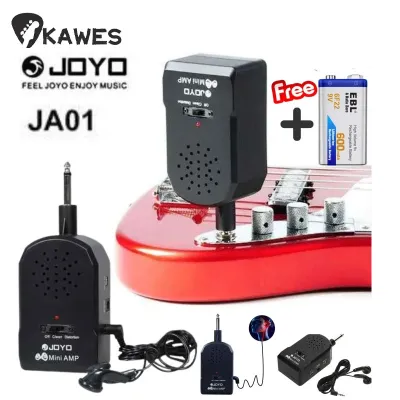
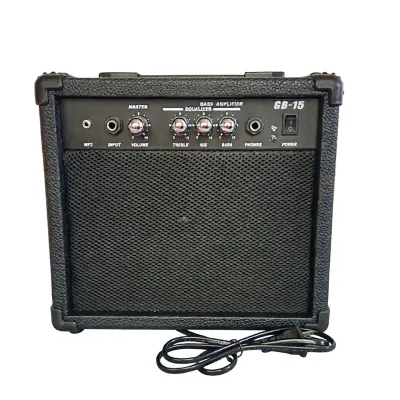
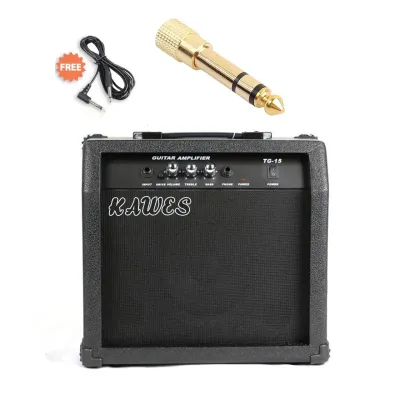
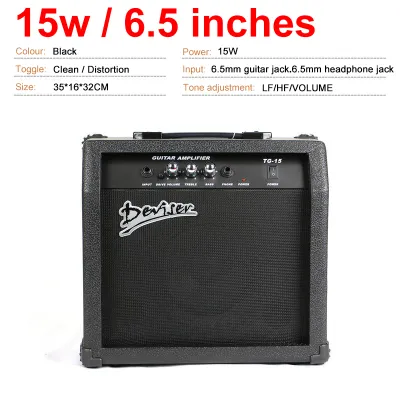
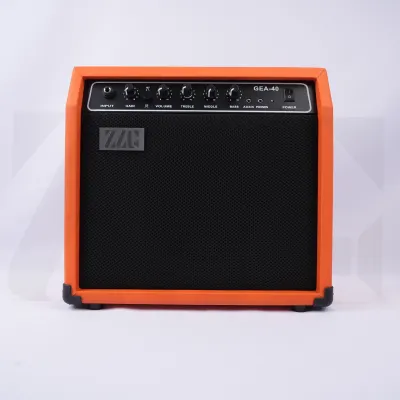
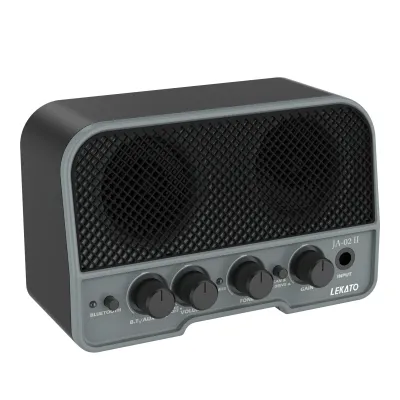
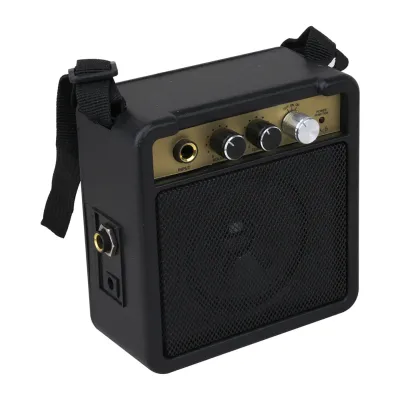
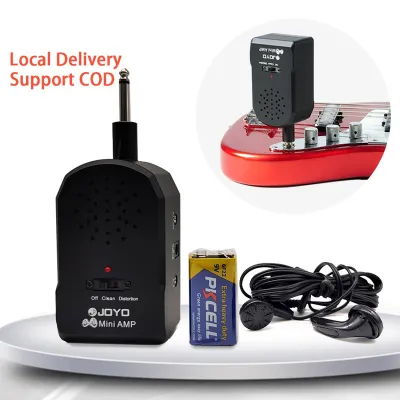
Prices are valid at publication and may change. Please refer to the product page for the latest price.
Solid-state amplifiers use transistors to amplify the guitar’s signal. These units are highly regarded for their reliability, durability, and clean tonal output. Because they do not rely on fragile glass vacuum tubes, they can withstand physical impacts and tropical humidity much better than their vintage-style counterparts. Solid-state amps are generally lightweight, affordable, and deliver a consistent sound regardless of the volume level, making them excellent, low-maintenance tools for beginners.
Modeling amplifiers are essentially specialized computers housed within a speaker cabinet. They use digital signal processing (DSP) to emulate the sounds of various classic amplifiers, speaker cabinets, and effects pedals. This versatility is incredibly valuable for beginners who are still discovering their personal tonal preferences. With a modeling amp, you can switch from a clean jazz tone to a heavy metal distortion at the press of a button, allowing you to explore different genres without purchasing expensive external pedals.
Tube amplifiers represent the traditional technology favored by many professional musicians for their warm, organic compression and responsive dynamics. However, they are rarely suitable for beginners. Tube amps are significantly heavier, highly sensitive to voltage fluctuations, and require periodic tube replacements, which can be costly and difficult to source locally. Furthermore, tube amplifiers must be played at high volumes to reach their optimal sound profile, which is rarely practical in typical residential neighborhoods.
For those starting out, solid-state and digital modeling amplifiers offer the best balance of cost, convenience, and longevity. They allow you to practice at whisper-quiet volumes—or through headphones—while still enjoying a rich, inspiring sound that encourages you to pick up your guitar every day.
Key Specifications to Match Your Practice Environment
One of the most common mistakes beginners make is purchasing an amplifier with too much power for their actual needs. To choose the right size and wattage, you must evaluate where you will spend the majority of your practice time.

Wattage is a measure of electrical power, but in guitar amplifiers, it does not translate linearly to perceived volume. For home practice in a bedroom or apartment, a solid-state or modeling amplifier rated between 10 and 20 watts is more than sufficient. This power range allows you to turn the volume knob to a usable level where the speaker can perform optimally without disturbing your family or neighbors. If you plan to jam with acoustic instruments or a keyboard player in a small room, a 20-watt to 40-watt amplifier will provide the necessary headroom to remain clean and audible. If your goal is to rehearse alongside an acoustic drum kit, you will generally need a solid-state amplifier of at least 50 to 100 watts to cut through the high ambient noise of percussion.
Speaker size is another critical factor that dictates the physical character of your sound. Most beginner practice amplifiers feature speakers ranging from 6.5 inches to 10 inches in diameter. Smaller speakers (6.5 to 8 inches) are highly compact and excellent for mid-range frequencies, but they often lack low-end bass response, which can make your guitar sound thin or boxy. A 10-inch speaker offers a balanced compromise, providing a fuller bass response while remaining highly portable. Professional-grade amplifiers typically use 12-inch speakers, which deliver the deepest bass and widest sound projection, though they come with a larger physical footprint and increased weight.
Consider the physical space available in your home. Philippine households often feature compact living arrangements where gear must be easily stored away when not in use. A lightweight, compact amplifier that fits easily on a desk or shelf is far more likely to be used daily than a heavy, bulky cabinet that blocks a hallway or requires significant effort to move.
Essential Features for Learning and Daily Use
Modern technology has transformed beginner amplifiers from simple volume boosters into comprehensive practice stations. When evaluating options, look for features that actively support your daily learning routine and reduce the need for immediate secondary purchases.
Onboard digital effects are highly beneficial for beginners. While professional players often build complex pedalboards, a beginner can save significant money by choosing an amplifier with built-in overdrive, reverb, delay, and modulation effects. These built-in options do not need to be studio-grade; they simply need to be adjustable enough to let you experiment with different sounds. Learning how a delay effect interacts with your playing or how reverb adds space to your tone is an essential part of developing your musical ear.
Connectivity is perhaps the most crucial aspect of a modern practice amplifier. A dedicated headphone jack (usually in 3.5mm or 6.35mm format) is non-negotiable for silent practice sessions late at night. When headphones are plugged in, the amplifier should automatically mute the main speaker, directing a cabinet-emulated signal to your ears. Additionally, an auxiliary input (Aux In) or wireless Bluetooth connectivity allows you to plug in your smartphone or tablet. This feature lets you play backing tracks, metronome apps, or online video lessons directly through the amplifier speaker alongside your guitar signal, creating an immersive learning environment.
Some advanced modeling amplifiers also feature integrated USB ports. This allows the amplifier to act as an audio interface, enabling you to connect the unit directly to a computer or mobile device to record your playing. Recording your practice sessions is one of the most effective ways to analyze your timing, technique, and progress over time.
How to Build Your Shortlist: A Condition-Based Buying Guide
To narrow down your choices, match your living conditions and musical aspirations to one of the following common beginner profiles.
Scenario A: The Quiet Apartment Dweller If you live in a close-quarters subdivision, a condominium, or a shared boarding house, your primary constraint is noise control. Look for a highly compact desktop modeling amplifier rated between 10 and 15 watts. Prioritize units that feature high-quality headphone emulation and a small physical footprint that can sit comfortably on a study desk.
Scenario B: The Aspiring Band Member If your goal is to join a school band, play at local community events, or jam with friends in a garage, you need physical durability and volume. Focus on a robust solid-state amplifier rated at 40 to 50 watts, ideally equipped with a 10-inch or 12-inch speaker. This setup ensures you have enough projection to be heard over a drummer while still offering a headphone jack for home practice.
Scenario C: The Tone Explorer on a Budget If you want to experiment with a wide variety of musical genres—from classic rock to modern ambient pop—without spending money on individual effects pedals, a digital modeling amplifier is your best path. Look for an option that offers a user-friendly mobile app interface, allowing you to download custom presets and tweak virtual signal chains easily.
When planning your purchase, you must allocate your budget wisely between the guitar and the amplifier. A common mistake is spending 90% of your funds on a premium guitar and plugging it into a low-quality, cheap amplifier. This creates a severe bottleneck, as even the finest guitar will sound flat and uninspiring through a poor speaker. A balanced approach is to allocate roughly 40% to 50% of your total starter budget to the amplifier. For example, if you have a total budget of ₱15,000, spending approximately ₱8,000 on the guitar and ₱7,000 on a capable practice amplifier will yield a much more satisfying and encouraging learning experience than spending ₱13,000 on the guitar and only ₱2,000 on the amplifier.
Pre-Purchase Checklist and Setup Verification
Once you have narrowed down your options, use this checklist to verify your choice before finalizing your purchase, whether you are buying from a local music store or an authorized online distributor.
First, verify the voltage and power compatibility. The standard electrical supply in the Philippines is 220V at 60Hz. Many amplifiers sold online are imported from countries that use 110V (such as the United States or Japan). Plugging a 110V amplifier directly into a Philippine wall outlet will permanently damage the internal transformer and electronics. Always check the label near the power input on the back of the amplifier to ensure it is rated for 220V-240V. If it is a 110V model, you must budget for a high-quality step-down transformer of appropriate wattage.
Second, if you are testing the amplifier in person, perform a physical inspection. Plug a guitar in and turn every control knob slowly from zero to ten. Listen closely for any crackling, scratching, or sudden drops in volume, which can indicate dirty or damaged potentiometers. Gently wiggle the input jack and headphone jack while a cable is connected; the sound should remain stable without cutting out or producing loud popping noises.
Third, safeguard your investment by verifying the warranty terms. Ensure you are purchasing from an authorized dealer who offers a clear local warranty, typically covering parts and labor for at least six months to a year. Avoid gray-market imports that lack local service center support, as shipping an amplifier abroad for repairs is prohibitively expensive. Keep your official receipt and original packaging safe, as these are almost always required should you need to claim warranty service.
Frequently Asked Questions (FAQ)
Can I use a bass amplifier for an electric guitar?
Yes, you can safely play an electric guitar through a bass amplifier, but the tonal results may not be ideal. Bass amplifiers are engineered with a flat frequency response and heavy cabinet reinforcement to handle deep, low-end frequencies without distorting. When you plug an electric guitar into a bass amp, the sound often lacks the bright, sparkling high-end frequencies and mid-range bite characteristic of traditional guitar tones. However, unlike the reverse scenario, playing a guitar through a bass amp will not damage the speaker, making it a safe but tonally limited temporary solution.
Do I need an amplifier if I have an acoustic-electric guitar?
An acoustic-electric guitar does not strictly require an amplifier for daily home practice, as its hollow body naturally amplifies the strings to a comfortable acoustic volume. However, if you want to perform for an audience, record your playing, or use effects, you will need amplification. Standard electric guitar amplifiers are not ideal for acoustic guitars, as they are designed to color and distort the signal. For the most natural sound reproduction, you should plug an acoustic-electric guitar into a dedicated acoustic amplifier or a public address (PA) system, which are designed to preserve the woody, acoustic resonance of the instrument.
Community discussion
Share your experience or ask a question. Comments are reviewed before publication.