
A drum practice pad is the single most important tool for an aspiring drummer. To find the right one, a beginner must balance realistic stick rebound, manageable noise levels, physical size, and setup compatibility. While it is tempting to buy the most affordable option, choosing a pad that matches your living space and practice goals ensures you build correct technique from day one. Engaging in structured drum pad practice allows you to develop muscle memory and stick control without the overwhelming volume of an acoustic kit. The ideal pad for your journey depends on your specific living situation, budget, and practice goals rather than a single universal standard.
Core Specifications: Evaluating Material, Size, and Noise Control
Surface Material and Rebound Feel
The playing surface determines how the stick bounces back, directly affecting how you learn to control the rebound. Gum rubber is the most common material used in practice pads. It offers a firm, highly responsive bounce that helps beginners feel the natural energy return of a drumstick. This high rebound is excellent for practicing basic strokes, but it can sometimes mask poor technique by doing too much of the work for you. Natural gum rubber provides a classic feel, while synthetic variants may offer slightly different textures and wear patterns over years of use.
Silicone and specialized gel surfaces offer a softer, more muted response. These materials absorb more energy, requiring your wrists and fingers to work harder to lift the stick. This characteristic simulates the feel of a looser drumhead, such as a floor tom or a modern mesh head on an electronic drum kit. When selecting a pad, check the manufacturer’s specifications for durometer ratings, which measure the hardness of the material. A higher durometer indicates a firmer surface with more rebound, while a lower rating indicates a softer, quieter pad.
Products mentioned in this guide
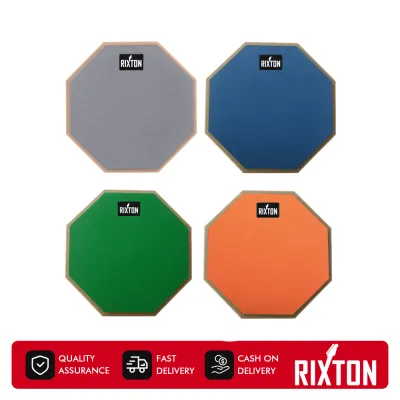
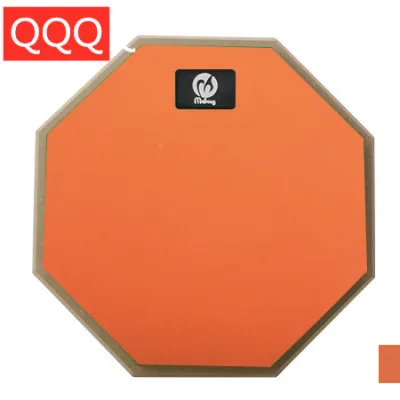
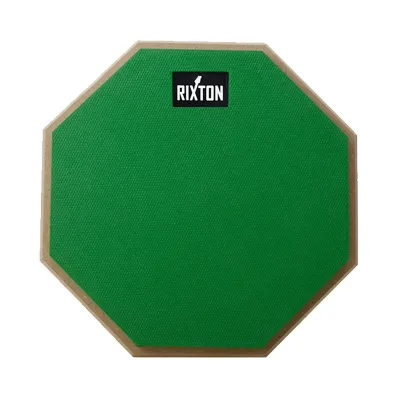
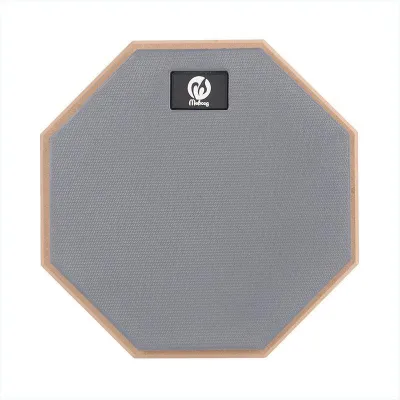
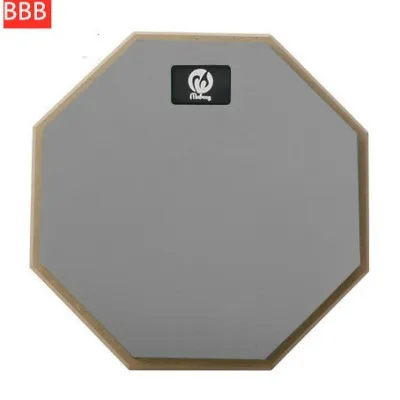
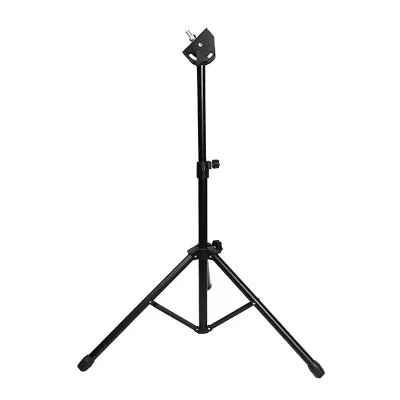
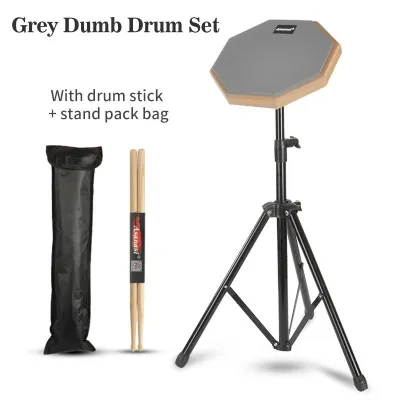
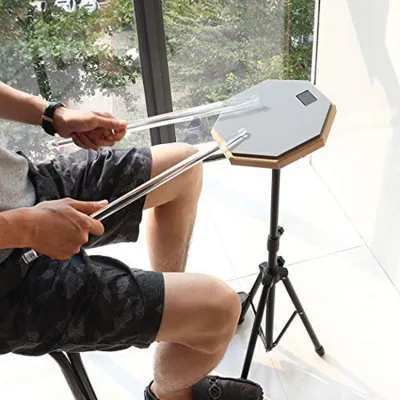
Prices are valid at publication and may change. Please refer to the product page for the latest price.
In the tropical climate of the Philippines, humidity plays a significant role in material longevity. High humidity and ambient heat can cause certain silicone or cheap rubber compounds to become sticky over time. This stickiness attracts dust, pet hair, and lint, which degrades the texture of the playing surface. To maintain a consistent grip and prevent surface degradation, choose high-quality vulcanized rubber or treated silicone, and plan to clean the surface regularly as part of your routine.
Pad Size and Thickness
Practice pads generally fall into two primary size categories: compact pads ranging from 6 to 8 inches, and standard pads measuring 12 inches in diameter. Compact pads are highly portable and lightweight, making them easy to slip into a backpack for practice on the go. However, their smaller surface area requires precise aiming, which can be challenging for beginners who are still developing their hand-eye coordination.
A standard 12-inch pad closely mimics the diameter of a traditional snare drum. This size allows you to place the pad directly into a standard snare drum stand basket, providing a highly stable and realistic practice setup. The larger target area lets you focus entirely on your hand technique rather than worrying about missing the pad. It also allows you to rest your hands naturally without feeling cramped.
Thickness is another critical dimension to verify on the product specifications sheet. Thicker pads, often featuring a heavy wooden or composite base, offer superior stability and do not slide around during intense practice sessions. Thinner pads are lighter and easier to transport but may shift or bounce when placed on a table or lap. Ensure you check the exact diameter and thickness on the product packaging or manufacturer’s listing to confirm it fits your intended practice space.
Noise Level and Vibration Control
While practice pads are significantly quieter than acoustic drums, they are not completely silent. The sound of a wooden drumstick striking a hard rubber surface can produce a sharp, high-pitched click that easily penetrates walls and floors. For those living in shared apartments, condominiums, or multi-generational households, managing this noise is crucial.
The base material of the pad plays a major role in sound dampening. Pads constructed with a dense wooden base tend to produce a lower-pitched, more solid sound, whereas plastic bases can resonate and amplify the high-pitched click of the stick. Many modern pads feature a bottom layer of high-density foam or non-slip rubber. This dual-density design serves a double purpose: it prevents the pad from sliding on smooth surfaces and absorbs low-frequency vibrations before they transfer to your desk or floor.
When evaluating noise control, look for verified user feedback from players who use the pad in apartment settings. Marketing claims regarding decibel reduction can sometimes be misleading, as they may not account for the structural vibration transmitted through furniture. Selecting a pad with a thick foam backing or using a dedicated dampening mat underneath can significantly reduce the risk of disturbing your family or neighbors.
Setup Configurations: Mountable, Portable, and Freestanding Options
Standard Mountable Pads
Standard mountable pads are designed to integrate seamlessly with existing drum hardware. These pads typically feature a threaded metal insert on the underside, most commonly with an 8mm thread size, which allows them to screw directly onto a standard cymbal stand. Alternatively, 12-inch mountable pads are sized to sit securely inside the basket of a snare drum stand, mimicking the exact positioning of a real snare.

Using hardware to mount your pad offers significant ergonomic advantages. A dedicated stand allows you to adjust the height and angle of the pad precisely to match your physical proportions, encouraging proper posture and preventing back strain. This setup is highly recommended for beginners who have a dedicated practice corner and want to build muscle memory that translates directly to a full drum kit. Keep in mind that mounting hardware is rarely included with the pad itself, so you will need to budget for a separate stand.
Portable and Compact Pads
For drummers who travel frequently or have limited living space, portable and compact pads offer an excellent alternative. These pads are lightweight and often feature a soft, non-slip foam backing that allows them to be placed directly on a desk, dining table, or even your lap. Some models even include a strap that secures the pad directly to your thigh, allowing you to practice rudiments while sitting on a chair or sofa.
While practicing on a desk or lap is highly convenient, it introduces clear ergonomic limitations. Desks are rarely at the optimal height for drumming, which can force you to raise your shoulders or bend your wrists at unnatural angles. Extended practice sessions in these positions can lead to muscle fatigue or joint strain. If you choose a portable pad, use it primarily for short warm-ups or travel, and transition to a properly positioned stand for your main technical workouts. Always check the product’s base specifications to ensure it has a high-friction, non-slip surface to prevent it from sliding during use.
Freestanding Pads with Integrated Stands
Freestanding pads with integrated stands provide an all-in-one solution that eliminates the need to purchase separate hardware. These systems feature a practice pad permanently attached to a lightweight, folding metal tripod stand. They are highly convenient for beginners who want a complete, ready-to-use package that can be easily folded and stored in a closet when not in use.
However, these integrated systems often involve trade-offs in stability and build quality. Lightweight stands are prone to wobbling or creeping across the floor when subjected to heavy, fast playing. This movement can disrupt your rhythm and force you to constantly adjust the stand mid-practice. Before purchasing an all-in-one freestanding pad, carefully verify the stand’s weight capacity, maximum height range, and locking mechanisms in the manufacturer’s specifications to ensure it can withstand daily use on tile or wooden floors.
Aligning Drum Pad Practice Features with Your Beginner Goals
Rudiments and Stick Control
If your primary goal is to master basic rudiments—such as single-stroke rolls, double-stroke rolls, and paradiddles—the surface material of your pad is your most critical choice. For these fundamental exercises, a firmer surface like gum rubber is highly advantageous. The responsive rebound of hard rubber allows you to feel how the stick reacts to the surface, helping you understand the physics of stick control and finger play.
As you practice, the clear tactile feedback of a firm pad makes it easier to identify uneven strokes and timing errors. This immediate feedback loop is essential for building a clean, consistent technique. Beginners should focus on controlled, slow strokes on a high-rebound surface before attempting to increase their speed. This structural approach prevents the development of bad habits that are difficult to correct later.
Dynamics and Articulation
Drumming is not just about speed and rhythm; it also requires a deep understanding of dynamics—the variation in volume between soft and loud notes. Practicing accents and ghost notes can be challenging on a single-surface pad, as the uniform rebound can make all strokes feel relatively similar.
To address this, many manufacturers offer dual-surface practice pads. These models typically feature a standard responsive rubber on one side and a much harder, denser rubber or a softer foam on the reverse side. The harder surface produces a louder, sharper click, making it easier to hear the difference between accented and unaccented notes. The softer side dampens the sound and reduces rebound, forcing you to use more wrist movement. Investing in a dual-surface pad allows you to practice these dynamic transitions on a single piece of gear, providing excellent long-term value for a developing player.
Endurance and Technique
Building physical endurance in your wrists and forearms is a key part of a beginner’s development. Some players turn to low-rebound pads, such as those made of heavy gel or soft foam, to build muscle strength more quickly. Because these surfaces do not bounce the stick back automatically, your muscles must work harder to lift the stick for the next stroke.
While low-rebound pads are excellent tools for conditioning, beginners must approach them with caution. Practicing for extended periods on an overly resistant surface with unconditioned muscles can lead to fatigue, poor form, and even repetitive strain injuries like tendonitis. For your first pad, it is best to start with a standard medium-rebound rubber surface to establish proper, relaxed technique, and gradually introduce low-rebound surfaces as your physical endurance improves.
Pre-Purchase Checklist and Routine Maintenance
Hardware Compatibility
Before finalizing your purchase, it is vital to verify that your chosen practice pad is compatible with your existing setup or the hardware you plan to buy. If you intend to mount the pad on a cymbal stand, check the product specifications to confirm the thread size of the insert. While an 8mm thread is the industry standard for modern drum hardware, some older or budget-friendly pads use a 6mm thread, which will not fit standard stands without an adapter.
If you plan to use a snare drum stand, ensure the pad’s diameter is compatible with the stand’s basket. A 12-inch pad will sit comfortably in most standard snare stands, but smaller 6-inch or 8-inch pads are too small to be gripped by the basket arms. Some manufacturers resolve this by mounting a smaller pad onto a wider 12-inch wooden base, allowing it to fit standard stands while remaining lightweight.
Included Accessories
Do not assume that a practice pad comes with everything you need to start playing. Read the product description carefully to see what accessories are included in the box. While some beginner packages bundle the pad with a pair of drumsticks, a carrying case, or mounting screws, many premium pads are sold strictly as standalone items.
If sticks are not included, you will need to purchase them separately. Additionally, if you plan to carry your pad to lessons or school, looking for a package that includes a padded transport bag can save you money and protect the playing surface from scratches and dirt. Budget-friendly packages typically range from ₱500 to ₱1,500, while premium dual-sided models or those bundled with stands can cost upwards of ₱2,500 to ₱5,000.
Routine Maintenance
To ensure your practice pad lasts for years, establish a simple, low-risk maintenance routine. Dust, dirt, and oil from your hands will naturally accumulate on the playing surface over time, reducing its grip and altering the rebound feel. For standard rubber and silicone pads, the safest cleaning method is to wipe the surface gently with a soft microfiber cloth dampened with clean water.
Avoid using harsh chemical cleaners, alcohol, or household detergents, as these substances can dry out and crack natural rubber or cause silicone to degrade. This is especially important in the high humidity of the Philippines, where chemical degradation can accelerate rapidly under warm conditions. Always consult the manufacturer’s care instructions before applying any cleaning solution, and allow the pad to air dry completely in a shaded area away from direct sunlight.
Frequently Asked Questions (FAQ)
Can I use a drum practice pad on a regular desk?
Yes, you can place a practice pad on a standard desk, but doing so can transfer significant acoustic vibration through the furniture. This vibration can create a loud, low-frequency humming sound that travels through walls and floors, potentially disturbing others in your home. To prevent this, place a thick neoprene mousepad, a folded towel, or a dedicated foam isolation pad underneath the practice pad. This simple step dampens the vibration, reduces the overall noise level, and protects your desk surface from scratches.
Do I need a double-sided practice pad as a beginner?
While a double-sided practice pad is a highly useful tool, it is not a strict requirement for a beginner’s first day of practice. A single-sided pad with a high-quality rubber surface is completely sufficient for learning basic hand positioning, stick grip, and fundamental rudiments. Double-sided pads become valuable as you progress and want to practice transitions between different drum feels, such as moving from a highly responsive snare drum to a deader floor tom. If your budget is tight, a reliable single-sided pad is an excellent starting point.
What size drumsticks should I use with a practice pad?
For general practice pad use, standard 5A drumsticks are highly recommended for beginners. The 5A size offers a balanced weight, length, and diameter that is comfortable for most hand sizes, making it the ideal starting point for developing proper technique. When choosing sticks, pay attention to the tip material. Wood tips provide a warm, natural feel on rubber surfaces, while nylon tips produce a brighter, sharper click and offer slightly better durability on abrasive surfaces. Always check your pad manufacturer’s recommendations to ensure your sticks will not mark or damage the playing surface.
Community discussion
Share your experience or ask a question. Comments are reviewed before publication.