
The best starting point among Chinkee Tan’s self-help books depends entirely on your immediate personal growth goals, whether you need to overhaul your financial habits, build daily discipline, or cultivate a more positive outlook. Rather than looking for a single universal title, Filipino readers can achieve the most impactful mindset shift by matching their current life stage and pressing challenges with the specific theme of a book. By evaluating your personal needs first and verifying authentic copies through official channels, you can establish a solid foundation for lasting personal development.
To make the most of your reading journey, it is helpful to approach these books not just as casual reading, but as practical guides designed for real-world application. The author’s catalog spans a wide range of topics, from basic budgeting and debt management to entrepreneurial mindsets and motivational daily devotionals. Identifying where you currently stand in your personal and professional life will prevent you from feeling overwhelmed by the sheer volume of available titles.
Identify Your Core Mindset Goals Before Choosing
Before browsing any book catalog, you must clarify the specific mindset or life challenges you want to address. Personal development is a broad field, and narrowing down your focus ensures you select a book that directly speaks to your current situation. For instance, if you are constantly stressed about monthly bills, a book focused on financial literacy and wealth mindsets will serve you far better than one centered on general career motivation. Conversely, if your finances are stable but you struggle with daily procrastination, your primary need is a framework for productivity and habit formation.
Products mentioned in this guide




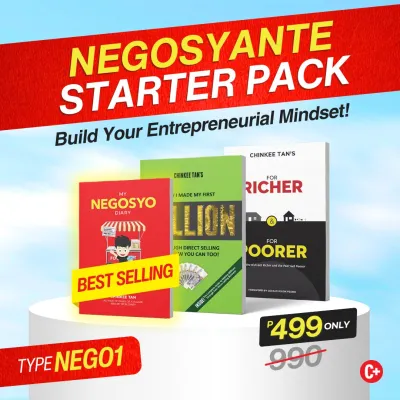
Prices are valid at publication and may change. Please refer to the product page for the latest price.
Assessing your current pain points requires honest self-reflection. Ask yourself whether you need foundational motivation to overcome a fear of failure, or if you require a highly specific, step-by-step system to manage your daily routines. Foundational books are excellent for readers who feel stuck in a negative loop and need a boost of positivity to change their perspective. On the other hand, strategic books are better suited for those who are already motivated but lack the practical tools to execute their plans effectively.
It is easy to fall into the trap of buying a book simply because it is trending on social media or recommended by a friend. However, a popular title focusing on getting out of debt may not resonate with a young professional whose primary goal is learning how to invest or transition into a new career. Choosing a book that does not align with your immediate needs often leads to reader fatigue, causing you to abandon the book before finishing it. Always prioritize your personal learning requirements over external trends.
To ensure a successful reading outcome, define what progress looks like for you before opening the first page. For some, success might mean successfully tracking daily expenses for an entire month, while for others, it could be shifting from a scarcity mindset to one of abundance and opportunity. Having a clear, measurable goal in mind allows you to actively look for relevant advice as you read, making the concepts much easier to absorb and apply to your daily life.
Compare Key Themes to Match Your Current Life Stage
Once you have identified your goals, the next step is to evaluate how different book themes align with your current life stage. The author’s publications generally fall into two categories: beginner-friendly foundational guides and advanced strategic books. Beginner books typically use highly conversational language, simple analogies, and visual layouts to introduce basic concepts like saving money, avoiding debt, and staying positive. These are ideal for students, fresh graduates, or anyone new to self-help literature.

Advanced books, by contrast, dive deeper into complex strategies such as business scaling, investment mindsets, and long-term wealth preservation. If you are already familiar with basic financial concepts and are looking to expand your income streams, starting with a beginner-level saving guide might feel repetitive. Instead, look for titles that challenge your strategic thinking and offer frameworks for professional growth, leadership, or entrepreneurship.
Another important distinction to make is between theory-oriented and action-oriented books. Theory-oriented books focus on shifting your underlying philosophy, helping you dismantle limiting beliefs about success and money. Action-oriented books, often formatted as workbooks, planners, or daily journals, require active participation. These books feature fill-in-the-blank sections, daily checklists, and budgeting templates designed to turn abstract concepts into concrete daily habits.
Your current life circumstances should dictate which approach you prioritize. If you are facing a major career transition or starting a small business, look for books that offer frameworks on adaptability, resilience, and resourcefulness. If you are struggling with daily burnout and feeling overwhelmed by your responsibilities, prioritize books that focus on routine optimization, time management, and positive daily declarations to help restore balance to your life.
Finally, consider the cultural context and relatability of the examples used in the text. One of the reasons these self-help books resonate so strongly with Filipino readers is their use of localized scenarios, such as navigating family financial dynamics, managing the pressures of being a breadwinner, or practicing the local culture of saving. Ensuring the book you choose addresses these specific cultural realities makes the advice far more practical and easier to implement in your daily environment.
Verify Official Editions, Formats, and Availability
When you are ready to make a purchase, verifying the authenticity and format of the book is crucial for a high-quality reading experience. Because self-help books are frequently updated to reflect changing economic landscapes and reader feedback, you should check the latest bibliography and reprint information. Checking the author’s official website or authorized online marketplaces ensures you are purchasing the most recent, revised edition containing updated strategies and relevant examples.
Choosing the right format also plays a significant role in how well you absorb and retain personal development content. Physical paperbacks are highly recommended for action-oriented books and workbooks, as they allow you to physically write down your goals, highlight key passages, and fill out templates. However, physical books require proper care in tropical climates; high humidity can cause pages to warp or develop mold over time, so storing them in a dry, well-ventilated area is essential.
Digital formats, such as e-books, offer unmatched convenience for readers who want to utilize their daily commute to read. Reading an e-book on a tablet or smartphone allows you to carry an entire library without adding weight to your bag, and digital highlighting tools make it easy to review key takeaways later. Audiobooks are another excellent alternative, especially for busy individuals who prefer listening to motivational content while stuck in traffic, exercising, or performing household chores.
Language options and reading comprehension levels are also important factors to verify before buying. Many of these self-help titles are written in a conversational blend of English and Tagalog, making complex financial and psychological concepts highly accessible. If you prefer a more formal reading style, or if you are buying the book as a gift for someone who prefers pure English or Tagalog, double-check the language specifications listed on the product page to ensure it matches the reader’s preferences.
Avoid purchasing books from unauthorized third-party sellers or downloading pirated digital copies. Unauthorized physical prints often suffer from poor paper quality, faded ink, misaligned text, and even missing pages that can disrupt your reading flow. Pirated digital files frequently contain formatting errors, broken links, or outdated content. Purchasing exclusively through official brand stores and authorized retailers guarantees a complete, high-quality product while directly supporting the creator’s work.
Build an Actionable Reading and Implementation Plan
Buying the right book is only the first step; the real value comes from how you implement its teachings in your daily life. To avoid overwhelming yourself with too many new concepts at once, set a realistic and sustainable reading pace. Instead of trying to finish an entire book in a single weekend, commit to reading just one chapter or five pages a day. This slower pace gives your mind the time it needs to process the information and reflect on how it applies to your personal situation.
Active reading is essential for personal growth. Keep a dedicated notebook or journal next to you while you read, or use the margins of your physical book to jot down thoughts and personal reflections. When you come across a passage that resonates with you, write down a specific action step you can take based on that advice. For example, if a chapter discusses the importance of tracking expenses, immediately download a budgeting app or set up a simple spreadsheet to record your spending.
To maintain momentum, establish a consistent system for reviewing and applying your key takeaways. You might set aside fifteen minutes every Sunday to review your notes from the past week and assess your progress. Sharing your goals with a trusted friend, family member, or peer group can also provide valuable accountability. Discussing the book’s concepts with others helps reinforce your own understanding and exposes you to different perspectives on the same material.
Recognize that while self-help books are powerful tools for mindset shifts, they are not a substitute for professional guidance when dealing with complex challenges. If you find yourself facing severe financial distress, deep-seated emotional hurdles, or career stagnation that a book cannot resolve, use the book’s foundational advice as a stepping stone to seek specialized workshops, financial planners, or professional counseling. Combining the principles of self-help literature with expert guidance is often the most effective path to long-term success.
Frequently Asked Questions (FAQ)
Where is the safest place to buy authentic books?
The safest way to purchase authentic copies of these self-help books is through official brand stores, authorized physical bookstores, and reputable e-commerce platforms. When shopping on online marketplaces, look for official verification badges or mall tags on the seller’s profile, which indicate that the store is an authorized distributor. Additionally, take the time to read recent buyer reviews, paying close attention to photos uploaded by customers to verify the print quality, paper thickness, and overall condition of the books upon delivery.
Should I read the books in chronological order or by topic?
You do not need to read these books in chronological order, as almost all of them are designed to function as standalone guides. It is highly recommended to read by topic based on your most pressing current need. If your immediate priority is learning how to save money, start with a book dedicated to basic budgeting. Once you have mastered those habits, you can transition to books focusing on investing, business, or broader mindset development, creating a customized reading path that evolves alongside your personal growth.

Community discussion
Share your experience or ask a question. Comments are reviewed before publication.