
To choose your first Bernard Cornwell book, you must first decide whether you want to commit to a multi-volume epic or enjoy a self-contained story, and which historical era captivates you most. For those seeking a massive, action-packed saga of shield walls and the birth of England, The Last Kingdom (the first book of The Saxon Stories) is an excellent starting point. If you prefer a gritty, realistic, and deeply moving reimagining of Arthurian legend, The Winter King (The Warlord Chronicles) offers a masterful trilogy opener. For readers who want a classic, episodic military adventure set during the Napoleonic Wars, Sharpe’s Tiger provides an explosive introduction to Richard Sharpe. If you want to test the waters with a single, standalone book before committing to a series, the visceral medieval battle recreation in Azincourt is a highly recommended choice.
Identify Your Preferred Historical Era and Reading Commitment
Bernard Cornwell is widely regarded as a master of historical fiction, celebrated for his ability to transport readers directly into the mud, blood, and chaos of ancient and early modern battlefields. Before purchasing your first book, take a moment to consider which historical epoch excites you the most. If you are drawn to the clash of swords, the pagan-Christian divide, and the formation of early Britain, the early medieval period will be your ideal destination. If you prefer the tactical brilliance of longbowmen during the Hundred Years’ War, the high medieval era is a great fit. For those fascinated by black-powder musketry, military discipline, and the grand campaigns of the early nineteenth century, the Napoleonic Wars offer endless material.
Your willingness to commit to a long-running series is another crucial factor in making your choice. Some of Cornwell’s most famous works are sprawling sagas that span over a dozen volumes, requiring a significant investment of time and shelf space. If you enjoy watching characters age, evolve, and navigate complex political landscapes over decades, these multi-book series are incredibly rewarding. However, if you prefer a self-contained narrative with a definitive beginning, middle, and end, a standalone novel or a tight trilogy is a much safer starting point.
Products mentioned in this guide

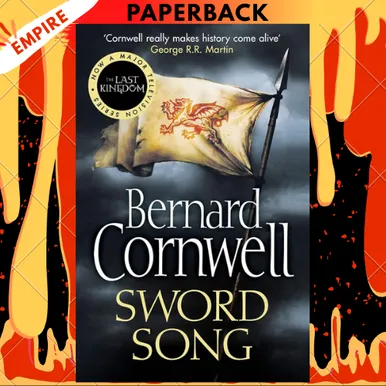
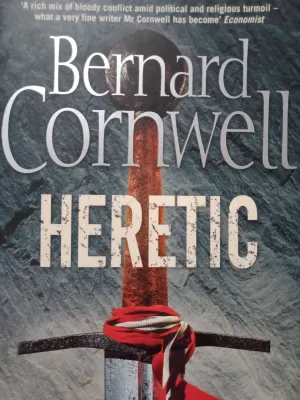
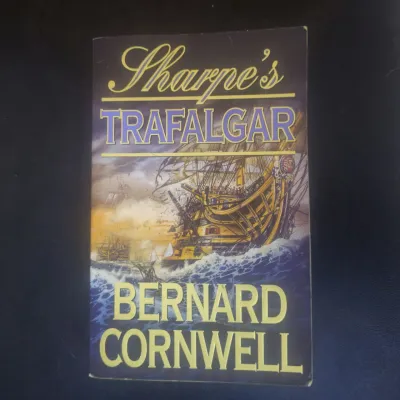
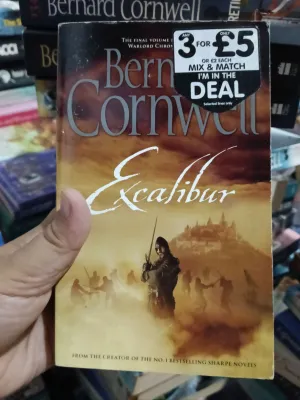
![Bernard Cornwell Books [Preloved]](https://img.lazcdn.com/g/p/dc7ffeac7f1f25dbce2df345a5af309d.jpg_400x400q80.jpg_.webp)
![[Preloved] Bernard Cornwell author of The Last Kingdom Series](https://img.lazcdn.com/g/ff/kf/S6c876cbae2ac4703b15e4b05e73aebe5z.jpg_400x400q80.jpg_.webp)
Prices are valid at publication and may change. Please refer to the product page for the latest price.
For readers in the Philippines, sourcing physical books requires some practical planning. While major local bookstore chains frequently stock popular historical fiction, inventory can be unpredictable, and specific volumes in a long series may not always be available on the shelves. Online marketplaces and local specialty book distributors are excellent alternatives for tracking down specific editions. Additionally, the tropical climate and high humidity of the Philippines can take a toll on paperbacks, causing pages to yellow or covers to warp over time. If you plan to build a permanent physical collection, investing in trade paperbacks or hardcovers, or storing your books in a dry, well-ventilated space, will help preserve them for years to come. E-books are also an excellent, climate-proof alternative that ensures instant access to entire series without shipping delays.
Recommended Starting Points for Long-Running Historical Series
If you decide that a multi-book saga is the right path for you, several distinct entry points offer different historical flavors and narrative styles. The Saxon Stories, beginning with The Last Kingdom, is perhaps Cornwell’s most famous contemporary series, largely due to its successful television adaptation. Set in the ninth century, the story follows Uhtred of Bebbanburg, a Saxon-born noble raised by Danes, who finds himself torn between his loyalty to his adoptive Viking family and his duty to King Alfred the Great of Wessex. This series is an excellent starting point because of its fast pacing, vivid first-person narration, and detailed exploration of shield-wall tactics. It provides a fascinating look at the chaotic period when the fractured kingdoms of Britain were slowly forged into a single nation.

For those interested in the high Middle Ages, The Grail Quest series, starting with Harlequin (published as The Archer’s Tale in some regions), offers a thrilling adventure set during the Hundred Years’ War. The protagonist, Thomas of Hookton, is an English archer who survives a brutal raid on his village and embarks on a journey of vengeance that becomes intertwined with the search for the Holy Grail. This series is highly recommended for its detailed depiction of medieval military campaigns, the devastating power of the English longbow, and the grim realities of fourteenth-century warfare. It strikes a strong balance between historical accuracy and a classic quest narrative, making it highly accessible to newcomers.
If you prefer the era of muskets, cannons, and redcoats, the Sharpe series is an absolute classic of the genre. Following the career of Richard Sharpe, a ruthless but brilliant British soldier rising through the ranks during the Napoleonic Wars, this series spans over twenty novels. New readers often face a choice between reading the books in publication order, starting with Sharpe’s Eagle, or chronological order, starting with Sharpe’s Tiger. Sharpe’s Tiger is set in late eighteenth-century India and depicts Sharpe as a young private, making it an excellent, action-packed introduction that establishes his character before he fights in Europe. The series is celebrated for its meticulous research, memorable cast of characters, and thrilling depictions of famous historical battles.
For readers who want a shorter, more literary series, The Warlord Chronicles, beginning with The Winter King, is widely considered to be Cornwell’s masterpiece. This trilogy offers a gritty, demystified, and historically grounded reimagining of the Arthurian legend, set in the chaotic fifth century after the Roman withdrawal from Britain. Narrated by Derfel Cadarn, a warrior who rises to become one of Arthur’s key lieutenants, the story portrays Arthur not as a fairy-tale king in shining armor, but as a dedicated warlord struggling to keep a fractured land together against Saxon invaders and internal strife. The trilogy is deeply atmospheric, emotionally resonant, and offers a fascinating look at the clash between ancient pagan beliefs and the rise of Christianity.
Standalone Novels for Readers Seeking a Complete Single Story
If you are hesitant to commit to a multi-book series, Bernard Cornwell has written several outstanding standalone novels that deliver a complete, satisfying historical experience in a single volume. Azincourt (also published as Agincourt) is a magnificent entry point that focuses on one of the most famous battles in military history. The novel follows Nicholas Hook, an English archer who escapes a death sentence at home to fight in the campaigns of King Henry V. The book culminates in the legendary Battle of Agincourt in 1415, where a starving, disease-ridden English army faced overwhelming French forces. Azincourt showcases Cornwell’s ability to build tension, develop relatable characters, and describe the terrifying, claustrophobic reality of medieval hand-to-hand combat with unmatched intensity.
Another excellent standalone option is The Fort, which shifts the historical focus to the late eighteenth century during the American Revolutionary War. Based on the historical Penobscot Expedition of 1779, the novel tells the story of a small British garrison defending a half-built fort in Maine against a massive American naval force. What makes The Fort unique is its dual-perspective narrative, which fairly represents the motivations, courage, and flaws of both the British defenders and the American attackers, including the historical figure of Paul Revere. It is a masterclass in military history, detailing how poor leadership, miscommunication, and pride can decide the outcome of a campaign.
Before purchasing any standalone novel, it is wise to check the thematic focus and content warnings of the book to ensure it aligns with your reading preferences. Cornwell’s standalone works do not shy away from the brutal realities of historical warfare, including graphic violence, the harsh treatment of prisoners, and the devastating impact of war on civilian populations. If you prefer lighter historical romance or political intrigue with minimal combat, these action-oriented military novels may not be your preferred style. However, if you appreciate uncompromising historical realism and meticulous attention to tactical detail, these standalone books offer an unparalleled reading experience without any long-term series obligations.
How to Verify Editions, Titles, and Formats Before Purchasing
When you are ready to purchase your first Bernard Cornwell novel, taking a few minutes to verify the book’s details can save you from frustration and accidental duplicate purchases. One of the most common challenges readers face with Cornwell’s bibliography is the existence of regional title variations. Because his books are published by different companies in the United Kingdom and the United States, the same novel is sometimes released under two completely different names. For example, the first book of the Grail Quest series is titled Harlequin in the UK but was renamed The Archer’s Tale for the US market. Similarly, his standalone novel about the Battle of Agincourt is sold as Azincourt in some countries and Agincourt in others. Always check the publication history, book description, or copyright page online to confirm you are buying the correct book.
If you decide to dive into a long-running series like Sharpe or The Saxon Stories, look for omnibus editions or boxed sets to get the best value. Many publishers release the first three or four books of a series together in a single volume or a discounted bundle. In the Philippines, purchasing these bundled sets through reputable online book retailers or local distributors is often much more cost-effective, potentially saving you several hundred ₱ compared to buying each paperback individually. It also ensures that you have the next installment ready as soon as you finish the first, avoiding the disappointment of finding the subsequent volume out of stock at your local bookstore.
Finally, consider your preferred reading format and check the availability of different editions. While physical paperbacks are a classic choice, high-quality audiobooks have become incredibly popular for historical fiction. Cornwell’s novels are frequently narrated by acclaimed voice actors who bring the historical dialects, battle cries, and emotional depth of the characters to life. If you choose to listen to the books, verify the narrator’s name and listen to a sample beforehand to ensure their style suits your taste. For physical book collectors in tropical regions, checking the paper quality is also beneficial; trade paperbacks with acid-free paper tend to resist yellowing and humidity damage much better than standard mass-market paperbacks, making them a more durable choice for your home library.
Frequently Asked Questions (FAQ)
Should I read series in chronological or publication order?
When starting a long-running series like Sharpe, readers often debate whether to follow the order in which the books were written or the chronological timeline of the character’s life. For the Sharpe series, starting with the chronological order is highly recommended for modern readers. Beginning with Sharpe’s Tiger allows you to experience Richard Sharpe’s journey from the very beginning as a young private in India, providing valuable context for his personality, his rise through the ranks, and his relationships in later books.
For other series, such as The Saxon Stories, the publication order and the chronological order are identical, starting with The Last Kingdom. In these cases, you can simply follow the numbered sequence of the books. If you are a historical purist who prefers to see how an author’s writing style and historical research evolve over time, reading in publication order is a valid approach, but for character-driven immersion, chronological order is generally the most satisfying path.
Are these historical novels appropriate for younger readers?
Bernard Cornwell’s historical novels are celebrated for their uncompromising realism, which means they contain vivid and often graphic descriptions of historical warfare. Battles are depicted with intense physical detail, including the gruesome reality of sword wounds, cannon fire, and the unsanitary conditions of military camps. Additionally, the books reflect the harsh social and moral realities of the historical eras they depict, which can include mature themes, strong language, and violence against civilians.
Consequently, these novels are generally best suited for mature teenagers and adult readers. If you are considering purchasing one of these books for a younger reader, it is highly recommended to check the publisher’s age recommendations, read online content advisories, or skim a few chapters yourself. For older teens with a strong interest in history, these books can be an educational and thrilling way to learn about past eras, provided they are prepared for the realistic and gritty tone of the narrative.
Community discussion
Share your experience or ask a question. Comments are reviewed before publication.