
Finding the right word search book for your child in the Philippines requires matching the puzzle’s complexity to their developmental stage. A book that is too difficult can discourage a young reader, while one that is too simple will quickly be cast aside. By understanding how grid sizes, font styles, and themes evolve across age groups, you can select an engaging activity book that builds vocabulary, improves spelling, and provides screen-free entertainment during long car rides or rainy afternoons.
Why Age-Appropriate Word Search Books Matter
Word search puzzles are excellent tools for cognitive development, but their benefits depend heavily on a child’s current reading level. When a child scans a grid for letters, they practice visual tracking, which is the same eye movement required for reading left-to-right across a page. This exercise strengthens pattern recognition and helps children identify word boundaries, making it easier to decode unfamiliar terms in schoolbooks.
For younger children, the primary benefit lies in letter recognition and phonics reinforcement. As they search for individual letters to form simple words, they build a stronger mental orthographic map, which is crucial for early spelling. For older children, these puzzles expand vocabulary by introducing thematic terms that they might not encounter in daily conversation.
Products mentioned in this guide
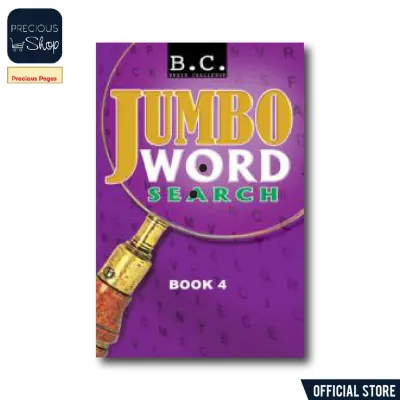
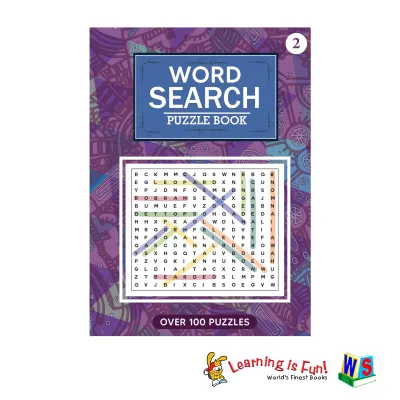
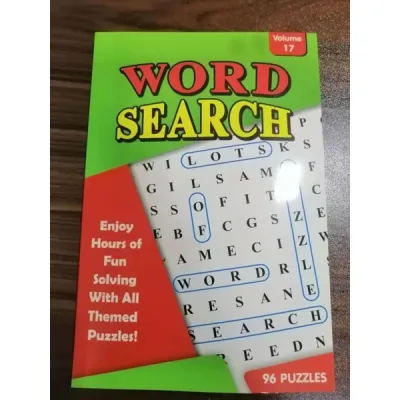
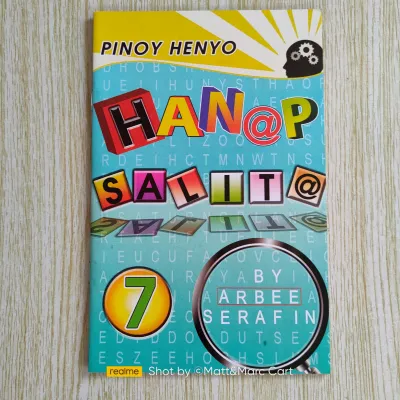
Prices are valid at publication and may change. Please refer to the product page for the latest price.
However, introducing a puzzle that does not match a child’s developmental stage can backfire. If a six-year-old is given a dense 15×15 grid with diagonal and backward words, they are likely to experience cognitive overload. Instead of learning, they may resort to random guessing or abandon the book entirely out of frustration. Conversely, an older child given a simple grid will finish it in seconds, missing out on the cognitive challenge that keeps their brain active.
Themed vocabulary plays a significant role in supporting school curricula. When puzzle themes align with subjects like elementary science, history, or geography, they reinforce classroom lessons in a relaxed, low-stakes environment. This contextual learning helps children retain new terminology and improves their overall reading comprehension.
Choosing Word Search Books for Preschoolers (Ages 3–5)
At this stage, children are just beginning to understand that letters combine to form words. The best word search books for preschoolers focus on basic visual tracking and letter identification rather than complex spelling rules. The goal is to make the search feel like a rewarding game of hide-and-seek with letters.

To keep the experience accessible, look for books with very small grid sizes, such as 3×3 or 5×5 grids. The fonts must be large, clear, and sans-serif to prevent visual confusion. Curly or highly stylized letters can make it difficult for a young child to distinguish between similar characters, such as ‘b’ and ‘d’ or ‘p’ and ‘q’.
Picture-to-word matching is an essential feature for this age group. Books that feature an illustration of the target object next to its written name allow children to connect the visual image with the letters they need to find. The word list should consist entirely of simple three-to-four-letter words, such as “cat,” “sun,” or “ball,” which align with early phonics instruction.
Physical durability is another critical factor to evaluate before buying. Preschoolers often press down hard with crayons or markers, so look for books with thick, high-quality paper that resists tearing. Single-sided printing is highly recommended, as it prevents ink from bleeding through and ruining the puzzle on the reverse side. Durable, lay-flat bindings also help keep the book open, allowing young hands to focus entirely on writing.
Choosing Word Search Books for Early Elementary Kids (Ages 6–8)
Children in early elementary school are developing reading fluency and expanding their sight word vocabulary. They are ready for a moderate challenge that transitions them from simple letter matching to active word recognition.
For this age group, grid sizes can expand to 8×8 or 10×10 layouts. While the majority of the words should still run horizontally from left to right or vertically from top to bottom, you can look for books that gradually introduce simple diagonal words. Backward words should generally be avoided at this stage, as they can confuse children who are still solidifying their left-to-right reading habits.
Thematic approaches are highly effective at keeping early elementary kids engaged. Look for books that organize puzzles around popular topics like animals, space, ocean life, or school subjects. These themes make the activity feel purposeful and allow children to learn related groups of words simultaneously, which aids in cognitive categorization.
To maintain high engagement, many publishers include bonus activities alongside the word searches. Books that feature integrated mazes, simple trivia, or coloring elements around the borders offer a welcome break from reading. This variety keeps the child entertained during long afternoons at home or during family travels, ensuring the book remains a favorite companion.
Choosing Word Search Books for Older Kids (Ages 9–12)
Older children require a much higher level of complexity to stay interested. They have developed strong reading skills and are capable of handling advanced vocabulary, larger grids, and intricate puzzle mechanics that test their problem-solving abilities.
Look for books with dense grids, typically 15×15 or larger, containing words that run in all eight directions, including backward and diagonally. To add an extra layer of challenge, some books feature hidden messages formed by the letters left over after all the words have been found. This mechanic encourages children to complete the puzzle accurately to solve the final riddle.
Subject-specific themes are ideal for this age group. Puzzles focusing on advanced topics like world geography, historical events, scientific concepts, or classic literature support middle-school learning. These themes challenge children to recognize and spell complex, multi-syllable words, expanding their academic vocabulary in the process.
When selecting a book for older kids, pay close attention to the layout of the answer key. A high-quality book will provide clear, easy-to-read solutions at the back, preferably with grid coordinates or highlighted paths rather than just a list of answers. Additionally, books with perforated pages are highly practical, allowing kids to tear out sheets to share with friends or siblings, or to work on a flat surface more comfortably.
Essential Features to Compare Before Purchase
Beyond age-appropriate content, the physical construction of a word search book determines how enjoyable it is to use. In the humid climate of the Philippines, paper quality is particularly important. Thin, low-grade paper can absorb moisture from the air, making it fragile and prone to tearing when marked with highlighters, gel pens, or felt-tip markers. Look for books that specify a higher paper weight to ensure a smooth, bleed-free writing experience.
The clarity of the answer key is another feature that separates high-quality books from poorly designed ones. A good answer key should not require a magnifying glass to read. It should clearly illustrate the completed grid with the word paths highlighted, making it easy for children to self-correct their work without frustration.
Binding type is a frequently overlooked detail that significantly impacts usability. Standard glue-bound books often snap shut on their own, forcing the child to hold the pages down with one hand while trying to circle words with the other. Books with lay-flat binding, spiral binding, or flexible softcovers allow the book to remain completely open on a desk or lap, making it much easier to write near the inner spine.
Buying Channels and Quality Verification
When shopping for children’s puzzle books on e-commerce platforms or online marketplaces in the Philippines, it is important to verify the quality of the product before checking out. Because you cannot flip through the pages physically, you must rely on specific indicators to ensure you are getting a well-designed book. Budget-friendly options typically range from ₱100 to ₱300, but verifying the listing details helps avoid low-quality reprints.
Start by checking the seller’s ratings and reading customer reviews carefully. Look for reviews that mention the physical quality of the book, such as paper thickness, print clarity, and binding durability. Be cautious of listings with generic descriptions or those that do not show preview images of the actual puzzle grids.
Verify the publication date and the publisher’s details. Older editions may contain outdated vocabulary or cultural references that are no longer relevant or easy for modern children to understand. Additionally, check for feedback regarding printing errors, such as missing pages, misaligned grids, or answer keys that do not match the puzzles, which can occasionally occur in low-cost self-published books.
Frequently Asked Questions (FAQ)
Can word search books help children with learning difficulties like dyslexia?
Word search puzzles can offer supportive practice for children with learning difficulties by encouraging visual tracking and letter pattern recognition. The structured grid helps some children focus on individual letter sequences in a controlled visual environment. However, because dyslexia affects phonological processing, these puzzles should be viewed as a supplementary, low-stress activity rather than a primary educational tool. It is always best to consult an educational therapist or teacher to design tailored, evidence-based interventions. If a child finds the grid format overwhelming or experiences visual fatigue, it is important to adjust expectations and avoid forcing the activity, keeping the focus on fun and confidence-building.
Should I let my child use a pencil or a pen for word searches?
For younger children, pencils are highly recommended because they allow for easy erasing and correcting. Preschoolers and early elementary kids are still developing their fine motor skills and frequently make mistakes or circle the wrong letters; being able to erase a mistake prevents frustration and keeps the page clean. For older children, highlighters or colored gel pens can make the activity more engaging. They can use different colors to code word directions or themes, which adds a creative element to the puzzle. However, before letting your child use ink, check the paper thickness of the book. Thin paper will allow ink to bleed through to the next page, potentially ruining the puzzle on the back.
How often should a child do word search puzzles to see vocabulary improvement?
To see steady progress in vocabulary and spelling, short and consistent sessions are far more effective than long, infrequent study blocks. Encouraging your child to complete just one or two puzzles a day—taking about 10 to 15 minutes—helps build a positive learning habit without causing cognitive fatigue or burnout. To maximize vocabulary retention, combine puzzle practice with active reading and daily conversation. When your child finds a new word in a puzzle, ask them to use it in a sentence or explain what it means. If you notice signs of puzzle fatigue, such as sighing, random guessing, or distraction, it is time to close the book and switch to other engaging literacy activities.
Community discussion
Share your experience or ask a question. Comments are reviewed before publication.