
Selecting the right Tagalog Bible is a deeply personal decision that shapes how you engage with scripture every day. The ideal translation for your spiritual routine depends entirely on whether you prioritize literal accuracy for deep study or natural readability for daily prayer. Rather than searching for a single “best” version, readers should evaluate the translation philosophy and language register to match their specific use case. By understanding how different editions handle the original Hebrew, Aramaic, and Greek texts, you can find a Tagalog Bible book that resonates with your heart and supports your spiritual growth.
In the Philippines, where devotional habits range from quiet morning reflections to intense group Bible studies, the language of scripture can vary from highly formal, classical Tagalog to contemporary, conversational phrasing. Choosing a register that does not match your comfort level can lead to frustration, either because the text feels too difficult to comprehend during a quick devotional session or because it lacks the precise wording needed for theological analysis. Balancing these factors requires a clear look at how translators approach their work and how physical book features affect your reading experience.
Understanding Tagalog Bible Translation Philosophies
To make an informed choice, you must first understand the two primary translation philosophies used by scholars: formal equivalence and dynamic equivalence. These methodologies dictate how closely a Tagalog translation adheres to the literal structure of the original biblical languages or how much it prioritizes the natural flow of modern speech. Recognizing these approaches allows you to predict how a specific Bible will read before you even open its pages.
Products mentioned in this guide
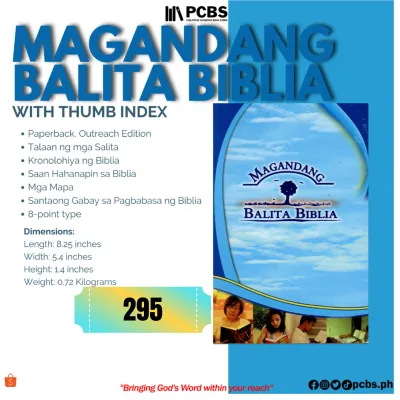
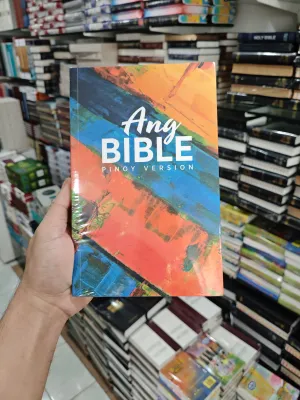
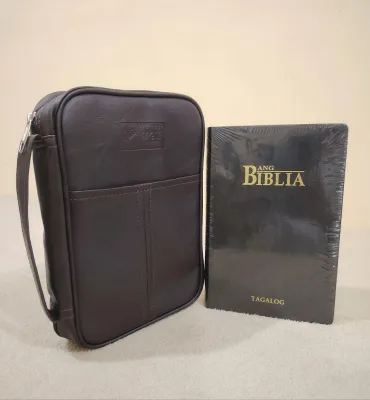
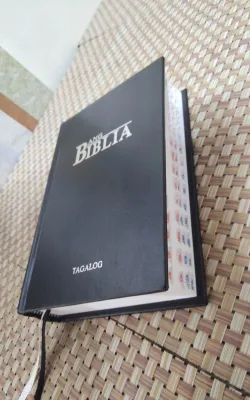
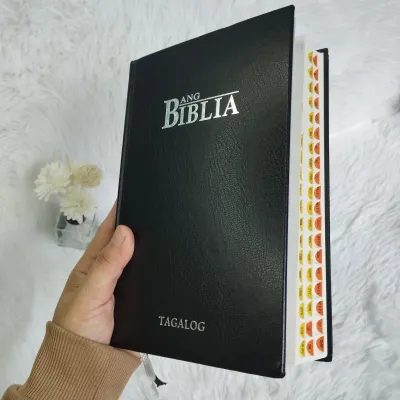
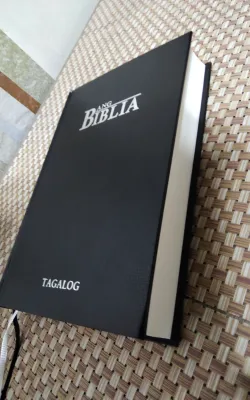

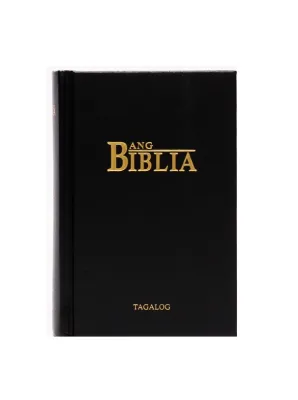
Prices are valid at publication and may change. Please refer to the product page for the latest price.
Formal equivalence, often referred to as a word-for-word translation, prioritizes literal accuracy and grammatical structure. Translators following this philosophy attempt to preserve the original sentence syntax, word order, and idioms as closely as possible in the target language. In Tagalog, this often results in a highly formal, literary, and sometimes complex sentence structure. While this method is invaluable for tracking specific words and theological concepts, it can sometimes feel rigid or archaic to contemporary readers who are not accustomed to classical Tagalog prose.
Dynamic equivalence, or thought-for-thought translation, focuses on conveying the original meaning and emotional impact of the text using natural, contemporary phrasing. Instead of translating word-for-word, translators analyze the overall message of a sentence or paragraph and express it in a way that a modern Tagalog speaker would naturally communicate. This approach yields a highly readable, fluid text that is easy to comprehend during silent meditation or aloud in a group setting. However, some of the literal nuances or specific word repetitions of the original languages may be smoothed over to maintain this readability.
Before purchasing a Tagalog Bible book, you can easily identify its underlying translation philosophy by examining the introductory pages. Check the copyright page, the publisher’s preface, or the back cover of the book. Publishers typically include an introductory essay or a “Preface to the Reader” that explicitly states whether the translation team utilized a formal, dynamic, or hybrid approach. Reading this section provides immediate clarity on what to expect from the text and helps you verify if the translation aligns with your intended spiritual practice.
Matching the Translation to Your Spiritual Use Case
Your primary spiritual activities should dictate the translation style you choose. A Bible that excels during a rigorous theological study session might feel overly dense during a quiet moment of personal prayer, while a highly conversational version might lack the precision required for deep doctrinal analysis. Aligning the translation with your specific goals ensures a more fruitful and engaging reading experience.

Approaches for In-Depth Bible Study
For detailed theological study, formal word-for-word translations are generally preferred. These editions preserve the original idioms, sentence structures, and grammatical nuances, which are essential when you want to conduct word studies, trace specific doctrines across different books, or compare passages. By keeping the translation as close to the original source text as possible, formal translations allow you to see the structural connections that the original authors intended.
However, because formal Tagalog translations often utilize older, highly literary vocabulary, you may find some passages challenging to decipher on your own. To navigate this, it is highly beneficial to keep a separate Tagalog dictionary or a biblical concordance nearby. These tools help clarify archaic terms and ensure you fully grasp the historical and cultural context of the vocabulary used in the text.
When selecting a formal translation for study, always check the edition for supplementary study aids. Look for Bibles that feature extensive study notes, cross-references in the margins, and detailed annotations. These built-in resources explain difficult cultural references, highlight parallel passages, and provide historical context, making your study sessions much more productive without requiring you to constantly consult external commentaries.
Approaches for Daily Devotion and Prayer
For daily devotion, personal reflection, and prayer, dynamic or contemporary translations are often the most effective choice. The primary goal of devotional reading is to meditate on the message and foster a personal, emotional connection with the text. A smooth, modern Tagalog translation allows for uninterrupted reading, helping you focus on the spiritual application of the passage rather than struggling with complex sentence structures or unfamiliar words.
Highly dynamic versions are particularly valuable when reading poetic books, parables, or complex epistles. By rendering these passages in accessible, everyday Tagalog, these translations make the emotional depth and practical wisdom of the scriptures immediately apparent. This accessibility is especially helpful during early morning devotions or late-night prayers when you want to absorb the text deeply and reflectively.
While prioritizing readability, it is still crucial to verify that your chosen dynamic translation remains faithful to core doctrines. Ensure that the translation is produced by a reputable, ecumenical, or denominational translation committee rather than a single individual. Additionally, verify that the edition contains the complete book count required for your tradition, as some devotional editions may omit specific books or sections to keep the volume compact.
Key Features to Verify Before Purchasing
Beyond the translation philosophy, the physical and textual characteristics of a Bible book significantly impact how often and how comfortably you will use it. Evaluating these practical details before making a purchase ensures that your Bible remains a durable and practical companion for years to come.
First, pay close attention to the language register used in the text. Tagalog Bibles generally fall into two categories: classic, deep Tagalog (which uses older literary terms, complex sentence structures, and traditional spelling) and modern conversational Tagalog (which incorporates contemporary vocabulary and simpler sentence structures). If you grew up speaking Tagalog or prefer a highly formal, reverent tone, a classic register may feel natural. However, if you are a younger reader, a new Tagalog learner, or simply prefer modern communication, a contemporary register will prevent reading fatigue.
Second, evaluate the physical edition and formatting of the book. Consider the font size, especially if you plan to read for extended periods or in low-light environments; a larger font size reduces eye strain. Examine the paper opacity as well; thin Bible paper can suffer from “ghosting” or bleed-through, where the text on the reverse side of the page shows through and makes reading difficult. Additionally, check the binding durability. A sewn binding is highly recommended over a glued binding, as it allows the Bible to lay flat when open and prevents pages from falling out over time, especially with daily use in humid tropical climates.
Third, look for useful supplementary materials included in the edition. Depending on your study habits, you may want a Bible that includes full-color maps of biblical lands, a brief dictionary of terms, a topical index for finding verses on specific subjects, or a reading plan to keep your daily devotions on track. These features add immense value and convenience, turning a simple text into a comprehensive spiritual resource.
Finally, always verify the publisher and authorization of the edition. Purchasing a Bible from a recognized, established publisher guarantees that the text has undergone rigorous proofreading, formatting, and quality control. This ensures that you receive a complete, accurate, and properly formatted translation free from printing errors or missing pages, giving you full confidence in the integrity of the scripture you are reading.
Decision Framework: Choosing Your Tagalog Bible
To finalize your choice, you can use a simple decision framework based on your primary reading goals and comfort level with the language. By answering a few basic questions about how and where you will use the Bible, you can confidently select the right edition.
Choose a formal, word-for-word translation if your primary goal is deep theological study, original language comparison, or academic cross-referencing. This approach is best suited for those who want to analyze the exact structure of the text and do not mind navigating classical, literary Tagalog vocabulary.
Choose a dynamic, thought-for-thought translation if your primary goal is daily devotion, smooth reading, and accessible prayer meditation. This option is ideal for readers who want a clear, immediate understanding of the text’s meaning and prefer a natural, contemporary flow of language.
Consider owning two different editions if your spiritual routine involves both deep analytical study and casual devotional reading. Using a formal translation to study the structural details of a passage alongside a dynamic translation to capture its emotional and practical meaning offers a balanced, comprehensive approach to scripture.
Verify the language register first if you are a new Tagalog learner, a student, or someone who prefers contemporary vocabulary over classic literary terms. Starting with a modern, highly readable translation prevents frustration and helps you build a consistent, lifelong habit of daily reading and reflection.
Frequently Asked Questions (FAQ)
Can I use an English Bible alongside a Tagalog translation for study?
Yes, parallel reading is an exceptionally effective method for deepening your comprehension of scripture. Comparing a formal English translation with a dynamic Tagalog translation—or vice versa—can clarify difficult passages, highlight subtle linguistic nuances, and improve your bilingual reading skills. This practice allows you to view the text from different angles, often revealing insights that might be missed when reading a single translation alone.
How do I know if a Tagalog Bible uses modern or classic vocabulary?
The most practical way to assess the language register before purchasing is to read a familiar passage, such as Psalm 23 or John 3:16, in the sample pages or product description. Look for specific word choices: classic translations often use older terms or complex grammatical structures, while modern translations use contemporary equivalents or simpler phrasing. If the text reads smoothly and feels natural to your everyday speech, it utilizes a modern register; if it requires you to pause and decipher the meaning of individual words, it leans toward a classic register.
Community discussion
Share your experience or ask a question. Comments are reviewed before publication.