
Choosing the right drum set for kids requires prioritizing physical height and limb reach over chronological age. While general age brackets offer a helpful starting point, children grow at vastly different rates. An ill-fitting instrument can lead to poor playing posture, physical discomfort, and early discouragement. A child is generally ready to transition from simple rhythm toys to a real drum set when they can sit upright independently, demonstrate basic hand-eye coordination, and show a sustained interest in musical patterns rather than chaotic noise-making.
To help you quickly identify the baseline criteria for selecting a kit, the general correlation between a child’s physical dimensions and the appropriate drum configuration is structured as follows:
- Toddler Kits (Ages 2–5): Best for heights under 100 cm; features a 12-inch to 14-inch bass drum in a simplified 3-piece configuration.
- Junior Kits (Ages 6–9): Best for heights between 100 cm and 135 cm; features a 16-inch to 18-inch bass drum in a 3-piece to 5-piece configuration.
- Fusion or Standard Kits (Ages 10–12+): Best for heights over 135 cm; features a 20-inch to 22-inch bass drum in a standard 5-piece configuration.
Before purchasing any instrument, always verify the manufacturer’s exact specifications, package completeness, and warranty terms from authorized music dealers in the Philippines to ensure you receive a genuine product suited to your child’s needs.
Products mentioned in this guide
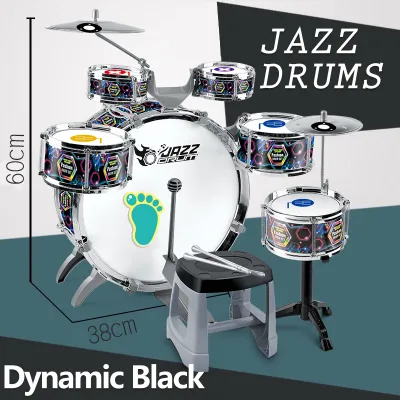

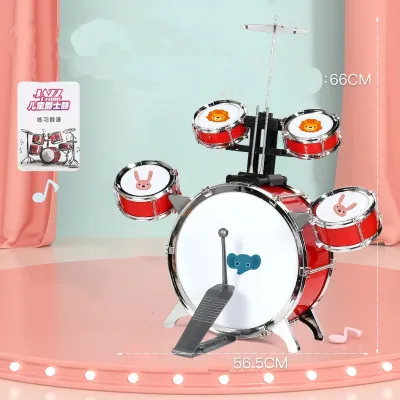
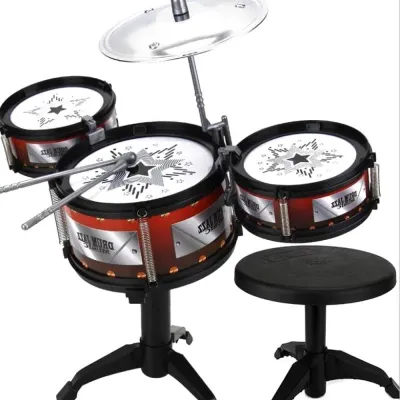
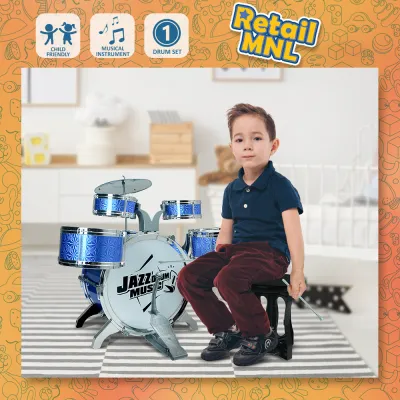
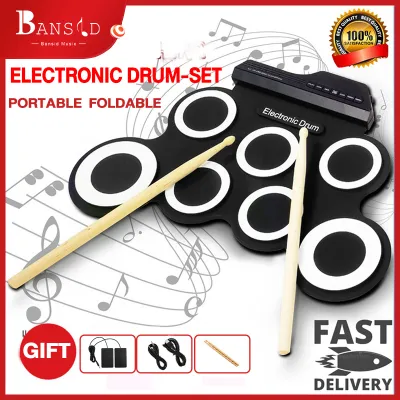
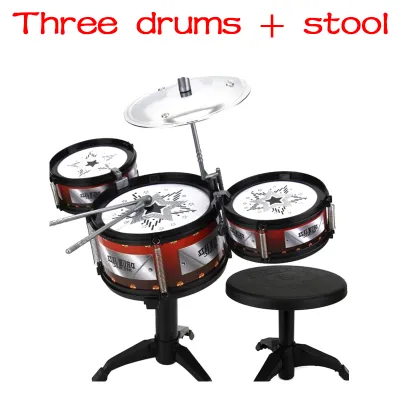
Prices are valid at publication and may change. Please refer to the product page for the latest price.
Physical Check: Why Height and Reach Dictate the Right Fit
Ergonomics play a critical role in how a young drummer develops their technique and maintains their enthusiasm. If a drum set is too large, your child will constantly overextend their limbs, leading to muscle strain in the shoulders, back, and hips. Conversely, playing on a kit that is too small forces them to hunch over, compressing their spine and restricting natural movement. Proper physical alignment prevents fatigue and protects developing joints from repetitive strain injuries.
To verify the correct fit, start by measuring your child’s inseam while they are seated on a stool. This measurement determines whether their feet can rest flat on the bass drum pedal and the hi-hat pedal without straining. Ideally, their thighs should slope slightly downward, placing their hips slightly higher than their knees. If their feet cannot comfortably reach the pedals or if their knees are pushed up too high, the setup will hinder their physical development.
Next, assess their arm reach by having them sit in the playing position and extend their arms toward the snare drum and cymbals. They should be able to strike the center of the snare drum and reach the crash or ride cymbals with a comfortable bend in their elbows. If they must lean forward or stretch their shoulders to hit a cymbal, the hardware is positioned too far away or is too large for their frame.
The foundation of this entire physical setup is a fully adjustable drum throne. Never substitute a standard household chair or a plastic stool, as these do not allow for precise height adjustments or proper pelvic support. A dedicated drum throne ensures your child’s weight is evenly distributed, allowing their legs to move freely to operate the pedals while keeping their core stable.
Choosing the Right Drum Set for Kids by Age Group
Selecting a drum set for kids requires understanding how different configurations match physical growth. Drum kits are categorized by the number of “pieces” they contain—which refers only to the drums themselves (snare, bass drum, and toms) and excludes cymbals and hardware. Matching these configurations to specific developmental stages ensures your child is neither overwhelmed by too many options nor limited by an inadequate setup.

Toddlers and Preschoolers (Ages 2–5)
For toddlers and preschoolers, a 3-piece junior drum set featuring a 12-inch or 14-inch bass drum is the ideal entry point. These kits typically include a snare drum, a single mounted tom-tom, a bass drum, and a small cymbal. It is crucial to differentiate between cheap plastic musical toys and genuine, entry-level wood-shell junior instruments. Wood-shell junior kits use tunable drumheads and real metal hardware, offering an authentic playing experience that responds to dynamic touch.
At this early developmental stage, the primary learning goals are developing basic rhythm, hand-eye coordination, and simple limb independence. Young children do not need a complex array of drums and cymbals, which can distract them from mastering fundamental beats. A simple, properly scaled 3-piece kit allows them to focus on striking the center of the drumhead and keeping time with a steady pulse.
Early Elementary (Ages 6–9)
As children enter early elementary school, their physical coordination and attention spans increase significantly. For this age group, a 3-piece to 5-piece junior drum set featuring an 18-inch bass drum provides the perfect balance of size and capability. A 5-piece kit adds a second rack tom and a floor tom, allowing the child to practice more complex drum fills and transitions across the kit.
This stage is also the ideal time to introduce a functional hi-hat stand and a dedicated ride cymbal. Operating the hi-hat pedal teaches essential foot-hand coordination, which is a cornerstone of modern drumming styles. Because children in this age range experience rapid growth spurts, investing in fully adjustable, medium-duty hardware is essential. Ensure the snare stand, cymbal stands, and drum throne can be raised and tilted to match their changing proportions.
Older Kids and Pre-Teens (Ages 10–12+)
By the time children reach age 10, they are often ready to transition to a standard or “fusion” sized drum set. Fusion kits typically feature a 20-inch bass drum and slightly smaller toms, making them easier to position for pre-teens who are still growing. Standard kits utilize a 22-inch bass drum, which offers a deeper, more resonant tone but requires a taller torso to see and reach over comfortably.
Transitioning to these larger kits also means upgrading to adult-sized, double-braced hardware and heavier, cast-bronze cymbals. These components are designed to withstand the increased striking force of older players and offer superior tonal clarity. If your child is on the shorter side but ready for a full-sized sound, you can configure a standard kit to accommodate them by mounting the rack toms on separate stands to the side of the bass drum, rather than directly on top of it, lowering their overall height.
Acoustic vs. Electronic: Choosing the Right Kit for Your Space
When looking for a drum set for kids, parents must decide between a traditional acoustic kit and a modern electronic setup. This decision often depends on your living situation, available space, and how noise will affect your household and neighbors. In many urban areas across the Philippines, such as dense residential neighborhoods or high-rise condominiums, managing volume is a primary concern.
Acoustic drum sets have a relatively large physical footprint and produce significant volume that can easily penetrate walls and floors. While they offer an unmatched tactile feel and natural dynamic response—teaching children how to control their volume through physical touch—they require dedicated space where high decibels are acceptable. In contrast, electronic drum kits are highly compact, often featuring foldable frames that can be tucked into a corner when not in use. They allow the player to practice silently using headphones, making them highly suitable for shared spaces or homes with close neighbors.
However, electronic kits do require a reliable power source, and their rubber or mesh pads feel different from real acoustic drumheads. On the benefit side, electronic modules come packed with built-in metronomes, coaching programs, and diverse sound libraries that can keep young learners engaged. Before choosing, verify the device compatibility, headphone jack sizes (such as 3.5mm or 6.35mm), and power specifications of any electronic kit. To help you weigh these factors, consider the following decision matrix:
| Feature / Scenario | Acoustic Drum Sets | Electronic Drum Sets |
|---|---|---|
| Physical Footprint | Large; requires a permanent, dedicated floor space. | Compact; many models feature foldable, space-saving frames. |
| Volume & Noise Control | High volume; requires acoustic treatment or isolated space. | Quiet; sound is routed to headphones; minimal pad impact noise. |
| Tactile Feel & Dynamics | Authentic rebound; teaches natural stick control and dynamics. | Synthetic feel; mesh heads offer realistic rebound but lack acoustic resonance. |
| Built-In Learning Tools | None; requires external metronomes, books, or devices. | Extensive; includes metronomes, play-along tracks, and coaching modes. |
| Climate Considerations | Wooden shells are sensitive to high tropical humidity and temperature shifts. | Electronic components require protection from moisture, dust, and power surges. |
Diagnostic Signs: When to Adjust or Upgrade the Current Kit
Children grow quickly, and a drum set that fit perfectly last year may now be causing physical discomfort or poor playing habits. Parents should regularly inspect their child’s posture and setup for clear diagnostic signs that indicate the kit needs adjustment or a complete upgrade. Ignoring these red flags can stall their musical progress and cause physical fatigue.
The first physical red flags are observable postural changes. If your child’s knees are consistently hitting the underside of the snare drum, or if they are hunching their shoulders forward to reach the cymbals, the kit has become too small. Another critical indicator is their foot positioning: if they cannot press the bass drum pedal flat-footed while keeping their thigh parallel to the floor, or if they are sitting so low that their knees are bent at an acute angle, the throne height must be adjusted immediately.
Hardware limitations also signal when a kit is reaching its expiration date. If the drum throne wobbles under your child’s weight, or if the junior-sized stands slip and fail to hold the weight of the drums and cymbals, they have likely exceeded the hardware’s weight and height capacity. Always check the manufacturer’s specified weight limits for the throne and stands to prevent sudden hardware failures or accidents.
When these signs appear, you have three actionable paths. First, attempt to maximize the current kit’s adjustments by raising the stands, tilting the toms, and extending the throne to its maximum safe height. If the drums are still usable but the seating is too low, you can replace specific hardware pieces—such as buying a taller, sturdier drum throne or a longer cymbal boom arm. Finally, if the physical shells themselves are simply too small to allow for proper ergonomic placement, it is time to upgrade to the next size category.
Frequently Asked Questions (FAQ)
Can a child play on a full-size adult drum set?
While a child can technically strike the drums on an adult-sized kit, doing so presents significant ergonomic challenges. To make a full-size kit work for a younger player, you must make substantial hardware modifications, such as lowering the snare stand to its absolute limit, mounting the rack toms on separate stands rather than the bass drum, and using a highly adjustable throne. However, if the child’s feet cannot comfortably reach the pedals while keeping their back straight, they should remain on a junior or fusion-sized kit to prevent developing poor physical habits.
What is the best age to start formal drum lessons?
Most music educators recommend starting formal drum lessons between the ages of 6 and 8. By this stage, children have developed the cognitive ability to focus for 30-minute intervals, understand basic mathematical concepts required for reading rhythm, and possess the physical coordination to control their limbs independently. Before this age, unstructured rhythmic play, hand percussion instruments, and simple rhythm games are highly effective for building a strong musical foundation without the pressure of formal instruction.
Do I need to buy a separate drum throne for my child?
Yes, a dedicated, adjustable drum throne is an essential purchase that should never be substituted with a standard household chair, stool, or bench. Standard seating does not allow you to adjust the height to the precise centimeter required for proper pelvic alignment and leg movement. A high-quality drum throne provides a stable, cushioned base that prevents slipping, supports the lower back, and allows your child to rotate their torso comfortably while playing.
Community discussion
Share your experience or ask a question. Comments are reviewed before publication.