
Selecting the right instrument cable is an overlooked aspect of building a guitar rig. While players spend hours researching amplifiers, pedals, and pickups, the physical link connecting these components often gets treated as an afterthought. A high-quality cable does not add anything to your tone; rather, its primary job is to preserve the raw signal of your instrument and prevent external interference from degrading your sound before it reaches your speakers.
Mogami has established a reputation among touring musicians and studio engineers for producing cables that prioritize signal transparency and physical durability. However, because different playing environments and instrument electronics place unique demands on your signal chain, there is no single cable model that suits every player. Finding the right match requires understanding how your guitar’s internal wiring interacts with the cable’s physical construction.
Assess Your Instrument and Pickup Configuration
Your guitar’s pickups are the starting point of your signal chain, and their design dictates how sensitive your setup is to cable characteristics. Passive pickups, which rely on traditional copper coils and magnets without external power, produce a high-impedance signal. This high-impedance output is highly susceptible to the electrical properties of the cable, particularly capacitance.
Products mentioned in this guide
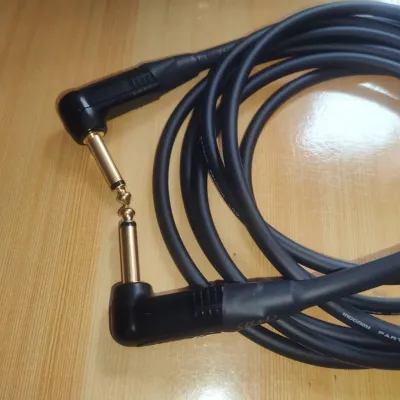
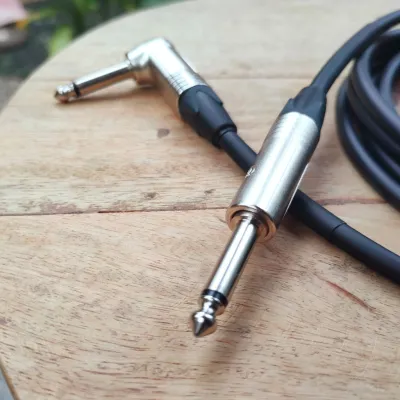
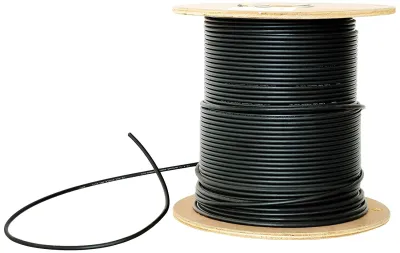
Prices are valid at publication and may change. Please refer to the product page for the latest price.
Capacitance is the natural tendency of two parallel conductors—in this case, the inner hot wire and the outer shield of your cable—to store an electrical charge. In a guitar cable, this capacitance acts as a subtle low-pass filter, gradually rolling off high-frequency treble frequencies as the cable length increases. If you use a cable with high capacitance, your passive guitar tone may sound muddy, dark, or lacking in articulation.
Active pickups, on the other hand, feature built-in preamplifiers powered by an onboard battery. This active circuitry buffers the signal, lowering the output impedance significantly. Because of this low-impedance output, active systems are largely immune to the high-frequency loss caused by cable capacitance. If your primary instrument uses active pickups, you have much more flexibility in choosing longer cable runs without worrying about losing your high-end sparkle.
When evaluating Mogami’s product lineup, you will find different series designed to address these specific electrical needs. The Mogami Platinum series is engineered with low capacitance, making it a suitable choice for passive pickups where preserving every detail of the high-frequency response is critical. The Mogami Gold series offers a slightly higher capacitance but provides a warm, balanced tonal response that many players prefer for classic rock or blues styles. Understanding your pickup type allows you to select a series that complements, rather than compromises, your instrument’s natural voice.
Match the Cable to Your Playing Environment
The physical space where you play your guitar determines the level of mechanical stress and electrical interference your cable must endure. In a stationary home studio or professional recording environment, physical movement is minimal, but the demand for absolute silence is incredibly high. For these settings, a cable designed for maximum shielding and minimal handling noise is essential, even if it is slightly stiffer or heavier.

Conversely, live stage performances demand a cable that can withstand constant movement, twisting, and being stepped on by bandmates. In tropical climates like the Philippines, high humidity and sweat can accelerate the wear on cable jackets and connectors. A live cable must feature a highly flexible outer jacket that resists kinking and does not become sticky or brittle over time.
Cable length is another critical factor that bridges the gap between tone and practicality. While a longer cable gives you more freedom to move around the stage, it also increases the total capacitance of your signal run. As a general rule, you should use the shortest cable that allows you to move comfortably. For home practice or small stages, a 10-foot or 15-foot cable is usually sufficient, while larger venues may require a 25-foot run.
The internal shielding of the cable plays a major role in rejecting electromagnetic interference from stage lights, power mains, and wireless systems. Mogami utilizes different shielding designs, such as spiral shielding and braided shielding. Spiral shielding offers exceptional flexibility and is easy to coil, making it highly suitable for active stage performers. Braided shielding, while stiffer, provides more comprehensive coverage and structural strength, making it highly effective for permanent studio installations where cables are rarely moved.
Choose Connectors and Geometry for Your Signal Chain
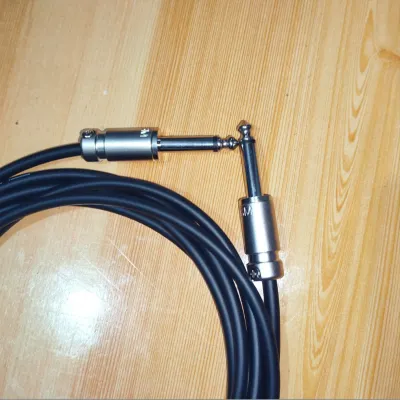
The physical connection points at either end of your cable are just as important as the copper wire inside. Choosing between straight and right-angle connectors depends entirely on the physical layout of your guitar’s output jack and your receiving equipment. For example, guitars with surface-mounted jacks, like a Les Paul or a classic offset body, benefit greatly from a right-angle connector because it keeps the cable profile low and reduces the leverage that could damage the jack if the cable is yanked.
Conversely, guitars with deeply recessed jacks, such as a Stratocaster, typically require a straight connector to ensure the plug can seat fully into the jack socket. The same logic applies to your amplifier and pedalboard inputs. If you are plugging directly into a crowded pedalboard, a right-angle plug can save valuable space and prevent the cable from sticking out where it could easily be kicked or damaged.
For players who use multiple effects pedals, the cables connecting those pedals—known as patch cables—are a critical part of the overall signal chain. Even if you use a premium cable from your guitar to your board, using low-quality patch cables between your pedals can degrade your signal and introduce unwanted noise. Integrating short, high-quality patch cables, such as those from the Mogami Gold Pedalboard series, helps maintain signal integrity across your entire board while keeping the layout neat and compact.
When inspecting connectors, pay close attention to the housing materials and contact plating. High-quality connectors, such as those manufactured by Neutrik and featured on Mogami cables, utilize gold-plated contacts to resist oxidation and corrosion. This corrosion resistance is particularly vital in humid environments, where moisture in the air can quickly tarnish nickel-plated connectors and lead to crackling or signal loss. Robust strain relief boots at the base of the connector are also essential, as they distribute the bending stress away from the delicate solder joints inside the plug.
Verify Authenticity and Integrate Your Cable
Because premium cables represent a significant investment, counterfeit products are a persistent concern in the global music market. To ensure you are purchasing a genuine Mogami cable, it is critical to buy exclusively from authorized dealers and established music distributors in the Philippines. Purchasing from unverified sellers on generic online marketplaces carries a high risk of receiving substandard imitations that do not perform to the brand’s specifications.
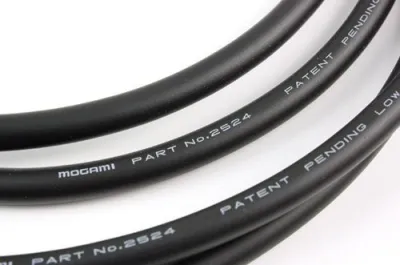
When you receive your cable, perform a thorough visual inspection to verify its authenticity. Genuine Mogami cables feature clean, precise branding printed along the outer jacket, with consistent spacing and font alignment. The heat-shrink tubing near the connectors should be neatly applied without bubbles or jagged edges, and the connectors themselves should feel solid and heavy in your hand.
Once you have verified the cable’s authenticity, integrate it into your rig and perform a systematic test. Start by plugging your guitar directly into your amplifier with the new cable, bypassing any pedals, to establish a baseline for the noise floor and tonal clarity. Listen closely for any hum or buzz, and gently wiggle the cable near the connectors to ensure there are no intermittent connection issues or crackles.
Next, compare the high-frequency response of the new cable against your old one. You should notice a clearer, more defined treble response, especially if you are using passive pickups and have switched to a lower-capacitance model. Finally, integrate the cable into your full pedalboard setup to ensure it coexists peacefully with your other gear and does not introduce any ground loops or interference.
Frequently Asked Questions (FAQ)
Do active pickups require a different cable specification than passive ones?
Active pickups do not strictly require a different cable specification, but they are far more forgiving of cable characteristics than passive pickups. Because active pickups feature an internal preamp that lowers the output impedance, the signal is buffered against the high-frequency loss typically caused by cable capacitance. This means you can use longer cables or models with slightly higher capacitance without experiencing the muddy high-end roll-off that would occur with a passive pickup setup. However, choosing a high-quality cable with robust shielding remains important to prevent external electromagnetic noise from entering your signal chain.
How should I clean and store my instrument cables to extend their lifespan?
Proper maintenance and storage are essential for preserving the performance and lifespan of your instrument cables. To clean your cables, periodically wipe down the outer jacket with a dry or slightly damp microfiber cloth to remove sweat, dirt, and stage grime; avoid using harsh chemical solvents that can degrade the rubber or PVC jacket. When storing your cables, always use the over-under coiling technique, which follows the natural lay of the wire and prevents internal twisting or strain on the conductors. Never wrap cables tightly around your hand and elbow, as this creates severe internal tension that can eventually break the copper shielding and lead to cable failure.
Community discussion
Share your experience or ask a question. Comments are reviewed before publication.