
Starting your musical journey with a Kawes electric guitar requires balancing your personal aesthetic preferences with practical playability. For a complete beginner, the ideal model is not necessarily the most expensive one, but rather the instrument that feels physically comfortable in your hands, stays in tune, and matches the genres of music you want to play. By focusing on key specifications such as body shape, neck profile, and pickup configuration, you can select a guitar that minimizes early learning frustrations and keeps you motivated to practice daily. Choosing the right starter instrument is a foundational step that shapes your technique, finger strength, and overall enjoyment of the learning process.
Identifying the Right Body Style for Your Comfort
The physical shape of your electric guitar plays a massive role in how long you can practice without experiencing physical fatigue. Kawes electric guitars come in several classic body styles, each offering distinct weight distributions and ergonomic profiles. For instance, double-cutaway body styles are highly popular among beginners because they typically offer a balanced center of gravity when worn with a strap. This balance prevents “neck dive,” a common issue where the headstock of the guitar pulls downward, forcing your fretting hand to constantly support the neck instead of focusing on forming chords.
When practicing while seated—which is how most beginners spend their first few months—the contours of the guitar body become incredibly important. A body with a belly carve (a contour on the back of the body) and a forearm bevel on the front allows the instrument to sit snugly against your torso. This ergonomic design prevents the sharp edges of the wood from digging into your ribs or forearm, promoting a relaxed, natural playing posture. On the other hand, traditional single-cutaway or slab-bodied designs may feel heavier and lack these contours, which can lead to discomfort during extended practice sessions.
Products mentioned in this guide
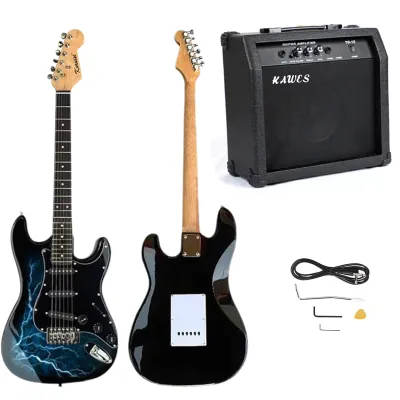
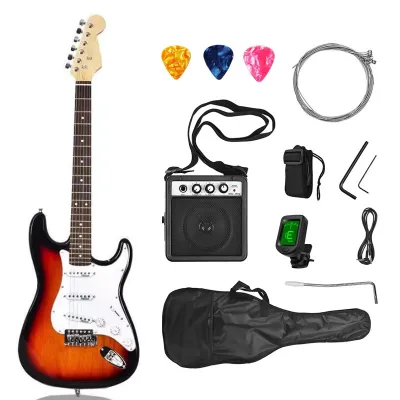
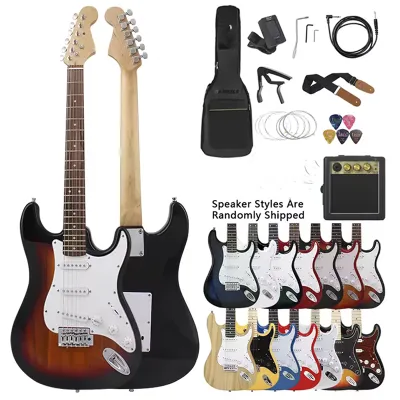
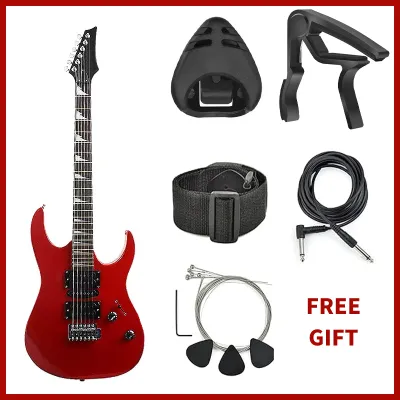
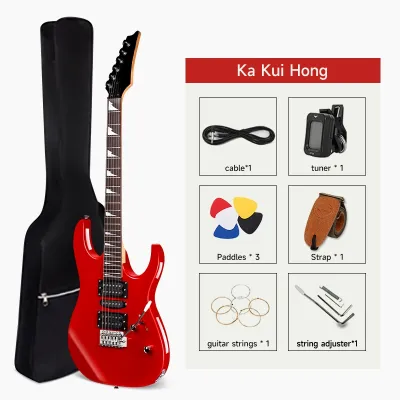
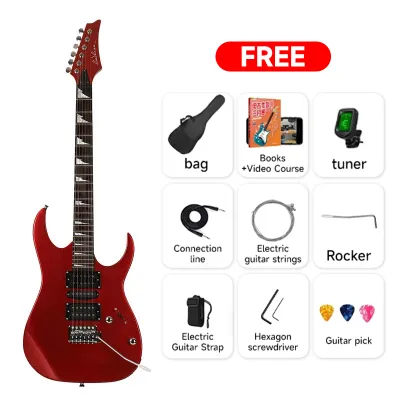
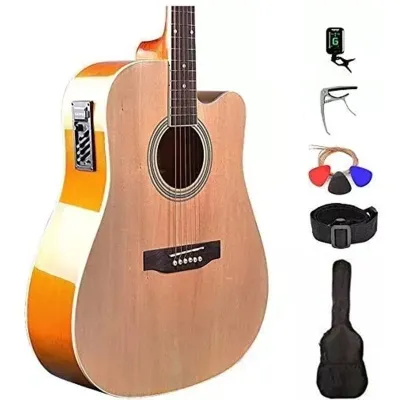
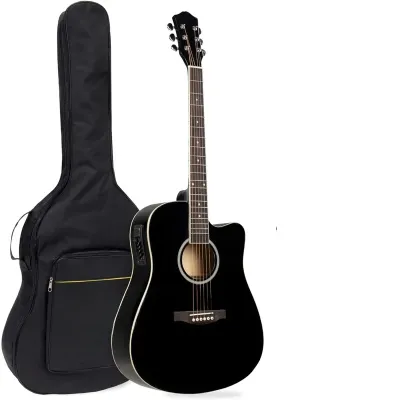
Prices are valid at publication and may change. Please refer to the product page for the latest price.
Before making a purchase, it is highly recommended to check the official Kawes product specifications for the exact weight and dimensions of the model you are considering. Electric guitars can range anywhere from 3.0 to over 4.5 kilograms. For younger players or those with a smaller frame, opting for a lighter model—often achieved through thinner body profiles or lightweight tonewoods—will make standing performances and long practice sessions much more manageable.
Evaluating Neck Profiles and Playability Features
The neck of the guitar is your primary point of contact with the instrument, making its shape and finish critical to your overall learning experience. Neck profiles are generally categorized by letters that describe their cross-sectional shape, such as “C,” “U,” or “V.” A modern “C”-shaped neck is widely considered the most versatile and comfortable profile for beginners. It provides a moderate thickness that fits naturally into the curve of the hand, reducing hand fatigue and cramping for players of all hand sizes.

Beyond the shape of the neck, you must pay close attention to the fretboard’s playability features. Fret sprout—where the metal fret ends protrude past the edge of the wooden fingerboard—is a common issue, especially in tropical climates like the Philippines where high humidity and temperature fluctuations cause wood to expand and contract. When evaluating a Kawes guitar, run your hand along the sides of the neck to ensure the fret edges are smooth and well-finished. Sharp fret edges can cause discomfort or even minor cuts, severely hindering your practice.
Additionally, check the factory string action, which is the height of the strings above the frets. If the action is too high, you will need to exert excessive finger pressure to fret notes, leading to unnecessary finger pain and discouragement. Conversely, if the action is too low, the strings may buzz against the frets. Beginners should verify the scale length (the distance between the nut and the bridge) and the nut width in the manufacturer’s spec sheet. A standard scale length of 24.75 to 25.5 inches and a nut width of around 42 millimeters offer a comfortable reach for most hand sizes.
Choosing the Ideal Pickup Configuration
The pickups are the “heart” of an electric guitar’s sound, translating string vibrations into electrical signals. As a beginner, understanding the difference between single-coil pickups and humbuckers will help you choose a Kawes model that aligns with your musical tastes. Single-coil pickups produce a bright, crisp, and clear tone that is highly suited for genres like pop, funk, country, and classic rock. However, they are susceptible to “60-cycle hum,” a background buzz that can become noticeable when using high-gain distortion.
Humbucking pickups, which use two coils wound in opposite directions, “buck the hum” to deliver a much quieter performance. They produce a thicker, warmer, and more powerful tone that is ideal for jazz, blues, hard rock, and heavy metal. Many modern Kawes electric guitars feature a combination of both, such as an “HSS” configuration (one humbucker at the bridge and two single-coils in the middle and neck positions). This setup offers incredible versatility, allowing you to experiment with a wide array of tones as you discover your musical identity.
Some models also include a coil-splitting feature, which allows you to temporarily deactivate one coil of a humbucker, effectively turning it into a single-coil. This added versatility is excellent for beginners who want to explore multiple genres without needing to buy multiple instruments. When choosing your pickup configuration, consider the type of amplifier and effects you plan to use, as high-gain amplifiers pair exceptionally well with humbuckers, while clean, ambient setups shine with single-coils.
Essential Accessories and Amplifier Pairing
An electric guitar cannot produce its signature sound on its own; it requires a proper amplification system and a few essential accessories to be fully functional. For beginners, a small, low-wattage solid-state practice amplifier is highly recommended. Look for an amplifier that features built-in digital effects (such as reverb, delay, and modulation) and, most importantly, a dedicated headphone output. A headphone jack is invaluable for silent practice, allowing you to hone your skills at any hour without disturbing your household or neighbors.
To connect your Kawes guitar to your amplifier, you will need a high-quality, shielded instrument cable. Cheap, unshielded cables often introduce unwanted hum and interference into your signal. Other essential accessories include a variety of guitar picks of different thicknesses, a comfortable and adjustable strap to support the guitar while standing, and a reliable digital tuner. Keeping your guitar in tune is crucial for training your ear, so a clip-on tuner or a tuning app on your smartphone should be used every time you pick up the instrument.
When shopping in the Philippines, it is highly beneficial to check local music stores for bundled starter packages. Many retailers offer comprehensive starter kits that include a Kawes electric guitar, a practice amplifier, a gig bag, a strap, cables, and picks at a combined price that is often more economical than purchasing each item individually. These bundles provide a convenient, all-in-one solution that ensures all your gear is compatible right out of the box.
Pre-Purchase Inspection and Setup Checklist
Whether you are purchasing your Kawes electric guitar from a physical retail store or receiving it from an online marketplace, conducting a thorough pre-purchase inspection is vital to ensure you receive a high-quality instrument. Start by inspecting the neck of the guitar. Hold the body of the guitar and look down the edge of the neck from the bridge to the headstock; the neck should be relatively straight with a very slight upward curve (known as relief). A severe upward bow or a backbow can cause severe fret buzz or make the guitar unplayable.
Next, inspect the hardware and electronics. Check the metal components, including the tuning pegs, bridge, and pickup covers, for any signs of rust, tarnish, or corrosion, which can occur during shipping or storage in humid environments. Plug the guitar into an amplifier and turn all the control knobs (potentiometers) for volume and tone, as well as the pickup selector switch. Listen closely for any scratchy, crackling, or popping noises through the speaker, which indicate dirty contacts or faulty wiring that may require repair.
Finally, test the tuning stability by tuning the guitar to standard pitch, playing a few chords, and performing moderate string bends. If the guitar immediately slips out of tune, the tuning machines may be loose, or the strings may not be properly stretched. If you notice that the action is uncomfortably high or the intonation is off (meaning notes sound out of tune as you play higher up the neck), do not hesitate to take the instrument to a qualified local guitar technician. A professional setup can transform a budget-friendly Kawes guitar into an incredibly smooth, easy-to-play instrument.
Frequently Asked Questions (FAQ)
Do I need to buy a separate amplifier for a Kawes electric guitar?
Yes, solid-body electric guitars produce very little acoustic sound on their own because they lack a hollow chamber to amplify string vibrations. To hear your playing clearly and enjoy the full tonal range of the instrument, you will need an external amplification source. If a traditional practice amplifier is too bulky or expensive, you can opt for a compact headphone amplifier that plugs directly into your guitar, or an audio interface that connects the guitar to your computer or smartphone, allowing you to practice silently using digital amp modeling software.
How often should a beginner change the strings on their electric guitar?
As a general rule, beginners should change their guitar strings every three to four months, or after approximately 100 hours of playing time. In the humid tropical climate of the Philippines, moisture and hand sweat can accelerate string degradation, leading to rust and corrosion. You can easily identify worn-out strings by looking for physical discoloration, a rough or stiff texture under your fingers, and a noticeable loss of tonal brightness and sustain. Replacing your strings regularly ensures optimal playability and keeps your Kawes guitar sounding fresh.
Community discussion
Share your experience or ask a question. Comments are reviewed before publication.