
Choosing the right guitar strings full set requires matching the string material to your guitar’s physical build and selecting a gauge that fits your finger strength and playing style. A mismatch can ruin your instrument’s tone or, in extreme cases, cause permanent structural damage to the neck and bridge. Selecting the ideal set involves understanding how different metals interact with your guitar’s pickups or soundboard, and how string thickness alters playability and tension.
Quick Guide to Matching Strings to Your Guitar
You must match the string material to the specific design of your instrument to ensure proper sound production and prevent damage. Acoustic guitars require bronze or brass alloy strings to project sound naturally through their wooden soundboards. Electric guitars need strings made from magnetic alloys, such as nickel-plated steel or stainless steel, to interact with the magnetic pickups. Classical guitars strictly require nylon or fluorocarbon strings, which exert much lower tension than steel strings.
Installing steel strings on a classical guitar is a common mistake that can warp the neck or pull the bridge off the top. Classical guitars are constructed with delicate wood and fan bracing designed to withstand only about 75 to 90 pounds of tension. A standard set of light steel strings exerts over 160 pounds of tension, which will quickly warp the neck, pull the bridge off the top, or crack the soundboard. Conversely, putting nylon strings on an electric or standard acoustic guitar will result in almost no volume and a muddy, unplayable tone.
Products mentioned in this guide
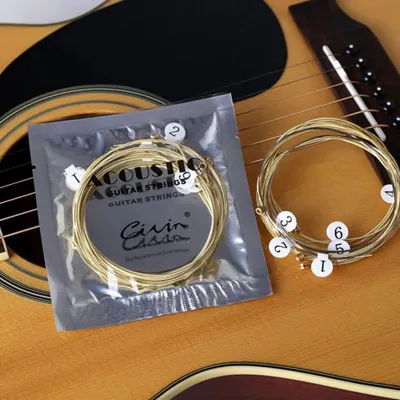

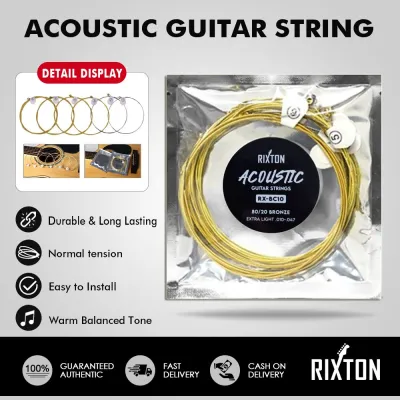

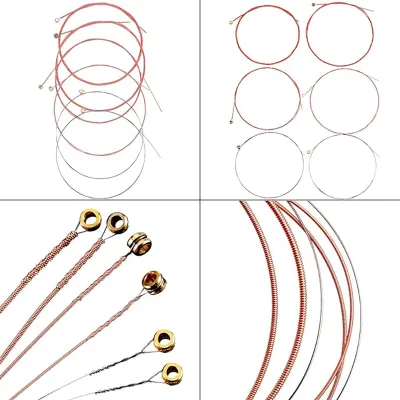

Prices are valid at publication and may change. Please refer to the product page for the latest price.
A guitar strings full set must align with both the structural limits of your instrument and your musical goals. Each type of guitar is engineered to handle a specific range of physical tension and to project sound through distinct physical mechanisms. Selecting a set that matches your instrument’s construction and your intended genre is the first step to achieving a great sound.
Match the String Type to Your Guitar
Before looking at specific brands or gauges, you must identify the exact category of your guitar. The three main types of guitars—acoustic, electric, and classical—rely on completely different string constructions to produce their signature sounds.

Acoustic Guitar Strings
Acoustic guitar strings are engineered to project sound purely through mechanical vibration without the aid of electronic amplification. These strings feature a high-carbon steel core wire, which is typically hexagonal in shape to help the outer wrap wire grip the core securely. The wrap wire is made from non-magnetic copper alloys, most commonly phosphor bronze or 80/20 bronze.
Phosphor bronze strings consist of approximately 92% copper, 8% tin, and a small amount of phosphorus, producing a warm, rich tone with a balanced frequency response. They tend to retain their brightness longer than other uncoated alloys because the phosphorus resists corrosion. In contrast, 80/20 bronze strings, made of 80% copper and 20% zinc, offer a very bright, crisp, and metallic sound that gradually mellows over time.
Visually, acoustic wound strings have a distinct golden, reddish, or brassy hue, which sets them apart from the silver-colored strings used on electric guitars. Tactilely, the wound strings feel rougher under your fingers because the bronze wrapping is thicker and designed to transfer maximum vibrational energy to the guitar’s wooden top.
Electric Guitar Strings
Electric guitar strings rely on electromagnetic induction to produce sound. When a string vibrates, it disrupts the magnetic field of the guitar’s pickups, generating a small electrical signal that is sent to an amplifier. Because of this, electric strings must be made from highly magnetic materials, such as nickel-plated steel, pure nickel, or stainless steel.
Nickel-plated steel is the most popular choice for electric guitars, offering a balanced combination of bright high frequencies, warm mids, and a strong, punchy attack. Pure nickel strings provide a warmer, rounder, vintage-style tone reminiscent of 1950s and 1960s rock and blues. Stainless steel strings are exceptionally bright, highly resistant to corrosion, and offer a slick feel, though they can cause slightly faster wear on your guitar’s frets.
The plain, unwound strings (typically the high E, B, and sometimes G strings) are made of tin-plated high-tensile steel. These strings are generally thinner and much more flexible than their acoustic counterparts, allowing electric players to execute wide pitch bends and rapid soloing techniques with minimal effort. The overall tension of an electric set is significantly lower than that of an acoustic set of a similar gauge.
Classical Guitar Strings
Classical guitars, also known as Spanish guitars, are designed for classical, flamenco, and traditional folk music. The treble strings (E, B, and G) are made from solid clear or black nylon, or sometimes fluorocarbon, which produces a bright, focused projection. The bass strings (D, A, and low E) consist of a core made of hundreds of fine nylon filaments wrapped with silver-plated copper or bronze wire.
You must never install steel acoustic or electric strings on a classical guitar. Classical guitars are constructed with delicate wood and fan bracing designed to withstand only about 75 to 90 pounds of tension. A standard set of light steel strings exerts over 160 pounds of tension, which will quickly warp the neck, pull the bridge off the top, or crack the soundboard.
Classical strings also differ in how they attach to the instrument. Instead of using a metal ball-end to anchor the string inside the bridge, classical strings are usually tie-end, meaning you must manually tie a specific knot around the bridge block to secure each string. Some modern classical strings feature ball-ends for easier installation, but they still maintain the low-tension nylon construction required for classical instruments.
Choose the Right String Gauge for Your Playing Style
String gauge refers to the physical thickness of the strings, measured in thousandths of an inch. A standard light electric set is often referred to as a ‘nine set’ because the high E string measures .009 inches, while a standard acoustic light set is a ‘twelve set’ (.012 inches). Choosing the correct gauge is a balance between physical playability and tonal depth.
Light Gauges for Bending and Fingerstyle
Light gauge strings are highly recommended for beginners, fingerstyle players, and lead guitarists who perform frequent string bends. For electric guitars, light gauges typically range from .008-.038 to .009-.042, while acoustic light gauges generally fall between .010-.047 and .011-.052.
Lighter strings require much less physical pressure to frets, making them gentler on developing calluses and reducing hand strain during long practice sessions. The lower tension allows you to bend notes smoothly, which is essential for blues, rock, and country lead playing. Furthermore, light strings respond quickly to a soft touch, making them ideal for delicate fingerstyle arrangements where heavy picking is not required.
However, lighter strings have less physical mass, meaning they transfer less energy to the guitar’s soundboard, resulting in a quieter acoustic volume. The overall sound can lack low-end warmth and sustain, sometimes sounding thin or tinny through an amplifier or in an acoustic room. Thin strings are also more fragile and are more likely to snap during aggressive strumming or heavy-handed picking.
Medium to Heavy Gauges for Strumming and Drop Tunings
Medium and heavy gauge strings are preferred by rhythm guitarists, bluegrass flatpickers, and metal players who use alternative lower tunings. Typical medium to heavy ranges include .011-.050 or higher for electric guitars, and .012-.053 to .013-.056 for acoustic guitars.
Thicker strings provide a massive, robust sound with rich low frequencies and exceptional natural sustain. They resist the physical impact of heavy flatpicks, allowing you to strum aggressively without the strings rattling or buzzing against the frets. This makes them the standard choice for acoustic players who need maximum volume in acoustic ensembles.
Additionally, heavy gauges are necessary for alternative tunings. If you tune your guitar down to Drop D, D Standard, or Drop C, standard light strings will become loose and floppy, causing severe fret buzz and poor intonation. Heavy strings maintain proper tension at lower pitches, keeping your notes clear and in tune. The main trade-off is that they require significant hand strength to press down and bend, which can lead to rapid hand fatigue if you are not accustomed to them.
Material and Coating: Shaping Your Tone and Lifespan
The metal alloy used to wrap your strings determines their baseline tone, while protective treatments dictate how long that tone will last before succumbing to environmental wear.
Core Materials and Tone Profiles
When selecting a full set, pay close attention to the specific alloys listed on the packaging rather than relying on generic marketing terms. The chemical composition of the wrap wire directly shapes your guitar’s acoustic or electric voice.
For acoustic guitars, 80/20 bronze delivers a bright, scooped midrange with a crisp high-end sparkle that cuts through a mix, making it excellent for dark-sounding dreadnought guitars. Phosphor bronze offers a more balanced, warm, and mid-forward tone that complements brighter-sounding tonewoods like maple or birch.
For electric guitars, nickel-plated steel provides a modern, balanced output with a sharp attack that works well across almost all genres, from pop to heavy metal. Pure nickel strings offer a softer high-end and a rich midrange, perfect for warm jazz, blues, and classic rock. Stainless steel strings yield an aggressive, bright tone with maximum bite, ideal for cutting through dense high-gain metal mixes.
Coated vs. Uncoated Strings for Humid Climates
In tropical, high-humidity environments like the Philippines, choosing between coated and uncoated strings is a critical decision that directly affects your maintenance budget and playing experience. High humidity, salty coastal air, and the natural sweat and oils from your fingers accelerate the oxidation process, causing bare metal strings to rust, turn black, and lose their vibrant tone in as little as a few days.
Coated strings feature an ultra-thin polymer or chemical barrier (such as Elixir’s Nanoweb or D’Addario’s XS series) that prevents moisture, sweat, and dirt from reaching the metal core and wrap wire. They can last three to five times longer than uncoated strings, maintaining their fresh tone and smooth feel for months even in humid weather. This makes them highly cost-effective in the long run, even though a premium coated set can cost between ₱800 and ₱1,500. The main trade-off is that some players find that the polymer coating makes the strings feel slightly slippery or plastic-like, and it can slightly dampen the initial high-end bite.
Uncoated strings are the traditional choice, offering a raw, textured feel and an immediate, uncompromised brightness. They are highly affordable, with budget-friendly sets typically priced between ₱300 and ₱500. However, without a protective barrier, uncoated strings oxidize rapidly in humid climates. If you do not wipe them down thoroughly after every playing session, they will quickly develop a rough, rusty texture that can accelerate fret wear and dull your tone, requiring much more frequent replacements.
What to Check Before Buying a Full Set
Before purchasing a new guitar strings full set, you must verify that the physical specifications of the strings match your guitar’s hardware, scale length, and configuration.
Scale Length and String Count
The first step is to confirm the number of strings your guitar requires. While the vast majority of guitars are standard 6-string instruments, you must be careful not to accidentally purchase a 7-string, 8-string, or 12-string set unless your instrument specifically requires it.
You must also consider your guitar’s scale length, which is the distance between the nut and the bridge saddle. Most electric guitars (24.75 to 25.5 inches) and acoustic guitars use standard-length string sets, which are long enough to wind comfortably around the tuning posts. However, instruments with shorter scales, such as 3/4-size acoustic guitars or travel electrics, can sometimes require specific short-scale strings, or you will need to trim a significant amount of excess wire from the ends.
Conversely, baritone guitars (usually 27 inches or longer) require specialized, extra-long string sets. If you attempt to use a standard set, the thick, wound portion of the string may not be long enough to reach the tuning peg, or the core wire may snap under the tension required to tune to pitch.
Bridge and Tuning Peg Compatibility
The physical ends of the strings must match how they anchor to your guitar’s bridge. Ball-end strings feature a small brass bead or ball secured at one end and are the universal standard for almost all electric guitars and steel-string acoustic guitars. On acoustics, the ball-end is inserted into the bridge hole and secured beneath the top using a removable bridge pin. On electrics, the ball-end anchors inside the bridge block or tailpiece.
Standard classical guitar strings do not have ball-ends. Instead, they are plain at both ends, requiring you to tie a secure loop knot around the classical bridge tie-block. Attempting to use ball-end strings on a traditional classical bridge can damage the delicate wooden tie-block if the bridge is not designed to accommodate them.
Additionally, consider your tuning pegs. If your electric guitar is equipped with locking tuners, you must ensure that your high-gauge strings are not too thick to pass through the small hole in the tuning post. Some heavy-gauge low strings (such as .056 or thicker used for drop tunings) may require you to slightly enlarge the tuning post hole or purchase a specialized set with tapered ends. If you have a locking tremolo bridge like a Floyd Rose, you will need to cut the ball-ends off the strings before clamping them into the bridge saddles, making standard ball-end sets perfectly compatible but requiring an extra installation step.
Frequently Asked Questions (FAQ)
Can I mix and match single strings instead of buying a full set?
While you can purchase single strings to replace a single broken string in an emergency, mixing and matching different brands, materials, or ages to build a custom set is generally not recommended. Strings from different manufacturers use varying core-to-wrap ratios, alloys, and manufacturing tolerances, which can lead to highly uneven tension across your guitar’s neck. This uneven tension can cause localized fret buzzing, poor intonation, and an inconsistent tone where some strings sound bright and others sound dull. For the best playability and a balanced sonic response, it is always best to install a fresh, matched guitar strings full set.
How often should I replace my full set of guitar strings?
There is no rigid calendar schedule for changing strings, as replacement frequency depends on how often you play, the acidity of your sweat, and your local environment. Instead, look for physical and auditory warning signs that your strings are worn out. If your strings look dark, rusty, or discolored, feel rough or stiff to the touch, or struggle to stay in tune, it is time for a replacement. Auditory signs include a sudden loss of high-end brightness, a muddy or dead sustain, and persistent intonation issues where notes sound out of tune even when the open strings are perfectly tuned.
Do I need to adjust my guitar setup when changing string gauges?
Yes, if you make a significant change in string gauge, your guitar will almost certainly require a setup adjustment. Moving to a heavier gauge increases the physical tension pulling on the neck, which will cause the neck to bow forward, raising your action (the height of the strings above the fretboard). Moving to a lighter gauge reduces tension, causing the neck to straighten or back-bow, which leads to severe fret buzz. To correct this, you or a qualified technician will need to adjust the truss rod to restore the proper neck relief. You may also need to adjust the bridge saddle heights for action, the saddle positions for intonation, and occasionally widen the nut slots if a thicker string does not sit properly in the existing slots.
Community discussion
Share your experience or ask a question. Comments are reviewed before publication.