
Selecting the correct guitar string material is the most critical decision you can make for your instrument’s playability, tone, and structural health. The fundamental rule is simple: your guitar’s build dictates the string material you must use. Classical guitars require nylon strings, acoustic guitars need bronze-alloy steel strings, and electric guitars require magnetic steel or nickel-plated strings. Using the wrong material can ruin your instrument’s tone or cause permanent structural damage.
Why Guitar String Material and Tension Matter for Your Instrument
Every guitar is engineered to withstand a specific range of physical tension. Steel strings exert a massive amount of pulling force on the instrument, often exceeding 150 pounds of tension when tuned to standard pitch. To handle this immense force, steel-string acoustic and electric guitars are built with thick internal wood bracing and an adjustable steel rod, known as a truss rod, running through the neck. This rod counteracts the forward pull of the strings, keeping the neck straight and playable.
In contrast, classical guitars are built with delicate, lightweight bracing designed to maximize the resonance of low-tension nylon strings. Nylon strings exert roughly half the tension of steel strings, usually averaging between 75 and 90 pounds. Because of this lower tension, classical guitars do not have steel truss rods in their necks. If you install high-tension steel strings on a classical guitar, the neck will bow forward, the bridge may rip off the soundboard, and the top wood can crack under the pressure, instantly voiding any manufacturer warranty.
Products mentioned in this guide
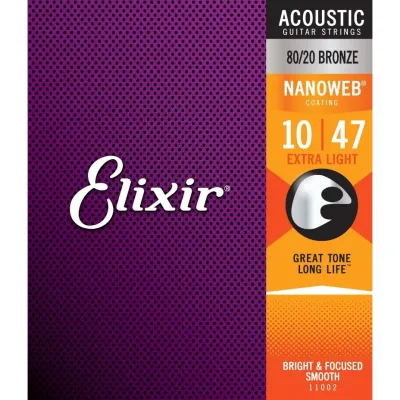

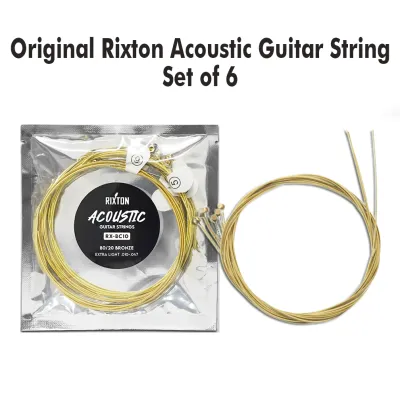

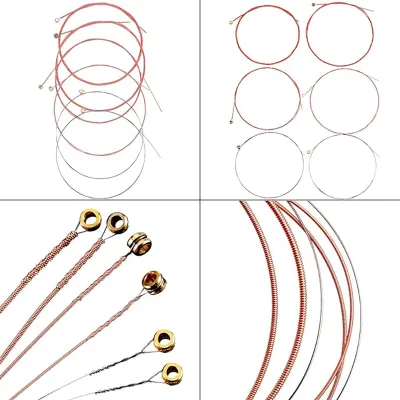
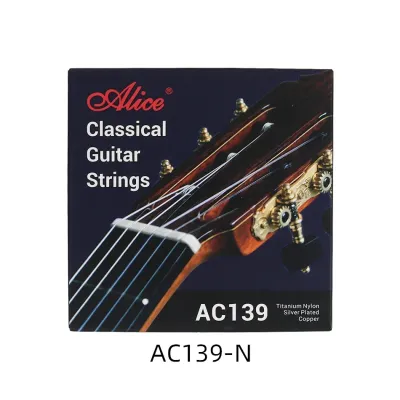
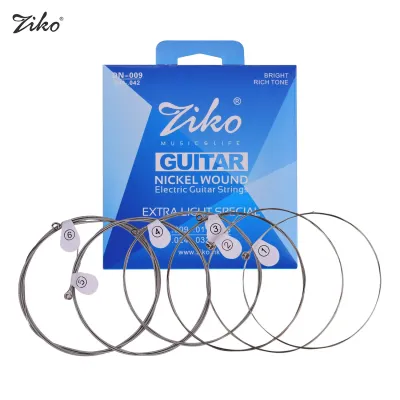
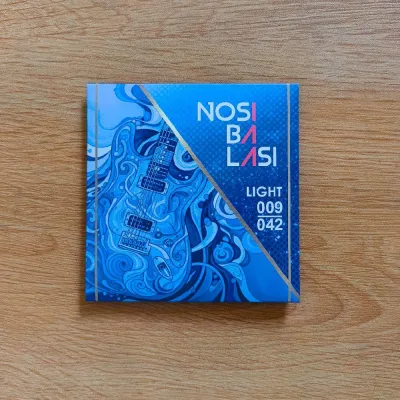
Prices are valid at publication and may change. Please refer to the product page for the latest price.
The physical design of the bridge and tuning pegs also differs by string type. Classical guitars feature a tie-block bridge where strings are manually knotted around a wooden block, and the headstock has thick plastic rollers. Steel-string guitars use bridge pins to anchor ball-end strings inside the body, and the headstock features thin metal tuning posts. Trying to force a string type onto an incompatible bridge design is a recipe for tuning instability and physical damage.
Classical Guitars: Choosing Nylon Strings and Tension Levels
Classical guitar strings are made primarily of nylon, but a standard set is divided into two distinct material types. The treble strings (E, B, and G) are solid, plain nylon filaments, which can be clear, black, or rectified for a textured grip. The bass strings (D, A, and E) consist of a core made of hundreds of fine nylon fibers wrapped in a thin metal wire, typically silver-plated copper or bronze. This combination provides the warm, mellow, and deeply resonant tone characteristic of classical and flamenco music.

Instead of being categorized by thickness or gauge, nylon strings are classified by tension levels: normal, hard, and extra hard. Normal tension strings are highly flexible, easy on the fingers, and suitable for beginners or players with a lighter touch. Hard tension strings require more finger strength but offer greater volume, faster note attack, and better projection. Extra hard tension strings provide maximum resistance and are suited for aggressive flamenco strumming or guitars with longer scale lengths.
Before purchasing, always perform a quick visual check of your instrument. If your guitar has a tie-block bridge, wide plastic tuning rollers, and no truss rod adjustment cover on the headstock, it is a classical guitar. You must purchase tie-end nylon strings to ensure the instrument remains safe and playable.
Acoustic Guitars: Navigating Bronze Alloys and Steel Cores
Acoustic steel-string guitars rely on a steel core wire wrapped with a copper-alloy wire on the lower strings to produce a bright, loud, and projecting tone. The two most common wrapping materials are Phosphor Bronze and 80/20 Bronze. Phosphor Bronze strings consist of 92% copper and 8% tin, with a small amount of phosphorus. They produce a warm, balanced tone with rich mid-range frequencies. Because phosphorus resists corrosion, these strings maintain their tone longer, making them highly recommended for humid tropical climates like the Philippines, where moisture and sweat can quickly dull untreated metal.
On the other hand, 80/20 Bronze strings are made of 80% copper and 20% zinc. They deliver an incredibly bright, crisp, and sparkling tone out of the box. However, they oxidize much faster than phosphor bronze, meaning their bright tone will fade more quickly under humid conditions unless they feature a protective polymer coating.
If you find standard steel strings too stiff or painful to play, Silk and Steel strings offer an excellent alternative. These strings feature a steel core wrapped in silk or nylon fibers before the outer silver-plated copper wire is wound. This design significantly lowers the overall tension and provides a soft, mellow feel, making them highly suitable for smaller-bodied parlor guitars or beginners building finger calluses. Always verify that your acoustic guitar has bridge pins and an adjustable truss rod before installing any steel-core strings.
Electric Guitars: Selecting Nickel, Steel, and Winding Types
Electric guitars do not rely on a hollow wooden body for acoustic projection; instead, they use magnetic pickups to capture string vibrations and send them to an amplifier. Because of this, electric guitar strings must be made of highly ferromagnetic materials. The most popular choice is nickel-plated steel, which balances the bright, magnetic response of steel with the warm, smooth feel of nickel. For a warmer, vintage-style tone reminiscent of early rock and jazz, pure nickel strings are an excellent option. If you need maximum brightness, high output, and exceptional resistance to rust in humid environments, stainless steel strings are a practical choice.
The physical texture of the string winding also plays a major role in your playing experience. Roundwound strings are the industry standard, featuring a round wire wrapped around the core. They are bright and punchy but produce noticeable finger-sliding noise and cause more wear on your frets over time. Flatwound strings feature a flat, ribbon-like outer wire, resulting in a completely smooth surface. They produce a warm, dark, and mellow tone with virtually zero finger noise, making them a common choice for jazz guitarists and players who want to minimize fret wear.
When choosing electric guitar strings, you must also consider compatibility with your guitar’s physical setup. Installing a heavier string gauge than what your guitar was originally set up for can cause the strings to bind in the nut slots, throw off the intonation, or require you to adjust the tension springs on a tremolo bridge system.
Pre-Purchase Checklist: Verifying String Compatibility
Before you spend your hard-earned ₱ on a new set of strings, run through this quick checklist to ensure proper compatibility:
- Check the Bridge and Headstock: Does your guitar require ball-end strings that anchor with bridge pins, or tie-end strings that knot around a classical bridge?
- Read the Packaging Carefully: Look for the material composition (e.g., Phosphor Bronze, Nickel-Plated Steel, or Nylon) and the gauge thickness. Standard light gauges are typically .012-.053 for acoustic guitars and .009-.042 for electric guitars.
- Identify Specialty Needs: If you play a 12-string guitar, you must buy a dedicated 12-string set to avoid putting double the tension on the neck. Resonator guitars often require heavier, specialized strings to properly vibrate the internal metal cone. Acoustic-electric hybrid guitars with magnetic pickups require electric guitar strings, whereas those with piezo pickups under the saddle can use standard acoustic bronze strings.
By taking a few moments to verify these details, you will protect your instrument from damage and ensure you get the exact tone and playability you need.
Frequently Asked Questions (FAQ)
Can I put steel strings on a classical guitar?
No. Classical guitars are not built to withstand the high tension of steel strings. They lack an internal steel truss rod to reinforce the neck and have much lighter top bracing. Installing steel strings will warp the neck, lift the bridge off the soundboard, or crack the top wood.
Do acoustic and electric guitar strings use the same materials?
No. Acoustic guitar strings typically use bronze alloys (like phosphor bronze) designed for acoustic projection and natural resonance. Electric guitar strings require ferromagnetic materials like nickel or steel so that the guitar’s magnetic pickups can capture the string vibrations and send a clear signal to the amplifier.
How do I know if my guitar needs normal or hard tension nylon strings?
Choose normal tension if you prefer a softer feel, play light fingerstyle, or have a vintage classical guitar with delicate bracing. Opt for hard tension if you have a strong attack, play flamenco or aggressive classical styles, or want more volume and projection from a modern, sturdy instrument.
Community discussion
Share your experience or ask a question. Comments are reviewed before publication.