
Finding the right guitar pick is one of the simplest yet most impactful ways to shape your tone and playing comfort. When searching for a reliable pic, guitar players often overlook how a fraction of a millimeter or a change in material can completely alter their instrument’s voice. The best choice depends entirely on your playing style, your guitar type, and even the climate you play in.
In warm, humid environments like the Philippines, factors like sweat and humidity also play a major role in how a pick feels in your hand. A pick that slips easily can disrupt your rhythm, while one with the right texture can keep your playing precise. By understanding the relationship between thickness, material, and technique, you can easily find the perfect match for your musical goals.
Understanding Guitar Pick Thickness
Guitar pick thickness is measured in millimeters and generally falls into four main categories: thin, medium, heavy, and extra heavy. Thin picks usually measure under 0.60 mm, medium picks range from 0.60 mm to 0.80 mm, heavy picks span from 0.80 mm to 1.20 mm, and anything above 1.20 mm is considered extra heavy. These measurements directly dictate how much the pick bends when it strikes a string.
Products mentioned in this guide
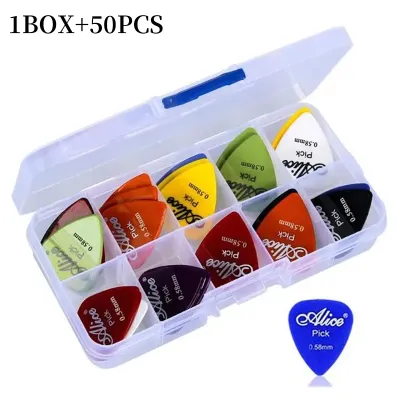


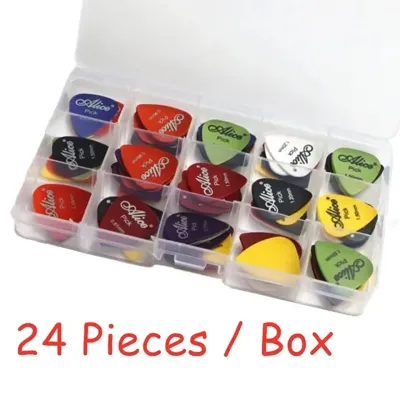
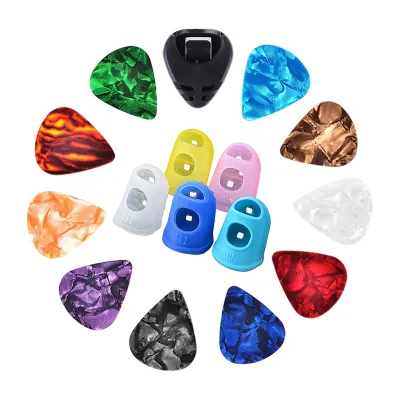
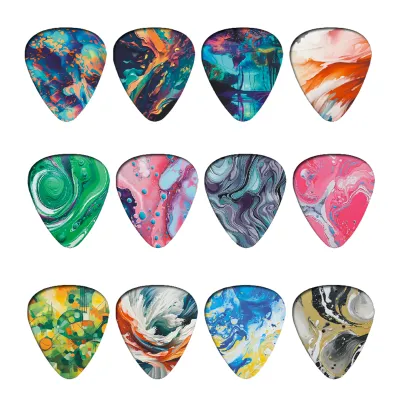
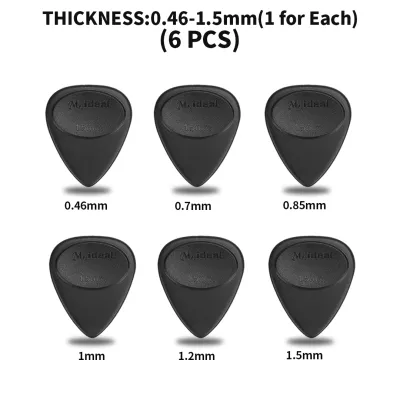
Prices are valid at publication and may change. Please refer to the product page for the latest price.
Thinner picks offer excellent flexibility, making them highly forgiving for rhythmic strumming. Because they bend easily, they glide across the strings with minimal resistance, producing a bright, breezy sound with a prominent clicking noise. However, this flexibility comes at the cost of note-to-note definition and volume, making thin picks less suitable for fast soloing or heavy riffs.
Conversely, thicker picks provide the rigidity needed for precise single-note articulation and a much fuller, bass-rich tone. Because a thick pick does not bend, it transfers the full force of your hand directly to the string, resulting in a stronger attack and greater dynamic control. This stiffness allows you to play faster, more accurate lead lines, though it requires a more relaxed grip to avoid dropping the pick or snapping strings.
Decoding Common Guitar Pick Materials
The material of your pick determines its texture, durability, and overall tonal warmth. Nylon is one of the most popular choices, known for its extreme flexibility and soft, warm attack. Nylon picks are highly resilient and rarely snap, making them a durable option for everyday practice. Because nylon can be slippery, manufacturers often mold raised grip textures onto the surface, which is incredibly helpful for keeping a secure hold during hot, humid gigs.

Celluloid is a classic material that closely mimics the feel and acoustic properties of traditional tortoise shell. It offers a smooth, polished texture and produces a very balanced, vintage tone with a bright, crisp attack. While celluloid provides excellent tonal clarity, it tends to wear down faster than modern synthetics and can become slick when exposed to finger sweat, requiring occasional wiping during long playing sessions.
Delrin, often marketed under various proprietary names like Tortex, is a highly durable synthetic polymer designed to address the shortcomings of older materials. It features a matte, slightly powdery texture that offers an exceptional natural grip, even in high-humidity conditions. Delrin picks wear down incredibly slowly, maintain their shape over long periods of heavy use, and deliver a very articulate, punchy response that highlights the mid-range frequencies of your guitar.
Matching Pick Specs to Your Playing Style
To find your ideal setup, you must match these physical specifications to your primary playing techniques. If you are an acoustic guitarist who mostly plays rhythm accompaniment or open-chord folk songs, a flexible, thinner pick (around 0.50 mm to 0.60 mm) made of nylon or thin celluloid is highly recommended. This combination allows you to strum rapidly without snagging the strings, keeping your rhythm smooth and your acoustic tone bright and airy.
For versatile players who constantly switch between rhythm strumming and light lead work, a medium-thickness pick (0.70 mm to 0.80 mm) serves as the ultimate middle ground. A medium celluloid or Delrin pick offers enough flexibility for comfortable strumming while retaining enough stiffness to handle classic rock solos and melodic fills. This versatility makes it the standard starting point for most electric guitarists.
If your style leans toward fast alternate picking, heavy metal, jazz, or intricate progressive rock, you will benefit most from a thick, rigid pick (0.90 mm to 1.50 mm). The lack of flex ensures instant string response, allowing you to execute rapid-fire runs and heavy palm-muted riffs with absolute precision. Heavy Delrin or thick nylon picks are excellent choices here, providing the necessary grip and durability for aggressive playing.
Keep in mind that your guitar’s string gauge also influences this decision. Heavy strings require a slightly thicker pick to prevent the string from overpowering the pick, while light strings can feel uncomfortable if struck with an excessively heavy, unyielding pick. Ultimately, you should test a few different combinations to see how they interact with your specific instrument and hand strength.
Secondary Specs That Matter Less
While thickness and material are the primary drivers of performance, other design elements play a much smaller role in your overall sound. The classic teardrop shape, often referred to as the 351 shape, is the industry standard for a reason. It provides a balanced balance of grip area and tip sharpness, making it perfectly sufficient for the vast majority of beginner and intermediate players without the need to seek out exotic shapes.
Similarly, features like molded grip textures, thumb indentations, and highly specialized beveled edges are matters of personal comfort rather than tone-defining specifications. While a textured grip can help prevent slippage in tropical climates, it does not change how the pick vibrates the string. You should also ignore novelty prints, glowing materials, or oversized novelty picks, as these rarely offer any functional advantage and are often made of lower-quality plastics that wear out quickly.
Frequently Asked Questions (FAQ)
Does a more expensive guitar pick improve tone?
No, a higher price tag does not automatically guarantee better tone. Your guitar’s sound is primarily driven by the pick’s material type and thickness, not how much it costs. A standard pick costing around ₱20 to ₱50 can deliver exceptional tone if it matches your playing style. Premium or boutique picks usually cost more due to custom artwork, brand licensing, or exotic materials like hand-polished acrylics, which offer unique cosmetic appeal but may not provide any noticeable sonic improvement for everyday playing.
How often should I replace my guitar pick?
You should replace your pick as soon as you observe physical signs of wear, such as deep grooves along the edges, a heavily rounded tip, or visible fraying. A worn-down, blunt tip significantly reduces your picking accuracy because it drags across the strings instead of releasing them cleanly. This dragging alters your attack tone, making your guitar sound muddy and dull, while also making fast, articulate passages much harder to play.
Community discussion
Share your experience or ask a question. Comments are reviewed before publication.