
Standard electric guitars with passive pickups and basic amplifiers almost always require a mono (TS) guitar jack. This setup uses a two-conductor system to transmit an unbalanced, instrument-level signal. Conversely, stereo (TRS) jacks are conditionally required for active pickup systems (where the extra terminal acts as an automatic battery switch), specific stereo effects pedals, or balanced connections to audio interfaces.
Before purchasing any replacement hardware or cables, the mandatory first step is to check your device manuals, inspect your existing cables, and verify the physical socket depth of your instrument. Taking these steps ensures you select a component that fits your guitar’s cavity and matches your amplifier’s input specifications.
Understanding Guitar Jack Types: Mono (TS) vs. Stereo (TRS)
To make an informed decision, you must understand the structural and functional differences between Tip-Sleeve (TS) and Tip-Ring-Sleeve (TRS) connectors. These terms describe the physical contact points on both the male plug and the female socket.
Products mentioned in this guide

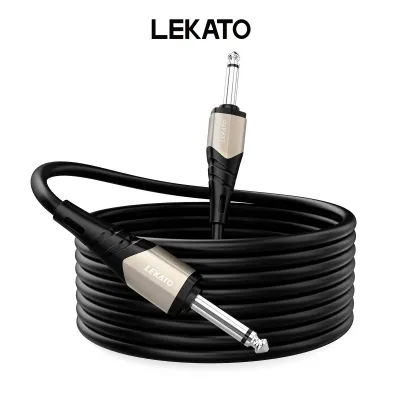
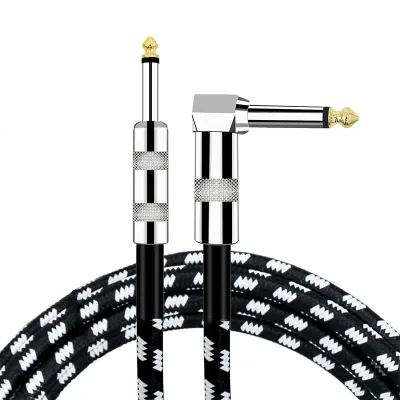
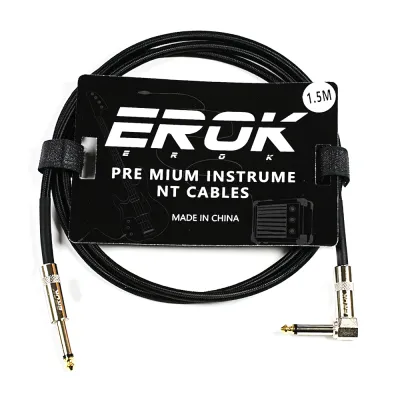

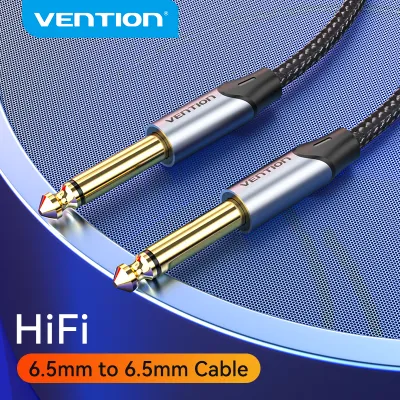
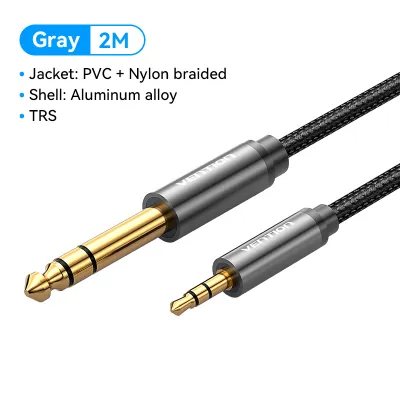

Prices are valid at publication and may change. Please refer to the product page for the latest price.
Mono (TS) Jacks
A mono jack features a two-conductor structure consisting of a tip and a sleeve, separated by a single insulating ring. The tip carries the hot audio signal, while the sleeve serves as the ground and shielding path. This design is the industry standard for unbalanced, instrument-level signals. Because passive guitar pickups generate a relatively simple, single-channel alternating current, a TS connection is all that is required to deliver this signal to your amplifier.
Stereo (TRS) Jacks
A stereo jack expands on this design by adding a third conductor: the ring. This configuration features a tip, a ring, and a sleeve, separated by two distinct insulating bands. TRS jacks serve several conditional purposes in a guitar setup. They can carry a balanced mono signal, which uses two signal wires and a ground to cancel out external electromagnetic interference over long cable runs. Alternatively, they can carry two independent audio channels for true stereo output. In active guitar electronics, the ring terminal is often wired to the negative terminal of an internal 9V battery; when a standard mono plug is inserted, it bridges the ring and sleeve, completing the circuit and powering up the onboard preamp.
Visual and Physical Checks
Identifying these connectors is straightforward when you know what to look for. On a male plug, simply count the black or colored isolation rings. A TS plug has one isolation ring separating the tip from the sleeve. A TRS plug has two isolation rings, creating three distinct metal segments. For female chassis jacks mounted inside your guitar or amplifier, you must inspect the internal contact prongs, often called leaf springs. A mono female jack has a single curved metal prong designed to grip the tip of the plug, along with a grounding frame that contacts the sleeve. A stereo female jack features two separate curved prongs—one for the tip and one for the ring—alongside the sleeve contact.
Mismatch Consequences
Plugging mismatched components together can lead to immediate signal degradation or complete silence. If you insert a TRS cable into a standard mono guitar output, the ring contact inside the guitar may not connect to anything, or it may short directly to the ground sleeve. This can result in a significant drop in volume, a thin and hollow tone, or no sound at all. Conversely, using a TS cable in a stereo or balanced TRS socket will short the ring channel directly to ground, effectively turning a balanced signal into an unbalanced one or silencing one side of a stereo feed.
Evaluating Build Quality and Connector Materials
When shopping for a guitar jack, physical durability and signal integrity are paramount. This is especially true in tropical environments like the Philippines, where high relative humidity and ambient salt air can rapidly accelerate the oxidation of metal components, leading to crackling noises and signal dropouts.

Contact Materials
The choice of plating material on your jack’s contacts directly influences its long-term performance. Nickel-plated contacts are highly durable, offering excellent resistance to physical wear from repeated plugging and unplugging. However, nickel can oxidize over time in humid conditions, requiring regular cleaning with contact cleaner. Gold-plated contacts offer high resistance to corrosion and chemical tarnishing, making them highly suitable for humid climates. The trade-off is that gold plating is relatively soft and can wear away over years of heavy use, exposing the underlying base metal to oxidation.
Housing and Strain Relief
The outer housing of a cable jack must withstand physical abuse, such as being stepped on or yanked. Heavy-duty metal housings, typically made of die-cast zinc or brass, offer robust protection against physical impact and provide additional shielding against electromagnetic interference. Plastic housings are lighter and less expensive but are prone to cracking under pressure. Inside the housing, an effective strain relief mechanism is essential. Look for jacks that feature a mechanical cable clamp or a compression boot that grips the outer jacket of the cable, transferring physical tension away from the delicate soldered wire connections.
Brand and Specification Verification
To ensure you are purchasing a reliable component, verify the manufacturer’s markings. Reputable brands stamp their names or logos directly onto the metal frames or plastic housings of their jacks. Be cautious of generic packaging that claims high performance without any brand markings on the physical part itself. Authentic components will also have clear part numbers that you can cross-reference on the manufacturer’s official website to confirm specifications. While a high-quality replacement jack is relatively inexpensive—often costing between ₱150 and ₱500 at local music stores in the Philippines—investing in a durable component saves you from costly gig failures.
Documentation Checks
Before finalizing a purchase, consult the manufacturer’s technical data sheets. These documents provide critical information, such as the rated mechanical lifespan (often measured in thousands of insertion cycles) and the maximum current and voltage ratings. For instrument-level signals, current ratings are less critical, but mechanical durability is vital if you perform frequently or practice daily.
Compatibility Checklist for Guitars, Pedals, and Amps
Ensuring physical and electrical compatibility across your entire signal chain prevents costly purchasing mistakes and installation headaches.
Guitar Output Jacks
The physical space inside your guitar’s control cavity dictates the type of jack you can install. Standard electric guitars often use open-frame jacks, which require sufficient clearance so the metal contact prongs do not touch the cavity walls, which are often coated with conductive shielding paint. If a prong touches the shielding paint, it will short the signal to ground, resulting in complete silence. For guitars with thin bodies or cramped electronics cavities, you may need a compact or enclosed jack. Additionally, guitars with thick wood tops or endpin outputs require long-threaded barrel jacks rather than standard short-threaded panel jacks.
Amplifier Inputs
Most guitar amplifiers feature standard, high-impedance unbalanced TS inputs designed to receive the raw signal from your guitar. However, some modern amplifiers, multi-effects processors, and audio interfaces feature balanced TRS inputs or combo jacks. If your amplifier has an effects loop (Send and Return jacks), check the manual to see if these connections are balanced (TRS) or unbalanced (TS). Using the wrong cable type in an effects loop can introduce unwanted hum or reduce the signal level.
Effect Pedals
Pedalboards introduce additional compatibility variables. While standard pedal inputs and outputs are mono TS, many modern delay, reverb, and modulation pedals feature stereo TRS inputs or outputs to create a wider soundstage. Furthermore, expression pedal inputs almost exclusively require TRS cables to transmit control voltage back and forth between the pedal and the controller. Some pedals also use TRS jacks for external footswitches or tap-tempo controllers.
Physical Clearance
The physical profile of your cable jack can affect both usability and safety. Straight jacks are ideal for recessed input plates, such as those found on Stratocaster-style guitars, as they allow easy insertion and removal. However, on guitars with edge-mounted jacks or on tightly packed pedalboards, a straight jack sticks out, making it vulnerable to being bumped and damaged. In these scenarios, a right-angle jack is preferred because it keeps the cable flush against the instrument or pedalboard, reducing physical leverage and protecting both the jack and the internal socket from structural damage.
Installation, Soldering, and Safety Boundaries
Replacing a faulty guitar jack or soldering a custom cable is a common DIY task, but it requires careful preparation and adherence to safety boundaries to avoid damaging your equipment.
Pre-Installation Checks
Before heating up your soldering iron, disconnect your guitar from all amplifiers, pedals, and power sources. If you are working on an active guitar or an acoustic-electric model, remove the internal battery to prevent accidental short circuits. For electric guitars, you may need to loosen or remove the strings to gain clear access to the pickguard or control cavity plate. Once the jack plate is unscrewed, take a clear, high-resolution photograph of the existing wiring layout. This visual reference is invaluable for ensuring you solder the hot and ground wires to the correct terminals on the replacement jack.
Soldering Basics
Use a soldering iron with an appropriate wattage, typically between 25 and 40 watts for guitar electronics. This range provides enough heat to melt solder quickly without overheating the delicate plastic insulation inside the jack. Clean the soldering iron tip and apply a small amount of fresh solder to both the iron tip and the exposed wire ends. Identify the hot terminal (connected to the tip prong) and the ground terminal (connected to the sleeve frame). Insert the tinned wire through the eyelet of the correct lug, apply heat to both the wire and the lug simultaneously, and feed in a small amount of solder. The solder should flow smoothly and look shiny when cooled; a dull, grainy appearance indicates a cold solder joint, which is mechanically weak and electrically unreliable.
Stop Conditions
While basic jack replacement is straightforward, certain scenarios require you to halt the process and consult a qualified guitar technician. If your guitar features a complex active preamp system with multiple circuit boards and unlabeled wires, DIY soldering can easily lead to permanent damage. Additionally, if the threads on your guitar’s wood cavity are stripped, or if you encounter an unfamiliar grounding scheme, professional intervention is the safest path to avoid introducing persistent ground loops and hum.
Safe Testing
Once the soldering is complete and the jack is physically secured back into the guitar, perform a low-volume signal test. Plug the guitar into your amplifier with the amp’s volume set to zero. Turn the amplifier on, slowly raise the volume to a low, audible level, and gently tap the guitar strings. If you hear a clean signal, gently wiggle the cable plug inside the jack to ensure there are no intermittent dropouts or crackles. If you hear a loud hum that disappears when you touch the metal parts of the guitar, your hot and ground wires may be reversed, requiring you to open the cavity and correct the wiring.
Frequently Asked Questions (FAQ)
Can I use a stereo (TRS) cable for a standard electric guitar?
Yes, you can physically plug a stereo (TRS) cable into a standard electric guitar with passive pickups, and it will usually pass the audio signal to your amplifier. However, doing so is unnecessary and can sometimes cause operational issues. If your amplifier’s input socket is designed to short the ring terminal to the ground sleeve to detect a connection, using a TRS cable can interfere with this switching mechanism. Additionally, TRS cables are typically more expensive than standard TS cables, offering no audio quality advantage in a standard passive mono setup.
Why is my guitar jack crackling or cutting out?
A crackling or cutting signal is usually caused by physical wear or environmental factors. First, check if the mounting nut on the outside of your guitar’s jack plate is loose; a loose jack can spin inside the cavity, twisting and breaking the internal solder joints. Second, inspect the internal contact prongs for oxidation or dirt, which is common in humid climates. You can clean these contacts using a specialized electrical contact cleaner. Finally, check if the leaf spring prong inside the jack has lost its tension over time; if it no longer firmly grips the tip of your cable plug, the jack will need to be physically bent back into shape or replaced.
Do I need a specific jack for an acoustic-electric guitar?
Yes, acoustic-electric guitars often require specialized jacks due to their unique physical and electrical designs. Many acoustic-electric models feature built-in preamps powered by an internal battery. These systems typically use a stereo (TRS) jack or a specialized barrel jack where the ring terminal acts as a switch to disconnect the battery when the cable is unplugged. Furthermore, because acoustic guitars have thicker wood sides, they often require a long-threaded endpin jack that doubles as a strap button. Always consult your specific preamp manual to verify the exact jack configuration before purchasing a replacement.
Community discussion
Share your experience or ask a question. Comments are reviewed before publication.