
Selecting the right drum rug depends on your specific drum kit configuration, available space, and flooring type. The ideal choice provides enough coverage to anchor all hardware while featuring a non-slip backing to prevent sliding and protect your floor during play.
How to Measure Your Drum Kit Footprint
To find the minimum dimensions for your drum rug, you need to measure your kit while it is fully set up in your preferred playing position. Do not rely on standard manufacturer shell sizes, as cymbal stands, pedal extensions, and your drum throne significantly expand the actual space you occupy.
Begin by measuring the total width of your setup. Extend your cymbal stands to their widest stable positions and measure from the outermost edge of the left stand to the outermost edge of the right stand. Next, measure the depth of your footprint. Run your tape measure from the very front of your bass drum hoop or the tips of your bass drum spurs all the way to the back edge of your drum throne.
Products mentioned in this guide
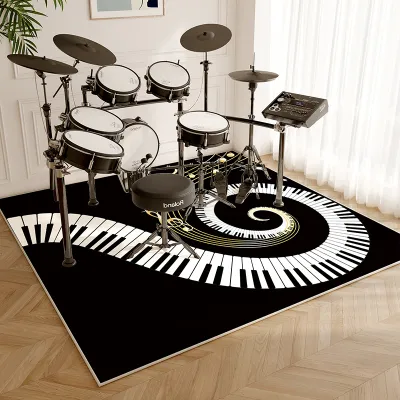
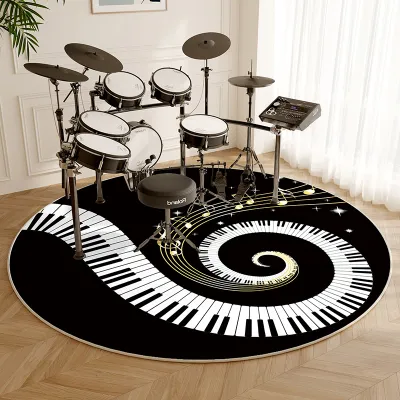
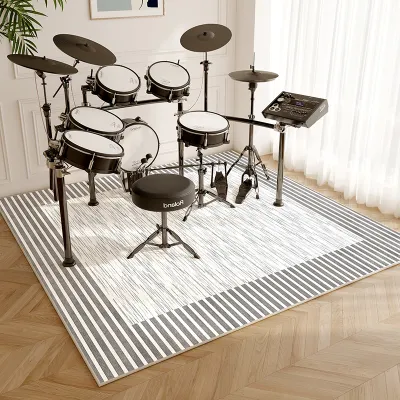
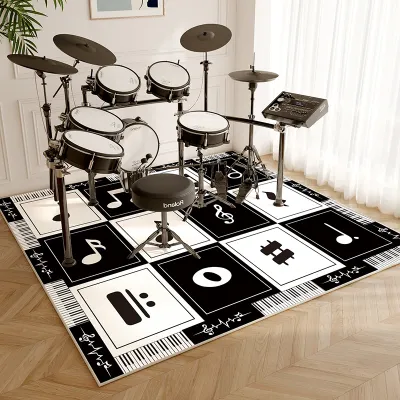

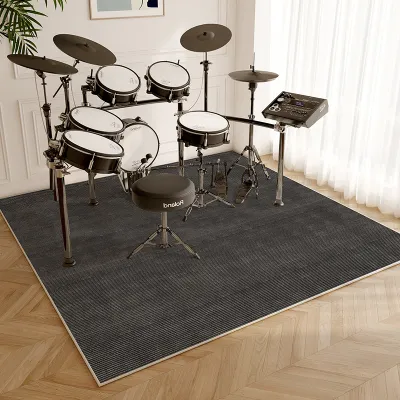
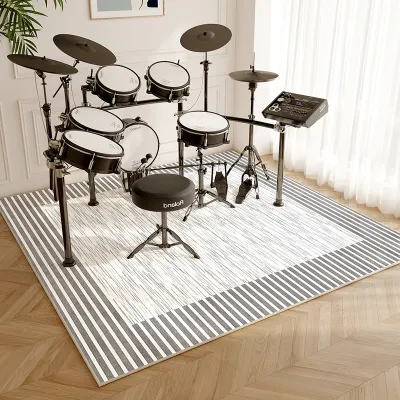
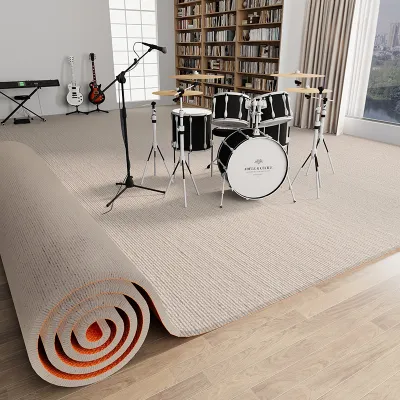
Prices are valid at publication and may change. Please refer to the product page for the latest price.
Always add a practical buffer zone of at least 10 to 15 centimeters to these measurements. This extra space ensures that your throne legs do not sit half-on and half-off the rug, which causes instability. It also accommodates minor adjustments during play, prevents pedals from slipping off the edge, and provides a safe landing zone for dropped drumsticks.
Matching Rug Sizes to Your Drum Configuration
While measuring your specific setup is the most accurate method, understanding standard configuration sizes helps narrow down your options when shopping. Drum rugs generally fall into three main size categories designed to accommodate different kit layouts.

For compact setups, such as electronic drum kits, portable cocktail kits, or small jazz configurations, a smaller rug measuring roughly 1.2 meters by 1.2 meters is often sufficient. These dimensions keep your space-saving layout secure without taking up unnecessary floor space in tight bedrooms or small studio corners. Ensure that the rack system or tripod legs of your electronic kit fit entirely within this boundary.
Standard four-piece and five-piece acoustic kits require a mid-sized rug, typically around 1.6 meters by 1.4 meters or 1.8 meters by 1.5 meters. This size range provides ample room to fully enclose the bass drum, snare stand, floor tom, hi-hat stand, and your throne. Keeping all these components on a single surface is crucial because your body weight on the throne acts as an anchor, preventing the bass drum from sliding forward.
Large setups, double-bass configurations, or kits with extensive rack systems and multiple side-mounted cymbals demand an extended rug. These setups usually require dimensions of at least 2.0 meters by 1.8 meters. If your hardware extends beyond these limits, your stands may wobble on uneven surfaces, or your bass drum spurs might damage the surrounding floor.
Choosing the Right Surface and Non-Slip Backing
The materials you select for your drum rug dictate how well your hardware grips the surface and how well the rug protects your floor, especially in warm, humid tropical climates. Both the top surface and the bottom backing must be evaluated carefully.
For the top surface, a low-pile woven carpet or a specialized tight-weave synthetic fabric is ideal. High-pile or shaggy carpets should be avoided, as they allow stands to wobble and can interfere with pedal action. A low-pile surface allows the hook-and-loop fasteners on the bottom of many modern bass drum pedals and hi-hat stands to grip firmly. Some drummers prefer heavy-duty vinyl surfaces, which are incredibly durable and easy to wipe clean after high-energy, sweaty practice sessions, though they offer less natural grip for hook-and-loop fasteners.
The backing of the rug is your primary defense against sliding. Look for a thick, non-slip rubber or latex backing that covers the entire underside of the rug. This backing creates friction against hard floors, such as ceramic tile, polished concrete, or hardwood, which are common in local homes. Avoid cheap foam backings, as they tend to degrade, crumble, and lose their grip over time when exposed to heat and humidity.
Floor protection is another critical factor. If you practice on hardwood or laminate floors, ensure the backing material is non-reactive. Some low-quality rubber backings can chemically react with floor finishes, leaving permanent discoloration or sticky residues. A high-quality, breathable backing prevents moisture from getting trapped underneath, reducing the risk of mold or mildew growth on both the rug and your floor.
Weighing Thickness for Stability Versus Portability
Choosing the thickness of your drum rug involves balancing the need for a stable, vibration-dampening playing surface with the practicalities of transport and storage.
Thicker rugs, often featuring dense woven fibers and heavy rubber backings, offer excellent stability and acoustic isolation. They help dampen low-frequency vibrations that travel through the floor, which is particularly beneficial if you practice on a second floor or in an apartment. However, these heavy-duty rugs are bulky, heavy, and difficult to roll up tightly, making them less practical for gigging drummers who need to pack up quickly after a show.
Thin, travel-friendly drum rugs are designed specifically for portability. They are lightweight, roll up into compact cylinders, and often come with integrated straps or carrying bags. While they are highly convenient for frequent transport in compact vehicles, they offer less vibration dampening and may bunch up if your hardware is exceptionally heavy or if you play with high physical intensity.
Regardless of thickness, pay close attention to the edge construction. Look for rugs with heavy-duty, reinforced stitched binding along the entire perimeter. This prevents the edges from fraying over time and ensures the rug lies completely flat on the floor. Curled edges are a serious tripping hazard on stage and can cause your hardware stands to sit at unstable angles.
Frequently Asked Questions (FAQ)
Can I use a regular household carpet instead of a dedicated drum rug?
While a regular household carpet or area rug can work in a pinch, it often lacks the specialized features required for drumming. Standard household rugs rarely have a heavy-duty, non-slip rubber backing, meaning the entire rug—along with your kit—can slide across smooth tile or wooden floors during a performance. Additionally, the fibers of standard carpets may not be dense enough to withstand the sharp spurs of a bass drum, leading to rapid wear, tears, and potential damage to the floor underneath.
How do I clean and maintain my drum rug?
To maintain your drum rug, start by regularly vacuuming or shaking it out to remove wood splinters from drumsticks, dust, and metal shavings from hardware. For spills or sweat, spot clean the surface using a mild detergent and a damp cloth, avoiding harsh chemicals that could degrade the non-slip backing. Because tropical humidity can encourage mold, always ensure the rug is completely dry before rolling it up for storage, and periodically inspect the backing for signs of peeling or cracking.
Community discussion
Share your experience or ask a question. Comments are reviewed before publication.