
When starting your drumming journey in the Philippines, the best drum chair—commonly referred to as a drum throne—is one that prioritizes structural stability, reliable height adjustment, and breathable materials capable of withstanding high tropical humidity. While it is tempting to use a spare dining chair, a plastic monobloc stool, or a wheeled office chair, investing in a dedicated drum throne is essential for developing proper technique, maintaining balance, and protecting your spine. A solid, double-braced round throne with a manual spindle or bolt-lock mechanism offers the most reliable and cost-effective starting point for local beginners practicing in home studios or bedrooms.
Choosing the right seat is not merely about comfort; it directly impacts how quickly you learn and how long you can play without pain. Because drumming is a highly physical, multi-limb activity, your body requires a stable foundation from which to operate. A high-quality drum throne ensures that your weight is distributed evenly, allowing your legs to move freely to operate the pedals while your core remains supported and relaxed.
Why a Proper Drum Throne Matters for Beginners
Maintaining correct posture is one of the greatest challenges for beginner drummers, and a standard household chair simply cannot facilitate the necessary alignment. When you sit on a chair that is too low or lacks proper support, your lower back naturally rounds, placing immense pressure on your lumbar spine. A dedicated drum throne is designed to keep your pelvis in a neutral position, encouraging a straight spine and allowing your shoulders and neck to remain relaxed during intense practice sessions.
Products mentioned in this guide

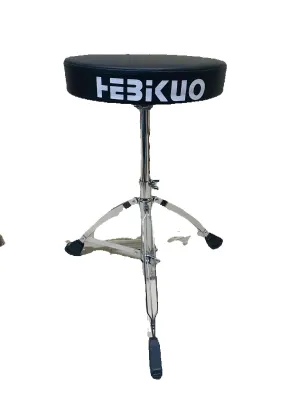

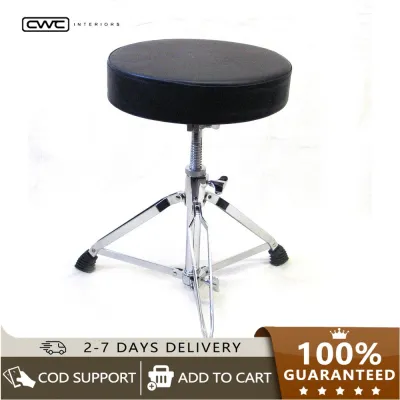
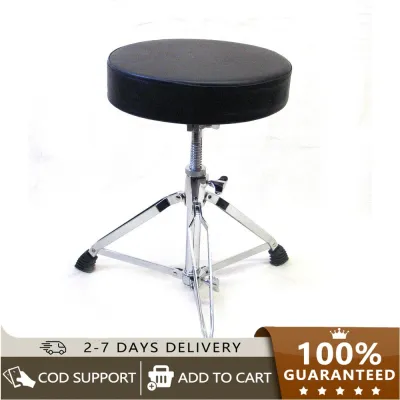
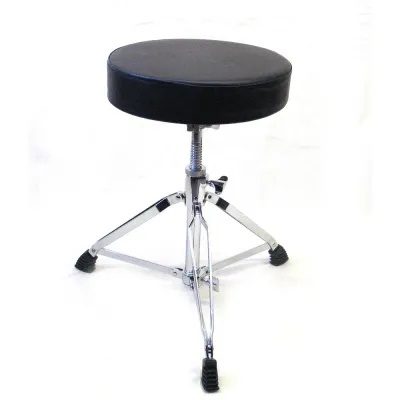
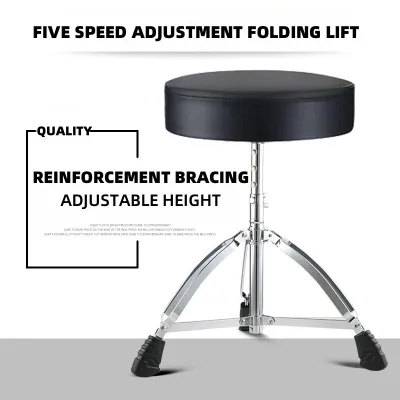
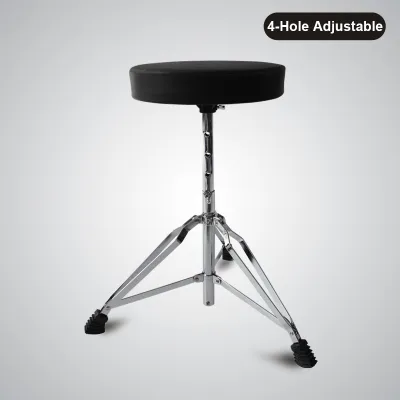
Prices are valid at publication and may change. Please refer to the product page for the latest price.
Beyond spinal health, a proper drum chair is critical for developing precise pedal control on both the bass drum and the hi-hat. Drumming requires your feet to be completely free to strike the pedals using various techniques, such as the heel-up or heel-down method. If your seat is unstable or at the wrong height, your body will instinctively use your legs to balance itself, which tenses your muscles and severely limits your speed, control, and coordination.
Fatigue reduction and injury prevention are also directly tied to the quality of your seating. Beginners often experience muscle soreness as they build up the endurance needed for drumming, but this soreness should never turn into sharp joint or back pain. A supportive drum throne absorbs the physical shock of your movements and prevents repetitive strain injuries in your hips, knees, and lower back, ensuring that your practice sessions remain productive and pain-free.
Key Features to Look for in a Beginner Drum Chair
When evaluating different drum thrones, the shape of the seat and the density of the padding are the first features you should examine. Round seats are the traditional standard, offering complete freedom of movement and making them highly versatile for players of all sizes. Saddle-style seats, which resemble a motorcycle saddle, provide contoured support for your thighs and can help reduce hip fatigue, though they tend to be bulkier and more expensive.

The density of the foam padding inside the seat is just as important as its shape. Cheap, low-quality thrones often use soft, open-cell foam that compresses completely under your weight, leaving you sitting on the hard wooden or metal base plate after just a few minutes. For long-term comfort, look for high-density, closed-cell foam that retains its shape and provides firm, springy support over hours of continuous use.
In the warm and humid climate of the Philippines, the outer material of the seat cushion requires careful consideration. While synthetic leather or vinyl is highly durable and easy to wipe clean after a sweaty practice session, it can trap heat if you practice in a room without air conditioning. Some drummers prefer fabric or mesh-covered seats for better breathability, though these materials require more effort to clean and can absorb moisture over time.
The height adjustment mechanism is another critical component that determines the throne’s reliability and ease of use. Bolt-and-pin systems are highly secure and affordable, utilizing a metal pin inserted through pre-drilled holes in the center post, though they only allow for height adjustments in fixed increments. Spindle or threaded shaft systems allow for precise, micro-adjustments simply by spinning the seat, which is then locked into place with a heavy-duty collar clamp.
Hydraulic or gas-lift adjustment systems offer the ultimate convenience, allowing you to change your height instantly with the pull of a lever, much like an office chair. However, these systems are significantly heavier, more expensive, and can develop leaks or lose pressure over time, especially in high-humidity environments. For most beginners, a threaded spindle system offers the best balance of durability, precision, and value.
The stability of the throne’s base is what ultimately keeps you safe while playing. Double-braced steel legs are essential for preventing lateral wobble and ensuring the throne can withstand the dynamic shifting of your weight. Single-braced legs are lighter and easier to carry, but they are prone to bending and shaking under active playing conditions, which can quickly erode your confidence and disrupt your balance.
Finally, pay close attention to the rubber feet at the bottom of the tripod base. Large, heavy-duty rubber feet with deep treads are crucial for gripping smooth flooring surfaces, such as the ceramic tiles or polished concrete commonly found in Filipino homes. Without adequate rubber grip, your throne will slowly slide backward as you play the bass drum, forcing you to constantly interrupt your practice to pull yourself back into position.
How to Set Up and Adjust Your Drum Chair Correctly
Setting up your drum throne correctly is a step-by-step process that should always begin before you position the rest of your drum kit. Start by adjusting the height of the seat so that when you sit down, your thighs slope slightly downward toward the floor. Your hips should be positioned slightly higher than your knees, creating an angle of approximately 90 to 105 degrees at your knee joints.
This slightly elevated hip position is crucial because it opens up your hip flexors, allowing your legs to move upward and downward with minimal resistance. If your seat is too low, your knees will sit higher than your hips, forcing your lower back to slouch and putting excessive strain on your hip joints. Conversely, if the seat is too high, your feet will struggle to rest flat on the pedals, causing you to stretch and lose power in your pedal strikes.
Once you have established the correct height, position the throne relative to your pedals so that your ankles sit slightly forward of your knees when your feet are resting naturally on the bass drum and hi-hat pedals. This positioning ensures that your leg weight is distributed naturally, allowing you to execute quick pedal strokes without feeling like you are falling forward or leaning too far backward.
Before sitting down to play, always verify the manufacturer’s specified weight capacity for your specific drum throne model. Exceeding the recommended weight limit can cause the adjustment mechanisms to slip, strip the threads on a spindle lock, or cause the metal legs to bend under sudden movement. Ensuring your throne is rated for your weight is a fundamental safety check that prevents sudden structural failures.
Lastly, double-check that all locking nuts, wing bolts, and collar clamps are securely tightened before you begin your practice session. Many drum thrones feature a memory lock—a metal ring that clamps onto the center post to memorize your height setting. Sliding this memory lock flush against the base joint and tightening it securely provides an extra layer of safety, preventing the seat from suddenly dropping or spinning unexpectedly while you are playing.
Evaluating Drum Chair Options for Your Budget and Space
As a beginner in the Philippines, you will need to balance your budget against the physical space available in your home. Basic folding drum stools are highly affordable, often costing between ₱1,500 and ₱3,000, and are incredibly easy to collapse and store. These models are ideal for students living in compact apartments, shared boarding houses, or condominiums where space is limited and the drum kit must be packed away after each use.
While basic folding stools are highly portable, they often compromise on padding thickness and overall stability. If your budget allows, investing in a standard medium-duty drum throne with a thicker seat cushion and double-braced legs is highly recommended. These mid-range options provide the structural integrity needed for daily practice and will last for years without needing an upgrade as your playing skills advance.
Some high-end drum thrones offer optional backrests, which provide excellent lumbar support for drummers who suffer from chronic back pain or who practice for several hours a day. However, backrests add significant weight, bulk, and cost to the throne, making them less practical if you need to transport your gear frequently. For most beginners, a well-designed round or saddle seat without a backrest is more than sufficient.
When purchasing a drum chair from online marketplaces or local music retailers in the Philippines, always verify the warranty terms and return policies. Because drum hardware is heavy and subject to high physical stress, manufacturing defects like stripped threads or cracked welds can occasionally occur. Choosing a reputable seller that offers a clear return window and a warranty on hardware parts will protect your investment and give you peace of mind.
What to Avoid When Buying Your First Drum Chair
One of the most common mistakes beginner drummers make is attempting to save money by using standard household furniture instead of a proper drum throne. Wooden dining chairs, plastic monobloc stools, and metal folding chairs are completely unsuitable for drumming because they lack height adjustment and do not support the natural posture required for playing. Plastic monobloc stools are particularly dangerous, as they can easily crack or collapse under the shifting weight of an active drummer.
Wheeled office chairs are another hazardous alternative that should be avoided at all costs. Because office chairs are designed to roll easily, they will constantly slide backward every time you push down on your bass drum or hi-hat pedals. This constant movement forces you to tense your core and leg muscles just to keep yourself from rolling away from the drum kit, which ruins your timing, destroys your technique, and leads to rapid physical exhaustion.
You should also avoid buying ultra-cheap, unbranded drum thrones that feature single-braced legs or flimsy plastic adjustment collars. These low-end thrones often wobble excessively from side to side, which forces your body to constantly make micro-adjustments to stay upright. This instability not only distracts you from your practice but also places unnecessary strain on your lower back and joints, defeating the entire purpose of using a dedicated drum chair.
Finally, never ignore the structural warnings and weight limits provided by the manufacturer. A drum throne undergoes significant dynamic stress as you move your arms and legs, meaning that a static weight rating is not the same as a dynamic playing rating. Investing in a sturdy, well-constructed drum chair with robust metal joints and double-braced legs is the best way to ensure your safety and comfort as you begin your musical journey.
Frequently Asked Questions (FAQ)
Can I use a regular office chair for playing drums? (FAQ)
No, using a regular office chair for playing drums is highly discouraged due to safety and ergonomic risks. The wheels on an office chair will cause you to roll backward every time you apply pressure to the bass drum or hi-hat pedals, making it impossible to maintain a stable playing position. Furthermore, office chairs typically feature armrests that obstruct your elbow movement and wide backrests that limit your shoulder rotation, preventing you from executing proper drumming techniques.
How do I clean and maintain the seat padding? (FAQ)
To clean and maintain your drum throne’s seat padding, start by checking the manufacturer’s care label for any specific material instructions. For vinyl or synthetic leather seats, regularly wipe down the surface with a damp microfiber cloth and a mild, non-abrasive soap solution to remove sweat, dust, and body oils, which can cause the material to crack over time in humid climates. If your throne has a fabric seat, gently vacuum it to remove dust and spot-clean any stains with a specialized fabric cleaner, ensuring the seat is completely dry before your next practice session to prevent mold growth.
Community discussion
Share your experience or ask a question. Comments are reviewed before publication.