
Choosing the right Casio 88-key digital piano requires a clear understanding of your current playing proficiency, long-term musical aspirations, living space, and budget. Casio offers a diverse range of instruments categorized into three distinct families: the entry-level CDP series, the versatile and portable Privia series, and the premium, cabinet-style Celviano series. Each line is engineered with specific keyboard actions and sound engines tailored to different stages of a pianist’s journey. By identifying where your needs align with these product lines, you can select an instrument that supports your technical development and provides an enjoyable playing experience for years to come.
Transitioning from a basic keyboard to a full-size digital piano is a significant step for any student or hobbyist. A standard acoustic piano features 88 keys, and learning on an instrument with the same layout is essential for developing proper spatial awareness and muscle memory. Furthermore, the physical resistance of the keys—known as key action—plays a critical role in building finger strength and control. Without weighted keys, a player cannot develop the nuanced touch required to perform classical, jazz, or modern music with dynamic expression.
In the Philippines, choosing a digital piano involves unique practical considerations. High humidity, limited living space in urban areas, and the need for silent practice in shared households make digital instruments highly attractive alternatives to acoustic pianos. Digital pianos do not require regular tuning, are far easier to transport, and allow players to practice at any hour using headphones. However, selecting the right model requires looking closely at key specifications, physical dimensions, and environmental care requirements to ensure your investment lasts.
Products mentioned in this guide
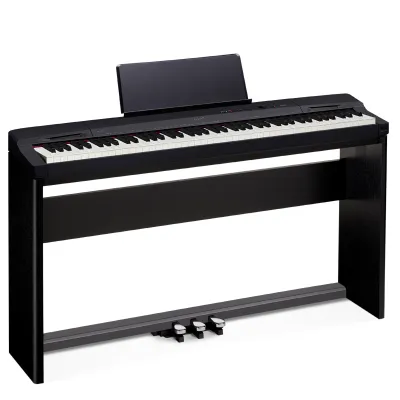
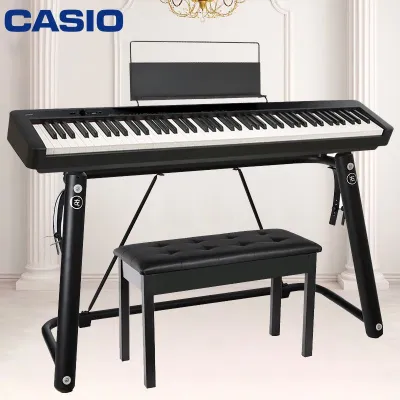
Prices are valid at publication and may change. Please refer to the product page for the latest price.
Assessing Your Skill Level, Goals, and Space
Before diving into specific models, you must evaluate your playing profile, intended use cases, and physical space constraints. Digital pianos are long-term investments, and selecting an instrument that matches your goals prevents the need for an expensive upgrade in the near future.
The Beginner Profile Beginners require an instrument that prioritizes foundational practice and correct finger technique. At this stage, the primary goal is to build finger strength, learn basic music theory, and develop coordination between both hands. A beginner’s piano should have a reliable weighted key action that closely mimics the resistance of an acoustic piano. While advanced sound customization and performance features are not strictly necessary, a built-in metronome, a headphone jack for quiet practice, and simple connectivity for educational apps are highly beneficial.
The Intermediate and Performing Player Profile Intermediate and advanced players need an instrument that responds to subtle variations in touch and expression. As repertoire becomes more complex, features such as high polyphony, advanced pedal response (including half-pedaling), and sophisticated sound engines become critical. Performing musicians, gigging artists, and music students also require portability and robust connectivity options. These players need physical line-out jacks to connect to external sound systems, USB ports for recording, and reliable wireless options for integrating with mobile devices or music production software.
The Home and Aesthetic Profile For many players, a digital piano is also a piece of furniture that resides permanently in a living room or dedicated music space. These users prioritize cabinet aesthetics, integrated pedal systems, and powerful built-in speakers that project sound naturally throughout the room. Rather than portability, the focus is on recreating the physical presence and acoustic resonance of a traditional upright or grand piano. A sliding key cover is also a highly valued feature in this category, protecting the delicate keybed from dust and environmental debris.
Space and Portability Considerations Physical space is a major determining factor when selecting a digital piano, especially in modern apartments or condominiums. Compact, slab-style digital pianos are lightweight and can be easily stored under a bed, placed on a folding stand, or packed into a gig bag for transport. In contrast, cabinet-style pianos feature integrated wooden stands and fixed pedal boards. While they offer a more authentic playing posture and superior sound projection, they require a permanent footprint in your home and are much more difficult to move.
The Importance of a Fully Weighted Hammer Action Regardless of your skill level, a fully weighted 88-key hammer action is the non-negotiable baseline for a serious digital piano. Acoustic pianos use a complex system of wooden hammers and felt to strike strings, creating a natural mechanical resistance. Digital pianos simulate this physical resistance using weighted hammers beneath or behind the keys. Choosing a keyboard with semi-weighted or unweighted keys will severely hinder a student’s ability to transition to an acoustic piano, as they will not develop the necessary finger control, hand posture, or dynamic sensitivity.
Casio 88-Key Series Guide by Player Profile
Casio has spent decades refining its digital piano technologies, developing proprietary keyboard actions and sound engines that cater to different tiers of musicians. When exploring Casio’s lineup, it is helpful to understand the core philosophy behind each series. Because specific model numbers, regional bundles, and availability change over time, you should use these series profiles to identify the right tier for your goals, and then verify current stock and specifications with authorized music retailers in the Philippines.

CDP and Entry Privia Series for Beginners
The CDP (Compact Digital Piano) series and the entry-level models of the Privia line are designed with affordability, simplicity, and ultra-slim profiles in mind. These instruments are engineered to deliver the essential elements of a digital piano without overwhelming beginners with complex menus or high price tags.
Key Action and Touch Resistance Models in this entry-level tier typically feature Casio’s Scaled Hammer Action Keyboard. This mechanism uses physical weights to simulate the graded resistance of an acoustic piano, where the lower keys feel heavier to the touch than the higher keys. This graded response is crucial for students who are building finger independence and learning to control their dynamics. The key surfaces often feature a matte finish to prevent fingers from slipping during extended practice sessions.
Sound Quality and Speaker Systems To keep the instruments compact and affordable, entry-level models utilize streamlined sound engines that focus on reproducing a clean, realistic grand piano tone. The built-in speaker systems are typically modest, often rated around 8 watts per channel, which is perfectly adequate for personal practice in a small bedroom or study. For late-night practice, these models feature dedicated headphone jacks that mute the internal speakers, allowing students to practice without disturbing other household members.
Practical Features and Limitations These entry-level instruments focus on core functionality, offering a small selection of essential sounds such as electric pianos, organs, and strings alongside the primary grand piano tone. They include basic USB-to-Host connectivity, allowing players to connect the piano to a computer or tablet to use with learning software. However, they generally lack advanced features like physical line-out jacks, high-resolution sound modeling, or complex wireless capabilities, making them best suited for home practice and early-stage learning.
Advanced Privia Series for Intermediate and Performing Players
The mid-to-high-tier Privia series is designed for serious students, hobbyists, and gigging musicians who require a higher level of performance, expressive control, and modern connectivity in a portable package. These models represent a significant step up in both mechanical design and digital technology.
Upgraded Key Mechanisms and Tactile Feel Advanced Privia models feature upgraded keyboard actions, such as the Smart Scaled Hammer Action or the Smart Hybrid Hammer Action. These mechanisms incorporate advanced physical designs and digital sensors to capture the precise speed and force of every key press, allowing for highly nuanced expression. The keys themselves often feature simulated ebony and ivory textures, providing a premium tactile feel and absorbing finger moisture, which is particularly beneficial in warm, humid climates.
Advanced Sound Engines and High Polyphony These instruments utilize Casio’s Multi-dimensional Morphing AiR (Acoustic and Intelligent Resonator) Sound Source. This engine models the complex acoustic characteristics of a grand piano, including string resonance, damper resonance, and key-off simulation. To support complex classical pieces and heavy use of the sustain pedal, these models offer high polyphony counts, typically 192 or 256 notes. This prevents notes from cutting off abruptly when playing rapid arpeggios or layering multiple sounds.
Versatile Connectivity and Stage Features Designed with modern workflows in mind, advanced Privia models offer extensive connectivity options. They feature physical line-out jacks (L/Mono, R) for clean connection to external amplifiers, mixing consoles, or PA systems during live performances. Many models also support wireless Bluetooth Audio and MIDI adapters, enabling seamless integration with learning apps like Casio Music Space, sheet music readers, or digital audio workstations (DAWs). This combination of stage-ready portability and advanced features makes them highly versatile tools for active musicians.
Celviano Series for Home and Classical Focus
The Celviano series represents Casio’s premium line of cabinet-style digital pianos. These instruments are designed for permanent installation in homes, teaching studios, or performance spaces, with a primary focus on recreating the complete sensory experience of playing a traditional acoustic grand piano.
Traditional Cabinet Design and Aesthetics Celviano pianos are housed in elegant, sturdy wooden cabinets that mimic the appearance of traditional upright pianos. They feature integrated sliding key covers, sturdy music rests, and permanent three-pedal lyres (damper, soft, and sostenuto) built directly into the frame. The cabinet design not only enhances the visual appeal of a living space but also provides a highly stable playing platform that does not slide or wobble during intense performances.
Acoustic Projection and Multi-Channel Sound To simulate the natural sound dispersion of an acoustic instrument, Celviano models utilize sophisticated multi-speaker sound systems. Rather than projecting sound directly at the player, these multi-channel systems direct sound upward, downward, and outward, reflecting off walls and the cabinet structure itself. Some premium models even feature a physical lid that can be opened or closed, physically altering the acoustic projection and resonance to simulate a grand piano lid.
Premium Keyboard Actions and Grand Piano Feel The keyboard actions in the Celviano series are designed to satisfy demanding classical pianists. High-end models feature the Natural Grand Hammer Action, developed in collaboration with prestigious acoustic piano manufacturer C. Bechstein. This action uses full-length wooden keys and a mechanical hammer mechanism that behaves identically to a grand piano action. This level of mechanical precision allows players to execute rapid repetitions, delicate pianissimos, and powerful fortissimos with absolute control and confidence.
Key Specifications to Compare and Verify
When comparing different Casio 88-key models, looking beyond the marketing terms and analyzing the technical specifications is essential. Before making a final purchase, verify these critical specifications against your specific learning goals and performance needs.
Keyboard Action Type and Key Surfaces Always check the specific name and generation of the keyboard action in the official product specifications. Look for terms like “Tri-sensor” or “Smart Hybrid,” and verify whether the keys feature textured surfaces (such as simulated ebony and ivory) or a standard smooth plastic finish. A tri-sensor system is highly recommended for intermediate players, as the third sensor allows the instrument to register a key strike even if the key has not fully returned to its resting position, enabling faster note repetition.
Maximum Polyphony Polyphony refers to the maximum number of individual notes or voices the digital piano can produce at the exact same time. While a beginner playing simple melodies may only require 64-note polyphony, intermediate and advanced classical repertoire demands much more. When you play a stereo-sampled piano sound, use layered tones (such as piano combined with strings), and hold down the sustain pedal, the instrument quickly consumes polyphony. To prevent notes from dropping out prematurely, look for models with at least 128-note polyphony, with 256-note polyphony being the ideal standard for advanced classical play.
Connectivity Options and Wireless Compatibility Carefully review the physical ports on the back and front of the instrument. If you plan to record your playing or use music production software, verify the presence of a USB-to-Host port. For saving your performances directly, a USB-to-Device port is highly convenient. Additionally, check the specifications to see if the piano supports Bluetooth Audio and MIDI. Some models have built-in Bluetooth, while others require an external proprietary USB adapter (such as the Casio WU-BT10). If an adapter is required, verify whether it is included in the retail package or must be purchased separately.
When integrating your piano with external learning platforms, digital sheet music editions, or interactive software, always verify the specific device compatibility, file formats, and regional restrictions before purchase. Never assume compatibility based on brand names alone; always cross-reference the exact model specifications of both the piano and your smart device. Furthermore, when purchasing digital sheet music or learning companion books, verify the specific edition, language, content completeness, and authorized source, as cover titles alone can be misleading.
Included and Optional Accessories Before finalizing your purchase, confirm exactly what is included in the box. Portable models often include a basic plastic footswitch, which can slide around on smooth floors and does not support half-pedaling. For serious practice, you will want to upgrade to a weighted, metal sustain pedal or a dedicated three-pedal unit. Additionally, verify whether the package includes a music rest and the correct power adapter. If you are buying a portable model, check if a matching wooden stand is available as an optional accessory or if you will need to purchase a third-party folding stand.
Setup, Placement, and Care in Humid Climates
Owning a digital piano in a tropical environment like the Philippines requires specific care and maintenance steps to ensure the longevity of the instrument. Unlike acoustic pianos, digital pianos do not suffer from warped soundboards or out-of-tune strings due to humidity, but their sensitive electronic components and mechanical key actions still require protection.
Strategic Placement in Your Home When setting up your digital piano, choose a location away from direct sunlight, open windows, and air conditioning vents. Direct sunlight can cause the plastic keys and wooden cabinet to fade, discolor, or warp over time. Placing the instrument directly under or opposite an air conditioning unit can expose it to rapid temperature fluctuations, leading to condensation inside the casing. Additionally, keep the piano clear of open windows where sudden tropical rain showers or windblown dust could enter.
Managing Humidity and Moisture High relative humidity is a common challenge in the Philippines. Over time, excessive moisture in the air can corrode internal electronic contacts, degrade sensor boards, and cause the felt bushings or adhesives in the key mechanism to swell or soften, resulting in sticky or unresponsive keys. To protect your instrument, maintain a stable room environment. If the room is consistently humid, consider using a dehumidifier or air conditioner to regulate the moisture levels. When the piano is not in use, keep the key cover closed or use a high-quality fabric dust cover to protect the keybed.
Safe Cleaning Practices To keep your Casio digital piano looking and performing its best, establish a regular, low-risk cleaning routine. Use a clean, dry, or very slightly damp microfiber cloth to gently wipe dust and fingerprints off the keys and cabinet surfaces. Avoid using paper towels, which can leave fine scratches on glossy finishes. Never use harsh chemical solvents, alcohol, benzene, or aerosol furniture polishes, as these substances can permanently dissolve or discolor the plastic key coatings and damage the matte textures. Always check the manufacturer’s care instructions before applying any cleaning agents.
Power Safety and Surge Protection Electrical stability is another critical factor to consider. Power outages, voltage fluctuations, and electrical surges—especially during the typhoon season—can severely damage the sensitive motherboards and power adapters of digital pianos. To safeguard your investment, never plug your digital piano directly into a standard wall outlet. Instead, always connect the power adapter to a high-quality surge protector or an automatic voltage regulator (AVR). This simple precaution can prevent costly electronic failures and extend the lifespan of your instrument.
Frequently Asked Questions (FAQ)
Do I really need 88 keys as a beginner?
Yes, starting with a full 88-key keyboard is highly recommended for beginners. While smaller 61-key or 76-key keyboards are lighter and less expensive, they lack the range required for standard classical and modern piano repertoire. Learning on a full-size keyboard from day one ensures you develop correct spatial awareness, proper hand positioning, and scale navigation. It also prevents the frustration and additional expense of having to upgrade to an 88-key instrument within your first year of study as your lessons progress.
Can I use a Casio digital piano with music learning apps?
Most modern Casio 88-key digital pianos are fully compatible with popular music learning and interactive sheet music apps. To connect your piano, check the model specifications to see if it supports USB MIDI or Bluetooth MIDI. If using a wired connection, you will need a compatible USB cable and adapter to connect the piano’s USB-to-Host port to your tablet or smartphone. For wireless connection, verify if your model has built-in Bluetooth MIDI or requires a compatible wireless adapter, and ensure your learning app is configured to recognize the MIDI input.
How does Casio's key action compare to acoustic pianos?
Casio’s hammer action keyboards are engineered to closely simulate the physical weight and mechanical resistance of an acoustic piano’s keys. However, because digital pianos lack the complex physical linkage of wooden keys, wippens, jacks, and felt hammers striking real strings, the tactile sensation will always differ slightly from an acoustic instrument. Premium models with wooden keys and advanced hybrid actions offer a remarkably close approximation. To find the action that feels most comfortable to you, it is highly recommended to test different models in person at an authorized local dealer.
Community discussion
Share your experience or ask a question. Comments are reviewed before publication.