
Finding the right capo is about matching its mechanical design to your specific guitar neck and playing environment. The best capo for your style depends on whether you prioritize rapid key changes during a live set or absolute tuning precision in a recording environment. By understanding how different clamping mechanisms apply pressure to your strings, you can avoid common issues like fret buzz, sharp notes, and finish damage.
How Different Capo Mechanisms Affect Tension and Playability
Every capo relies on a specific mechanical method to press the strings down against the frets, mimicking the action of your nut or a barre finger. The way a capo generates this clamping force directly influences how evenly the pressure is distributed across the fretboard. If a mechanism applies too much force, it stretches the strings downward, pulling your notes sharp and forcing you to retune. Conversely, insufficient pressure leads to deadened strings and annoying fret buzz.
Choosing a mechanism involves balancing operational speed against precision tension control. Some designs allow you to clamp and release the device in a fraction of a second with one hand, while others require two hands and manual adjustment to dial in the perfect pressure. Additionally, the physical weight and bulk of the mechanism can alter the balance of your instrument or physically obstruct your fretting hand when playing close to the clamped fret.
Products mentioned in this guide
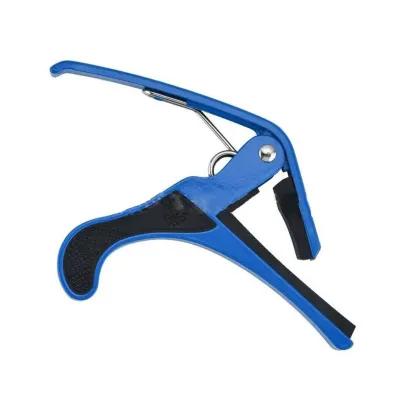
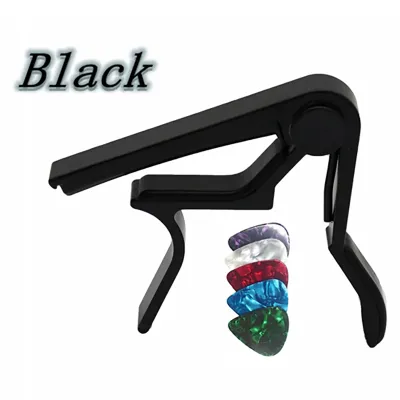
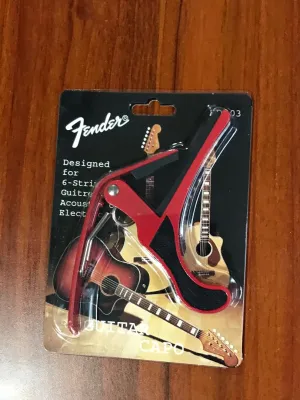
Prices are valid at publication and may change. Please refer to the product page for the latest price.
Trigger and Spring Capos
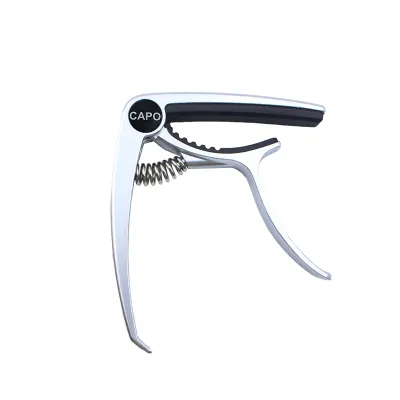
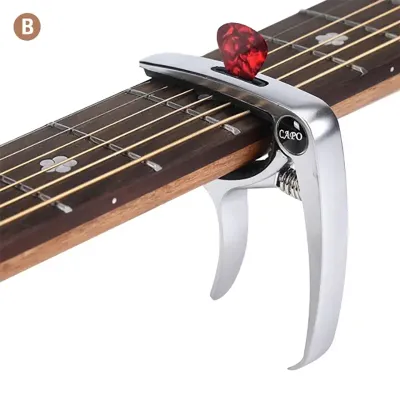
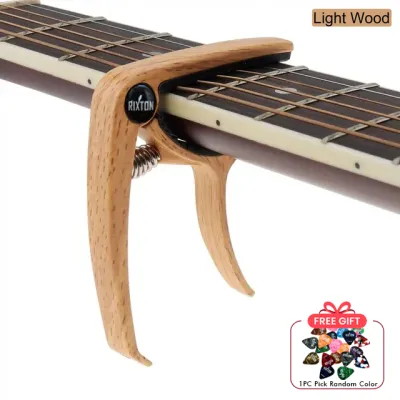
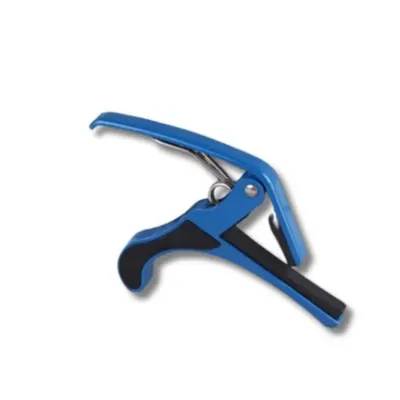
Trigger and spring-loaded capos are engineered for rapid deployment and one-handed operation. These devices utilize a heavy-duty internal coil spring to apply a fixed amount of clamping force to the guitar neck. To operate them, you simply squeeze the trigger handles to open the jaws, position the pad over the desired fret, and release. This straightforward operation makes them incredibly popular for live performances where you need to transition between songs in different keys without awkward pauses.
However, the fixed-pressure nature of spring mechanisms introduces distinct trade-offs. Because you cannot adjust the tension, the spring must be strong enough to hold down heavy-gauge acoustic strings, which means it will often over-clamp lighter electric guitar strings. If the capo is not seated perfectly parallel to the fret, or if the spring tension is too aggressive for your instrument’s setup, you will likely experience uneven pressure, string bending, and immediate tuning instability.
Screw and Adjustable Capos
Screw-operated and adjustable capos prioritize precision over speed, utilizing a thumbscrew, dial, or micro-clutch mechanism to let you control the exact amount of pressure applied to the strings. To install this type of capo, you place it over the neck and manually tighten the screw until the strings make clean contact with the fret without buzzing. This micro-adjustability is highly valued in studio environments where even a fraction of a cent of pitch deviation can ruin a recording track.
By applying only the minimum pressure required to fret the notes, adjustable capos minimize string deflection and preserve your guitar’s natural intonation. This design is also highly adaptable to different neck profiles, as you can easily back off the screw for a thick vintage neck or tighten it for a slim modern profile. The primary drawback is operational speed; adjusting a screw capo requires two hands and several seconds of fine-tuning, making rapid mid-song changes on a dark stage highly impractical.
Elastic and Toggle Capos
Elastic and toggle capos represent some of the most lightweight and budget-friendly options available to guitarists. These designs typically feature a flexible elastic band, a fabric strap, or a plastic toggle system that wraps around the back of the neck and hooks into slots on the main bar. Because they lack heavy metal springs or bulky screw housings, they are exceptionally portable and exert minimal pull on the neck, preventing the “neck dive” that can occur with heavier accessories on lightweight instruments.
Despite their low profile and ease of storage, elastic capos have significant limitations in demanding environments. The elastic material naturally degrades over time, especially when exposed to the high humidity and warm temperatures typical of tropical climates, leading to a gradual loss of elasticity and uneven tension. Furthermore, adjusting the tension on a strap or toggle system is a clumsy, two-handed process that is difficult to execute quickly or precisely under stage lights.
Aligning Capo Features With Your Playing Style and Guitar Type
To select the ideal capo, you must evaluate both your musical context and the physical characteristics of your instrument. Live performers who play energetic sets or engage in frequent crowd interaction generally benefit from the speed of a trigger or spring-loaded capo. When you are on stage, the ability to quickly clamp the capo onto the headstock when it is not in use is far more valuable than micro-tonal precision.

For studio musicians, fingerstyle players, and classical guitarists, the priority shifts entirely toward maintaining perfect intonation and accommodating complex chord voicings. Fingerstyle arrangements often require clean, ringing open strings mixed with intricate fretted notes; any slight tuning deviation caused by over-clamping will sound harsh and discordant. In these scenarios, a screw-adjustable or a specialized yoke-style capo that sits directly behind the fret is essential to keep all six strings perfectly in tune.
If you frequently experiment with alternate tunings or partial capoing—where only a few specific strings are clamped while others remain open—you will need to look at specialized partial capos. These often feature cutouts or individual finger-like pads that can be engaged independently. Standard spring capos cannot accommodate these setups, making adjustable or modular designs the only viable choice for exploring complex, non-standard tunings.
Your choice must also respect the fundamental differences between guitar types. A steel-string acoustic guitar, with its high string tension and medium-thick neck, requires a robust capo that can apply firm, even pressure. An electric guitar, featuring much lighter string gauges and lower action, is highly sensitive to over-clamping and requires either a very light spring or an adjustable screw to prevent the strings from pulling sharp. Classical guitars, on the other hand, feature wide, completely flat fretboards and nylon strings, requiring a specialized classical capo with a straight, non-radiused pad to ensure every string is pressed down evenly without slipping.
Physical Specifications to Verify Against Your Guitar
Before purchasing any capo, you must verify several physical specifications against your instrument to ensure a proper fit and prevent damage. The most critical factor is the fretboard radius. Most steel-string acoustic and electric guitars have a curved fretboard, ranging from a vintage 7.25-inch radius to a flatter 12-inch or 16-inch modern radius. If you use a flat capo on a curved fretboard, the outer strings will buzz; if you use a highly curved capo on a flat fretboard, the middle strings will be crushed and pulled sharp. Always check the manufacturer’s specifications to ensure the capo’s rubber pad matches your guitar’s radius.
Next, consider the neck width and depth clearance. Vintage acoustic guitars, twelve-string models, and classical guitars often feature significantly wider nuts and thicker neck profiles than modern electric guitars. A standard compact capo may not have enough jaw opening or pad length to span the entire width of a classical neck, resulting in the high or low E strings slipping out from under the pad.
The material and thickness of the capo’s padding are also vital for protecting your instrument’s finish. In warm, humid environments, certain low-grade rubber or synthetic pads can chemically react with delicate guitar finishes, particularly traditional nitrocellulose lacquers found on high-end or vintage instruments. This reaction can leave permanent, cloudy marks or sticky indentations on the neck. Look for capos that explicitly use high-quality, inert silicone or specialized protective materials, and avoid leaving the capo clamped to the neck or headstock for extended periods.
Finally, pay attention to the overall weight and balance of the accessory. A heavy brass or zinc-alloy capo can significantly alter the center of gravity of a lightweight electric guitar or a small-bodied acoustic, causing the neck to dip downward when you let go of it. If you prefer a balanced, weightless feel, look for capos constructed from aircraft-grade aluminum or lightweight carbon composites.
Decision Framework: Choosing the Right Capo for Your Setup
To finalize your decision, use this structured framework to match your primary playing conditions to the correct capo category:
- Choose a Trigger or Spring Capo if your primary need is speed, one-handed operation, and live stage reliability. This is the ideal choice for open-mic performers, rhythm guitarists in bands, and casual players who want a hassle-free tool that can be quickly clipped to the headstock between songs.
- Choose a Screw or Adjustable Capo if you require studio-grade intonation, play intricate fingerstyle arrangements, or frequently use alternate tunings. This option is best for recording musicians, detail-oriented solo performers, and players who use multiple guitars with different neck profiles and want to dial in the exact tension for each.
- Choose an Elastic or Toggle Capo if you need an ultra-lightweight, low-profile backup that fits easily into a pocket, or if you are a casual player working within a strict budget. This is a great secondary option to keep in your gig bag for emergencies.
Before making any purchase, verify first if your guitar features a non-standard neck profile, a thick vintage finish, or an unusually wide nut width. Always double-check that the capo’s pad curvature matches your fretboard radius and that the padding material is safe for your guitar’s specific finish. Taking these precautions ensures your instrument remains protected while delivering the best possible tone.
Frequently Asked Questions (FAQ)
Do I need a different capo for electric and acoustic guitars?
While some versatile capos can transition between both instruments, it is highly recommended to check the specifications of your specific models. Electric guitars typically feature highly curved fretboards (often a 9.5-inch or 12-inch radius) and very light string gauges, making them highly sensitive to excessive clamping force. Acoustic guitars generally have flatter fretboards and heavier strings, requiring more robust pressure. Using a heavy-duty acoustic spring capo on an electric guitar will often pull the strings sharp, while a light electric capo may cause fret buzz on an acoustic. For the best results, look for a capo specifically rated for your instrument’s fretboard radius and string type.
Can leaving a capo on the guitar damage the neck?
Yes, leaving a capo clamped to your guitar’s neck for extended periods when not playing can cause several types of damage. The continuous, concentrated pressure can compress the wood fibers of the neck or leave deep indentations in the frets and fretboard. Additionally, in humid tropical climates, the moisture trapped between the capo’s rubber pad and the neck can accelerate finish degradation, leading to discoloration or softening of the lacquer. To preserve your instrument, always remove the capo immediately after your playing session and store it safely in your case or accessory pocket rather than leaving it clamped to the neck or headstock.
Community discussion
Share your experience or ask a question. Comments are reviewed before publication.