
Selecting the right Bible journal for Catholic daily devotion in the Philippines requires balancing your personal prayer habits with durable physical features that can withstand daily use and tropical humidity. A dedicated journal serves as a sacred space to record your spiritual journey, whether you are practicing lectio divina, tracking the liturgical calendar, or writing down daily prayers. By focusing on paper weight, binding durability, and layout structure, you can find a companion that deepens your spiritual life and preserves your insights for years to come.
For Catholic readers, a journal is more than a simple notebook; it is a tool for active engagement with the Word of God. The right choice depends on how you interact with scripture, where you pray, and what writing tools you prefer. Understanding these factors before making a purchase ensures that your journal remains a source of inspiration rather than a cause of frustration.
Defining Your Catholic Devotional Needs
To find a suitable journal, you must first clarify your daily prayer routine and spiritual goals. Catholic devotional practices vary widely, and different styles of prayer require different journal structures. If your primary practice is lectio divina—the traditional monastic practice of scriptural reading, meditation, prayer, and contemplation—you will need a layout that offers ample, unstructured space. This allows you to write freely as the Holy Spirit guides your thoughts, without being confined by rigid lines or small boxes.
Products mentioned in this guide
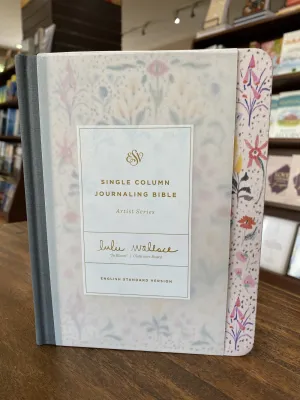
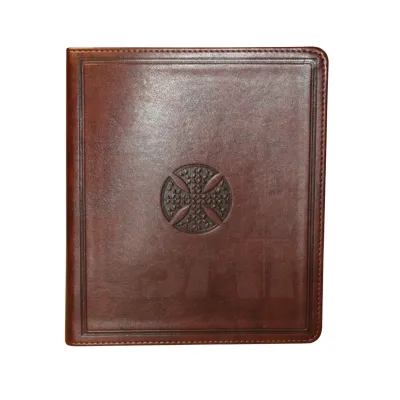
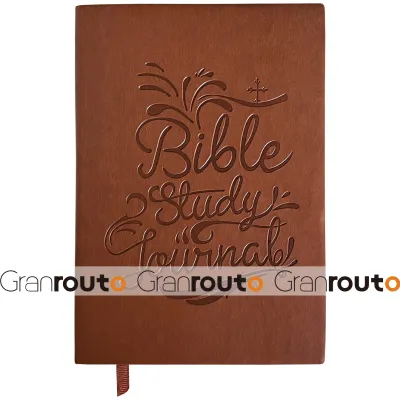
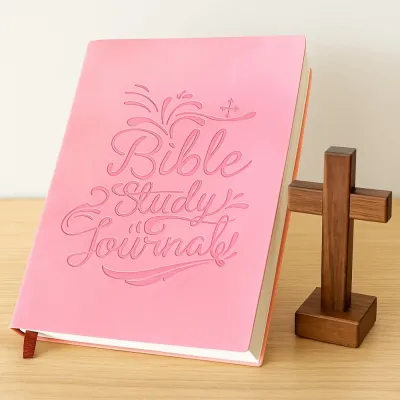
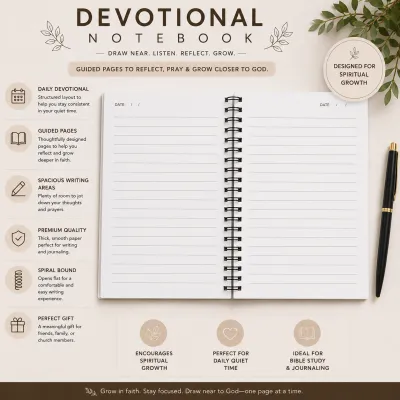

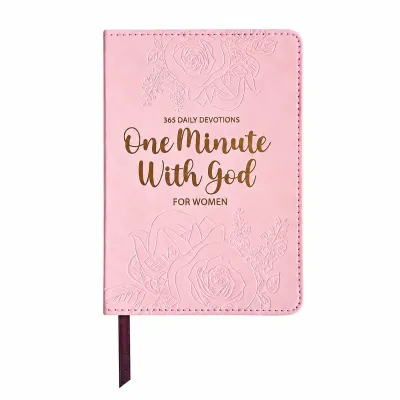
Prices are valid at publication and may change. Please refer to the product page for the latest price.
Alternatively, if your devotion is centered on the daily Mass readings, your journaling needs will be different. You might look for a journal that helps you track the liturgical year, guiding you through the seasons of Advent, Christmas, Lent, Easter, and Ordinary Time. This structured approach helps you stay aligned with the universal Church’s daily readings and feast days. For this style, a journal with pre-printed dates, lectionary references, or liturgical prompts can be incredibly helpful in keeping you disciplined and focused.
Consider also the volume of your daily writing. Some people prefer to write long, detailed paragraphs reflecting on their life experiences, struggles, and graces. If you tend to write extensively, you will require a journal with large pages and generous line spacing. On the other hand, if you prefer to jot down short prayer intentions, gratitude lists, or single-sentence resolutions, a compact journal with smaller sections or bulleted prompts will prevent the pages from feeling empty and intimidating.
Portability is another crucial factor to evaluate based on your lifestyle. If you primarily pray at your home altar, or altarito, a larger, heavier journal with a hard cover can sit permanently alongside your candles and crucifix. However, if you prefer to journal during visits to the parish adoration chapel, on your commute, or during lunch breaks at work, a lightweight, flexible journal is essential. In the Philippines, carrying a journal in a bag exposes it to sudden tropical downpours and high humidity, making a durable, water-resistant cover or a protective sleeve a wise investment.
Essential Features for Catholic Scripture Journaling
The physical construction of a Bible journal directly impacts how comfortable and sustainable your writing practice will be. The most critical technical specification to check is the paper quality, specifically its weight measured in grams per square meter (GSM). Standard Bibles often use very thin paper, sometimes under 40 GSM, to keep the book lightweight. However, thin paper is highly susceptible to ghosting—where writing is visible on the reverse side—and bleed-through, where ink actually penetrates the page. For a satisfying journaling experience, look for paper that is at least 80 GSM, and ideally 100 GSM or higher, which can handle gel pens, highlighters, and even light watercolor or calligraphy ink.

Binding is another feature that dictates the usability of your journal. A lay-flat binding, such as Smyth-sewn or thread-bound construction, is highly recommended for any writing notebook. This type of binding allows the journal to open completely flat on a table without the pages springing back or curling up. It ensures you can write easily near the inner gutter of the page without straining your hand or damaging the spine. Spiral-bound journals also lay flat and allow you to fold the cover back, but the metal or plastic coils can sometimes get in the way of your hand while writing, and the pages can tear more easily over time.
If you are choosing an integrated journaling Bible—where the biblical text and writing space are combined in a single volume—pay close attention to the margin width. Standard margins are too narrow for meaningful notes, so look for editions that offer margins of at least 1.5 to 2 inches. These margins should ideally feature light, faint lines to guide your handwriting without distracting from the text, or be completely blank if you prefer to sketch, draw, or use creative lettering alongside the scriptures.
Finally, look for Catholic-specific structural elements that enrich your devotional practice. A high-quality Catholic journal often includes a liturgical calendar showing the current liturgical year, feast days of major saints, and holy days of obligation. Some journals also feature printed references for the daily Mass readings, which follow a three-year cycle (Years A, B, and C) for Sundays and a two-year cycle (Years I and II) for weekdays. Having these references integrated into your journal saves you the step of looking them up online or in a separate missal before you begin your prayer.
Comparing Journal Formats and Layouts
Understanding the different internal layouts available will help you match a journal to your specific cognitive and creative style. The most common formats are blank, lined, and dotted pages. Lined pages are the traditional choice, providing a neat, structured environment for long-form writing and structured prayers. Dotted pages, popular in bullet journaling, offer a subtle grid that guides your writing while allowing the flexibility to draw diagrams, create custom trackers, or sketch illustrations. Blank pages offer complete creative freedom, making them ideal for those who express their prayers through art, calligraphy, or unstructured mind maps, though they can sometimes feel daunting to those who prefer a guide.
You must also choose between prompted journals and open-ended journals. Prompted Catholic journals provide daily structure, often featuring a short scripture verse, a reflection question, a quote from a saint, or a specific prayer prompt to kickstart your writing. These are excellent for beginners, those experiencing spiritual dryness, or anyone who appreciates a guided path for their daily quiet time. Open-ended journals, by contrast, consist entirely of blank, lined, or dotted pages, leaving the direction of your prayer entirely up to you and the promptings of the Holy Spirit on any given day.
Another major decision is whether to use an integrated Bible journal or a standalone companion journal. Integrated Bible journals contain the complete text of the scriptures with dedicated writing space on every page. This format is incredibly convenient because it keeps your reading and your reflections in one physical volume, creating a beautiful heirloom of your spiritual life. However, integrated Bibles are heavy, bulky, and can be difficult to carry around daily.
Standalone companion journals are separate notebooks designed to be used alongside your regular reading Bible. This format allows you to use your favorite, well-worn Bible translation while keeping your reflections in a separate, highly portable notebook. Standalone journals are generally more affordable, easier to replace once filled, and allow you to write as much as you want for a single scripture passage without being limited by the physical margins of a printed Bible page.
How to Evaluate and Purchase Your Bible Journal
When you are ready to purchase a Bible journal, careful evaluation of product specifications is necessary to ensure you get a durable product. Always read the product descriptions closely to verify the paper weight (GSM), the binding method, and the exact physical dimensions. If you are buying online, look for close-up photos of the paper texture and the binding to confirm that the book can lay flat.
If you decide on an integrated Catholic journaling Bible, you must verify its ecclesiastical compatibility. Ensure the edition includes the deuterocanonical books, which are an integral part of the Catholic biblical canon. Look for an imprimatur and a nihil obstat on the copyright page, which indicate that the translation and any accompanying notes have been reviewed and approved by Catholic church authorities. Common approved translations include the New Revised Standard Version Catholic Edition (NRSV-CE), the Revised Standard Version Catholic Edition (RSV-CE), and the New American Bible Revised Edition (NABRE).
Setting a realistic budget is also important, as prices can vary widely depending on materials and construction. In the Philippines, a simple, high-quality standalone companion journal can cost anywhere from ₱300 to ₱800. Premium integrated journaling Bibles, especially those with leather covers, gilded edges, and high-GSM paper, generally range from ₱1,500 to ₱3,500 or more. Investing in a slightly more expensive journal with sewn binding and thick paper is often worth the cost, as it will endure daily handling and resist the wear and tear of a humid climate.
To source these journals safely, explore a variety of retail options. Local religious goods stores, often located near major cathedrals, basilicas, or Catholic university campuses in the Philippines, are excellent places to physically handle the journals before buying. You can also find specialized Catholic publishers and diocesan bookstores that carry approved editions. When shopping on general e-commerce platforms or online marketplaces, verify the seller’s reputation, read customer reviews carefully, and check their return policy to ensure you can exchange the item if it arrives with printing defects, damaged corners, or a broken spine.
Frequently Asked Questions (FAQ)
Can I use a regular notebook instead of a dedicated Bible journal?
Yes, you can absolutely use a standard notebook for your daily Catholic devotions. Standard notebooks are highly accessible, budget-friendly, and come in a wide variety of paper qualities and sizes. The main trade-off is that they lack pre-printed scripture passages, liturgical calendars, or structured prompts. To turn a regular notebook into a dedicated devotional space, you can create a custom layout. Start by writing the date and the daily Mass readings at the top of the page, then divide the remaining space into sections for your observations, personal reflections, and a closing prayer.
How do I prevent my journal from falling apart with daily use?
To extend the life of your journal, especially in the humid tropical climate of the Philippines, proper care and storage are essential. Keep your journal in a cool, dry place away from direct sunlight, and avoid leaving it in damp bags or near open windows during the rainy season. When you first receive a new stitched or glued journal, take a moment to break in the spine gently. Place the book on a flat surface, open it to the center, and then open a few pages at a time from both the front and the back, pressing down lightly on the inner margins. This helps the binding relax and prevents the spine from cracking during daily use.
What pens or highlighters are safe for thin Bible paper?
To minimize bleed-through and ghosting on delicate Bible pages, you must select your writing instruments carefully. Pigment-based fineliners and standard ballpoint pens are generally safe because their ink dries quickly and does not saturate the paper fibers. For highlighting, avoid liquid or alcohol-based markers, which will bleed through almost any thin paper. Instead, opt for dry highlighters, which are wax-based and glide smoothly over the text without wetting the page, or use soft colored pencils. Always test any new pen or highlighter on an inconspicuous back page or flyleaf of your journal before using it on your main reflection pages.
Community discussion
Share your experience or ask a question. Comments are reviewed before publication.