
Choosing how to protect your acoustic guitar is one of the most important decisions you will make as a beginner. Your instrument is made of thin wood that is highly sensitive to physical impacts, pressure, and environmental changes. To keep your guitar safe, you must choose between a flexible, padded acoustic guitar bag (commonly known as a gig bag) and a rigid, heavy-duty hard case.
For most beginners, a padded gig bag is the most practical choice because it offers lightweight portability, convenient backpack straps, and plenty of pockets for accessories. However, if you own a high-value instrument, travel frequently by air, or need to store your guitar in challenging environmental conditions, a hard case provides the maximum level of physical and climate protection. Balancing your daily routine, travel habits, and budget will help you determine which option best suits your lifestyle.
Understanding Padded Gig Bags: Pros, Cons, and Best Use Cases
A padded gig bag is a soft-sided cover designed to protect your guitar from scratches, dust, and minor bumps during daily handling. These bags are typically constructed from durable, woven synthetic fabrics like nylon or polyester. The exterior fabric is often rated by denier (such as 600D), which indicates the density and tear resistance of the material. Inside, layers of high-density foam provide cushioning, with padding thickness generally ranging from a basic 5mm to a highly protective 20mm or more.
Products mentioned in this guide
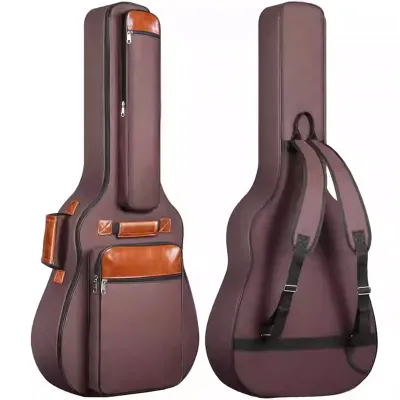
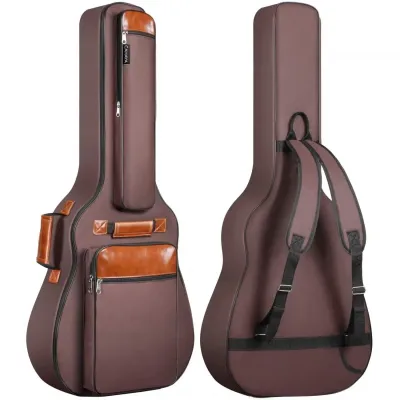
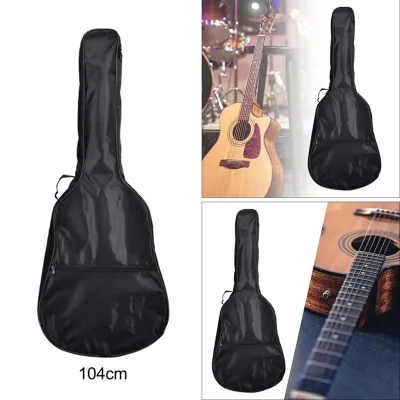
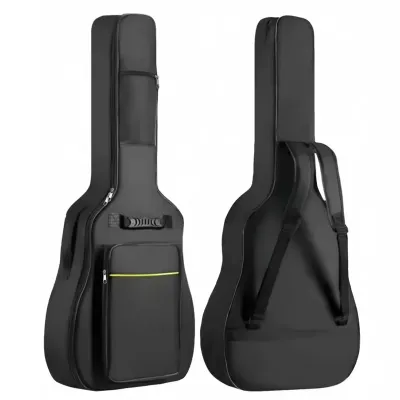
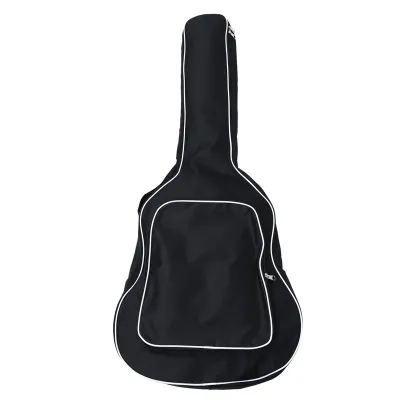



Prices are valid at publication and may change. Please refer to the product page for the latest price.
The primary advantage of a gig bag is its outstanding portability. Most models feature adjustable, padded backpack straps that allow you to carry your guitar comfortably on your back, leaving your hands completely free. This design is incredibly convenient for students walking to music lessons, commuters navigating busy streets, or musicians riding motorcycles and scooters. Additionally, gig bags are equipped with multiple exterior zippered pockets, providing dedicated space to carry your tuner, picks, capo, spare strings, cables, and sheet music without needing an extra backpack. While budget gig bags may start around ‛500, premium models with thicker padding can cost more; always verify current pricing with your local retailer.
Despite these benefits, gig bags have clear limitations when it comes to structural protection. Because they lack a rigid outer shell, they cannot protect your guitar from heavy crushing forces, sharp impacts, or structural pressure. If a heavy object falls onto a gig bag, or if someone accidentally steps on it, the force will transfer directly to the wooden body of your guitar, potentially causing cracks or a broken neck.
A gig bag is the ideal choice for casual home storage, walking short distances, using public transportation, and attending regular music lessons. If you plan to keep your guitar close by and handle it personally at all times, a well-padded gig bag offers more than enough protection for your daily routine.
Evaluating Hard Cases: Protection, Weight, and Storage Needs
A hard case is a rigid, form-fitting container designed to offer the highest level of physical security for your instrument. These cases are constructed with a tough outer shell made of plywood covered in vinyl, molded ABS plastic, or lightweight fiberglass. The interior is lined with thick, plush fabric over form-fitting foam cradles that mirror the exact shape of an acoustic guitar, providing crucial support along the entire length of the neck and headstock.

The main benefit of a hard case is its superior crush resistance and impact absorption. The rigid outer shell deflects sharp impacts and distributes heavy weight evenly, preventing external forces from reaching the delicate wood of your guitar. This structural integrity allows you to stack other items on top of the case or pack it tightly alongside other luggage without worrying about structural damage. Additionally, the form-fitting interior prevents the guitar from shifting or sliding inside the case during transit. Standard hard cases often start around ‛2,500, with specialized fiberglass or molded plastic cases costing significantly more.
However, this maximum protection comes with significant trade-offs in weight and convenience. Hard cases are inherently heavy, often weighing more than the guitar itself, which can make carrying them over long distances physically exhausting. They also lack backpack straps, meaning you must carry them by a single side handle, keeping one of your hands occupied at all times. Furthermore, hard cases do not have exterior pockets, forcing you to carry your music books, tuners, and cables in a separate bag.
A hard case is highly recommended if you frequently travel by air, pack your instrument into shared cargo spaces, or store your guitar in high-traffic areas where it could easily be knocked over. It is also the preferred option for protecting premium, solid-wood guitars that require a stable, sealed environment to prevent structural damage.
Matching Your Bag to Your Commute and Travel Habits
Your daily commute and travel habits should heavily influence your choice of an acoustic guitar bag. Navigating public transportation, such as crowded jeepneys, tricycles, or trains, requires a compact and agile solution. A bulky hard case is difficult to maneuver in tight spaces and can easily bump into other passengers or vehicle doors. A lightweight gig bag with backpack straps allows you to keep the instrument close to your body, making it much easier to board and exit crowded vehicles safely.
If you commute primarily by motorcycle or scooter, a gig bag is practically essential. The backpack straps allow you to secure the guitar safely to your back, keeping your hands free to operate the vehicle controls. Attempting to carry a heavy, handle-only hard case on a two-wheeled vehicle is highly dangerous and unbalanced.
Conversely, if you travel mostly by private car, a hard case offers peace of mind. You can safely place a hard case in the trunk or backseat, even if other luggage, groceries, or equipment might shift and slide against it during the drive. A soft gig bag placed in a car trunk is vulnerable to being crushed or punctured by shifting cargo.
Consider the physical strain of your journey as well. Walking long distances with a heavy hard case can lead to hand and shoulder fatigue, which can negatively affect your playing comfort when you arrive at your destination. If your daily routine involves a lot of walking, a lightweight, ergonomic gig bag is generally the more comfortable and practical choice.
Considering Storage Space and Climate Buffering
Home storage conditions and environmental factors play a critical role in maintaining your guitar’s structural health. Acoustic guitars are crafted from thin pieces of wood that expand and contract in response to changes in temperature and relative humidity. In tropical climates, high humidity is common, but indoor spaces with active air conditioning can experience rapid drops in humidity and temperature, putting stress on the wood.
Hard cases excel at climate buffering because they feature a tight, overlapping seal along the lid. This seal slows down the rate of air exchange between the inside of the case and the surrounding room, protecting the wood from sudden environmental shocks. When paired with silica gel packs or specialized instrument humidifiers, a hard case allows you to maintain a stable microclimate that prevents the wood from warping, cracking, or lifting at the glue joints.
In contrast, gig bags are made of breathable fabrics that offer very little resistance to humidity and temperature changes. If you store your guitar in a gig bag inside a room where the air conditioning is turned on and off frequently, the instrument will experience rapid environmental shifts, requiring more frequent tuning and increasing the risk of structural damage over time.
Space constraints inside your home are another practical consideration. An empty gig bag can be folded, rolled, or hung in a closet, taking up virtually no space when your guitar is out on a stand. A hard case, however, maintains its bulky, rigid shape permanently, requiring dedicated floor or closet space. If you live in a small apartment or shared room, a gig bag is much easier to store out of sight. However, if you must store your guitar under a bed or in a shared closet where other items might be stacked on top of it, only a hard case can guarantee the necessary crush resistance.
How to Measure and Verify the Fit Before Buying
Acoustic guitars are built in many different body shapes and sizes, including Dreadnought, Concert, Grand Auditorium, Parlor, and Jumbo. A generic “acoustic guitar bag” label does not guarantee a proper fit for your specific instrument. A bag that is too tight can put dangerous pressure on the bridge and tuning pegs, while a bag that is too loose will allow the guitar to slide around, increasing the risk of impact damage.
To ensure a perfect fit, you should measure your guitar manually using a flexible measuring tape. Take the following four essential measurements before browsing online marketplaces or visiting local music stores:
- Total Length: Measure from the very top of the headstock down to the bottom edge of the lower bout.
- Lower Bout Width: Measure the widest part of the guitar's body across the lower half.
- Upper Bout Width: Measure the widest part of the body across the upper half, near the neck joint.
- Body Depth: Measure the thickness of the guitar body at its deepest point, excluding the bridge.
Once you have these measurements, compare them directly against the manufacturer’s listed internal dimensions of the bag or case. Never rely on the external dimensions, as thick padding and rigid shells can make the exterior significantly larger than the actual usable space inside.
Additionally, pay close attention to internal neck support and headstock clearance. A high-quality bag or case should feature a dedicated neck cradle, often with a hook-and-loop strap, to keep the neck securely centered. Ensure there is enough clearance around the headstock so that the tuning pegs do not press tightly against the interior walls, which can knock the guitar out of tune or put unnecessary tension on the neck joint.
Frequently Asked Questions (FAQ)
Can I use a classical guitar bag for a steel-string acoustic guitar?
Classical guitars and standard steel-string acoustic guitars have fundamentally different body shapes and dimensions. Classical guitars typically feature wider, flatter fingerboards but smaller, shallower bodies compared to standard steel-string acoustics like Dreadnoughts or Grand Auditoriums. Because of these differences, a standard steel-string acoustic guitar will rarely fit inside a classical guitar bag; the bag will usually be too short and too shallow to zip closed safely. Conversely, placing a classical guitar inside a steel-string acoustic bag will leave too much empty space, allowing the instrument to slide around and risk damage. Always verify the specific internal dimensions of the bag to ensure it matches your guitar’s body type.
Do I need a humidifier inside my acoustic guitar bag?
Whether you need a humidifier or dehumidifier depends on your guitar’s construction and your local environment. Guitars made with solid wood tops are highly sensitive to humidity fluctuations, whereas laminate guitars are much more resilient. In tropical climates, high ambient humidity can cause the wood to swell, while running air conditioning can dry the air out rapidly. If you store your guitar in a hard case, using a specialized two-way humidity control pack can help maintain the ideal relative humidity level. However, because gig bags are made of breathable fabric, they cannot hold a stable microclimate effectively, making humidifiers less efficient inside them. For instruments stored in gig bags, it is best to keep the room’s overall humidity as stable as possible.
Community discussion
Share your experience or ask a question. Comments are reviewed before publication.