
Transitioning from a standard six-string guitar to a seven-string instrument opens up a world of deep, resonant low-end frequencies and expanded chord voicing possibilities. However, managing that extra low string requires a careful balance of physical tension, tonal clarity, and hardware compatibility. Choosing the right seven-string guitar strings involves matching your instrument’s physical scale length and your desired tuning with the correct string gauge and material. By understanding how these variables interact, you can prevent common issues like muddy low-end notes, excessive fret buzz, and premature string breakage.
Understand Your Tuning and Scale Length
Scale length is the distance between the nut and the bridge saddle, and it directly dictates how much tension a string requires to reach a specific pitch. Standard six-string guitars often use a 25.5-inch scale length, but seven-string guitars frequently feature longer scale lengths, such as 26.5 inches, 27 inches, or even multi-scale (fanned-fret) designs. You can identify your guitar’s scale length by checking the manufacturer’s specification sheet or by measuring from the front edge of the nut to the center of the 12th fret, then doubling that measurement.
A longer scale length naturally increases tension on a string tuned to a specific pitch. If you have a 27-inch scale guitar, you can use a slightly thinner seventh string to achieve the same tension as a thicker string on a 25.5-inch scale guitar. Conversely, a shorter scale length requires a thicker string to keep the low note from feeling loose and floppy.
Products mentioned in this guide
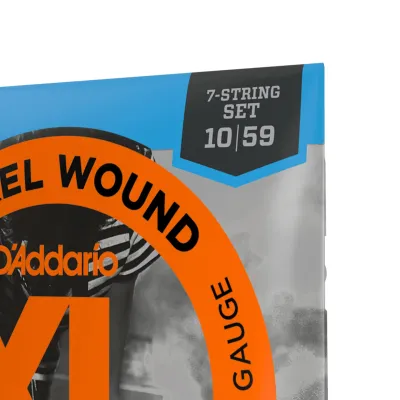

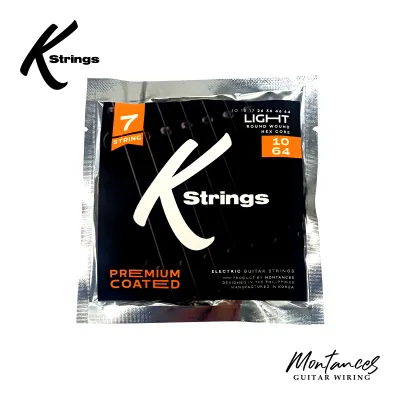



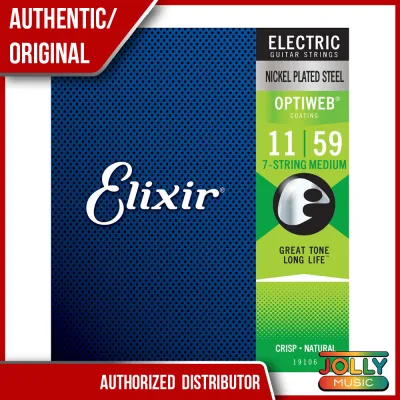
Prices are valid at publication and may change. Please refer to the product page for the latest price.
Your primary tuning range also dictates your string choice. Standard seven-string tuning is B-E-A-D-G-B-E, but many players prefer drop tunings, such as Drop A (A-E-A-D-G-B-E) or even lower variations. The lower you tune, the less tension the string will have under normal conditions.
Tuning down significantly requires thicker strings to maintain playability and prevent fret buzz. If you tune the seventh string down to A or G on a standard scale length, a thin string will vibrate with a wide, loose arc, causing it to strike the frets and produce an undesirable buzzing sound. Selecting a heavier gauge restores the physical resistance needed for clean, articulate notes.
Select the Right String Gauge for Your Playstyle
String gauge refers to the thickness of the strings, measured in thousandths of an inch. Lighter sets (such as those starting with a .009 or .010 on the high E) offer easier bending, less finger fatigue, and a brighter, snappier response on the higher strings. Heavier sets (starting with .011 or .012) provide a fuller, more robust low-end tone and greater tuning stability, especially when down-tuning, but they require more finger strength to bend and press down.

When buying a seven-string set, look closely at the seventh string’s gauge, which is typically listed last on the packaging (for example, .056, .059, .062, or .064). A standard light seven-string set might pair a .009 to .042 six-string set with a .052 or .054 seventh string. For standard B tuning, a .056 or .059 is often preferred by players who want a firmer feel. If you plan to drop-tune to A or lower, you may need to look for sets with a seventh string gauge of .062 to .068 to maintain balanced tension across the entire fretboard.
Your physical playing style plays a massive role in gauge selection. If you are a heavy-handed rhythm player who executes fast, aggressive downstrokes, a loose seventh string will easily bend out of pitch when struck hard, resulting in a sharp initial note that slowly settles back down. A stiffer, thicker low string resists this initial deflection, keeping your heavy riffs perfectly in tune and providing a faster tracking response for high-gain amplifiers. If you prefer a lighter, more expressive touch with plenty of soloing on the lower register, a slightly more flexible gauge will feel more comfortable and responsive.
Choose the String Material and Coating
The alloy used to wrap the lower strings heavily influences both the tone and the physical feel of your guitar. Nickel-plated steel is the most common choice, offering a bright, balanced tone with excellent magnetic response that works well for modern high-gain tones. Pure nickel strings provide a warmer, rounder, and more vintage-inspired sound, though they may lack the sharp bite required for complex, low-tuned metal riffs. Stainless steel strings are exceptionally bright, highly corrosion-resistant, and offer a distinctively rougher texture under the fingers, making them a durable option for players who want maximum clarity and projection.
Coated strings feature a micro-thin protective layer that shields the metal wrap wire from sweat, skin oils, and environmental moisture. In tropical climates with high humidity, such as the Philippines, uncoated steel strings can oxidize and rust rapidly, sometimes losing their bright tone and smooth feel within just a few days of heavy use. Coated strings resist this degradation, significantly extending the life of the set and reducing the annoying finger squeak that occurs when sliding along the fretboard. While coated sets carry a higher initial cost, they often save money and maintenance time in the long run.
Consider how your string material interacts with your entire signal chain. If you play through a high-gain digital modeler or a bright tube amplifier, stainless steel strings might sound overly harsh or fizzy in the high frequencies, whereas nickel-plated steel will offer a more controlled top end. For progressive metal and djent, where low-end articulation is critical, the bright attack of nickel-plated steel or stainless steel helps prevent the lowest notes from turning into a muddy, indistinguishable rumble.
Check Compatibility and Hardware Limits
Before installing a heavy seventh string, you must verify that your guitar’s hardware can physically accommodate it. The tuning peg hole for the seventh string is often drilled to handle standard gauges up to about .060 or .062. If you purchase a heavy set with a .070 or .074 low string, you may find that the wire simply will not pass through the tuning post hole. Similarly, the slots in the nut (the piece of plastic, bone, or synthetic material near the headstock) are precision-cut at the factory for specific string ranges.
At the other end of the guitar, the bridge saddles must support the string securely. If a string is too thick for the saddle slot, it will sit too high, ruining your action and intonation, or it may slide side-to-side during aggressive playing.
If you attempt to install a new seventh string and find that it does not drop easily and seat fully into the nut slot, stop immediately. Do not force the string into the slot or try to wedge it in by tightening the tuner. Forcing an oversized string can easily crack or break the nut, leading to an expensive repair. Instead, take your guitar to a qualified guitar technician who can use specialized nut-filing saws to widen the slot safely to the exact dimensions of your new string.
Build Your First 7-String String Set Shortlist
To find your ideal starting point, combine your guitar’s scale length, your target tuning, and your preferred material. For example, if you have a 26.5-inch scale guitar tuned to standard B and prefer a balanced, modern tone, a nickel-plated steel set with a .010 to .059 gauge range is an excellent baseline. If you are down-tuning to Drop A on a 25.5-inch scale, look for a heavier set with at least a .062 or .064 low string.
Always check the exact individual gauges printed on the back of the packaging or the online product specification sheet before purchasing. Some manufacturers package “seven-string” sets that simply add a relatively thin seventh string to a standard light six-string set, which may feel too loose for your specific tuning goals.
Allocate a realistic budget of around ₱500 to ₱1,200 to purchase two or three different sets from different brands or in slightly different gauges. Because string preference is highly subjective and depends on the unique resonance of your specific guitar, testing a few variations is the most reliable way to find your personal preference. Avoid buying bulk packs of a single gauge until you have verified how they feel and sound on your instrument.
Keep a small notebook or a digital note on your phone to record your impressions of each set. Note the brand, the exact gauges, the date of installation, how long they lasted before sounding dull, and how comfortable the tension felt on your fingers. Over time, this log will help you refine your choices and pinpoint the exact string specifications that make your seven-string guitar perform at its best.
Frequently Asked Questions (FAQ)
Can I use a standard 6-string set and add a single 7th string? (FAQ)
Yes, you can purchase a standard six-string set and pair it with an individually sold single string for the seventh position. However, this approach often leads to a noticeable tension and tonal mismatch if the single string’s gauge and material do not align with the rest of the set. If you choose this route, you must carefully calculate the tension of your sixth string and select a seventh string that continues that tension curve logically. For beginners, it is highly recommended to stick to purpose-built, pre-packaged seven-string sets, as manufacturers have already balanced the tension across the entire fretboard for optimal playability.
How often should I change my 7-string guitar strings? (FAQ)
Instead of relying on a strict calendar schedule, look for physical and auditory indicators that your strings are worn out. If you notice visible dark spots, rust, or a rough texture along the underside of the strings, or if your guitar struggles to stay in tune and the tone sounds dull and lifeless, it is time for a replacement. In warm, humid environments, sweat and moisture accelerate this decay. To maximize the lifespan of your strings, always use a clean microfiber cloth to wipe down the entire length of each string, including the undersides, immediately after every playing session.
Community discussion
Share your experience or ask a question. Comments are reviewed before publication.