
Finding the right way to amplify your acoustic guitar can feel overwhelming when you are just starting out. For beginners in the Philippines, choosing a Fishman guitar pickup is a highly reliable path to achieving a clear, professional plugged-in sound. The ideal choice depends on your specific instrument, your budget, and whether you prefer a simple, non-invasive installation or a permanent, professionally fitted system.
By understanding how different pickup technologies interact with your guitar’s wood and strings, you can make an informed decision that enhances your playing experience. This guide will help you navigate the technical specifications, physical compatibility requirements, and installation choices to find the perfect match for your musical journey.
Understanding Fishman Pickup Technologies for Beginners
To choose the right pickup, you must first understand the core technologies available. Fishman designs several distinct types of sensors, each capturing your instrument’s sound in a different way. Reading product labels and specification sheets carefully will help you identify which technology a specific model uses.
Products mentioned in this guide
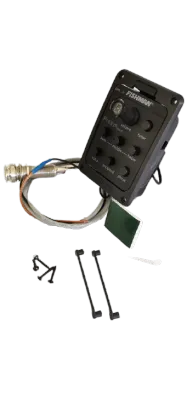
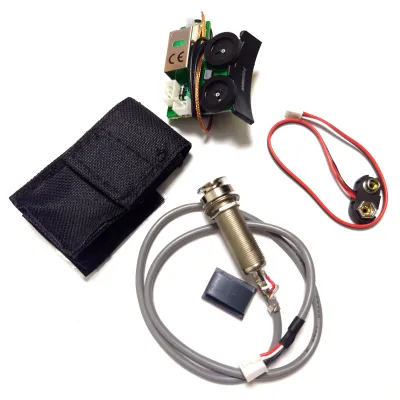
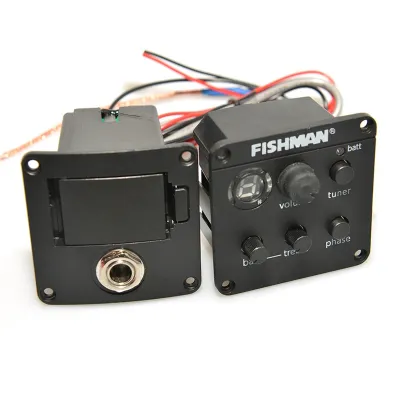
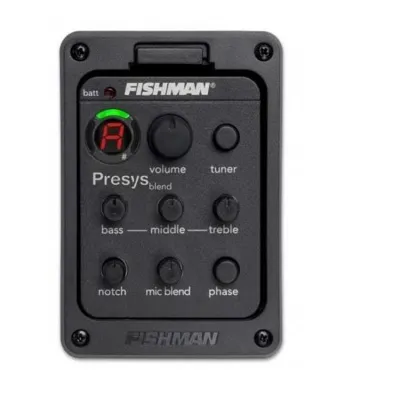
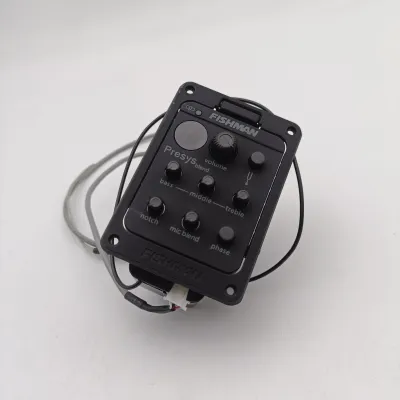
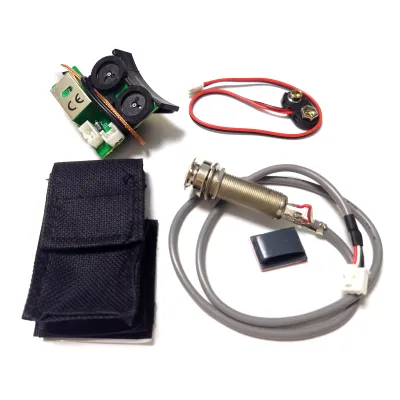
![[ChuYH] Original Fishman VT1 Acoustic Guitar Pickup System Tail Nail Pickup EQ DIY Guitar Parts & Accessories](https://img.lazcdn.com/g/p/54ba9b6f607a8822a9292e1f9407eb3a.jpg_400x400q80.jpg_.webp)
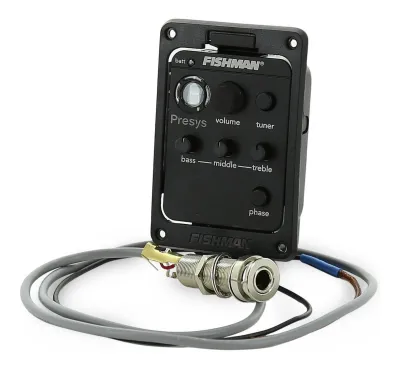
Prices are valid at publication and may change. Please refer to the product page for the latest price.
Undersaddle transducers (UST) are thin strips placed directly beneath your guitar’s saddle. They use piezoelectric crystals to convert the physical pressure of the vibrating strings into an electrical signal. Because they are sealed inside the bridge, they are exceptionally resistant to feedback, making them the standard choice for loud live environments like local church bands or outdoor gigs.
Magnetic soundhole pickups clamp directly across the soundhole of a steel-string guitar. They work similarly to electric guitar pickups, using magnetic fields to capture string vibrations directly. These systems are highly favored by beginners because they are incredibly easy to install and remove without modifying the instrument.
Soundboard transducers (SBT) attach to the underside of the guitar’s top wood, known as the soundboard. Instead of capturing direct string vibration, they capture the natural resonance of the wood itself. This results in a highly organic, warm acoustic tone, though they are more prone to feedback at high volumes than undersaddle or magnetic options.
Internal microphone systems capture the actual air movement inside the guitar body. While they offer the most realistic acoustic tone, they are highly sensitive and easily trigger feedback. Many advanced systems pair an internal microphone with an undersaddle transducer, allowing you to blend the stability of the transducer with the warmth of the microphone.
When evaluating these technologies, consider your primary playing environment. If you plan to practice at home or record in a quiet room, a system that incorporates a soundboard transducer or microphone will deliver a highly natural tone. If you plan to play live on stage with a full band, prioritizing feedback resistance with an undersaddle or magnetic pickup is generally more practical.
Matching the Pickup to Your Guitar Type
Physical compatibility is the most critical factor when selecting a pickup. A pickup that does not fit your instrument’s dimensions will suffer from poor string balance, weak output, or may even cause structural damage. Before making a purchase, you must take precise measurements of your instrument.

Use a precise ruler or digital caliper to measure your saddle slot width, which is typically either 3/32 inches (approximately 2.3 mm) or 1/8 inches (approximately 3.2 mm). You should also measure the overall string spacing at the bridge and, if you are considering a magnetic pickup, the exact diameter of your guitar’s soundhole.
Acoustic Steel-String Guitars
Standard steel-string acoustic guitars, such as dreadnoughts and auditoriums, are highly compatible with a wide range of Fishman systems. Undersaddle transducers are excellent for these instruments because they capture the bright, articulate attack of steel strings, which is ideal for flatpicking and rhythmic strumming.
Before installing an undersaddle pickup, always verify the depth of your guitar’s saddle slot. If the slot is too shallow, adding the transducer element underneath will raise your string action too high, making the guitar difficult to play. A shallow slot can also cause the saddle to tilt forward under string tension, which risks cracking the wooden bridge.
Classical and Nylon-String Guitars
Classical guitars require a completely different approach due to their physical construction and lower string tension. Nylon strings do not contain magnetic materials, which means magnetic soundhole pickups will not work on a classical guitar.
Additionally, nylon strings exert significantly less downward pressure on the saddle than steel strings. If you install a standard steel-string undersaddle pickup on a classical guitar, the output will often sound thin, weak, and uneven across the strings. Look specifically for classical-designated sensors or non-invasive soundboard transducers designed to respond to lower physical tension.
Ukuleles and Smaller Instruments
Ukuleles and travel guitars have very small soundboxes and limited internal cavity space. Standard acoustic guitar pickups and preamps are far too large and heavy for these compact instruments, and installing them can damp the natural acoustic vibrations of the wood.
For these instruments, look for scaled-down sensors specifically engineered for ukulele bridge slots. These compact systems often utilize smaller coin-cell batteries or operate as passive systems to save space and keep the instrument lightweight. This ensures the instrument remains comfortable to play while preserving its natural acoustic resonance.
Key Features to Evaluate on a Beginner Budget
As a beginner, it is important to prioritize essential features that match your current skill level and avoid overspending on professional-grade extras. The first major decision is choosing between a passive and an active pickup system.
Active systems feature an onboard preamp powered by a battery, which boosts the signal before it leaves the guitar. This ensures a strong, clean signal over long cable runs and often includes convenient onboard controls. Passive systems do not require a battery, making them lighter and less expensive, but they require an external preamp or Direct Input (DI) box to sound their best.
Onboard controls can range from simple volume and tone wheels tucked discreetly inside the soundhole to large preamps mounted on the side of the guitar. Soundhole-mounted controls are highly recommended for beginners because they do not require cutting a large hole in the side of your instrument. While built-in tuners and multi-band equalizers are convenient, they add weight and require more invasive installation.
When planning your budget, it helps to understand the general price tiers available in the local market. Entry-level passive pickups and basic soundboard transducers are typically available under ₱3,000, offering a budget-friendly way to start amplifying your sound. These are excellent for casual home use and simple practice setups.
Mid-range active systems generally fall between ₱3,000 and ₱7,000. This tier provides a significant upgrade in signal strength and tone control, making them highly suitable for school performances, church services, and local open mics. Premium multi-source systems and advanced preamps sit above ₱7,000, which are excellent long-term investments but often exceed a beginner’s immediate needs.
Installation and Power Requirements
Integrating a pickup into your guitar requires varying levels of physical modification. Non-invasive options, such as magnetic soundhole pickups, slide easily into place and can be removed in seconds without leaving a permanent mark on your instrument.
Semi-invasive installations require widening the existing endpin hole at the bottom of the guitar to accommodate a 1/4-inch output jack. While this is a permanent modification, it is standard practice and does not alter the acoustic tone of the instrument. Fully invasive installations require routing the saddle slot to ensure a perfectly flat bottom surface or cutting a large opening in the side of the guitar for a preamp unit.
Active systems require a reliable power source, usually a 9V battery or small button cells. Always consult the manufacturer’s specification sheet to verify the expected battery life, which often ranges from 100 to over 300 hours of continuous use. To prevent unnecessary battery drain, always unplug your guitar cable from the endpin jack when you are not playing, as inserting the cable acts as the system’s power switch.
It is crucial to establish clear stopping conditions for any do-it-yourself installation. If your chosen pickup requires drilling into the wood, routing the saddle slot, or modifying the bridge, do not attempt to do this yourself. The high relative humidity in the Philippines causes guitar wood to expand and contract, making it highly susceptible to cracking if drilled or cut incorrectly. Always take your instrument to a qualified local luthier or technician for permanent modifications.
Where to Buy and Verify Authenticity in the Philippines
Due to the high demand for quality guitar gear, counterfeit pickups are a common issue on unverified online marketplaces and social media buy-and-sell groups. Purchasing a counterfeit product results in poor sound quality, high background noise, and a lack of warranty support.
To ensure you are purchasing a genuine product, prioritize authorized local music distributors and official brand flagship storefronts on major online marketplaces. These sellers provide authentic products backed by official manufacturer warranties and clear return policies.
When your pickup arrives, perform a thorough physical inspection before installation. Genuine packaging should feature crisp, high-quality printing, clear serial numbers, and official warranty documentation. Inspect the pickup itself for clean, professional solder joints, robust wiring, and clearly engraved or printed branding.
Be highly skeptical of listings offering premium active pickups at suspiciously low prices. If a price seems too good to be true, it is almost certainly a counterfeit copy. Investing in a genuine pickup from an authorized source ensures reliable performance, excellent sound quality, and long-term durability in tropical climates.
Frequently Asked Questions (FAQ)
Do I need an external preamp or DI box?
Whether you need an external preamp or DI box depends entirely on whether your pickup system is active or passive. Passive pickups output a high-impedance signal that degrades quickly over long cable runs, resulting in a loss of high frequencies and a muddy tone. If you choose a passive pickup, you will need an external preamp or an active DI box to match the input impedance of a PA system, mixer, or audio interface.
Active pickups feature a built-in preamp that boosts the signal and outputs a low-impedance signal. This allows you to plug directly into an acoustic amplifier, mixing board, or audio interface without experiencing signal loss or tone degradation. If you want a simple, plug-and-play setup with minimal extra gear, an active pickup system is generally the most convenient choice for beginners.
Will adding a pickup damage my acoustic guitar?
Adding a pickup will not damage your acoustic guitar if you select the correct type of system and ensure it is installed properly. Non-invasive options, such as magnetic soundhole pickups or temporary soundboard transducers, use padded clamps or gentle adhesives that can be removed easily without leaving permanent marks or altering the wood.
Permanent installations, such as drilling an endpin jack or routing a saddle slot, do modify the physical structure of the instrument. When performed by a professional luthier, these modifications are completely safe and will not harm the guitar’s structural integrity or acoustic tone. However, attempting to drill or cut the wood yourself without the proper tools and experience can easily cause the wood to split or crack, especially under the shifting humidity levels common in tropical climates.
Community discussion
Share your experience or ask a question. Comments are reviewed before publication.