
Starting your drumming journey in the Philippines often means balancing the desire for authentic acoustic feel with the practical realities of living in close-quarters subdivisions, condominiums, or shared family homes. A complete electronic drum kit offers a practical solution, allowing you to practice silently with headphones while enjoying a wide variety of built-in sounds. Choosing the right setup requires understanding how different materials, module features, and hardware configurations impact your learning progress and long-term enjoyment. By focusing on key specifications like pad material, trigger zones, and local warranty support, you can find an instrument that fits both your living space and your musical goals.
What to Look for in a Beginner Electronic Drum Kit
When evaluating an electric drums full set, the choice of pad material is one of the most critical decisions you will make. Mesh pads feature a woven surface that closely mimics the tension and rebound of a traditional acoustic drumhead. They are highly adjustable, allowing you to tighten or loosen the head using a standard drum key to customize the physical response. Furthermore, mesh is exceptionally quiet, making it the ideal choice for late-night practice sessions in densely populated residential areas. In the warm, humid climate of the Philippines, high-quality mesh heads also offer a practical advantage: they are breathable and less prone to the sticky, degrading texture that low-grade rubber pads can develop over years of exposure to moisture and heat.
Rubber pads, on the other hand, are typically found on budget-friendly entry-level kits. While they are incredibly durable and require virtually no maintenance, they offer a much harder playing surface. This stiffness can lead to wrist fatigue during extended practice sessions and produces a louder, more distinct “clack” sound when struck. If your budget allows, prioritizing a kit with at least a mesh snare pad—the drum you will strike most frequently—is a highly recommended compromise that preserves playability without significantly increasing the overall cost.
Products mentioned in this guide
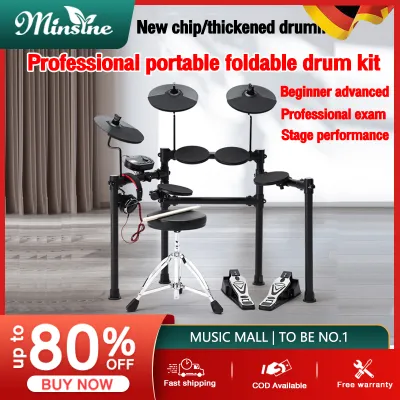
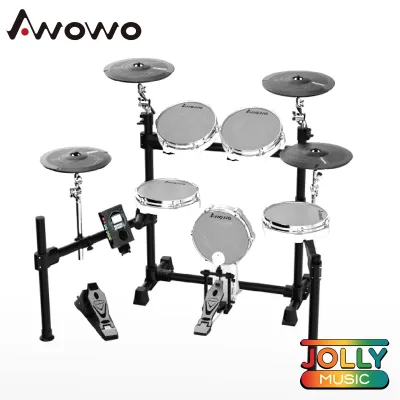
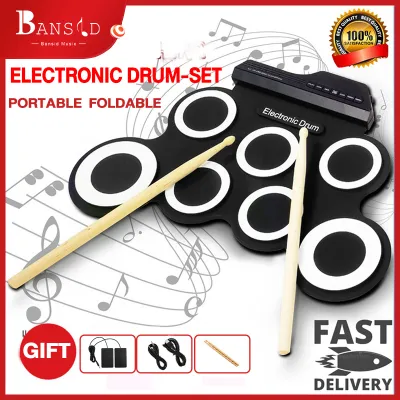
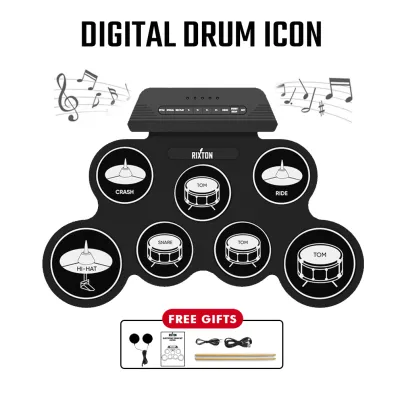
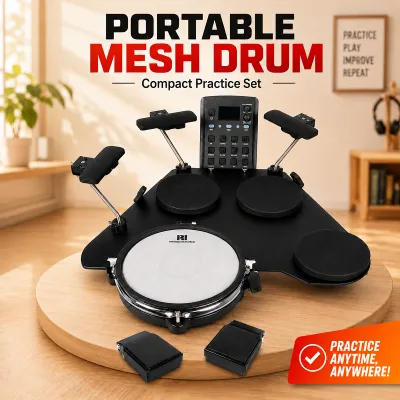
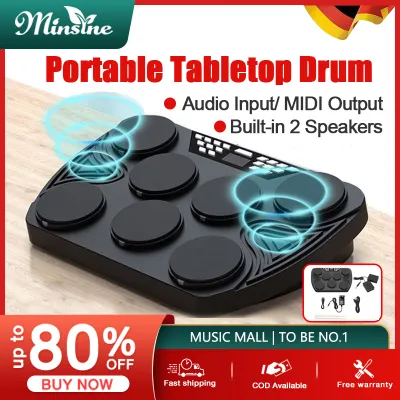
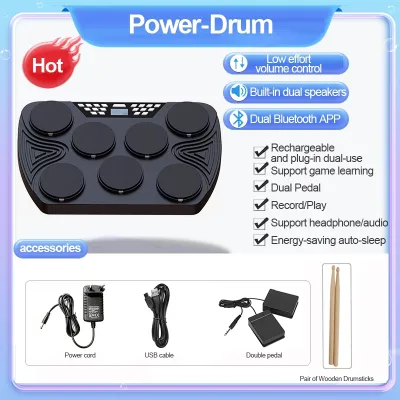
Prices are valid at publication and may change. Please refer to the product page for the latest price.
Beyond the pads, the drum module serves as the brain of your electronic kit. For beginners, the module should focus on functional learning tools rather than hundreds of highly specialized sound effects. A built-in metronome with adjustable time signatures and tempos is non-negotiable for developing a steady sense of rhythm. Look for modules that include coaching functions, such as timing accuracy checks and quiet-count modes, which provide immediate visual feedback on your performance. Built-in play-along tracks across various musical genres also help keep practice sessions engaging and practical.
Finally, do not overlook the physical construction of the drum rack. A stable, four-post rack made of steel or heavy-duty aluminum ensures that the pads remain securely in place while you play. Flimsy, lightweight racks tend to wobble or slide across the floor under heavy striking, which can cause the internal sensors to trigger falsely or misalign your physical playing posture. The rack should offer easy height and angle adjustments so that the kit can grow with younger players or be comfortably shared among family members of different heights.
Key Features to Compare Before Buying
As you compare different electronic drum kits, understanding technical specifications will help you identify which models offer the best long-term usability. One of the primary differentiators is the number of trigger zones on each pad. Single-zone pads trigger the exact same sound regardless of where you strike the surface. While sufficient for tom pads, a single-zone snare pad limits your ability to play rimshots or cross-sticks, which are essential techniques in popular music genres. Dual-zone pads feature separate sensors for the head and the rim, allowing for much more expressive playing. Similarly, look for dual-zone cymbals that support edge and bow sounds, as well as a physical choke capability that lets you silence the cymbal sound by grabbing the edge with your hand.

Connectivity options are equally important for modern learning workflows. A USB-MIDI port is a standard feature that allows you to connect your drum module directly to a computer, tablet, or smartphone. This connection enables you to use interactive learning software, practice apps, and digital audio workstations (DAWs) to record your playing or trigger high-quality external drum libraries. Bluetooth connectivity is another highly convenient feature, allowing you to stream audio wirelessly from your phone directly to the drum module. This makes it incredibly easy to play along with your favorite songs or instructional videos without dealing with tangled auxiliary cables. If Bluetooth is not available, ensure the module has a standard 3.5mm auxiliary input jack.
The design of the hi-hat controller also significantly impacts the realism of your practice experience. Most entry-level electronic drum sets utilize a detached, standalone foot pedal to control the open and closed sounds of the hi-hat. While highly compact and cost-effective, these pedals lack the physical resistance and mechanical feel of a traditional acoustic hi-hat stand. Advanced beginner kits sometimes feature a continuous controller pedal or a specialized pad that mounts directly onto a standard acoustic hi-hat stand. This setup provides a much smoother transition when transitioning to an acoustic drum kit in the future, as it teaches you to control the physical weight of the hi-hat cymbals with your foot.
Where to Buy and How to Verify Authenticity in the Philippines
Navigating the local market requires a careful balance between finding a competitive price and ensuring you receive an authentic product with reliable after-sales support. While online marketplaces and general ecommerce platforms often display tempting deals, purchasing from authorized physical music stores or official brand flagship stores online remains the safest route. Visiting a physical showroom allows you to test the physical rebound of the pads, hear the module’s sound quality through headphones, and assess the overall stability of the rack before making a financial commitment.
One of the most critical advantages of buying from an authorized local dealer is the provision of an official manufacturer warranty. Electronic drum modules are complex computers, and the piezo sensors inside the pads are subject to constant physical impact. Having access to an authorized local service center in major metropolitan hubs like Metro Manila, Cebu, or Davao ensures that you can easily source replacement parts or obtain professional repairs if a component fails. Be wary of sellers offering “store-only” warranties that require you to ship the heavy, bulky kit back overseas at your own expense for servicing.
When shopping online, watch out for common red flags that indicate counterfeit or gray-market products. Suspiciously low prices that fall far below the standard retail average are a primary warning sign. Authentic kits should always arrive in original, sealed manufacturer packaging with clear branding, serial numbers, and localized power adapters. Unofficial bundles that substitute the manufacturer’s original power supply with cheap, unbranded adapters pose a significant risk, as unstable voltage or power surges can easily damage the sensitive internal circuitry of your drum module.
In terms of budgeting, a reliable entry-level electronic drum kit in the local market typically ranges from ₱15,000 to ₱35,000. When planning your purchase, always clarify whether the advertised price is for the base kit alone or a complete bundle. Many manufacturers ship the base kit without essential hardware like a drum throne, kick pedal, or headphones. Factoring these additional items into your initial budget prevents unexpected expenses and ensures you can begin playing the moment your shipment arrives.
Essential Accessories to Complete Your Setup
To get the most out of your new electronic drum set, you will need to budget for several essential accessories that are frequently sold separately from the main kit. The first consideration is your audio output. For personal practice, a high-quality pair of studio monitor headphones is indispensable. Unlike standard consumer headphones that artificially boost bass frequencies, studio headphones offer a flat frequency response, allowing you to hear the true, uncolored sound of your drum module. When selecting headphones, pay attention to their impedance rating; models with an impedance of 32 ohms or lower are ideal, as they can be driven to safe, clear volume levels directly by the drum module without the need for an external headphone amplifier.
If you wish to play out loud for family or friends, you will need a dedicated drum amplifier. Standard guitar amplifiers are not designed to handle the wide frequency range of electronic drums; the deep, low-frequency thud of a kick drum can easily distort or damage a guitar amp’s speaker, while the high-frequency crispness of the cymbals will sound muffled. A dedicated drum amplifier or an active PA speaker features a multi-way speaker design that accurately reproduces both the lowest bass notes and the highest treble frequencies safely.
Physical hardware is another crucial component of your setup. A dedicated drum throne is highly recommended over a standard household chair, as it allows you to adjust your seating height precisely to maintain a 90-degree angle at your knees and hips, protecting your lower back from strain. If your kit features a physical kick pad rather than a silent trigger pedal, you will also need to purchase a reliable single kick pedal. Finally, select a clean pair of wooden or nylon-tipped drumsticks, typically in a versatile 5A or 7A size, to complete your physical setup.
For those living in apartments, condominiums, or shared family homes, managing physical vibration is just as important as controlling acoustic noise. While headphones keep the sound of the drums silent to the room, the physical impact of your feet on the kick and hi-hat pedals creates low-frequency vibrations that travel directly through the floorboards, often sounding like a loud hammer to neighbors living downstairs. Placing a thick, non-slip drum rug underneath your entire setup is an excellent first step. For multi-story buildings, constructing a simple isolation platform—often referred to as a tennis ball riser—can highly effectively decouple the drum kit from the floor, ensuring peaceful relationships with your neighbors.
Frequently Asked Questions (FAQ)
Do I need a dedicated amplifier for an electronic drum set?
No, you do not need an amplifier if you plan to practice exclusively with headphones. In fact, headphones are the preferred choice for most beginners practicing at home. However, if you want to perform for others or practice without wearing headphones, you will need an external speaker. Avoid using standard guitar amplifiers, as they are voiced specifically for mid-range frequencies and can easily distort or suffer damage from the deep low-end frequencies of an electronic kick drum. A dedicated drum amplifier, keyboard amp, or active PA speaker is designed to handle the wide dynamic range of electronic percussion safely.
How much space does a full electronic drum kit require?
A standard entry-level electronic drum kit typically requires a floor space of approximately 1.2 meters by 1.2 meters (about 4 feet by 4 feet). Compact, folding racks may fit into slightly smaller spaces, while larger setups with independent cymbal stands might require up to 1.5 meters of width. When planning your space, remember to account for the physical clearance needed behind the drum throne for comfortable seating, the forward travel of the kick pedal, and enough lateral room to prevent your drumsticks from hitting nearby walls or furniture during wide arm movements.
Can I use standard acoustic drum sticks on electronic mesh pads?
Yes, you can use standard wooden drumsticks, but they must be completely clean and dedicated solely to your electronic kit. Using sticks that have previously been used on acoustic cymbals can transfer wood splinters, metal shavings, or dirt to the delicate mesh heads, leading to premature tearing or sensor damage. Nylon-tipped sticks are highly recommended for mesh pads because they are perfectly smooth and do not splinter. Regardless of the tip material, regularly inspect your sticks for any cracks or sharp edges, and maintain a proper striking angle to preserve the life of your pads.
Community discussion
Share your experience or ask a question. Comments are reviewed before publication.