
Deepening your spiritual life is a highly personal journey that requires the right companion in the form of written words. In the Philippines, where Catholic traditions run deep and permeate daily life, finding the right spiritual book can be both a blessing and a challenge due to the sheer volume of available literature. Whether you are seeking to establish a basic prayer routine, understand complex Church teachings, or find comfort during difficult times, the books you choose will shape your spiritual formation. Selecting the right Catholic faith books involves assessing your current spiritual needs, understanding the different genres of Catholic writing, and verifying that the texts you read are doctrinally sound and authentic.
Identifying Your Spiritual Reading Goals
Before purchasing any spiritual book, it is essential to evaluate your current spiritual maturity and identify your immediate needs. Spiritual growth is seasonal; a book that inspires a beginner might not satisfy someone seeking advanced contemplative prayer, while a dense theological treatise might overwhelm someone who is just starting to explore their faith. If you are experiencing a period of spiritual dryness, you may benefit from books focusing on God’s mercy and emotional healing. Conversely, if you are seeking to defend your faith or understand Church teachings more clearly, your goals will point you toward apologetics or moral theology.
Matching the format of the book to your daily schedule is equally important for maintaining consistency. If you are a busy professional navigating long daily commutes in urban areas, a thick volume of systematic theology may not be practical. Instead, a book of short daily devotionals or a collection of brief reflections can easily fit into a 15-minute gap in your schedule. For those who can dedicate longer, uninterrupted periods of time on weekends, comprehensive guides on the interior life or detailed scriptural commentaries offer the depth required for serious study. By aligning your reading material with both your spiritual state and your lifestyle, you prevent reading from becoming a chore and instead allow it to become a source of daily nourishment.
Products mentioned in this guide
Prices are valid at publication and may change. Please refer to the product page for the latest price.
Exploring Key Categories of Catholic Literature
Catholic literature is vast, spanning two millennia of intellectual and spiritual tradition. To navigate this expansive library, it helps to categorize books into distinct genres, each serving a unique purpose in your spiritual development.

Scripture and Theological Foundations
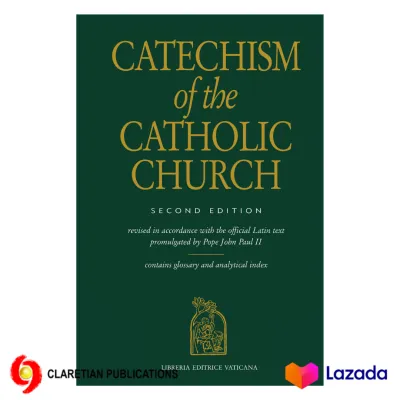
The foundation of any Catholic library must begin with Sacred Scripture and the official teachings of the Church. Reading the Bible along with authorized commentaries ensures that your personal interpretation remains aligned with the historical and apostolic understanding of the faith. The Catechism of the Catholic Church is another indispensable resource, providing a systematic and comprehensive exposition of Catholic doctrine, morals, and sacraments. These foundational texts are not meant to be read like novels; rather, they serve as lifelong reference guides that build a solid intellectual baseline, protecting your faith from common misconceptions and helping you articulate what you believe.
Spiritual Classics and Mysticism
For those who wish to transition from intellectual knowledge to a deeper, more intimate relationship with God, the spiritual classics are unmatched. These works, written by canonized saints and mystics throughout history, explore the depths of the interior life and the stages of contemplative prayer. Authors such as Saint Teresa of Avila, Saint John of the Cross, and Saint Thérèse of Lisieux offer timeless wisdom on overcoming personal faults, enduring spiritual trials, and experiencing union with God. Because these texts deal with profound mystical experiences, they are best read slowly and prayerfully, often serving as excellent material for spiritual direction.
Modern Spiritual Guides and Encyclicals
The Church continues to speak to the modern world through contemporary pastoral letters, papal encyclicals, and practical guides written by modern authors. These writings address the specific moral, social, and technological challenges of our time, translating ancient truths into actionable advice for modern living. Papal encyclicals, for instance, offer authoritative guidance on issues like social justice, care for creation, and family life. Modern spiritual guides written by contemporary priests, religious, or lay theologians help bridge the gap between traditional practices and the hectic realities of modern family and professional life.
Biographies and Hagiographies
Sometimes, the most effective way to learn how to live the faith is by observing how others have done so before us. Biographies of the saints, known as hagiographies, provide concrete, historical examples of holiness in action. Reading about the lives of saints—ranging from early martyrs to modern figures like Saint Padre Pio or local Filipino saints like Saint Lorenzo Ruiz and Saint Pedro Calungsod—shows us that holiness is achievable in every state of life. These stories humanize the saints, revealing their struggles, doubts, and triumphs, which in turn inspires us to persevere in our own spiritual journeys.
Essential Checks Before Buying a Catholic Book
When purchasing Catholic literature, especially books concerning faith, morals, and scripture, it is crucial to perform several quality and authenticity checks. The most important of these is verifying ecclesiastical approvals, which serve as a safeguard against doctrinal errors. Look for the Nihil Obstat, which is an official declaration by a diocesan censor that a book contains nothing contrary to faith or morals, and the Imprimatur, which is the bishop’s formal permission for the book to be published. These declarations are typically printed on the copyright page and are essential for any book that claims to present official Catholic teaching or scriptural translation.
Evaluating the publisher’s reputation and the quality of the translation is another critical step, particularly for classic works originally written in Latin, Spanish, French, or Italian. A poor translation can obscure the author’s original meaning or introduce theological ambiguities. Reputable Catholic publishing houses employ scholars who specialize in translating historical texts while preserving their theological accuracy and spiritual depth. Before buying, check the introduction or the publisher’s note to see if the translation has been updated or reviewed by competent authorities.
The physical format of the book is a practical consideration that is often overlooked, especially in tropical climates like the Philippines. High humidity, heat, and seasonal rains can cause paperbacks to warp, pages to yellow rapidly, and bindings to deteriorate. If you plan to build a permanent spiritual library or use a book daily for prayer, investing in a durable hardcover edition with acid-free paper is highly recommended. For books that you intend to carry with you during daily commutes or travel, a lightweight, flexible paperback or a high-quality digital edition may be more practical, provided you protect physical copies from moisture and pests.
Finally, always review the publication date and the specific edition of the book. While classic spiritual texts remain timeless, books dealing with liturgy, canon law, or pastoral guidelines must reflect the most current teachings of the Church. For example, ensure that any liturgical guide or prayer book you purchase aligns with the post-Vatican II liturgical calendar and the current English translation of the Roman Missal. Checking the edition details prevents confusion and ensures that your personal prayer practices remain in harmony with the universal Church.
Where to Source Authentic Catholic Books in the Philippines
Finding authentic Catholic books in the Philippines is relatively straightforward if you know where to look, but it requires caution when browsing general retail spaces. Visiting established local Catholic bookstores, diocesan communication offices, and gift shops attached to major shrines or cathedrals is the most reliable way to find curated selections. These physical locations allow you to inspect the books firsthand, check for the Imprimatur, and evaluate the print quality before making a purchase. Furthermore, the staff at these specialized stores are often knowledgeable and can offer recommendations based on your specific reading interests.
If physical shopping is difficult, navigating the official online stores of recognized religious publishers and authorized digital platforms is a safe alternative. Many local Catholic publishing houses and diocesan media ministries operate their own online storefronts, offering secure home delivery across the archipelago. When ordering online, always verify that you are purchasing from the official store of the publisher or an authorized distributor rather than an unverified third-party seller. This ensures that you receive a genuine, complete edition and that your purchase directly supports the publishing ministry of the Church.
For academic texts, rare theological resources, or historical documents, exploring parish libraries, Catholic university presses, and seminary bookstores can yield excellent results. Institutions like the Ateneo de Manila University Press or the University of Santo Tomas Publishing House regularly publish scholarly works on theology, church history, and pastoral ministry. These academic outlets are invaluable for readers who wish to delve deeper into theological study beyond introductory-level guides.
Conversely, when browsing general online marketplaces or informal street vendors, you must remain vigilant for red flags. The rise of unauthorized printing has led to an influx of low-quality, pirated editions of popular spiritual books. These counterfeit copies often feature missing publisher details, suspiciously low prices—such as a complete theological volume sold for under ₱100—poor binding that falls apart quickly, and numerous typographical errors that can alter the meaning of theological texts. If a listing lacks clear photos of the copyright page, has altered cover art, or does not specify the publisher, it is best to avoid it and source the book from an authorized Catholic retailer.
Building a Sustainable Spiritual Reading Routine
Acquiring the right books is only the first step; the true benefit comes from integrating them into your daily life in a way that fosters genuine spiritual growth. One of the most effective methods for reading spiritual classics and scripture is Lectio Divina, a traditional four-step practice of reading, meditating, praying, and contemplating. Instead of rushing through pages to finish a chapter, Lectio Divina encourages you to read a short passage slowly, focus on a word or phrase that resonates with you, talk to God about how it applies to your life, and rest quietly in His presence. This method transforms reading from an intellectual exercise into an active conversation with God.
To prevent your reading routine from becoming overwhelming, it is crucial to set realistic daily or weekly goals. It is far better to read for 10 minutes every day with full attention than to attempt to read for two hours once a week when you are exhausted. Identify a specific, quiet time in your daily schedule—such as early in the morning before the household wakes up, or in the evening before sleeping—and dedicate that time consistently to spiritual reading. Treat this time as an appointment with God, free from digital distractions and notifications.
Using a dedicated spiritual journal can also significantly enhance your reading experience. Writing down key passages, personal reflections, and questions that arise during your reading helps solidify the lessons in your mind. A journal also serves as a valuable record of your spiritual journey, allowing you to look back over months or years to see how God has guided you through different seasons of life. If you encounter difficult theological concepts or challenging moral teachings during your reading, note them down in your journal so you can discuss them later with a priest, spiritual director, or knowledgeable mentor.
Frequently Asked Questions (FAQ)
Do I need an Imprimatur for every Catholic book I read?
No, you do not need an Imprimatur for every single book you read, but its necessity depends on the genre of the literature. Books that deal directly with Catholic doctrine, dogmatic theology, Sacred Scripture translations, liturgical texts, and official prayer books strictly require ecclesiastical approval to ensure they are free from doctrinal or moral error. However, general spiritual memoirs, historical accounts of the Church, biographies of saints, and personal inspirational writings do not always carry an Imprimatur. When reading books without this official approval, it is wise to choose works written by reputable Catholic authors and published by established, faithful Catholic publishing houses to ensure the content aligns with Church teachings.
How can I choose the right Bible translation for personal study?
Choosing the right Bible translation depends on whether your primary goal is precise study or smooth, daily reading. Translations generally fall into two categories: formal equivalence (word-for-word translation) and dynamic equivalence (thought-for-thought translation). Formal equivalence translations, such as the Revised Standard Version Catholic Edition (RSV-CE), are excellent for close study and theological analysis because they preserve the original sentence structures and literal meanings as closely as possible. Dynamic equivalence translations, such as the New American Bible Revised Edition (NABRE), are highly readable and well-suited for daily devotional reading and prayer. For personal study, it is highly recommended to choose a translation approved by the local bishops’ conference, such as the Catholic Bishops’ Conference of the Philippines (CBCP), to ensure the translation is accurate and suitable for Catholic spiritual formation.
Community discussion
Share your experience or ask a question. Comments are reviewed before publication.