
To choose the right pop-up books for your toddler, you must match the book’s physical durability and mechanical complexity to your child’s developmental stage. Between ages 1 and 3, a child’s interaction with books shifts from sensory exploration and physical testing to purposeful manipulation and narrative comprehension. Selecting the wrong type can lead to immediate tears—both of the paper and from the toddler—while the right match fosters a lifelong love for reading.
In tropical environments like the Philippines, high humidity can soften paper fibers over time, making structural integrity even more critical. A book that survives a dry climate might warp or tear more easily when exposed to seasonal moisture. By understanding how your child’s fine motor skills and cognitive abilities evolve, you can select interactive books that are both safe and engaging.
Understanding How Toddlers Interact with Books (Ages 1 to 3)
During the first three years of life, a child’s relationship with books is highly physical. For a 1-year-old, a book is primarily a sensory object to be explored with all the senses. This stage involves mouthing, grabbing, shaking, and testing the limits of the materials. Because their fine motor skills are still developing, young toddlers do not yet understand the delicate nature of paper structures, and their immediate instinct is to pull or chew on anything that protrudes.
Products mentioned in this guide
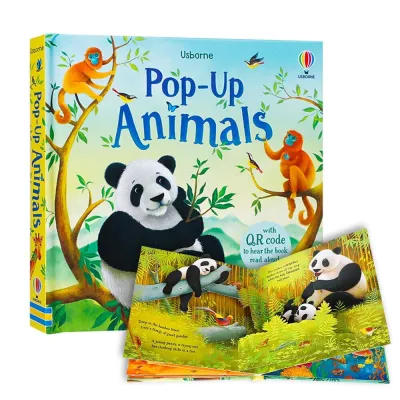
1,163 Lazada user ratings
Captivating storytelling, Great learning tool for toddlers, Perfect bedtime reading, Great learning tool for toddlers, Colorful and attracti…Read full reviewShow less
Captivating storytelling, Great learning tool for toddlers, Perfect bedtime reading, Great learning tool for toddlers, Colorful and attractive design, Provides educational value, Provides educational value, Engaging and interactive for kids,
Engaging and interactive for kids, Captivating storytelling, Great learning tool for toddlers, Beautiful pop-up illustrations, Encourages ea…Read full reviewShow less
Engaging and interactive for kids, Captivating storytelling, Great learning tool for toddlers, Beautiful pop-up illustrations, Encourages early learning, Ideal gift for Christmas or birthdays,
Great learning tool for toddlers, Beautiful pop-up illustrations, Provides educational value, High-quality materials used, Engaging and inte…Read full reviewShow less
Great learning tool for toddlers, Beautiful pop-up illustrations, Provides educational value, High-quality materials used, Engaging and interactive for kids,
Captivating storytelling, Beautiful pop-up illustrations, Perfect bedtime reading, Great learning tool for toddlers,
Nice pop—up books for storytelling time. Will make great gifts for young children.
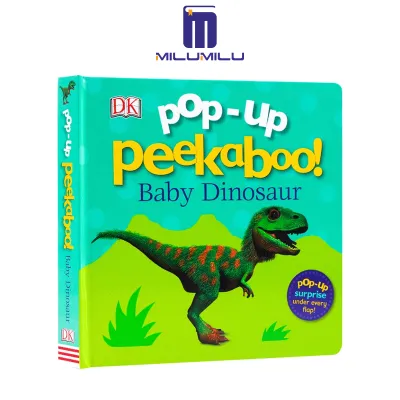
10 Lazada user ratings
Super ganda. Nag enjoy anak ko. Madami siyang matututunan. Eto yung book na inadvise ng speech therapist na makakatulong kay baby.Hardcover …Read full reviewShow less
Super ganda. Nag enjoy anak ko. Madami siyang matututunan. Eto yung book na inadvise ng speech therapist na makakatulong kay baby.Hardcover and durable, Interactive baby book,
Colorful pages inside, 3D pop-up design, Encourages early learning, Educational and fun, Great for storytime,
Not sealed yung book so na open na :( unlike sa fully booked
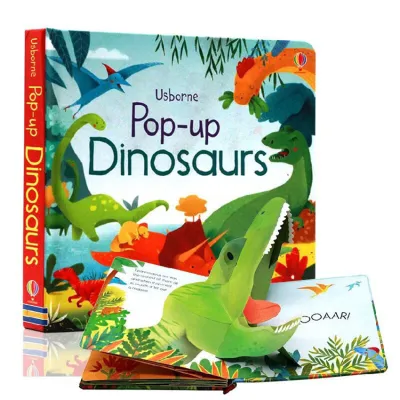
12 Lazada user ratings
Second time buying this book. It's really nice. My kid loves it so much..................
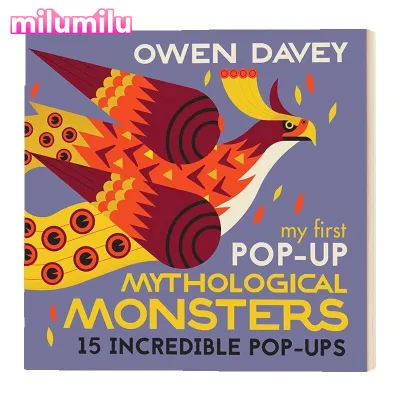
Prices are valid at publication and may change. Please refer to the product page for the latest price.
As children reach age 2, their cognitive abilities expand to include an emerging understanding of cause-and-effect. They begin to realize that their physical actions—such as pulling a tab or sliding a panel—cause a specific visual change on the page. This stage is characterized by repetitive, interactive play. They will happily slide the same panel back and forth dozens of times, practicing their hand-eye coordination and building confidence in their ability to manipulate their environment.
By age 3, toddlers transition into early narrative comprehension and imaginative play. Their attention spans lengthen, allowing them to follow simple storylines and connect the illustrations to a sequence of events. Their handling capabilities become significantly gentler, as they can now control their finger movements with greater precision. They can appreciate multi-layered visual surprises and are ready to engage with books that require careful page-turning and deliberate interaction.
Connecting these developmental milestones directly to paper mechanisms ensures that reading remains a positive experience. Introducing complex, delicate paper engineering too early often results in broken books and frustrated parents. Conversely, keeping an older toddler limited to basic sensory textures may lead to boredom and a loss of interest in reading sessions.
Key Pop-Up Features to Match Your Toddler's Age
Selecting the right interactive book requires looking closely at the materials, mechanisms, and themes of each title. By categorizing books into specific age-appropriate frameworks, you can find options that challenge your child’s mind without overwhelming their physical capabilities.
Age 1: Durability and Simple Sensory Exploration
For 1-year-olds, durability is the single most important factor. Look for books constructed from thick, heavy-duty board materials that can withstand teething, drool, and enthusiastic grabbing. Rounded corners are essential to prevent accidental scratches to sensitive skin during active play. The pages should be thick enough that they cannot be easily bent or creased by a tight grip.
Instead of delicate paper pop-ups, focus on simple, robust mechanisms that are integrated directly into the board pages. Sturdy felt flaps, thick cardboard lift-the-flaps, and embedded touch-and-feel textures are ideal for this stage. These elements provide sensory feedback without the risk of tearing. Felt flaps are particularly resilient, as they bend and flex without creasing or snapping off.
Visual content should feature high-contrast images, single-object pages, and minimal text. A young toddler’s attention span is short, so clear, bold illustrations of familiar items—like a ball, a cup, or a dog—are highly effective. Avoid books with long paragraphs or complex background details that can distract from the primary image.
At this stage, completely avoid books with small, easily detachable parts, thin paper folds, or delicate strings. These components can be crushed instantly and, more importantly, present a serious choking hazard if swallowed. Keep the focus entirely on solid, chunky construction that can survive daily physical exploration.
Age 2: Interactive Mechanisms and Cause-and-Effect
When your child reaches age 2, look for books that feature sturdy pull-tabs, sliding panels, and simple spinning wheels. These mechanisms require deliberate, directional hand movements, which help refine fine motor skills and hand-eye coordination. The tabs and sliders should be made of thick, laminated cardboard and recessed into the pages to prevent them from being easily bent or ripped out.
Basic, single-layer pop-ups that spring up automatically when a page is opened are excellent for demonstrating cause-and-effect. These structures should be simple and robust, rising from the center fold without intricate, overlapping paper layers. The sudden appearance of a three-dimensional object when the page opens provides a delightful surprise that encourages the child to open and close the book repeatedly.
Select content that mirrors your toddler’s daily life and interests. Books featuring familiar routines—such as bath time, brushing teeth, or going to bed—help reinforce positive habits. Animals, vehicles, and simple nature themes are also highly engaging. Look for text that uses repetitive, predictable phrases, which allows your child to anticipate the words and begin participating in the reading process.
Ensure that the interactive mechanisms are intuitive enough for a 2-year-old to operate with minimal adult assistance. If a pull-tab is too stiff or a slider is too tight, your child may become frustrated or use excessive force, leading to damage. A smooth, easily glided mechanism builds confidence and encourages independent exploration.
Age 3: Complex Structures and Story Engagement
For 3-year-olds, you can introduce more complex paper engineering, including multi-layered pop-ups, nested flaps, and V-fold structures. These elements create a sense of depth and three-dimensional space, transforming the book into a miniature theater. At this stage, children can appreciate the artistry of paper engineering and will enjoy discovering hidden details tucked behind larger structures.
Look for books with continuous storylines, character dialogues, and interactive prompts. Instead of isolated words, the text should tell a cohesive story that encourages your child to predict what might happen next. Interactive elements can be woven into the narrative, such as asking the child to pull a tab to help a character open a door or turn a wheel to change the weather in the story.
At age 3, you can begin transitioning from reinforced board pages to standard paper pages, provided your child has demonstrated gentle handling habits. If they still tend to be energetic or rough with their toys, it is best to stick with heavy-duty board books that feature advanced pop-up elements. This hybrid approach offers the complexity of older books with the durability of toddler formats.
Choose themes that encourage role-play, emotional recognition, and vocabulary expansion. Books that explore feelings, social interactions, or simple problem-solving are highly beneficial. The three-dimensional scenes can serve as backdrops for imaginative play, allowing your child to use their toys or fingers to act out stories within the pop-up landscapes.
Essential Safety and Durability Checks Before Purchase
Before purchasing any interactive book, conduct a thorough physical inspection to ensure it is safe and built to last. Examine the binding quality and page thickness. The spine should be securely glued and reinforced, as loose bindings can quickly fall apart under the strain of repeated opening and closing. Check the edges of the pages; they should be smooth and free of sharp paper corners that could cause cuts.
Verify that all pop-up elements, tabs, and decorative pieces are securely anchored to the pages. Give them a gentle tug to ensure they do not easily detach. Any piece that can be pulled off with minimal effort is a potential choking hazard, especially if younger siblings are in the home. Look for mechanisms that are integrated into the structure of the page rather than simply glued to the surface.
Always check the manufacturer’s recommended age grading and safety labels on the packaging or product description. These guidelines are established based on safety standards and developmental appropriateness. If a book is labeled “not suitable for children under 36 months,” respect this warning, as it usually indicates the presence of small parts or delicate materials that can break easily.
Assess the overall size and weight of the book. A book that is too heavy or bulky will be difficult for small hands to manage independently. If a child struggles to hold a book, they are more likely to drop it, which can damage the corners or cause minor injuries if it lands on little toes. Opt for compact, lightweight designs that fit comfortably in a toddler’s lap.
Guiding Your Toddler and Maintaining Pop-Up Books
Teaching your toddler how to handle interactive books gently is a gradual process that requires patience and modeling. When introducing a new pop-up book, sit together and demonstrate the correct way to interact with it. Show them how to use “two fingers” to slide a tab or turn pages slowly from the outer corners rather than grabbing the delicate paper structures in the center.
Establish clear reading boundaries to protect the books from damage. Keep complex pop-up books on a higher shelf where they can only be accessed during supervised reading sessions. This ensures that your child enjoys the interactive elements under your guidance, while simpler, indestructible board books can remain on lower shelves for independent, unsupervised play.
Despite your best efforts, minor tears are inevitable. When damage occurs, perform basic, reversible repairs immediately to prevent the tear from worsening. Use specialized acid-free book repair tape or archival glue, which remain flexible and will not yellow or degrade the paper over time. Avoid standard household sticky tapes, as their adhesives dry out, become brittle, and can permanently damage the paper fibers, especially in warm, humid climates.
Define clear stopping conditions for when a book is no longer safe to use. If a pop-up mechanism is severely torn, exposes sharp plastic or metal staples, or has loose parts that can be easily pulled off and swallowed, it must be retired. You can either remove the damaged pages entirely to keep the rest of the book or replace the book to ensure your child’s safety during reading time.
Frequently Asked Questions (FAQ)
Are pop-up books safe for 1-year-olds?
Traditional, delicate paper pop-ups are generally unsafe for 1-year-olds due to the high risk of tearing and choking on small paper pieces. At this stage, children explore objects with their mouths, and thin paper can easily soften and tear off. Instead, choose thick board books with simple, reinforced felt flaps or sensory textures designed specifically for heavy physical exploration. Always supervise your child during reading sessions and regularly check the book for any loose parts.
How do I fix a torn pop-up mechanism?
To repair minor tears or detached tabs, use specialized acid-free book repair tape or archival glue. Apply a small amount of adhesive with a toothpick to the torn edge, press the pieces together, and let it dry completely before closing the book. Avoid standard household adhesive tapes, which degrade the paper and lose their stickiness in humid conditions. If the damage is severe, creates sharp edges, or results in small, detachable pieces, discard or retire the book immediately to prevent safety hazards.
What is the difference between a pop-up book and a lift-the-flap book?
Lift-the-flap books feature flat, hinged paper or board pieces that hide images or text underneath, requiring a simple lifting motion to reveal the surprise. Pop-up books use complex paper engineering, such as V-folds and parallel folds, to create three-dimensional structures that rise automatically when the page is opened. Lift-the-flap books are generally more durable and suitable for younger toddlers, while true pop-up books are better suited for older toddlers who have developed the fine motor control needed to handle delicate structures gently.

Community discussion
Share your experience or ask a question. Comments are reviewed before publication.