
To choose the right tuning pegs for a classical guitar, you must match the physical dimensions of your slotted headstock—specifically the roller spacing, roller diameter, and screw hole alignment—and select geared machine heads designed specifically for nylon strings. Unlike steel-string guitars, classical guitars utilize nylon strings, which exert lower overall tension but require significantly more stretching to reach and maintain pitch. This physical characteristic, combined with the traditional slotted headstock design of classical instruments, demands a specific type of geared tuner known as a machine head. Choosing the wrong set can lead to tuning instability, physical damage to the headstock, or an unusable instrument. In tropical climates like the Philippines, where high relative humidity and seasonal temperature shifts cause wood to expand and contract, selecting high-quality, corrosion-resistant tuning pegs is even more critical to ensure smooth operation and prevent the wood from binding around the rollers.
Historically, classical stringed instruments relied on traditional friction pegs, which are tapered wooden pins inserted directly into the headstock. While some historical replicas still use friction pegs, modern classical guitars almost exclusively use geared machine heads. These modern tuners feature a worm gear mechanism that provides mechanical advantage, allowing you to make micro-adjustments with minimal physical effort. The gears also prevent the string tension from pulling the peg backward, ensuring the guitar stays in tune for longer periods. When evaluating new machine heads, your primary decision factors should be tuning stability, ease of use, weight distribution across the headstock, and your personal aesthetic preferences.
The fundamental difference between classical and steel-string tuners lies in how they interact with the strings and the headstock. Steel-string guitars typically feature solid headstocks with thin, vertical metal posts. Classical guitars, on the other hand, feature slotted headstocks where the tuning rollers lie horizontally inside carved channels. Nylon strings are much thicker than steel strings and require wider, smooth rollers—usually made of plastic or composite materials—to prevent the strings from being cut or damaged under tension. Because nylon is highly elastic, classical tuners require precise gear ratios to handle the continuous stretching of the strings without slipping. Understanding these structural differences is the first step toward selecting a replacement set that preserves both the playability and the structural integrity of your instrument.
Products mentioned in this guide
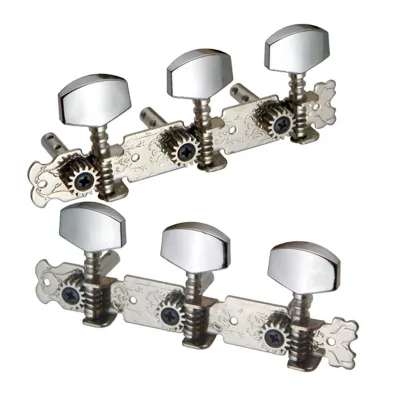


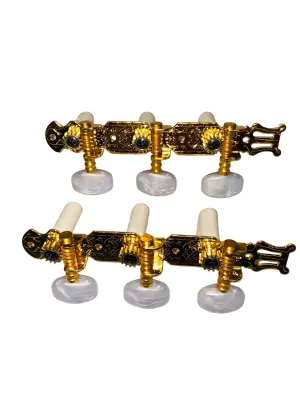
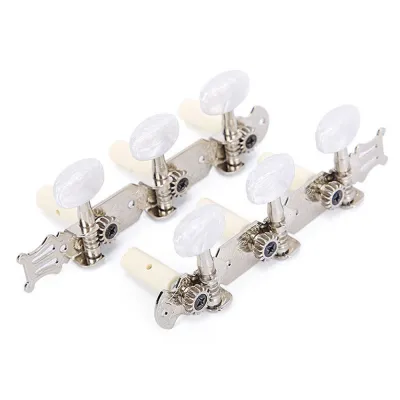
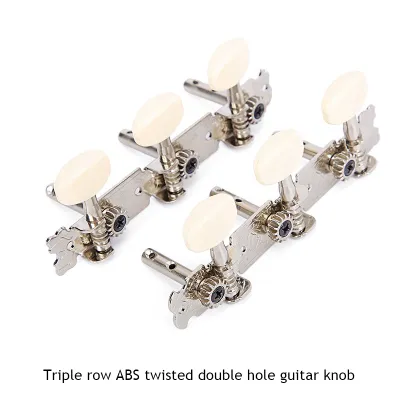

Prices are valid at publication and may change. Please refer to the product page for the latest price.
Essential Compatibility and Measurement Checks Before Buying
Before purchasing any replacement tuning pegs, you must perform precise physical measurements of your guitar’s headstock. Classical guitar machine heads are typically mounted on two metal plates, with three tuners on each plate in a three-on-a-side configuration. Because there is no universal standard for screw placement or roller spacing across all manufacturers, buying a set based on looks alone often results in hardware that does not fit. To avoid the need for drilling new holes or modifying the wood of your headstock—which can lower the value of your instrument and risk cracking the delicate grain—you must verify several critical dimensions using a precise measuring tool like a digital caliper or a fine ruler.
The first and most important dimension to check is the roller spacing, which is the distance between the centers of the three string posts on each plate. The industry standard for modern classical guitars is 35 millimeters from the center of one roller to the center of the next. However, older instruments, vintage models, or guitars made by custom luthiers may feature non-standard spacings, such as 39 millimeters or even unique proprietary layouts. If your measurements deviate from the standard 35-millimeter spacing, you will need to search specifically for vintage-spec plates or consider individual, single-unit tuners rather than plate-mounted sets.
Next, you must measure the roller diameter and roller length. The rollers are the thick cylinders around which the nylon strings are wound. Most modern classical guitar rollers have a standard diameter of 10 millimeters. If the holes in your headstock are slightly smaller, a 10-millimeter roller will bind, making it incredibly difficult to turn the peg and potentially cracking the wood. Conversely, if the holes are too large, the roller will wobble, causing tuning instability and uneven wear. You must also measure the length of the roller from the base plate to the outer tip to ensure it spans the entire width of the headstock slot without rubbing against the inner walls of the wood.
Screw hole spacing and alignment represent another critical compatibility check. Each tuning machine plate is secured to the side of the headstock by several small wood screws. You should measure the exact distance between these screw holes on your existing plates and compare them to the technical diagram of the replacement set. While filling old screw holes with wood glue and toothpicks and drilling new ones is a common repair, keeping the original holes intact is always the preferred, non-destructive path. Additionally, examine the overall plate size and shape. The new plates should be large enough to cover any indentation, discoloration, or finish marks left by the old hardware, ensuring a clean and professional aesthetic upgrade.
Evaluating Gear Ratios, Materials, and Build Quality
Once you have verified the physical dimensions, you can focus on the mechanical specifications and material composition of the tuning pegs. The gear ratio is one of the most important indicators of how a tuner will perform in daily use. Expressed as a ratio such as 14:1, 16:1, or 18:1, this number represents how many times you must turn the tuning button to complete one full rotation of the string roller. A higher gear ratio, such as 18:1, offers much finer control over the tuning process. Because nylon strings are highly elastic and sensitive to minute changes in tension, a higher gear ratio allows you to make precise micro-adjustments, making it much easier to bring your guitar into perfect pitch.

The materials used to construct the rollers, plates, and buttons directly impact the durability, weight, and performance of the tuning machines. Rollers are commonly made from ABS plastic, Delrin, or metal. Delrin and high-grade plastics are highly favored because they offer a smooth, low-friction surface that allows the nylon strings to slide easily during tuning without binding or fraying. Metal rollers are incredibly durable but add significant weight to the headstock, which can alter the physical balance of the guitar and cause it to feel neck-heavy when played while standing or sitting.
The metal plates and gears themselves require careful consideration, especially in humid environments. In tropical regions like the Philippines, airborne moisture and sweat from your hands can quickly tarnish or corrode cheap plated metals. Look for tuning machines constructed with solid brass, stainless steel, or high-quality gold-plated finishes, as these materials resist corrosion and maintain their smooth mechanical action over time. The gears should be precisely cut and tightly meshed; loose gears result in backlash, a frustrating phenomenon where you turn the tuning button but the roller does not move immediately, leading to unpredictable tuning adjustments.
Tuning buttons, the parts you grip with your fingers, are available in various materials, including wood, acrylic, pearloid, and metal. While button selection is largely aesthetic, the weight of the buttons contributes to the overall balance of the headstock. Finally, consider whether the tuning system utilizes bushings. Bushings are small metal or plastic sleeves inserted into the outer holes of the headstock slots. They support the outer end of the roller, reducing the physical strain on the wood and preventing the roller from bending under string tension. If your guitar is designed for bushings, ensure your replacement set includes them and that they match the diameter of your headstock holes.
Installation Boundaries and When to Seek a Professional Luthier
Replacing classical guitar tuning pegs is a task that many players can perform at home, provided they proceed with patience and the correct tools. The process begins by carefully removing the old strings and unscrewing the mounting screws on the sides of the headstock. Once the screws are removed, the old plates should slide out of the headstock slots. Before inserting the new plates, clean the exposed wood and check for any debris or wood shavings inside the slots. When sliding the new rollers into place, they should fit smoothly without requiring force. If you must push hard to get the rollers through the holes, stop immediately, as forcing them can split the headstock wood.
There are several warning signs that indicate you should halt the installation and seek professional assistance. If the screw holes on the new plates do not align with the existing holes in the wood, or if the rollers bind tightly inside the headstock slots, do not attempt to force the installation. Stripped screw heads or screws that feel loose in their holes are also signs that the wood needs professional attention. A qualified luthier can safely plug old screw holes, redrill precise new pilot holes, or slightly enlarge the roller holes using specialized reaming tools that prevent the wood finish from chipping or cracking.
Consulting a professional luthier is highly recommended if you are working on a high-value, vintage, or delicate handmade classical guitar. Irreversible modifications, such as drilling new holes or altering the headstock slots, can significantly reduce the historical and monetary value of a fine instrument. A luthier has the specialized clamps, drills, and alignment jigs necessary to ensure that the new hardware is installed perfectly straight and functions without putting unnecessary stress on the guitar’s neck.
After successfully installing the new tuning pegs, perform a series of post-installation checks before tuning the guitar to pitch. Turn each button slowly to ensure the gears rotate smoothly without catching, grinding, or slipping. When restringing the guitar, ensure you wind the nylon strings in the correct direction—typically winding toward the center of the headstock—to maintain a straight string path from the nut to the roller. This minimizes friction and prevents the strings from rubbing against the wood of the headstock slots. Allow the new nylon strings to stretch and settle, checking the stability of the tuners over several days to ensure the mounting screws remain secure and the rollers do not wobble.
Frequently Asked Questions (FAQ)
Can I use steel-string acoustic tuning pegs on a classical guitar?
No, you cannot use steel-string acoustic tuning pegs on a classical guitar due to fundamental differences in headstock design and string tension. Steel-string guitars typically feature solid headstocks with vertical, thin metal posts designed to handle high-tension steel strings. Classical guitars feature slotted headstocks with horizontal, thick rollers designed specifically for lower-tension nylon strings. Attempting to mount steel-string tuners on a classical guitar would require extensive, destructive modifications to the headstock, and the thin metal posts would slice through or damage the delicate nylon strings.
Do I need to buy tuning pegs in sets of three or six?
Classical guitar tuning pegs are almost always sold in sets of six, configured as two plates with three tuners on each side in a three-on-a-side layout. This matches the traditional symmetrical design of classical guitar headstocks. When purchasing replacement hardware, you will receive a left-side plate and a right-side plate. It is essential to verify that the product description specifies a complete three-on-a-side set rather than individual tuners or a six-in-line configuration, which is designed for electric guitars and will not fit a classical headstock.
Will upgrading tuning pegs improve my classical guitar's tone?
Upgrading your tuning pegs will not directly change or improve the inherent acoustic tone of your classical guitar, as tone is primarily generated by the wood, bracing, and construction of the guitar body. However, high-quality tuning pegs can subtly influence the instrument’s sustain and resonance by changing the mass and weight distribution of the headstock. More importantly, a premium set of tuners dramatically improves tuning accuracy and stability, allowing the strings to vibrate at their optimal tension and ensuring your guitar stays in tune throughout your practice sessions or performances.
Community discussion
Share your experience or ask a question. Comments are reviewed before publication.