
Finding the right travel guitar requires a deliberate compromise between physical size, playing comfort, and acoustic resonance. To make the best choice, you must evaluate where you will take the instrument, how much space you have, and how the local climate—especially high humidity—will affect the guitar’s materials. By matching your specific travel habits with the right scale length, body design, and construction materials, you can find an instrument that is easy to carry without compromising your playing experience.
Assess Your Travel Context and Portability Limits
Your travel style is the most critical factor when choosing a portable instrument. If you primarily travel by air, your main concern is whether the guitar can fit into the overhead bin of a commercial airplane. Most airlines have strict carry-on dimensions, and while some crew members are accommodating to musicians, a guitar that exceeds standard overhead limits risks being checked into the cargo hold, where it faces rough handling and extreme temperature drops.
For those who travel by car, bus, or ferry, physical space is still at a premium, but you have slightly more flexibility regarding shape and length. If you frequently commute through crowded transit hubs or pack your gear into tight spaces, a guitar with a detachable neck or a highly compact headless design can save valuable space and reduce the risk of accidental impact damage.
Products mentioned in this guide


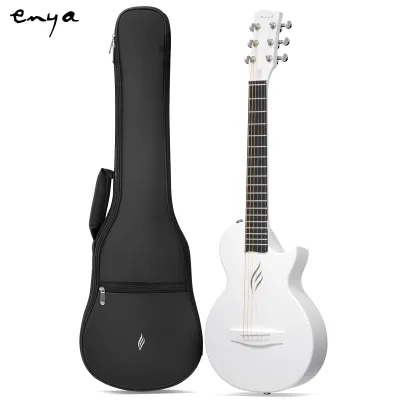


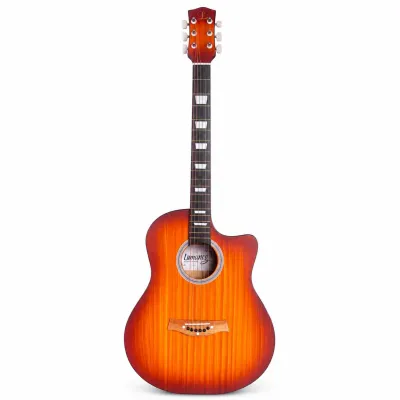

Prices are valid at publication and may change. Please refer to the product page for the latest price.
Backpackers and hikers require an entirely different level of portability. For these adventures, every gram counts, and the guitar must be light enough to carry on your back for hours without causing fatigue. In tropical environments like the Philippines, outdoor travel also exposes your instrument to sudden downpours, intense midday heat, and high relative humidity. Moving an instrument from an air-conditioned hotel room directly into humid outdoor air can cause rapid wood expansion, tuning instability, and structural stress. Understanding these environmental factors beforehand helps you decide whether you need an ultra-compact silent guitar, a rugged composite model, or a traditional scaled-down acoustic.
Compare Scale Lengths for Playability and Comfort
Scale length—the distance between the nut and the bridge saddle—directly dictates how a guitar feels to play. Standard acoustic guitars typically feature a scale length of 25.4 to 25.5 inches, which provides optimal string tension and fret spacing. Travel guitars, however, often reduce this scale length to 22.75, 23.5, or 24 inches to minimize the overall length of the instrument. While a shorter scale length makes the guitar much easier to pack, it also changes the physical dynamics of playing.

When you shorten the scale length, the frets are placed closer together. This can make complex chords easier to reach for players with smaller hands, but it can feel cramped or restrictive in the higher registers for those accustomed to standard necks. If you plan to use your travel guitar for serious practice or fingerstyle playing, a scale length closer to 24 inches will feel much more natural and require less adjustment to your muscle memory.
Furthermore, a shorter scale length reduces string tension when tuned to standard pitch. This lower tension can result in a loose or floppy string feel, which may cause fret buzz if you play with a heavy hand. To compensate for this, many players use medium or heavy-gauge strings on short-scale travel guitars to restore a familiar level of tension and improve tuning stability. Always check the manufacturer’s recommendations before changing string gauges, as some lightweight travel guitars are structurally optimized for specific string tensions.
Understand Body Size and Tonal Trade-offs
The physical volume of a guitar’s body is the primary driver of its acoustic projection, bass response, and overall warmth. Standard dreadnought or concert guitars have large soundboards and deep bodies that allow low-frequency sound waves to develop fully. When you shrink the body to create a travel-friendly instrument, you naturally lose this low-end resonance. Travel guitars tend to have a brighter, more mid-range-focused sound profile that can sometimes sound thin or boxy.
To combat these acoustic limitations, instrument designers employ various structural innovations. Some travel guitars feature modified body shapes, such as asymmetrical designs, teardrops, or extended lower bouts, which maximize the internal air volume while keeping the overall footprint small. Others utilize offset soundholes to increase the vibrating surface area of the soundboard, allowing the top to move more freely and produce a surprisingly full sound for its size.
If your primary goal is quiet practice in hotel rooms or hostels, you might want to bypass traditional acoustic bodies entirely. Headless electric travel guitars or silent acoustic-electric models rely on headphones or small travel amplifiers for sound, offering the ultimate in compact design and quiet operation. These instruments eliminate the acoustic body altogether, using a solid frame or a minimalist center block to provide a familiar holding shape while remaining incredibly easy to pack.
Inspect Build Quality and Material Durability
The materials used to construct your travel guitar determine not only its tone but also its ability to survive the rigors of the road. Traditional solid wood guitars offer the richest, most complex tones, but they are highly sensitive to environmental changes. In tropical climates with high humidity, solid wood absorbs moisture from the air, causing the top to swell, the action to rise, and the glue joints to weaken. Conversely, dry air-conditioned environments can cause the wood to shrink and crack.
For a travel instrument, laminate woods or high-pressure laminates (HPL) are often much more practical choices. Laminate wood consists of multiple thin layers of wood glued together, which makes it highly resistant to warping and cracking under changing humidity levels. While laminate guitars may lack some of the tonal complexity of solid wood, they are incredibly durable and far more affordable, making them excellent companions for beach trips or camping.
If you want the absolute highest level of durability without sacrificing sound quality, carbon fiber is the premium material of choice. Carbon fiber travel guitars are completely impervious to humidity, temperature fluctuations, and physical impacts. You can take a carbon fiber guitar from a cold, air-conditioned room into a humid tropical forest without worrying about warping, cracking, or going out of tune. However, carbon fiber instruments represent a significant financial investment, often costing upwards of ₱30,000, so you must weigh this cost against your actual travel frequency and environmental exposure.
Regardless of the material, pay close attention to the construction details. Inspect the neck joint to ensure it is robust and seamless, as this area bears the brunt of string tension. Look for guitars with quality hardware, such as enclosed gear tuners, which resist dust and moisture better than open-gear designs. A well-constructed travel guitar should feel solid and balanced in your hands, with no rough fret edges or loose internal bracing.
Build Your Shortlist and Verify Specifications
Before making your final purchase, it is essential to create a structured shortlist and verify the exact specifications of each candidate. Do not rely solely on product photos, as perspective can make a guitar look smaller or larger than it actually is. Always check the manufacturer’s spec sheet for the total length, body width, body depth, and weight. Compare these measurements directly with the carry-on limits of the airlines you fly most frequently to avoid unexpected gate-checking fees.
Next, verify the hardware specifications. Ensure the guitar features an adjustable truss rod, which allows you to adjust the neck relief if the wood shifts due to climate changes. Check the quality of the tuning machines; cheap tuners will slip constantly, especially when subjected to the temperature changes of travel. Additionally, inspect the included gig bag or case. A high-quality travel guitar should come with a padded, water-resistant gig bag featuring robust zippers, neck support, and comfortable backpack straps.
If you plan to perform or record while traveling, verify whether the guitar has a built-in pickup system and check its compatibility with standard acoustic amplifiers or audio interfaces. Some travel guitars feature built-in preamps with headphone jacks, allowing you to practice silently without any extra gear. By carefully verifying these specifications against your personal travel needs, you can confidently select a travel guitar that balances portability, durability, and sound quality for your journeys.
Frequently Asked Questions (FAQ)
Can a travel guitar replace a full-size acoustic for daily practice?
While a travel guitar is an excellent tool for maintaining your skills on the road, it is generally not recommended as a permanent replacement for a full-size acoustic guitar during daily home practice. The shorter scale length and smaller fret spacing can alter your muscle memory, making it feel awkward when you transition back to a standard instrument. Additionally, the limited bass response and lower volume of a travel guitar may prevent you from developing a full range of dynamic control and expressive playing techniques.
What should I look for in a travel guitar case or gig bag?
A great travel gig bag should offer a balance of lightweight portability and robust protection. Look for bags with at least 15mm to 20mm of high-density foam padding to protect against accidental drops and impacts. The exterior fabric should be water-resistant or waterproof to shield the instrument from sudden tropical downpours. Essential features include heavy-duty, rust-resistant zippers, a dedicated neck cradle with a strap to keep the guitar secure, and adjustable, padded backpack straps for comfortable hands-free transport.
Community discussion
Share your experience or ask a question. Comments are reviewed before publication.