
Finding the right self-discipline book is not about grabbing the most popular title off a bestseller shelf; it is about finding a manual that speaks directly to your current cognitive habits and daily realities. Many readers buy highly recommended self help books only to find the advice impractical or the tone uninspiring. To avoid this, you must treat the selection process as a deliberate matching exercise between your personal learning style, your specific behavioral goals, and your daily routine.
In a fast-paced environment where daily commutes, high humidity, and constant digital distractions can easily drain your mental energy, a book’s practical application is far more important than its theoretical prestige. A book that works wonders for a remote worker with a highly flexible schedule might fail completely for a professional managing a long daily transit. Choosing the right resource requires looking past the marketing hype and evaluating the actual structure of the content.
To make an informed choice, you must evaluate how you absorb information, how much time you can realistically dedicate to reading, and how you plan to implement the advice. By taking a systematic approach to selecting your next read, you can save time, avoid frustration, and build a sustainable path toward personal growth.
Products mentioned in this guide


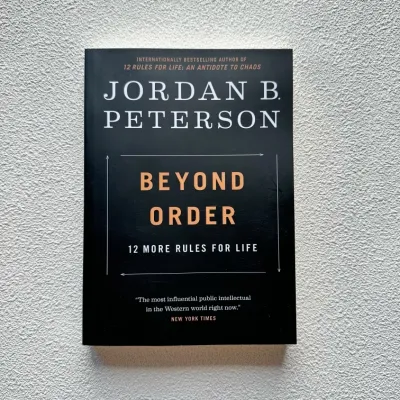
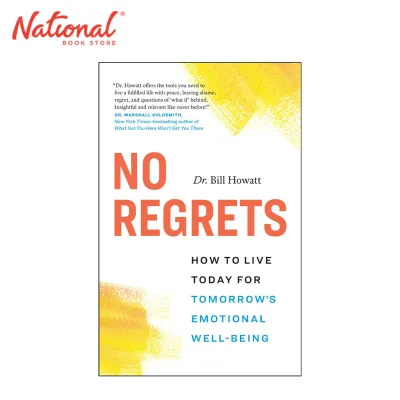
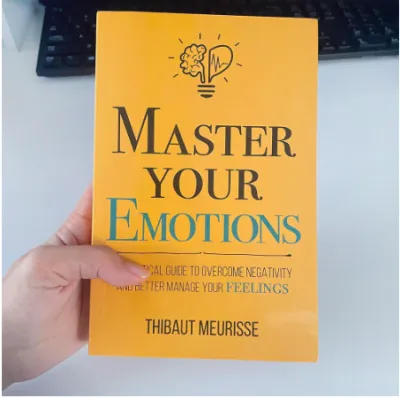
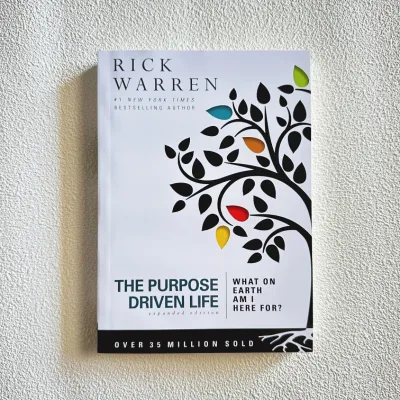
Prices are valid at publication and may change. Please refer to the product page for the latest price.
Define Your Specific Self-Discipline Goals
Before spending your hard-earned money, you must identify the exact behavioral bottleneck you want to address. Self-discipline is not a single, uniform trait; it is a collection of distinct habits, cognitive patterns, and systems. If your primary struggle is starting tasks because of anxiety or perfectionism, you need a book focused on mindset shifts and emotional regulation. If you struggle with consistency over time, your goal is habit formation. If you are overwhelmed by managing multiple projects, you require a structured productivity system.
To narrow down your focus, ask yourself a few targeted self-assessment questions. At what specific moment in the day does your discipline usually fail? Are you struggling with the initial friction of starting a task, or the fatigue of sustaining effort over several hours? Do you need a high-level philosophical shift to change how you view your work, or do I need a concrete daily planner template to keep you organized?
It is also important to distinguish between foundational principles and advanced tactical adjustments. Foundational books explore the evolutionary biology and psychology behind procrastination, helping you build self-compassion and long-term resolve. Tactical books, on the other hand, skip the theory and provide immediate frameworks like time-blocking, habit stacking, or digital minimalism. Knowing where you sit on this spectrum prevents you from buying a dense academic text when you actually need a simple, actionable checklist.
Match Books to Your Learning and Reading Style
Every reader processes information differently, and self help books are written in highly diverse formats to cater to these preferences. If you are an action-oriented learner, look for books structured as workbooks, complete with fill-in-the-blank exercises, weekly challenges, and self-reflection prompts. These books require active participation and are best suited for those who learn by doing. If you prefer to understand the underlying mechanisms before changing your behavior, prioritize theory-heavy books that draw on cognitive behavioral therapy, neuroscience, or detailed historical case studies.

Consider your reading stamina and daily schedule when evaluating a book’s structure. If you only have ten minutes to read during a busy afternoon or while waiting for transit, a book with short, self-contained chapters is ideal. These bite-sized formats allow you to walk away with one clear, actionable concept without losing the thread of a complex narrative. Conversely, if you enjoy deep-diving into a subject over a quiet weekend, a comprehensive, narrative-driven book will provide the intellectual depth needed to keep you engaged.
Visual and interactive elements also play a crucial role in comprehension. Scan previews or online reviews to see if the book utilizes flowcharts, summary tables, or bulleted key takeaways at the end of each chapter. For many visual learners, a single well-designed diagram illustrating a habit loop is far more memorable and useful than ten pages of descriptive prose.
Choose the Right Format for Your Daily Routine
The medium through which you consume a book directly impacts how well you integrate its lessons into your life. Physical books remain an excellent choice for active study. They allow you to easily highlight key passages, write notes in the margins, and physically flip back and forth between chapters to reference diagrams. Keeping a physical book on your desk also serves as a constant, tangible visual cue to stay focused on your goals.
E-books offer unmatched portability and convenience, especially if you want to carry an entire library without adding weight to your bag. They allow you to adjust font sizes, read in low-light conditions, and instantly search for specific terms. However, before purchasing an e-book, verify its file format and device compatibility. Ensure the digital platform you use is fully authorized in your region to avoid licensing issues that could restrict your access to the text.
Audiobooks are highly effective for busy individuals who want to utilize passive time, such as during a long commute or while performing household chores. When choosing an audiobook, listen to a sample first to ensure the narrator’s tone and pacing keep you engaged. Verify if the audiobook platform provides accompanying PDF materials, as many self-discipline books include visual worksheets or templates that are difficult to appreciate through audio alone.
Screen Book Structure and Author Credentials Before Buying
With thousands of self help books available on online marketplaces and bookstore shelves, screening the content before making a purchase is essential. Start by examining the table of contents to evaluate the book’s logical progression. A well-structured book should show a clear path from identifying a problem to implementing a solution. If the chapter titles seem repetitive or overly vague, the book may contain a lot of filler content.
Investigate the author’s credentials to ensure their advice is grounded in credible expertise. Look for authors who have academic training in psychology or behavioral science, or those who have demonstrated long-term success applying these principles in demanding professional fields. Be cautious of books written by influencers whose primary qualification is self-promotion. Additionally, check the publication edition; revised editions often address reader feedback, update outdated scientific references, and refine the practical exercises.
Avoid making purchasing decisions based solely on eye-catching cover designs, generic bestseller badges, or sensationalist marketing claims. A book that promises to “completely transform your life in three days” is rarely backed by sustainable behavioral science. Instead, look for realistic, measured descriptions that emphasize gradual progress, consistent effort, and practical systems. Whether you are budgeting ₱300 for a digital copy or ₱800 for a durable physical edition, prioritizing substance over marketing will yield much better results.
Plan How to Apply the Book's Systems to Your Life
Reading a self-discipline book without an implementation plan is simply a form of productive procrastination. To turn knowledge into action, establish a realistic reading pace. Instead of rushing through a book in a single sitting, commit to reading one chapter at a time, allowing yourself several days to practice the concepts before moving on. Schedule specific review nodes—such as at the end of each week—to reflect on what you have learned and assess your progress.
Integrate the book’s frameworks directly into your existing daily routines. If a book recommends a daily planning ritual, decide exactly when and where this will happen, such as right after your morning coffee. By linking the new behavior to an established habit, you lower the cognitive friction required to get started.
Finally, establish clear exit criteria for the book. Not every methodology works for every individual. If you have consistently applied a book’s system for two to three weeks and find that it causes excessive stress, feels overly bureaucratic, or simply does not fit your lifestyle, give yourself permission to pause. You can choose to re-read challenging sections, adapt the rules to fit your needs, or transition to a different resource that aligns better with your daily reality.
Frequently Asked Questions (FAQ)
Should I read multiple self-help books at the same time?
Reading multiple self-discipline books simultaneously can easily lead to cognitive overload and framework confusion. Different authors often advocate for contrasting methodologies—such as one promoting strict, minute-by-minute scheduling while another emphasizes intuitive, flow-based productivity. Trying to merge these competing systems at the same time can cause analysis paralysis. It is generally more effective to read sequentially, mastering one book’s core system before introducing new concepts. However, parallel reading can be beneficial if the books cover entirely separate, non-overlapping domains, such as pairing a book on sleep hygiene with one on professional project management.
How do I know if a self-discipline book is outdated?
To evaluate if a book’s advice remains relevant, examine its core scientific references and behavioral assumptions. Many older books rely on psychological theories that have since been refined or disproven, such as the idea that willpower is a strictly limited physical resource that depletes rapidly. Additionally, look at the practical tools the author recommends. If a book’s productivity system relies heavily on obsolete software, deprecated digital platforms, or cultural assumptions about work that do not align with modern remote or hybrid environments, the tactical advice may be difficult to apply. Focus instead on books that emphasize timeless behavioral principles, or seek out updated, revised editions that account for modern technological and cultural shifts.
Community discussion
Share your experience or ask a question. Comments are reviewed before publication.