
Finding the right seating is one of the most overlooked aspects of learning the piano. For adult players, using an improper chair can lead to chronic discomfort, poor technique, and shortened practice sessions. To select a piano chair that supports your body, you must focus on key specifications: an adjustable height range that aligns your elbows with the keys, a stable base with a verified weight capacity, and high-density padding wrapped in breathable upholstery. Prioritizing these features ensures that your seating provides a solid, ergonomic foundation, allowing you to focus entirely on your musical performance.
Signs Your Current Chair is Hindering Your Playing
Many adult pianists begin by pulling up whatever seating is closest at hand, such as a dining room chair, a folding metal chair, or a cushioned office seat. While this setup might suffice for a few minutes of casual playing, it quickly reveals its limitations during extended practice. The most immediate indicator that your current chair is hindering your playing is physical discomfort. If you experience a dull ache in your lower back, tightness across your shoulders, or tension in your neck after only fifteen minutes of practice, your seating is likely failing to support an active, upright posture.
Standard household chairs are designed for relaxation or dining, meaning they often slope backward or lack the necessary height to align your body with a standard keyboard. When a chair is too low, you are forced to hunch your shoulders and lift your wrists excessively to reach the keys, which restricts blood flow and leads to rapid fatigue. Conversely, a chair that is too high causes you to lean forward, putting unnecessary pressure on your lower back and making it difficult to plant your feet firmly on the floor. If you find yourself constantly shifting your weight, sliding forward, or stacking cushions to find a comfortable angle, it is time to stop adjusting and upgrade to a dedicated piano chair.
Products mentioned in this guide
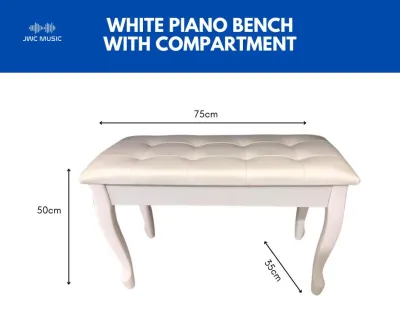
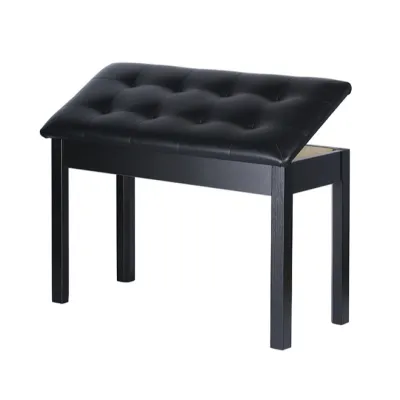
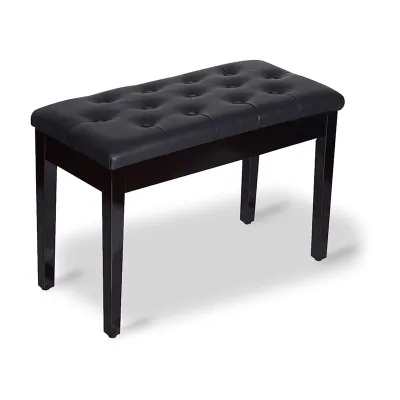
Prices are valid at publication and may change. Please refer to the product page for the latest price.
Matching Height Range and Adjustability to Your Posture
Achieving the correct ergonomic relationship between your body and the piano keyboard is essential for preventing repetitive strain injuries and developing fluid finger technique. When seated, your forearms should be roughly parallel to the floor, and your elbows should form an angle slightly greater than 90 degrees when your fingers rest on the keys. This alignment allows the weight of your arms to transfer naturally into the keys, reducing the muscular effort required to play. Because adult body proportions vary significantly, a fixed-height chair rarely provides this optimal alignment, making adjustability a non-negotiable feature.

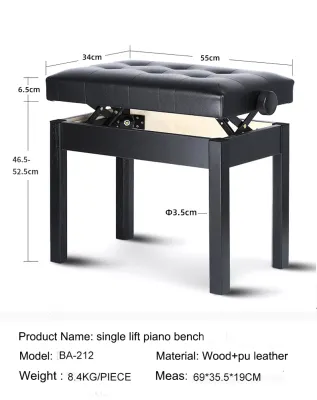
When evaluating adjustable piano chairs, you will encounter different mechanisms designed to raise and lower the seat. Manual adjustment systems, which typically feature dual wooden or metal knobs on the sides of the bench, operate via a threaded metal rod inside the frame. These manual systems are highly durable and offer precise, incremental adjustments that remain locked in place, though they require some physical effort to turn. On the other hand, hydraulic or pneumatic mechanisms use gas-charged cylinders activated by a lever, allowing you to adjust the height instantly while seated. While pneumatic chairs offer unmatched convenience, especially in multi-player households, you must verify the quality of the cylinder to ensure it will not lose pressure or leak over time.
To determine your ideal height range before purchasing, sit on a flat, firm surface with your back straight and your forearms positioned parallel to the floor. Measure the distance from the floor to your sit bones, or use a mirror to estimate this height. Once you have this measurement, compare it to the minimum and maximum height specifications provided by the manufacturer. Ensure your target measurement sits comfortably within the chair’s adjustable range, leaving room for minor adjustments if you wear shoes with different heel heights or use a keyboard stand that sits slightly higher than a standard acoustic piano.
Verifying Weight Capacity and Base Stability
A piano chair must provide an absolutely stable, wobble-free foundation to support the dynamic movements involved in playing. As you navigate the keyboard, your body naturally shifts laterally, and your feet actively engage with the pedals, transferring force through your seat to the floor. If the chair’s frame flexes or wobbles during these movements, it disrupts your balance and forces your core muscles to overcompensate, leading to early fatigue. Therefore, verifying the structural integrity and weight capacity of the chair is a critical safety step.
Always locate the manufacturer’s official weight capacity on the product specification sheet or packaging labels rather than relying on generic descriptions. For adult players, a robust weight capacity ensures that the frame, joints, and adjustment mechanisms can withstand not only your static weight but also the dynamic forces exerted during expressive playing. Look for chairs constructed from solid hardwoods like beech or oak, or heavy-duty steel frames, as these materials offer superior resistance to warping and joint loosening over years of use.
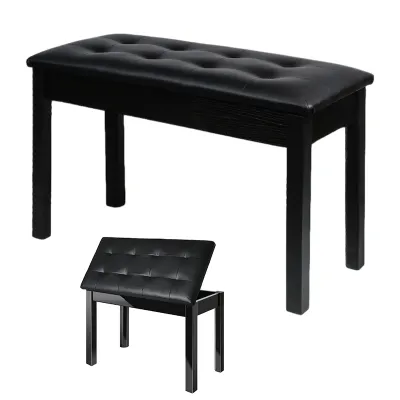
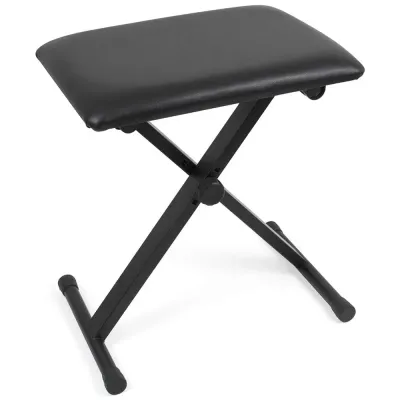
The design of the chair’s base also plays a major role in overall stability. Classic four-legged benches distribute weight evenly across a wide footprint, making them exceptionally stable and resistant to tipping. In contrast, pedestal-style bases or X-style folding chairs offer greater portability but can develop joint play and side-to-side wobble if the locking bolts loosen. Additionally, consider the floor surface in your practice space; look for chairs equipped with built-in rubber glides or felt pads on the feet to prevent sliding on smooth tiles or polished wooden floors. If the chair lacks these protective elements, plan to place a thin, non-slip protective mat underneath to safeguard your flooring and lock the chair securely in place.
Choosing Padding and Upholstery for Your Practice Duration
The comfort of your piano chair determines the quality and duration of your practice sessions. When selecting a seat, the density of the padding is far more important than how soft it feels upon initial contact. Very plush, soft cushions may feel comfortable for the first few minutes, but they allow your sit bones to sink completely through the padding, eventually resting against the hard wooden or metal support board underneath. This “bottoming out” cuts off circulation and causes localized pain, forcing you to cut your practice short.
To prevent this issue, look for chairs constructed with high-density polyurethane foam or resilient multi-layered padding. High-density foam provides firm, springy support that distributes your weight evenly across the seat and quickly regains its shape when you stand up. You can often identify high-density construction by checking the product specifications for foam density ratings or by looking for a firm, supportive feel that resists deep compression when pressed with your hand.
Upholstery selection is another critical factor, particularly in warm and humid tropical environments. Synthetic leather, often labeled as PU or vegan leather, is highly popular because it is water-resistant and incredibly easy to wipe clean with a damp cloth. However, synthetic leather can trap body heat and sweat during long practice sessions, leading to discomfort. If breathability is your primary concern, woven fabric or velvet upholstery allows for better airflow, keeping you cool during intense practice, though these materials require more careful maintenance and are susceptible to staining from spills or dust accumulation.
Building Your Final Shortlist and Verification Checklist
Before making your final purchase, it is wise to compile a shortlist of candidate chairs and systematically verify their specifications against your personal requirements. Create a simple comparison checklist that includes the minimum and maximum height limits, verified weight capacity, frame material, padding type, and upholstery fabric. By comparing these hard specifications side-by-side, you can eliminate models that do not meet your physical needs, regardless of how appealing their aesthetic design might be.
In addition to physical specifications, carefully review the seller’s return policy and warranty terms before finalizing your order. Look for warranties that specifically cover structural defects in the frame, joint failures, and malfunctions in the height adjustment mechanism, as these are the components most likely to experience wear over time. A clear, customer-friendly return policy is essential, as it allows you to test the chair’s comfort and height compatibility in your actual practice space and return it if it does not resolve your posture issues.
Finally, remember that while a high-quality piano chair is a vital tool for ergonomic playing, it cannot solve all physical discomfort on its own. If you have adjusted your seating to the correct height and verified your posture, yet continue to experience persistent pain, numbness, or muscle strain, pause your practice. In these situations, it is highly beneficial to consult a professional piano instructor or an ergonomic specialist who can observe your playing technique in real-time and help you identify any underlying tension or movement habits that may be causing the issue.
Frequently Asked Questions (FAQ)
Can I use a standard office chair with armrests for playing the piano?
Standard office chairs are generally unsuitable for piano practice because their design conflicts with the physical demands of playing. Armrests physically block your elbows, preventing the wide lateral arm movements required to reach the upper and lower registers of the keyboard. Furthermore, office chairs typically feature deep seat pans and reclined backrests that encourage a slouched, relaxed posture, whereas piano playing requires an active, upright stance near the front edge of the seat. The rolling casters on most office chairs also introduce a safety hazard, as the chair can easily roll backward when you apply pressure to the sustain pedal, disrupting your balance and technique.
Does a wider piano bench improve playing posture?
A wider piano bench, often referred to as a duet bench, does not directly improve individual playing posture, but it offers practical advantages depending on your playing style. The extra width provides a larger surface area, allowing you to slide laterally when performing complex classical pieces that span the entire keyboard. It is also essential if you regularly play duets with a partner or if you are a teacher who needs to sit comfortably alongside a student. Before choosing a wider bench, measure the clear space between your piano’s legs or stand supports to ensure the bench can be pushed neatly underneath when not in use, preserving valuable floor space in your room.
Community discussion
Share your experience or ask a question. Comments are reviewed before publication.