
Protecting your guitar is just as important as learning how to play it. A reliable guitar hard case acts as a shield against physical impacts, accidental drops, and environmental hazards like high humidity and rapid temperature shifts. For beginners in the Philippines, where tropical humidity can warp wood and rust metal hardware, choosing the right case is a critical decision. To find a case that offers genuine protection, you must evaluate specific dimensions, outer shell materials, interior support structures, and hardware quality before making a purchase.
Measure Your Guitar Before Buying a Case
Never buy a hard case based solely on a generic label like “standard acoustic” or “electric guitar.” Guitar bodies vary in shape, length, and depth, meaning a case designed for a dreadnought will not securely hold a classical or parlor model. Before browsing online marketplaces or visiting a local music store, you must take precise measurements of your instrument using a flexible measuring tape.
Start by measuring the overall length of the guitar from the top of the headstock to the bottom edge of the lower bout. Next, measure the width of the upper bout, the waist, and the lower bout, which are the widest parts of the body. Do not forget to measure the body depth at its thickest point, usually near the bridge, to ensure the lid of the case can close without putting downward pressure on the soundboard.
Products mentioned in this guide
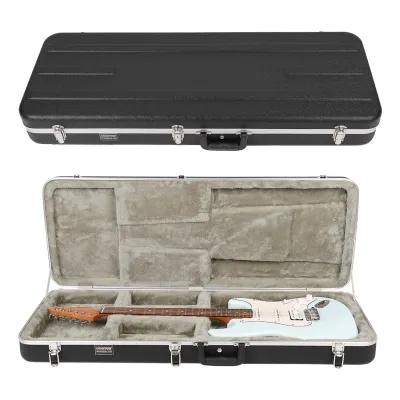
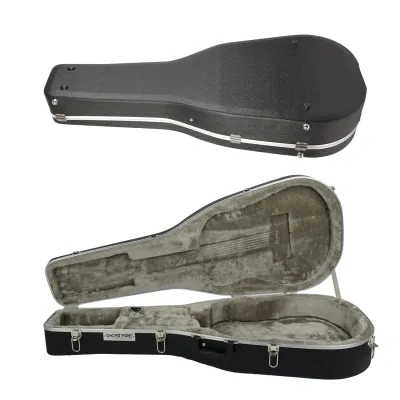
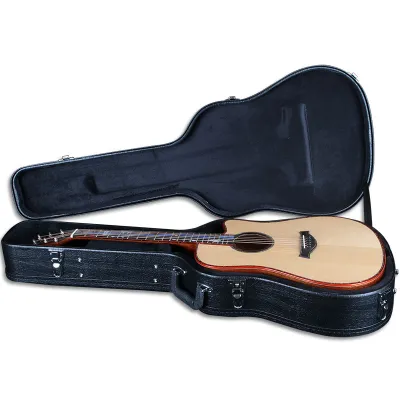


Prices are valid at publication and may change. Please refer to the product page for the latest price.
Identifying the exact body shape of your guitar is equally important. A cutaway acoustic, an archtop, or an offset electric guitar each requires specific interior contours to prevent the instrument from sliding around. A case that is too large allows the guitar to shift during transport, which can lead to broken headstocks or chipped finishes.
Finally, pay close attention to the neck joint and the headstock angle. Guitars with angled headstocks require extra vertical clearance inside the case. If the case is too shallow, the headstock might press directly against the back wall, making it highly vulnerable to snapping if the case is dropped.
Evaluate the Shell Material and Construction
The outer shell of a hard case determines how well it can withstand external impacts, heavy stacking, and tropical weather elements. Different materials offer distinct balances of weight, durability, and price, so you should choose one that matches your daily routine and travel habits.

Plywood is a traditional and highly reliable material for guitar cases, often covered with a protective vinyl or Tolex outer layer. These cases offer excellent structural rigidity and are highly resistant to crushing, making them ideal for home storage or stacking in a vehicle. However, plywood cases tend to be heavy, which can make long walks or commutes on public transit quite tiring.
Acrylonitrile Butadiene Styrene (ABS) plastic is a popular modern alternative that offers high impact resistance at a lighter weight than plywood. ABS cases are molded to fit specific guitar shapes and are excellent at absorbing shocks from accidental drops. They also tend to seal tightly, which helps protect the instrument from sudden rain showers during a wet commute.
Fiberglass represents the premium end of the spectrum, offering exceptional strength-to-weight ratios and superior sealing against moisture. While these materials provide outstanding protection for high-end instruments, they are often more expensive and may exceed the budget of a beginner. For most starting players, a well-constructed plywood or ABS case provides more than enough protection.
Regardless of the material, you must inspect the structural hardware of the case. Check that the seams are tight and that the metal hinges are securely riveted to the frame rather than simply glued. The latches should operate smoothly, snapping shut with a firm, positive click, and at least one latch should feature a key lock to prevent accidental opening during transit.
Check the Interior Padding and Neck Support
While the outer shell deflects external forces, the interior of the case is what keeps your guitar safe from internal damage. A quality interior must immobilize the instrument completely and cushion it against sudden deceleration.
Examine the thickness and density of the internal foam padding. High-density foam covered with soft plush fabric or crushed velvet is ideal, as it absorbs shocks without scratching the guitar’s delicate finish. Avoid cases with thin, stiff cardboard-like padding covered by cheap synthetic cloth, as these offer very little impact absorption.
The most critical interior feature is the neck support block. This cradle should support the guitar’s neck near the joint, keeping the entire neck aligned and preventing the headstock from touching the bottom or sides of the case. If the headstock rests directly against any part of the case shell, a drop can transmit the impact force directly to the wood, causing a clean break.
Additionally, check the design and placement of the internal accessory compartment. This pocket, usually located directly under the neck support, is highly convenient for storing picks, tuners, and spare strings. However, you must ensure that the lid of this compartment does not press against the back of the guitar neck or body when the case is closed.
In humid tropical climates like the Philippines, the interior materials also play a role in moisture management. Some plush linings can trap humidity if left open in damp environments, so it is wise to keep silica gel packets inside the accessory compartment to help absorb excess moisture and protect your guitar’s metal hardware from rust.
Consider Portability and Storage Features
A protective case is only useful if you can carry it comfortably. If a case is too heavy or awkward to handle, you may find yourself leaving it at home, exposing your guitar to unnecessary risks.
Start by evaluating the handle design, as this is the primary point of contact between you and the case. Look for a handle that is ergonomically shaped, padded, and securely bolted to the case frame with heavy-duty metal brackets. A poorly positioned or unpadded handle can cause hand fatigue and pain, especially during long walks or commutes.
If you rely on public transportation, such as jeepneys, buses, or the MRT, portability features become even more critical. Look for cases that include D-rings for attaching a shoulder strap, or models that come with integrated backpack straps. Carrying the case on your back keeps your hands free and makes navigating crowded streets and stations much safer and easier.
Storage footprint is another practical consideration for home use. Check whether the case has small protective rubber feet on the bottom and side edges. These feet allow the case to stand upright or on its side without scratching the outer shell or slipping on smooth floors. If you have limited space, a case that can stand vertically in a closet or corner is highly advantageous.
Verify Fit and Protection Before Finalizing
Before you commit to a purchase, you should perform a physical check to ensure the case is a secure fit for your specific guitar. If you are buying in a physical store, bring your instrument along to test the fit in person.
Place your guitar gently into the case; it should slide in smoothly without requiring you to push or force it down. Once inside, there should be no visible gaps around the body, particularly at the waist and lower bout. If the guitar can slide side-to-side or up-and-down even by a centimeter, the fit is too loose, and you will need to add extra padding or look for a different model.
Perform the “shake test” by closing the lid, securing all the latches, and gently lifting and shaking the case. You should not feel or hear the instrument shifting inside. If you feel a thudding sensation, the interior padding is not making sufficient contact with the guitar body to keep it immobilized.
Next, inspect the clearance around the tuning keys, strap buttons, and output jacks. None of these components should press tightly against the hard outer frame of the case, as this can cause finish cracks or structural damage over time. The lid should close easily and seal completely without requiring you to press down hard on the top of the guitar.
Frequently Asked Questions (FAQ)
Is a hard case necessary for a beginner guitar?
While a padded gig bag is convenient for light travel and quick trips, a hard case is highly recommended if you need to store your guitar in a shared space, travel on public transit, or protect it from extreme humidity. A hard case provides a rigid barrier against crushing forces, accidental drops, and rapid environmental changes that a soft bag simply cannot match. If you have invested in a solid-wood instrument, a hard case is essential to prevent the wood from warping due to seasonal humidity shifts.
Can I use a universal hard case for different guitar shapes?
Universal hard cases are designed to accommodate a wide variety of models, but they often leave empty spaces around the body of more uniquely shaped guitars. If you must use a universal case, you can fill these gaps by placing clean, soft microfiber cloths or foam inserts around the lower bout and waist to prevent the guitar from shifting. However, this is a temporary solution, and a shape-specific case remains the most secure option for long-term transport and protection.
Community discussion
Share your experience or ask a question. Comments are reviewed before publication.