
Selecting a capo for a classical guitar is a precise task that directly impacts your instrument’s tone, intonation, and physical health. Unlike steel-string acoustic or electric guitars, classical guitars feature unique structural designs—specifically wider, flatter necks and highly pliable nylon strings—that require a specialized accessory. Using an incorrect capo can lead to persistent string buzzing, sharp notes, and even permanent damage to the delicate tonewoods and finishes.
In the Philippines, where high relative humidity and warm temperatures are constant, choosing the right gear becomes even more critical. Tropical conditions can soften traditional guitar finishes and cause wood to expand, making your instrument more vulnerable to physical pressure and chemical reactions from low-quality materials. Understanding how to evaluate capo designs, measure your instrument, and apply proper clamping techniques will ensure your classical guitar sounds its best while remaining fully protected.
Why Classical Guitars Need a Specialized Capo
To understand why a standard capo will not suffice, you must look at the anatomy of a classical guitar. The most prominent difference lies in the fretboard radius. Steel-string guitars almost always feature a curved fretboard, designed to make wrapping your hand around the neck for barre chords more comfortable. Consequently, capos designed for steel strings have a matching curved profile. Classical guitars, however, are built with a completely flat fretboard. If you place a curved capo on a flat classical fretboard, the curved bar will press down excessively on the middle strings while failing to make adequate contact with the outer strings. This mismatch results in severe buzzing on the outer strings and sharp, out-of-tune notes in the middle.
Products mentioned in this guide

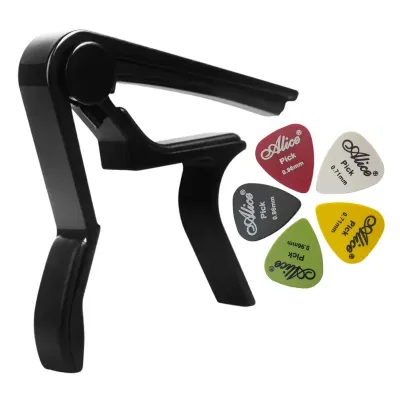

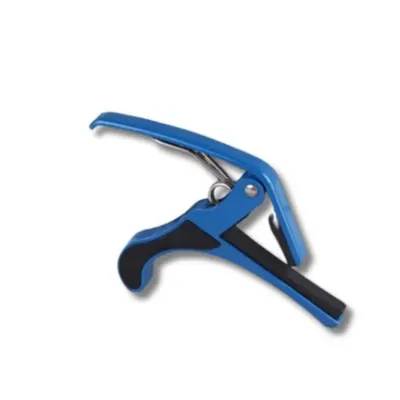
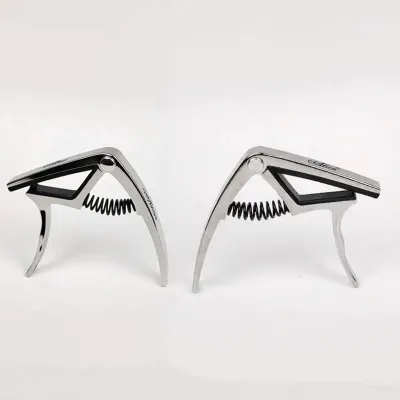
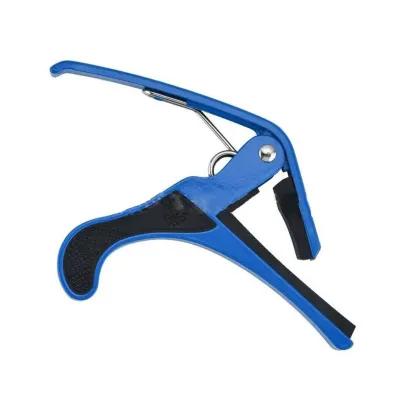
Prices are valid at publication and may change. Please refer to the product page for the latest price.
Another critical factor is the width and thickness of the neck. A standard acoustic guitar typically has a nut width of around 43 millimeters, whereas a classical guitar neck is significantly wider, usually measuring between 50 and 52 millimeters at the nut, and widening further as you move up the fretboard. A standard capo is often too short to span this entire distance, leaving the outer strings completely un-fretted. Furthermore, classical necks have a thicker, more rounded profile compared to the slim profiles of modern steel-string guitars. The capo must have a deep enough throat to clear this thickness without scratching the back of the neck.
Finally, the physical properties of nylon strings dictate the required clamping pressure. Nylon strings have much lower tension and are far more elastic than steel strings. Because they are soft and pliable, they require very little downward force to be pressed cleanly against the fret wire. If you apply the heavy, non-adjustable clamping force of a standard steel-string capo to nylon strings, the excessive pressure will stretch the strings downward and sideways. This severe deflection pulls the pitch sharp, ruining your intonation and making your performance sound out of tune even if the open strings were perfectly calibrated.
Key Features to Look for in a Classical Guitar Capo
When shopping at local music stores or browsing online marketplaces, you must look for specific technical features to ensure compatibility. The first and most obvious specification to verify is a flat profile. The contact pad of the capo—the part that presses directly onto the strings—must be completely straight. Any curve, no matter how slight, will compromise the even distribution of pressure across the flat fretboard.

The overall length of the clamping bar is equally important. To accommodate the wide classical neck, the contact pad should ideally measure at least 55 millimeters. This length ensures that even when you position the capo on higher frets, such as the fifth or seventh fret where the neck naturally widens, the bar will comfortably cover all six strings without slipping off the edges.
Adjustable tension is another essential feature for classical guitarists. Capos that allow you to fine-tune the clamping force via a micrometer screw, dial, or adjustable spring are highly recommended. This adjustment capability allows you to apply the absolute minimum amount of pressure required to eliminate string buzz. By minimizing the force, you preserve the life of your nylon strings, maintain accurate intonation, and prevent unnecessary wear on your frets.
You must also pay close attention to the padding materials used on both the front bar and the rear clamp. High-quality, inert silicone or soft, vulcanized rubber is ideal. These materials provide a firm yet gentle grip that conforms to the strings without slipping. In the warm and humid climate of the Philippines, cheap plastics and low-grade rubbers can degrade rapidly, becoming sticky or releasing oils. These chemical reactions can permanently stain or dissolve delicate guitar finishes, particularly traditional French polish or thin nitrocellulose lacquers commonly found on classical instruments.
Evaluating Common Capo Mechanisms for Nylon Strings
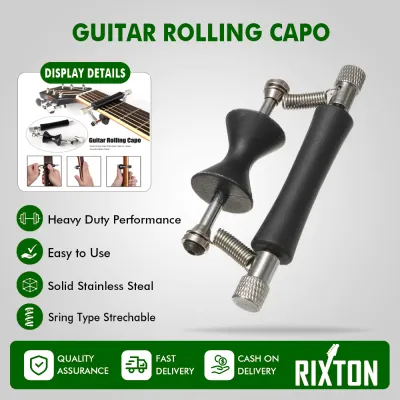
Capos come in several mechanical designs, each offering distinct advantages and trade-offs for classical players. Screw-adjustable and yoke-style capos are widely considered the most precise option. These designs feature a threaded screw that allows you to gradually tighten the capo onto the neck. This mechanical control gives you the ability to dial in the exact pressure needed for a clean sound without a single microtone of pitch distortion. While they take slightly longer to install and move during a performance, their stability and precision are unmatched for classical repertoire.
Strap and elastic capos represent a more traditional, lightweight approach. These models use a fabric strap or an elastic band that wraps around the neck and latches into pre-set notches. They are highly portable, inexpensive, and naturally flat, making them gentle on the instrument. However, they offer very limited tension adjustment. Furthermore, elastic materials are highly susceptible to environmental degradation. In the tropical heat of the Philippines, the rubber fibers inside elastic straps tend to dry out, stretch, and lose their elasticity quickly, meaning you will need to replace them much more frequently than solid metal designs.
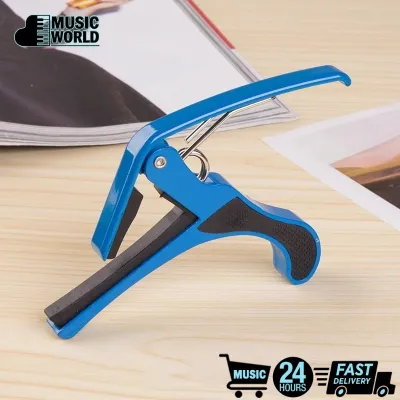
Spring-loaded or trigger capos are favored by performing musicians who need to make rapid, one-handed changes between songs. These capos use a heavy-duty internal spring to clamp onto the neck instantly. While convenient, many standard trigger capos apply a fixed, high-tension force designed for stiff steel strings. When used on a classical guitar, this excessive force can easily bend nylon strings sharp and put unnecessary stress on the neck. If you prefer a trigger design, you must ensure it is specifically labeled for classical guitars, or choose a model that includes an adjustable spring tension dial to back off the pressure.
Partial capos are specialized accessories designed to clamp only a subset of strings, leaving others open to create unique alternate tunings without changing the physical tuning pegs. While less common in traditional classical music, they are increasingly popular in modern fingerstyle and crossover classical arrangements. If you experiment with partial capos, ensure the clamping mechanism distributes pressure evenly on the active strings without twisting or putting uneven torque on the wide classical neck, which could warp the wood over time.
How to Measure Your Guitar for a Proper Fit
Before purchasing a capo from an online marketplace or a local retailer, taking precise physical measurements of your classical guitar will save you from the hassle of returns. Start by measuring the width of the fretboard. Use a ruler or a digital caliper to measure the distance from the outer edge of the low E string to the outer edge of the high E string at the nut. Next, take the same measurement at the fifth and seventh frets. Your chosen capo’s contact pad must be wider than these measurements to ensure full coverage.
Next, measure the thickness of the neck profile. Place your measuring tool from the top of the fretboard to the deepest point of the curved wood on the back of the neck. Do this at the first fret and the seventh fret. Compare these dimensions with the maximum opening depth specified by the capo manufacturer. If the capo’s throat is too shallow, it will not open wide enough to slide onto the neck, or it may scrape against the wood during installation.
You should also verify the flatness of your fretboard. While almost all classical guitars are flat, some modern crossover models feature a very subtle radius. Place a precise straightedge across the frets; if you see light shining through the middle, your fretboard has a slight curve, and you may need a specialized crossover capo rather than a completely flat classical one. Once you have these measurements, cross-reference them with the official manufacturer specification sheets to guarantee a secure physical fit.
Preventing Buzzing and Tuning Issues During Use
Even with the correct capo, improper installation can lead to performance issues. To achieve a clean, buzz-free tone, always place the capo directly behind the fret wire—ideally about one to two millimeters away from it. Do not place it in the exact middle of the fret space. Positioning the capo close to the fret wire mimics the natural fretting action of a finger, requiring the absolute minimum amount of downward pressure to secure the string cleanly against the metal fret.
Once the capo is positioned, adjust the tension mechanism gradually. Start with the clamp loose enough that the strings buzz when plucked. Slowly tighten the screw or dial until the buzzing stops on all six strings, then stop tightening immediately. Any additional pressure beyond this point is unnecessary and will only pull your strings sharp, accelerate fret wear, and strain the neck of your instrument.
If you continue to experience buzzing or tuning instability despite correct capo placement, the issue may lie with the guitar itself rather than the accessory. In the Philippines, seasonal shifts in humidity can cause the wood of a classical guitar to swell or shrink. This movement can alter the neck relief or cause individual frets to lift slightly. Worn-out nylon strings that have lost their elasticity can also cause localized buzzing. Before adjusting your capo to extreme, damaging tensions, inspect your instrument’s neck relief, check for uneven frets, and consider installing a fresh set of high-quality nylon strings.
Frequently Asked Questions (FAQ)
Can I use a standard steel-string capo on a classical guitar?
Using a standard steel-string capo on a classical guitar is highly discouraged due to physical incompatibility. Steel-string capos are designed with a curved profile to match the radiused fretboards of acoustic and electric guitars, and they are typically much narrower. When clamped onto the wide, flat fretboard of a classical guitar, a curved capo will press down too hard on the center strings while failing to secure the outer strings, resulting in severe buzzing and poor intonation. Additionally, the high, non-adjustable spring tension of many steel-string capos can easily crush soft nylon strings and damage the wider neck profile.
Will a capo damage the finish on my classical guitar?
A capo can damage your guitar’s finish if it is made from low-quality materials or used improperly. Many classical guitars are finished with delicate materials like French polish or thin nitrocellulose lacquer, which are highly sensitive to pressure and chemical reactions. Cheap rubber or plastic pads on low-grade capos can leach plasticizers that chemically react with and melt these finishes, especially in the hot, humid climate of the Philippines. To prevent damage, always choose capos with high-quality, inert silicone padding, avoid leaving the capo clamped to the neck when the instrument is not in use, and store it separately in your guitar case.
Community discussion
Share your experience or ask a question. Comments are reviewed before publication.