
Choosing a chronological study Bible for your personal spiritual routine in the Philippines requires balancing your devotional goals with practical considerations like translation style, physical durability, and local availability. Unlike a standard Bible that groups books by literary genre, a chronological Bible rearranges the entire text into the order in which the events actually occurred. This layout provides a seamless historical narrative, allowing you to experience the unfolding of biblical history as a single, continuous story. To find the edition that will best support your daily quiet time, you must evaluate how the text is organized, how the translation fits your reading habits, and how the physical construction will hold up against the local tropical climate.
Is a Chronological Layout Right for Your Devotional Routine?
To understand if a chronological layout fits your spiritual practice, it is helpful to compare it with the traditional canonical structure. The standard Bible layout groups books by genre—such as law, history, poetry, prophets, gospels, and letters. While this traditional arrangement is excellent for thematic study and locating specific passages quickly, it often obscures the historical relationship between different texts. For instance, the prophetic books of the Old Testament are grouped together at the end, separated from the historical narratives of Kings and Chronicles where those prophets actually lived and preached. A chronological layout bridges this gap by inserting the prophetic messages directly into the historical accounts of the kingdoms they addressed.
Reading the scriptures in historical sequence transforms how you perceive the narrative flow of biblical history. When you read the Psalms of David interspersed with the accounts of his flight from Saul in the books of Samuel, the emotional and spiritual depth of those prayers becomes immediately apparent. Similarly, reading the letters of the Apostle Paul alongside the accounts of his missionary journeys in the Book of Acts provides a vivid picture of the early church’s struggles and triumphs. This contextual integration helps readers who want to see the “big picture” of the biblical narrative and understand how individual books fit into a unified historical timeline.
Products mentioned in this guide
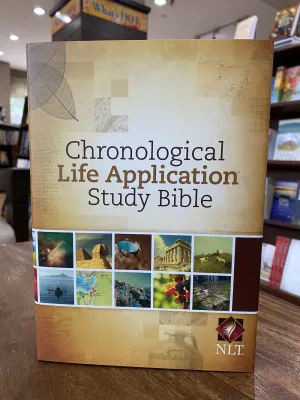
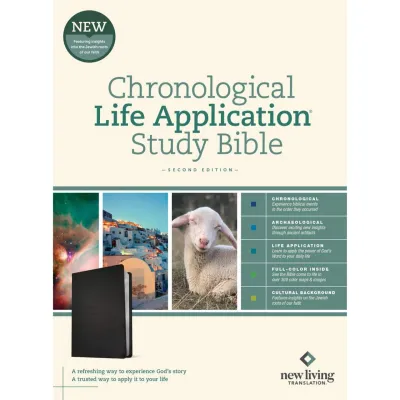
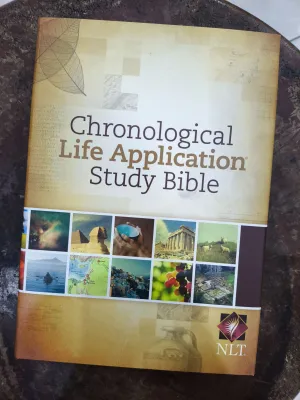
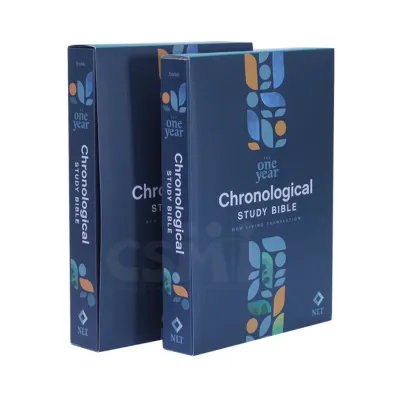
Prices are valid at publication and may change. Please refer to the product page for the latest price.
However, this layout presents unique challenges that you should consider before making a purchase. Because the text is rearranged, the narrative can sometimes feel fragmented, particularly when dealing with parallel accounts. In the New Testament, for example, a chronological Bible will often merge or place side-by-side the parallel accounts of the four Gospels. This can make it difficult to appreciate the distinct literary voice and theological emphasis of each individual Gospel writer. Additionally, because the books are broken up and rearranged, finding a specific chapter and verse during a church service or group study can be highly frustrating without a detailed index.
To mitigate these challenges, high-quality chronological study Bibles include robust transitional notes and structural guides. These editorial additions explain why certain passages are placed where they are and how the rearranged texts connect to one another. If you are a reader who thrives on historical context, enjoys seeing the chronological development of theological themes, and wants to refresh a long-standing reading routine, a chronological Bible is an invaluable tool. If you prefer to study books as complete, uninterrupted literary units, you might find a standard study Bible paired with a chronological reading plan to be a more comfortable alternative.
How to Evaluate Translations and Study Notes
Once you decide that a chronological layout aligns with your devotional goals, the next step is to evaluate the translation philosophy of the edition. Bible translations generally fall along a spectrum from formal equivalence (word-for-word) to dynamic equivalence (thought-for-thought). Word-for-word translations, such as the English Standard Version (ESV) or the New American Standard Bible (NASB), prioritize literal accuracy and are highly suited for deep, word-level study. However, they can sometimes feel rigid during extended reading sessions. On the other hand, thought-for-thought translations, like the New Living Translation (NLT) or the New International Version (NIV), prioritize readability and smooth narrative flow, making them exceptionally well-suited for the continuous, story-driven style of a chronological Bible.

The quality and depth of the accompanying study notes are just as critical as the translation itself. Because a chronological Bible rearranges the text, you will rely heavily on the study notes to explain the historical, cultural, and geographical background of each period. Look for editions that offer comprehensive historical introductions to each era, detailed timelines that run alongside the text, and archaeological insights that ground the narrative in real-world history. The notes should help you bridge the gap between ancient history and modern application, ensuring that your reading remains a spiritual exercise rather than a purely academic one.
In addition to standard study notes, pay close attention to the visual aids included in the edition. A superior chronological study Bible should feature full-color maps, detailed architectural reconstructions of ancient structures, and clear charts that compare parallel events. For example, a chart comparing the reigns of the kings of Israel and Judah alongside the active ministries of the prophets is indispensable for keeping track of complex historical periods. These visual elements help clarify the narrative flow and prevent you from feeling lost in the historical details.
Finally, consider the theological perspective of the publisher and the editorial team. Study notes are not neutral; they reflect specific theological traditions and interpretive frameworks. Before purchasing, research the publisher’s background and read sample notes if possible to ensure they align with your personal faith tradition or learning objectives. Whether you prefer notes that are confessionally aligned with your church or those that offer a broad, multi-denominational overview of historical interpretations, verifying this aspect beforehand prevents unexpected theological friction during your daily quiet time.
Matching Physical Formats to Your Reading Environment
The physical construction of your Bible is a crucial factor, especially when considering the tropical climate of the Philippines. High humidity and warm temperatures can take a heavy toll on books, causing pages to cockle, adhesives to break down, and synthetic covers to peel or degrade over time. When evaluating binding options, Smyth-sewn bindings are highly recommended over glued bindings. A sewn binding allows the Bible to lay flat when open, reducing stress on the spine and ensuring that pages do not fall out after years of use. While premium leather covers like goatskin or calfskin offer the greatest durability and flexibility, high-quality synthetic covers (often labeled as Leathersoft or TruTone) can also be durable if kept in a climate-controlled environment.
The page layout and typography directly affect your reading comfort and eye strain during extended devotional sessions. Chronological Bibles are often dense, containing not only the biblical text but also extensive study notes, charts, and articles. A single-column paragraph layout is highly popular for chronological reading because it mimics the format of a modern novel, encouraging a natural, continuous reading flow. Double-column layouts, however, are often more compact and can make the overall volume lighter. Ensure the font size is comfortable for your eyes; many study Bibles are printed in small fonts (7 to 8 point) to keep the book’s thickness manageable, but “comfort print” or large-print editions (9 point and above) are much easier to read for long periods.
You must also weigh the physical dimensions and weight of the Bible against your lifestyle. A comprehensive chronological study Bible is often a substantial volume, sometimes weighing over two kilograms. If your primary reading environment is a dedicated desk or altar at home, a large, heavy hardcover or premium leather edition is an excellent choice. However, if you plan to carry your Bible to church, small group meetings, or during your daily commute on public transportation, a heavy volume can become a physical burden. For readers on the go, a more compact edition or even a digital version might be necessary, though many find that the tactile experience of a physical book is irreplaceable for personal devotion.
To protect your investment from the local climate, consider using a high-quality zippered Bible cover. A cover protects the edges of the pages from dust, moisture, and physical damage when carried in a bag. Inside your home, store your Bible in a cool, dry place away from direct sunlight, which can fade the cover and dry out the binding. Placing a small, food-safe silica gel packet inside your Bible case or on the shelf where you store your books can help absorb excess moisture and prevent the growth of mold or mildew on the paper edges.
Sourcing and Verifying Authentic Copies in the Philippines
Sourcing an authentic chronological study Bible in the Philippines requires careful navigation of local retail channels and online marketplaces. Established Christian bookstores remain the most reliable physical sources for genuine editions. Visiting a physical store allows you to handle the Bible, inspect the paper quality, test the binding, and verify the layout before making a purchase. If a physical store is not accessible, many of these established retailers operate official online storefronts or authorized shops on major ecommerce platforms, providing a secure way to purchase genuine copies from the comfort of your home.
When shopping online, verifying the product details is essential to avoid counterfeit or low-quality reproductions. Always check the International Standard Book Number (ISBN) listed in the product description and cross-reference it on the publisher’s official website. This step ensures that the edition, translation, and binding style match exactly what you intend to buy. Be cautious of listings that use generic stock photos or have vague descriptions that omit the publisher’s name, publication year, or specific translation details.
The prevalence of pirated books on online marketplaces makes vigilance necessary. Counterfeit Bibles are often sold at unusually low prices, sometimes for as little as ₱300 to ₱500, whereas genuine imported study Bibles typically range from ₱1,500 to ₱4,000 or more depending on the binding. While a low price can be tempting, pirated copies often suffer from severe quality issues, including blurred or faded printing, missing pages, incorrect page sequencing, thin paper that allows ink to bleed through, and toxic-smelling chemical adhesives. These defects can severely hinder your reading experience and shorten the lifespan of the book.
To protect yourself when purchasing online, read customer reviews carefully, looking specifically for photos of the actual product received. Check the seller’s rating and verify if they are an authorized distributor or a reputable local bookstore. If a deal seems too good to be true, it is highly likely a counterfeit. Investing in a genuine edition from an authorized source guarantees that you receive a durable, high-quality volume while supporting the publishers and authors who produce these valuable study resources.
Frequently Asked Questions (FAQ)
Do I need a chronological Bible if I already have a standard study Bible?
While you can follow a chronological reading plan using a standard canonical Bible, doing so requires constant flipping back and forth between different books, which can disrupt your reading momentum. For example, reading the prophets alongside the historical books of Kings and Chronicles in a standard Bible means constantly turning pages, managing multiple bookmarks, and losing the immediate narrative flow. A dedicated chronological study Bible eliminates this friction by physically rearranging the text into a seamless, continuous sequence. Furthermore, these specialized editions include integrated timelines, historical introductions, and transitional notes specifically written to explain the chronological flow, features that are not present in standard study Bibles. If you want a smooth, uninterrupted historical reading experience, a dedicated chronological Bible is highly beneficial.
Can I use a chronological study Bible for group or church studies?
Using a chronological study Bible in a standard group or church study can be challenging because the page numbers and text order will not align with the canonical Bibles used by other participants. When the leader asks the group to turn to a specific passage, you may struggle to find it quickly because the text has been rearranged and split across different sections of your Bible. However, a chronological Bible is exceptionally useful for specialized group studies that focus on biblical history, the life of Christ, or the historical context of the prophets. In these settings, the chronological layout provides a shared historical framework that enhances everyone’s understanding. For general church services, you can still use your chronological Bible by relying on its canonical index, though many readers find it easier to use a standard Bible for communal gatherings and reserve their chronological Bible for personal study at home.
Community discussion
Share your experience or ask a question. Comments are reviewed before publication.