
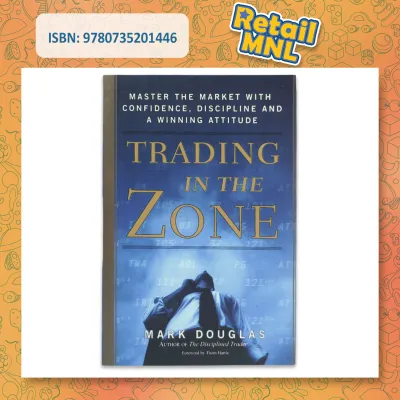
Integrating the core psychological principles of Mark Douglas’s seminal book, Trading in the Zone, into your daily routine requires shifting your focus from predicting market movements to executing a consistent, probability-based process. Many traders struggle not because their technical analysis is flawed, but because they treat each individual trade as a test of their intelligence or intuition. To build a reliable daily routine around Douglas’s teachings, you must systematically train your mind to accept risk, think in terms of statistical probabilities, and execute your strategy without emotional interference. This means structuring your entire trading day—from your morning preparation to your evening review—around the preservation of your psychological capital rather than just your financial capital.
In a tropical climate where external factors like sudden afternoon downpours or fluctuating internet connections can add unexpected stress to your day, maintaining an unshakeable internal state is critical. Whether you are trading local equities on the Philippine Stock Exchange during the day or navigating global foreign exchange and cryptocurrency markets late into the night from your home office, the psychological challenges remain identical. By establishing a structured routine that reinforces risk acceptance and objective execution, you can transform trading from a high-stress gamble into a calm, business-like operation.
Pre-Market Preparation: Setting the Psychological Foundation
Your trading day begins long before you look at a live price chart. The primary goal of pre-market preparation is to align your mind with the reality of market uncertainty. In Trading in the Zone, Douglas explains that the market is a stream of unique moments, meaning that any single trade has a completely random outcome, even if your overall strategy has a highly profitable edge. To internalize this, start your morning by reviewing your trading plan and explicitly defining your edge as a simple statistical probability. Remind yourself that you do not need to know what is going to happen next in order to make money over a series of trades.
Products mentioned in this guide
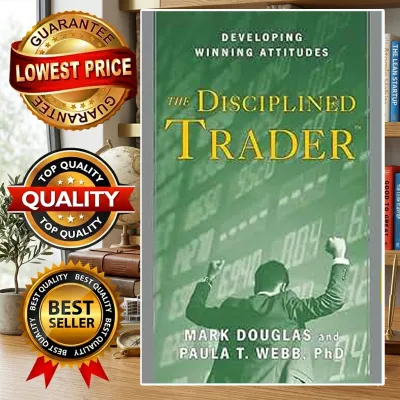
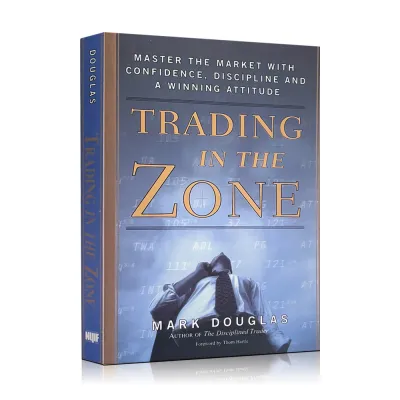
17 Lazada user ratings
💰Price:10/10 📚Content Quality:10/10 👤Author Reputation:10/10 Improves decision making, Builds trader discipline, definitely worth thee buy
Great for mindset training, Boosts confidence in trading, Helps is seeing the market of what it really is
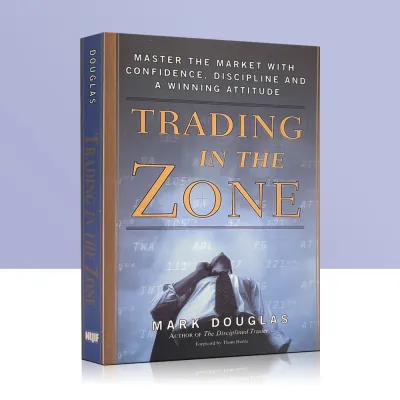
54 Lazada user ratings
Received items complete and well packed. Pag di ka maselan OK eto. Correct spelling naman at walang naalis na pages. May soft copy ako neto …Read full reviewShow less
Received items complete and well packed. Pag di ka maselan OK eto. Correct spelling naman at walang naalis na pages. May soft copy ako neto pero gusto ko pa rin ng tangible na book. Recommended but don't expect much. Reduced yung mga font at manipis mga margins. 5stars dahil mabilis si seller.
Transform your trading strategy, Achieve success in trading, Gain discipline in trading, Improve your trading skills,
Enhance your trading mindset, A must-read for traders, Transform your trading strategy, Practical guide for traders,
Practical guide for traders, Boost your confidence in the market, I’m hoping it’s not gonna waste of money
on time delivery binding good quality printing excellent highly recommended thank you seller
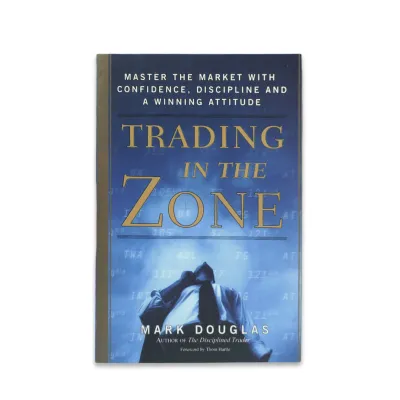
7 Lazada user ratings
Good book nice pack
26 Lazada user ratings
💰Price:Reasonable 📚Content Quality:Amazing Insights from Trading, good for newbie like me What I most like with the book is its quality, and…Read full reviewShow less
💰Price:Reasonable 📚Content Quality:Amazing Insights from Trading, good for newbie like me What I most like with the book is its quality, and the the letters is also good size which is easy to read.
The book arrived in great condition with enough bubble wrap and in a box. Print is also clear. Thank you seller!
sulit ang pagbili nito. marami ka talaga matututunan. if you are serious about trading, I recommend this book.
Winning attitude development, Essential for serious traders, Build discipline and confidence,
Winning attitude development, Build discipline and confidence, Insightful trading companion,
Prices are valid at publication and may change. Please refer to the product page for the latest price.
Once you have identified your potential setups for the day, perform a deliberate mental risk acceptance exercise. Look at the specific entry points and stop-loss levels you have planned, and calculate the exact financial risk in pesos. If you are planning to risk ₱2,000 on a particular setup, visualize the market hitting your stop-loss and the ₱2,000 leaving your account. Ask yourself honestly if you are completely at peace with this outcome. If you feel a tightening in your chest or a sense of anxiety, your position size is too large, or you have not truly accepted the risk. Adjust your position size downward until the thought of losing that specific peso amount produces no emotional reaction whatsoever.
Finally, establish your environmental and operational boundaries for the session. This involves setting a strict daily loss limit—such as a maximum cumulative loss of ₱6,000—after which you will shut down your trading platform for the day. Additionally, define the external conditions that require you to stay on the sidelines. For instance, if a tropical storm is causing unstable power grids or intermittent internet connectivity in your neighborhood, or if you are experiencing personal fatigue, make the executive decision to refrain from trading. Pre-defining these boundaries prevents you from making impulsive, emotionally charged decisions when your environment or your mind is compromised.
In-Market Execution: Maintaining Discipline and Objectivity
When the market opens and price action begins to fluctuate, your primary duty is to act as a mechanical executor of your plan. Douglas emphasizes that a professional trader does not hesitate, second-guess, or hope; they simply execute. When a predefined signal occurs, you must enter the trade immediately without searching for extra confirmation or waiting for a “perfect” moment that does not exist. Once you are in the trade, let your pre-set stop-loss and take-profit orders do their job. Avoid the temptation to manually adjust your stop-loss closer to your entry point out of fear, or to take profits prematurely before your target is reached.

To maintain this level of objectivity, you must learn to recognize and neutralize emotional triggers in real time. The fear of missing out (FOMO) often manifests when you see a sudden, sharp price movement in an asset you did not analyze, tempting you to chase the market. Similarly, hesitation often creeps in after you have suffered a series of consecutive losses, causing you to skip a perfectly valid setup out of fear of losing again. When you feel these impulses arising, take a slow, deep breath and remind yourself of the fundamental truth: this specific trade is just one of the next one hundred trades, and its individual outcome has no bearing on the long-term viability of your edge.
If you find that emotional fatigue, frustration, or anger is beginning to cloud your judgment, you must enforce a hard stop rule. This means physically stepping away from your screens and closing your trading applications. In the heat of a trading session, it is easy to fall into the trap of “revenge trading,” where you attempt to win back lost pesos by taking highly risky, unplanned positions. Recognizing the physical signs of stress—such as a racing heartbeat, clenched jaw, or rapid breathing—is your cue to walk away, perhaps stepping outside to feel the breeze or grabbing a glass of cold water, allowing your nervous system to reset before any further capital is put at risk.
Post-Market Review: Reinforcing Consistent Habits
The work of a disciplined trader does not end when the market closes; the post-market review is where your psychological habits are truly cemented. Instead of measuring the success of your day solely by your net profit or loss in pesos, you must evaluate how well you executed your process. Create a daily trading journal that grades your performance based on rule compliance rather than financial outcomes. A trade that resulted in a loss of ₱1,500 but was executed flawlessly according to your plan should be graded as an absolute success. Conversely, a trade that made a profit of ₱5,000 but was entered impulsively without a plan must be graded as a failure.
During this review, dedicate a specific section of your journal to analyzing your psychological state throughout the session. Write down the moments where you felt hesitation, greed, or anxiety, and try to pinpoint the exact thoughts that triggered those emotions. For example, did you feel a surge of euphoria after a winning trade, leading you to take an oversized position on the next setup? Or did a minor loss make you feel defensive, causing you to widen your stop-loss? Documenting these behavioral patterns helps you bring your subconscious biases into your conscious awareness, making them much easier to manage in future sessions.
Use these insights to formulate highly actionable mental adjustments for the following day. If you notice that you consistently hesitate on your first trade of the morning, your adjustment might be to start with a smaller position size to ease into the flow of the market. If you find that you struggle with screen addiction after your daily goals are met, your refinement might be to set an alarm that signals the immediate shutdown of your computer. By continuously refining your routine based on objective self-observation, you gradually eliminate the psychological friction that prevents consistent execution.
Tracking Your Progress: Measuring Psychological Consistency
To confirm that you are successfully internalizing the concepts from Trading in the Zone, you must adopt a long-term, statistical method of tracking your progress. Douglas strongly advocates for evaluating your performance over a predefined sample size of trades, such as a block of twenty trades, rather than focusing on day-to-day fluctuations. When you view your results in blocks, you stop obsessing over the outcome of any single trade and begin to see the law of probabilities work in your favor. Commit to executing twenty consecutive trades without changing your strategy, altering your risk parameters, or skipping setups, and only analyze your profitability once the entire block is complete.
Alongside your financial metrics, track your “flawless execution” rate as a primary key performance indicator. This metric is calculated by dividing the number of trades executed perfectly according to your rules by the total number of trades taken. If you took twenty trades and followed your plan perfectly on eighteen of them, your execution rate is ninety percent. Your goal should be to maintain an execution rate above eighty-five percent, regardless of whether the market environment is highly favorable or temporarily challenging. This shifts your sense of accomplishment from making money to maintaining self-discipline.
Over time, you will begin to observe subtle but profound behavioral shifts that indicate your psychological transformation is taking root. You will notice that your emotional reaction to a losing trade becomes neutral, and you no longer feel the urge to explain away a loss or blame the market. You will find yourself pulling the trigger on valid setups without a trace of hesitation, fully accepting that the outcome is out of your control but completely within the boundaries of your statistical edge. When trading becomes a calm, repetitive, and almost boring exercise in probability management, you will know you have successfully entered the zone.
Frequently Asked Questions (FAQ)
How long does it take to master the psychological aspects of trading?
Mastering the psychological aspects of trading is an ongoing journey of self-discovery rather than a destination with a fixed timeline. Because trading forces you to confront deep-seated beliefs about risk, money, and being right, the time it takes to achieve consistency depends heavily on your willingness to examine your own biases. Some traders begin to see significant improvements in their discipline within a few months of consistent journaling, while others may spend years battling the same emotional patterns. The key is to treat psychological training as a daily practice, understanding that screen time alone is not enough; you must actively work on your mindset during every single session.
Can I apply these concepts if I am a part-time trader?
Yes, the core principles of risk acceptance and probability thinking are entirely universal and apply to any trading style, frequency, or timeframe. If you are a part-time trader balancing a full-time career, you can adapt these concepts by focusing on higher timeframes, such as the daily or four-hour charts, which require less frequent monitoring. Utilizing automated price alerts and pre-set order types allows you to execute your edge mechanically without the emotional strain of watching every tick of the market. Whether you trade once a day or twenty times a week, the requirement to accept risk before entering a trade and to execute your plan without hesitation remains exactly the same.
Community discussion
Share your experience or ask a question. Comments are reviewed before publication.