
Selecting your very first drumstick pair is a crucial step that directly impacts your early practice sessions, your hand comfort, and your overall budget. For a beginner in the Philippines, the ideal budget for a reliable, high-quality first pair of drumsticks ranges from ₱400 to ₱800. This price bracket represents the entry-level standard from established, reputable global and local percussion brands, offering the best balance of structural integrity, weight consistency, and playability.
While it is tempting to purchase the cheapest option available, spending too little on unbranded sticks—often sold for under ₱150 on online marketplaces—frequently leads to rapid breakage, warping, and poor technique development. These ultra-cheap sticks are often made from low-grade, soft woods that do not absorb shock properly, transferring vibrations directly into your wrists and fingers. Conversely, spending over ₱1,200 on premium artist signature models, exotic wood species, or highly specialized lacquer finishes is unnecessary when you are still mastering basic rebound and grip.
By focusing your budget on standard production models from trusted manufacturers, you ensure that you are practicing with a tool that has undergone rigorous quality control. These sticks are designed to withstand the initial, often heavy-handed strikes of a learning drummer. Allocating your initial funds toward this reliable middle tier saves you money in the long run by reducing the frequency of replacements and protecting your hands from fatigue.
Products mentioned in this guide
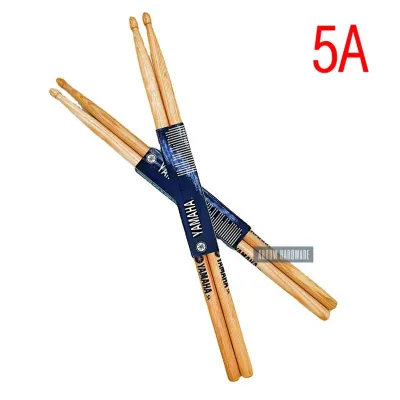
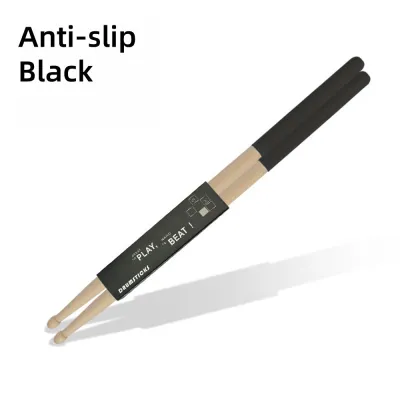
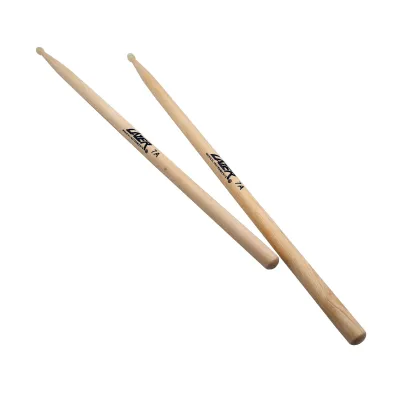
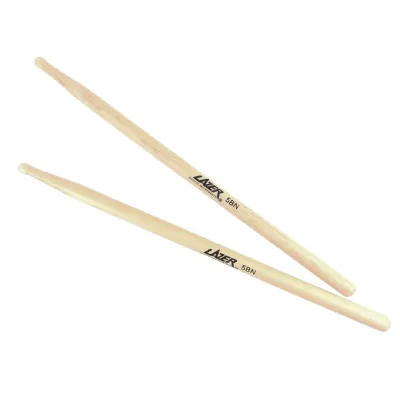
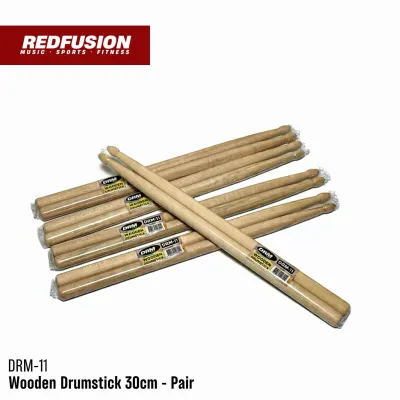
Prices are valid at publication and may change. Please refer to the product page for the latest price.
What Actually Drives the Price of a Drumstick?
Understanding the manufacturing and material factors that dictate the cost of a drumstick helps you make an informed decision without overspending. The primary driver of both price and durability is the species of wood used in production. Hickory is the industry standard for a reason; it offers excellent shock absorption, a comfortable mid-range weight, and high resilience, making it the baseline recommendation for beginners. Maple is lighter and allows for faster play, but it is more susceptible to splitting under heavy impact and often carries a slightly higher price tag due to sourcing. Oak is incredibly dense, heavy, and highly durable, but it transmits more vibration to your hands and can be tiring for a novice to control.
Manufacturing precision and quality control also heavily influence the retail price. Premium manufacturers utilize advanced digital scales and acoustic sensors to match pairs by exact weight and pitch. While professional drummers rely on perfectly pitch-paired sticks to ensure consistent tonal response across their cymbals, beginners do not yet require this level of precision to learn basic rudiments and timing.
Brand licensing and artist endorsements introduce another price premium that does not necessarily translate to better durability. Artist signature models are customized to the specific length, taper, and tip preferences of famous players, which adds to the marketing and production costs. Standard catalog lines from the same manufacturers use the exact same high-quality wood and machinery but are sold at a much more accessible price point.
Specialized coatings, active grips, and alternative tip materials also add to the retail cost. Some brands apply proprietary active-grip lacquers that react to body heat, or insert rubberized sleeves to prevent slippage. While these features are highly useful for performers playing long sets under hot stage lights, they remain optional additions that can unnecessarily inflate a beginner’s starting budget.
Balancing Cost and Durability for Daily Practice
To get the most value out of your purchase, you need a stick that can survive daily practice sessions while remaining highly affordable. The universal starting point for almost every drum student is the 5A model. This size offers a medium weight, standard length, and moderate thickness that fits comfortably in most hands. Starting with a 5A prevents the premature breakage often caused by using sticks that are too thin, while avoiding the wrist strain associated with models that are too heavy.

When evaluating longevity against cost, hickory remains the undisputed champion for daily practice. The natural fibers of hickory wood are highly interlocking, which allows the stick to flex slightly upon impact rather than snapping immediately. This flex absorbs the force of a strike, protecting both the stick itself and the delicate joints in your hands and wrists.
Tip shape and material also play a significant role in both durability and cost. Standard wood tips shaped like acorns or teardrops are highly recommended for beginners because they provide a warm, full tone on both drums and cymbals. Nylon tips, which are plastic caps pressed onto the end of the stick, are sometimes preferred for their bright sound and resistance to chipping, but they add to the retail cost and carry the risk of flying off if the adhesive fails during a heavy practice session.
If your initial budget allows, adopting a bulk-buying strategy can significantly lower your long-term costs. Purchasing a three-pack or a full “brick” (typically 12 pairs) of standard hickory 5A sticks reduces the cost per pair compared to buying them individually. Having multiple identical pairs on hand also ensures that your practice session is never cut short by an unexpected break, and it allows you to rotate your sticks to distribute wear evenly.
Common Budget Traps and Where Beginners Waste Money
Navigating the musical instrument market can be challenging, and there are several common traps where beginners frequently waste their hard-earned money. The most common trap is purchasing unbranded, generic sticks from general e-commerce platforms. These items are often made from improperly dried birch or pine, which warps rapidly when exposed to the high humidity levels common in the Philippines. These sticks often suffer from poor grain alignment, meaning they can shatter along diagonal weak points within the first few hours of use.
Another common mistake is purchasing specialized sticks based on a favorite music genre before developing fundamental physical technique. Beginners inspired by heavy metal might rush to buy thick, heavy 2B sticks, while those interested in jazz might opt for ultra-thin 7A models. Using 2B sticks without proper wrist relaxation can quickly lead to painful fatigue, while starting with 7A sticks often results in rapid breakage as you learn to control your striking force.
Many beginners also overlook the importance of a dedicated practice pad, choosing instead to practice directly on hard household surfaces like wooden tables or metal chairs. Practicing on non-rebound surfaces destroys the wood fibers of your sticks rapidly, causing them to splinter and chip prematurely. Investing a portion of your budget in a basic rubber practice pad is a far more economical strategy, as it preserves your sticks and allows you to practice quietly at any hour.
Finally, always factor in hidden online costs when shopping for drum gear. Ordering a single pair of sticks online often incurs shipping fees that can equal half the value of the sticks themselves, especially when shipping across different regions of the Philippines. To maximize your budget, it is usually more economical to visit a local physical music store to test the sticks in person, or to bundle your stick purchase with other necessary accessories like a drum key, metronome, or practice pad to qualify for free shipping.
How to Inspect and Verify Quality Before You Buy
If you are purchasing your drumsticks from a physical music retail store, you have a distinct advantage. You can perform a few quick, practical checks to ensure you are buying a straight, balanced, and structurally sound pair of sticks before heading to the cash register.
The Roll Test
- Place the drumstick on a completely flat surface, such as a glass display counter or a smooth stone countertop.
- Gently roll the stick forward and backward with your palm.
- Watch the tip of the stick closely as it rolls; if the tip wobbles, hops, or lifts off the surface, the shaft is warped.
- Reject any warped sticks, as they will feel unbalanced in your hand and will strike the drumhead at inconsistent angles.
Visual Grain Inspection
- Hold the stick up to the light and examine the grain lines running along the wooden shaft.
- Look for straight, continuous grain lines that run parallel from the butt end of the stick all the way to the shoulder and tip.
- Avoid sticks where the grain lines run diagonally and exit through the side of the shaft, a defect known as grain runoff.
- Sticks with severe grain runoff are structurally compromised and will easily snap along those diagonal lines under moderate impact.
Weight and Feel Balance
- Hold one stick in each hand using your natural drumming grip.
- Gently tap them against a practice pad or your palm to feel how the weight is distributed.
- Both sticks should feel virtually identical in weight and balance point.
- If one stick feels noticeably heavier or tip-heavy compared to the other, ask the store staff if you can try another pair to find a better match.
If you are purchasing your sticks online, you must rely on a different verification strategy. Carefully read the product descriptions to confirm the exact manufacturer model number, wood type (ensuring it explicitly states hickory), and tip material. Prioritize buying from authorized flagship stores of established music distributors, and always check the seller’s return and exchange policies regarding warped or defective items upon delivery.
Frequently Asked Questions (FAQ)
How long should a beginner's drumsticks last?
The lifespan of a drumstick depends heavily on your practice frequency, your grip tension, and your hitting technique. For a beginner practicing 30 to 60 minutes a day with proper, relaxed technique on a practice pad or a well-adjusted drum kit, a single pair of high-quality hickory sticks can easily last three to six months. You will know it is time to replace them when you observe deep grooves cut into the shoulder from cymbal hits, severe splintering along the shaft, or a noticeable loss of weight and balance that makes the stick sound hollow when tapped.
Should I buy expensive drumsticks to improve my sound?
No, buying expensive drumsticks will not significantly improve your sound as a beginner. Your overall tone, volume control, and dynamics are driven almost entirely by your physical striking technique, the tuning of your drumheads, and the quality of your cymbals. Standard, affordably priced hickory sticks are perfectly adequate for developing clean rebound, hand-to-hand balance, and volume control. Save your money for drum key tools, replacement drumheads, or professional instruction, which will have a much greater impact on your musical progression.
Can I use broken or chipped drumsticks for practice?
You should avoid using severely splintered, cracked, or structurally compromised drumsticks, especially on an acoustic drum kit or an electronic drum pad. A cracked stick can snap completely mid-strike, sending sharp wooden shards toward your eyes or face, and the jagged edges of a splintered shoulder or chipped tip can easily slice through expensive drumheads or damage the rubber pads of an electronic kit. However, if a stick merely has a slightly chipped tip but remains structurally solid, you can safely continue using it for casual, low-impact rudiment practice on a rubber practice pad.
Community discussion
Share your experience or ask a question. Comments are reviewed before publication.