
Readers in the Philippines seeking the intellectual thrill of Japanese mystery novels similar to Yukito Ayatsuji’s The Decagon House Murders will find a captivating world of “honkaku” (orthodox) fiction waiting to be explored. While direct Tagalog translations of these highly specific puzzle mysteries remain rare, English translations are widely accessible through local physical bookstores, specialized importers, and online marketplaces. Navigating this literary niche requires understanding the unique characteristics of the genre, knowing which authors and publishers to look for, and verifying edition details to ensure a complete and satisfying reading experience.
By focusing on established translation houses and utilizing local retail networks, you can build a remarkable collection of Japanese puzzle mysteries. Whether you prefer holding a physical paperback or reading on a digital device, securing these titles in the Philippines is highly achievable when you know where to look and how to verify the authenticity and quality of each edition.
Understanding the Honkaku Style: What Makes a True Puzzle Mystery
The term “honkaku” translates literally to “orthodox” or “genuine,” and in the context of Japanese crime fiction, it represents a commitment to the classic, fair-play puzzle mystery. Pioneered in the early twentieth century and revitalized in the 1980s by authors like Soji Shimada and Yukito Ayatsuji, honkaku mysteries prioritize logical deduction above all else. Unlike hardboiled detective stories or psychological thrillers that focus on character trauma, social commentary, or high-speed action, a honkaku novel is structured as an intellectual game played between the author and the reader.
Products mentioned in this guide

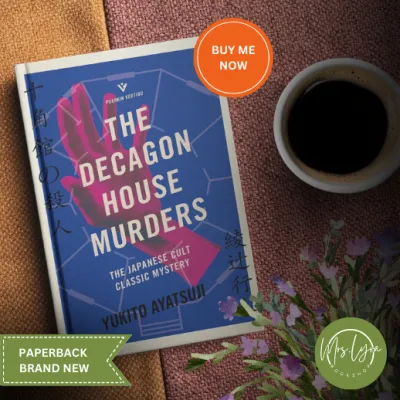
Prices are valid at publication and may change. Please refer to the product page for the latest price.
In a true honkaku mystery, the author provides all the necessary clues to solve the crime before the detective reveals the solution. These stories frequently employ classic tropes such as the “locked-room” murder, the isolated island mansion, or an eccentric cast of suspects cut off from the outside world. The setting itself often functions as a puzzle piece, complete with architectural diagrams, maps, and timelines printed in the front of the book to help you track the movements of the characters.
Because the entire narrative functions as a complex mechanism, the quality of the translation is absolutely critical. A single mistranslated word, an omitted detail about a room’s layout, or an altered nuance in a character’s statement can render the central puzzle unsolvable. When choosing an edition, you must ensure that the translation preserves these delicate, fair-play clues without simplifying the prose or altering the structural clues designed by the author.
Notable Honkaku Authors and Series to Explore in English Editions
If The Decagon House Murders sparked your interest in Japanese puzzle mysteries, several other prominent authors and series are available in English translations that share the same structural DNA. Yukito Ayatsuji himself has other translated works that continue his exploration of bizarre architecture and complex puzzles. His novel The Mill House Murders serves as an excellent follow-up, featuring another remote, eccentrically designed house and a baffling locked-room crime that challenges the intellect of detective Kiyoshi Shimada.

To understand the roots of the modern honkaku revival, you should explore the works of Soji Shimada, often referred to as the godfather of the movement. His landmark novel The Tokyo Zodiac Murders is a masterpiece of the genre, presenting an incredibly complex puzzle involving astrology, alchemy, and a series of seemingly impossible crimes. Shimada’s Murder in the Crooked House is another essential read, set in a bizarre, tilted mansion in the snowy north of Japan, which perfectly mirrors the atmospheric tension found in Ayatsuji’s work.
Other contemporaries and successors offer brilliant variations on the fair-play formula. Alice Arisugawa is highly regarded for his clinical, logical approach to deduction, with works like The Moai Island Puzzle offering classic isolated-setting scenarios. For readers who enjoy a blend of traditional puzzle-solving with deep psychological and social insights, Keigo Higashino’s early works, such as The Devotion of Suspect X and Malice, provide exceptionally clever plots that subvert classic mystery expectations while maintaining rigorous logical standards.
When searching for these titles, look for books published by specialized imprints that have dedicated themselves to bringing Japanese crime fiction to English-speaking audiences. Pushkin Vertigo (an imprint of Pushkin Press) has curated an outstanding collection of classic and contemporary Japanese mysteries, including many of the key honkaku titles. Vertical (an imprint of Kodansha) and Locked Room International are also excellent publishers to watch, as they consistently deliver high-quality, accurate translations that preserve the intricate details of the original Japanese texts.
How to Find and Verify Tagalog Translations of Japanese Mysteries
For readers who prefer experiencing literature in Tagalog, finding direct translations of Japanese honkaku mysteries presents a unique challenge. Currently, the local publishing landscape in the Philippines features very few direct Japanese-to-Tagalog translations of niche puzzle novels. While popular manga, light novels, and mainstream romantic fiction occasionally receive official Tagalog editions, classic honkaku mysteries are almost exclusively imported and distributed in their English-translated formats.
To verify if a Tagalog translation of a specific mystery novel exists, you should start by checking the official catalogs of major Philippine publishing houses and independent literary presses. Prominent local publishers occasionally license foreign titles for local translation, but these projects are typically announced on their official websites or verified social media channels. Avoid relying on third-party rumors or unverified online listings, as these often mistake English imports for local translations.
It is highly recommended to avoid unofficial fan translations or unauthorized digital editions often found on self-publishing platforms and web forums. In a genre where precise wording is everything, unofficial translations frequently suffer from grammatical errors, omitted paragraphs, and a lack of professional editorial oversight. A poorly translated clue or a misunderstood cultural reference can completely ruin the logical flow of a honkaku mystery, leaving you frustrated by an unsolvable puzzle. Sticking to officially licensed English editions remains the most reliable way to enjoy these stories as the authors intended.
Where to Buy Imported and Local Mystery Novels in the Philippines
Locating physical copies of Japanese mystery novels in the Philippines requires a targeted approach, as these niche titles may not always be displayed on the front shelves of general bookstores. Major physical retailers like Fully Booked are your best starting point, as they frequently stock a wide selection of international fiction and often have dedicated sections for translated Japanese literature. If a specific title like The Mill House Murders is out of stock, you can often request a special order through their customer service desk.
Online marketplaces and independent digital bookstores offer another excellent avenue for sourcing these novels. Many local independent booksellers specialize in importing curated titles from publishers like Pushkin Vertigo and can secure specific editions upon request. When navigating online marketplaces, look for reputable sellers who specialize in books rather than general merchandise, and always check customer feedback to ensure they supply genuine, officially published editions rather than unauthorized reprints.
When budgeting for these books, expect to pay between ₱500 and ₱900 for standard imported paperback editions, while hardcovers or special collector’s editions can cost significantly more. Be sure to factor in local shipping fees when purchasing online, and compare prices across different retailers to find the most reasonable deal. Additionally, because the tropical climate in the Philippines brings high humidity, it is wise to store your imported paperbacks in dry, well-ventilated areas or use silica gel packets on your bookshelves to prevent paper yellowing and moisture damage.
Your Pre-Purchase Checklist for Translated Puzzle Mysteries
Before finalizing your purchase of a Japanese mystery novel, running through a quick verification checklist will help you avoid common pitfalls such as buying the wrong edition, receiving a poor translation, or missing crucial parts of the story.
First, verify the translator’s name listed on the book’s cover or copyright page. Renowned translators who specialize in Japanese literature ensure that the delicate wordplay and logical clues remain intact. Reading a brief sample or checking reader discussions online can give you a good sense of whether the translation flows naturally while maintaining the precision required for a fair-play mystery.
Second, check whether the book is a standalone novel, part of a series, or an omnibus edition. Some publishers release classic mysteries in collected volumes, which can offer excellent value but may sometimes feature different formatting or cover art that does not match the rest of your collection. Ensure that the edition you are buying contains the complete, unabridged text, including any maps, floor plans, or character lists, as these visual aids are often essential for solving the mystery alongside the detective.
Finally, confirm the publication date and the specific edition of the book. Some older Japanese mysteries have undergone revisions by the author in later years to correct minor plot inconsistencies or update the clues. Purchasing the most recent translation from an established publisher guarantees that you are reading the definitive, most polished version of the text.
Frequently Asked Questions (FAQ)
Are there official Tagalog translations of The Decagon House Murders?
Currently, there are no officially licensed Tagalog translations of The Decagon House Murders available in the Philippines. The novel is primarily read and distributed in its English translation published by Pushkin Vertigo. To stay updated on potential future translations, you can regularly monitor the official catalogs of major Philippine publishing houses or visit local book fairs where publishers announce new licensing agreements.
Do I need to read the Kiyoshi Shimada series in chronological order?
While The Decagon House Murders is the first book in Yukito Ayatsuji’s famous House series featuring the detective Kiyoshi Shimada, the novels are designed to function as standalone puzzle plots. You can generally read them out of chronological order without spoiling the central mysteries of the other books. However, reading them in order of publication can enhance your appreciation of the subtle character development and the recurring thematic elements that connect the stories.
Community discussion
Share your experience or ask a question. Comments are reviewed before publication.