
When you sit down at a drum kit for the first time, your focus is naturally drawn to the snare, the cymbals, and the bass drum pedal. However, the most critical component of your setup is actually the seat beneath you, commonly known as a drum throne. Choosing a heavy-duty drum chair as a beginner in the Philippines is not an unnecessary luxury; it is a foundational decision that directly impacts your playing posture, physical comfort, and long-term progress. In a tropical climate where humidity can affect materials and where shipping heavy hardware requires careful planning, selecting the right throne requires a clear understanding of structural specifications and local purchasing strategies.
Many beginners underestimate the physical demands of drumming, viewing the seat as a simple stool rather than an active ergonomic tool. A proper drum throne is engineered to support your body while your limbs are in constant motion, maintaining your center of gravity and preventing unnecessary strain on your lower back and joints. By investing in a heavy-duty model from the start, you establish a stable foundation that allows you to focus entirely on developing your rhythm, speed, and technique without the distraction of a wobbling or uncomfortable seat.
Why Beginners Need a Heavy-Duty Drum Chair
Drumming is a highly physical, full-body activity that requires constant coordination between your upper body and your feet. When you play, your feet are not resting flat on the floor to support your weight; instead, they are actively hovering over or pressing down on the bass drum and hi-hat pedals. This means your entire body weight is concentrated on your pelvis and lower spine. If your seat is unstable, your core muscles must work overtime simply to keep you upright, leaving less energy and coordination for your limbs. A heavy-duty drum chair provides a rock-solid foundation, allowing your hips to remain stable and your legs to move freely without compromising your balance.
Products mentioned in this guide
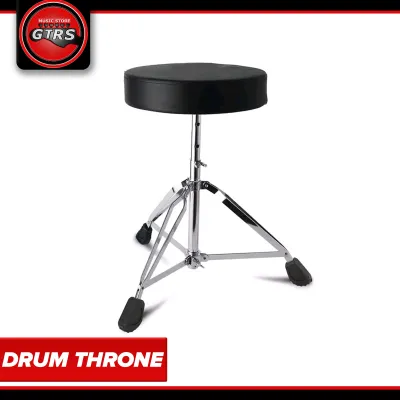
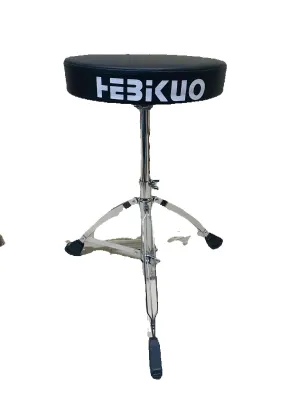
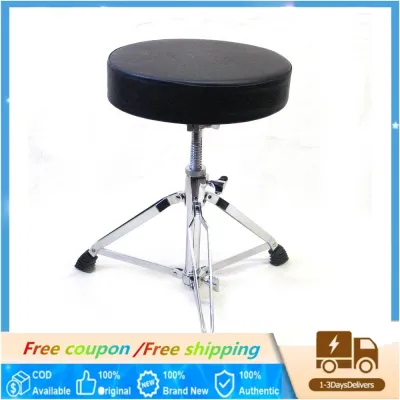
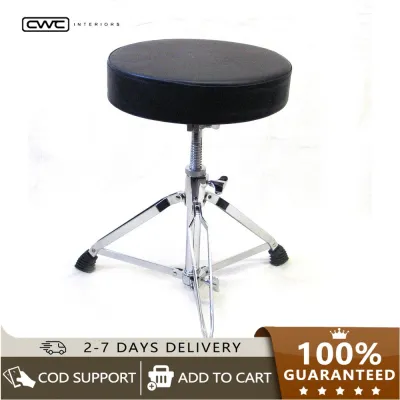
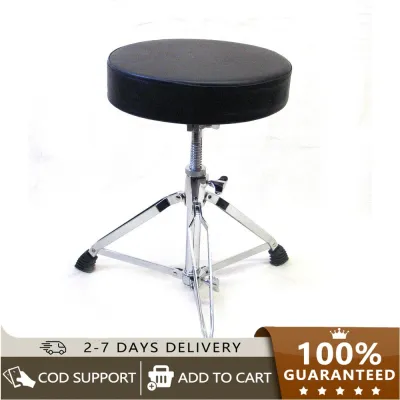
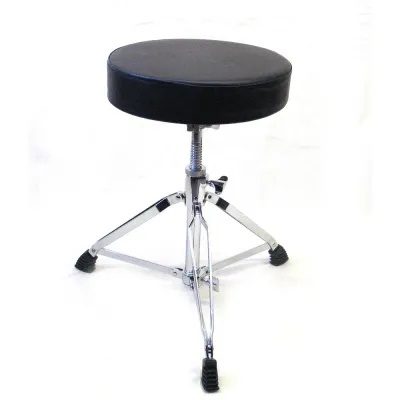
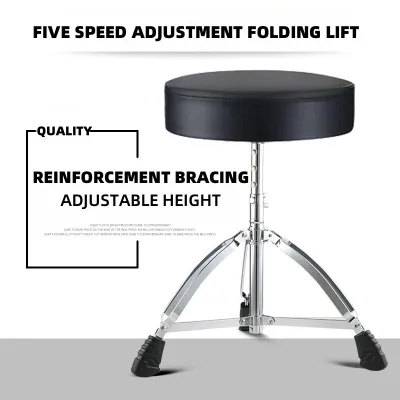
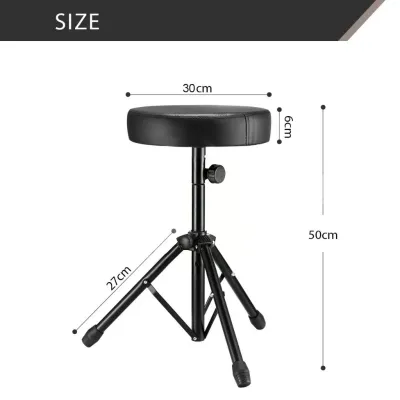
Prices are valid at publication and may change. Please refer to the product page for the latest price.
In addition to supporting your posture, a heavy-duty drum throne offers superior durability and long-term value compared to standard lightweight stools. Standard stools often use thin metal tubing, single-braced legs, and low-grade plastic joints. Under the repetitive, high-impact force of daily drumming, these components can quickly loosen, strip, or bend, rendering the stool useless within a few months. A heavy-duty throne, characterized by thicker steel tubing and double-braced legs, is built to withstand years of rigorous practice sessions, making it a much smarter investment for a beginner who plans to stick with the instrument.
When evaluating potential drum chairs, beginners should look for explicit weight capacity thresholds on product labels to ensure safety. A true heavy-duty throne typically lists a weight capacity of at least 100 to 150 kilograms. Checking these specifications ensures that the locking mechanisms, weld points, and base castings are engineered to handle both your static weight and the dynamic forces generated while you play. Choosing a throne with a capacity that comfortably exceeds your weight provides an extra margin of safety and prevents premature wear on the adjustment mechanisms.
Key Features to Evaluate Before Buying
The foundation of any reliable drum chair is its tripod base, and understanding the differences in base designs is crucial for making an informed purchase. Double-braced legs feature two parallel metal strips on each leg of the tripod, which significantly reduces lateral flexing and twisting compared to single-braced designs. While quad-leg bases offer even greater stability, they are heavier, bulkier, and often unnecessary for most beginner setups. Pay close attention to the rubber feet at the bottom of the legs; large, deeply grooved rubber feet are essential for gripping typical Philippine flooring materials, such as ceramic tiles, polished concrete, or smooth wood, preventing the chair from sliding during intense playing sessions.

Height adjustment mechanisms are another critical feature to evaluate, as they determine how easily and securely you can set your playing height. There are three primary mechanisms available on the market:
- Bolt-and-Collar Systems: These budget-friendly systems use a metal pin or bolt inserted through pre-drilled holes in the shaft. While secure, they offer limited, fixed height increments and can be tedious to adjust.
- Spindle (Threaded) Systems: The industry standard for heavy-duty thrones, this system works like a giant bolt. You rotate the seat to raise or lower it, then lock it in place with a wing nut and a memory lock. This mechanical connection is incredibly secure and allows for micro-adjustments.
- Hydraulic or Pneumatic Systems: These systems use gas struts to allow for instant height changes with the pull of a lever. While highly convenient, cheap hydraulic cylinders can leak over time, causing the seat to slowly sink while you play, and they are more susceptible to wear in hot, humid environments.
Seat shapes also play a significant role in your comfort and leg movement during long practice sessions. Round seats are the traditional choice, offering uniform support from all angles and allowing your thighs to move without obstruction. Saddle (or motorcycle-style) seats feature contoured cutouts for the thighs, which can reduce pressure on the undersides of your legs and promote better pelvic alignment. While saddle seats are highly favored by many experienced drummers, beginners often find round seats more versatile as they adapt to different sitting positions and drum kit configurations.
Finally, consider the material and padding density of the seat cushion. High-density foam is crucial; soft, cheap foam will compress completely under your weight, leaving you sitting on the hard wooden or metal base plate within minutes. Look for firm, molded foam that retains its shape and provides consistent support. For the cover material, vinyl is highly durable and easy to wipe clean, which is highly beneficial in the humid Philippine climate where sweat is inevitable. However, some players prefer breathable fabric tops to prevent slipping and heat buildup, though these require more care to prevent moisture absorption and odor.
Navigating the Local Market for the Best Value
Finding the right heavy-duty drum chair in the Philippines requires a strategic approach to sourcing and purchasing. Visiting physical music stores in major metropolitan areas like Metro Manila, Cebu, or Davao allows you to physically test the throne’s stability, padding firmness, and adjustment mechanisms before spending your money. However, physical stores may have limited stock or higher prices due to retail overhead. Online marketplaces and specialized music ecommerce platforms often offer a wider selection and competitive ₱ pricing, making them an attractive option for budget-conscious beginners.
When shopping online, verifying seller authorization, warranty terms, and return policies before checking out is essential. Look for official brand flags, authorized distributor badges, or highly rated local music retailers on the platform. A reliable heavy-duty throne should come with a manufacturer’s warranty that covers weld failures, structural defects, and mechanical issues. Be sure to read the return policy carefully, as returning a heavy, bulky item can be difficult and expensive if the product arrives damaged or does not match the description.
Because heavy-duty drum hardware is constructed from thick steel, these items are heavy and bulky, which can significantly impact shipping costs. When ordering online, factor in the shipping fees, which can vary widely depending on whether you live in Luzon, Visayas, or Mindanao. Ensure the seller packages the item securely to prevent scratches or structural damage during transit. Additionally, be prepared for basic assembly, as most thrones are shipped disassembled to save on shipping volume; make sure the package includes all necessary assembly tools and instructions.
To avoid purchasing a low-quality product, learn to identify common red flags in product listings. Be skeptical of listings that use generic terms like “universal drum stool” or “heavy-duty” without providing concrete specifications, such as weight capacity, tube diameter, or material details. Unverified weight claims that seem unrealistically high for a low-priced, lightweight stool are a major warning sign. Always cross-reference the model number on the manufacturer’s official website to verify the specifications and ensure you are getting a genuine, high-quality product.
Building Your Conditional Shortlist
Instead of relying on a fixed list of products that may not be available locally, you can build a conditional shortlist by matching your specific physical needs and practice environment to the right throne specifications.
Scenario A: Taller or Heavier Players
If you are taller or heavier, prioritize a wide, double-braced tripod base and a heavy-duty spindle-style adjustment mechanism with a robust locking collar. Look for models that specify a maximum height of at least 24 inches (approx 60 cm) and a verified weight capacity of 130 kg or more to ensure the seat does not slip or wobble during play. A saddle-style seat can also provide better support for larger frames by distributing weight more evenly across the thighs.
Scenario B: Small Practice Spaces
If you practice in a small bedroom or a shared apartment, space is at a premium. Look for a heavy-duty throne with a collapsible base that can be folded flat for storage without requiring specialized tools. Some models feature a removable seat top, allowing you to pack the base and the seat separately. A round seat is generally more compact and easier to store than a bulky saddle seat, making it ideal for tight spaces.
Scenario C: Budget-Conscious Beginners
If you have a limited budget, prioritize structural stability over advanced features. Avoid cheap hydraulic thrones, as low-cost gas struts are prone to leaking and failing quickly. Instead, look for a manual spindle or a robust bolt-and-collar throne with double-braced legs. A simple, well-built round throne with high-density foam will serve you much better and last much longer than a cheap, poorly made saddle throne with low-quality padding.
Step-by-Step Comparison Checklist
To compare final candidates side-by-side, use this step-by-step checklist based on verified specifications:
- Leg Construction: Are the legs double-braced? (Yes/No)
- Adjustment Type: Is it a threaded spindle, a bolt-and-collar, or a hydraulic system?
- Seat Plate Bracket: Is the bracket connecting the seat to the shaft made of solid metal or thin plastic?
- Weight Rating: Is there an official manufacturer-specified weight limit? (Specify in kg)
- Rubber Feet: Are the rubber tips large, non-slip, and deeply grooved?
- Foam Density: Does the foam feel firm and resistant to bottoming out when pressed?
Safe Setup and Ongoing Maintenance
Once you have selected and purchased your heavy-duty drum chair, proper assembly and setup are crucial for ensuring its stability and safety. When unboxing your throne, follow the manufacturer’s assembly instructions carefully. Start by fully extending the tripod legs; the spreader bars should be parallel to the floor or slightly angled downwards to provide maximum stability. Tighten the main wing nut on the base casting securely. Next, insert the upper shaft into the base tube, adjust it to your desired height, and ensure the locking collar or memory lock is threaded down tightly against the base casting to prevent the shaft from wobbling.
In the humid Philippine climate, routine inspection and maintenance are essential for protecting your investment and keeping your throne functional over time. Sweat and moisture can cause metal components to rust, so wipe down the metal parts of your throne with a clean, dry cloth after every practice session. Apply a small amount of multi-purpose lubricant or grease to the threaded spindle and adjustment screws once or twice a year to keep them turning smoothly. Regularly check the rubber feet for wear; if they wear through to the metal legs, replace them promptly to maintain traction and protect your floors.
Finally, be aware of the safety limits of your drum chair and know when to stop using it. If you notice any cracks in the welds, stripping of the adjustment threads, or if the seat begins to wobble excessively despite all clamps being tightened, stop using the chair immediately. Using a compromised throne can lead to sudden collapse, risking serious injury to your back, hips, or wrists. Contact the manufacturer or a qualified professional to seek replacement parts or support rather than attempting to use a damaged seat.
Frequently Asked Questions (FAQ)
Can I use a regular office chair instead of a drum chair?
Using a standard office chair for drumming is highly discouraged due to several ergonomic and safety risks. Office chairs typically feature rolling casters, which will cause you to drift away from the pedals as you play, disrupting your timing, balance, and technique. Furthermore, the high backrests and armrests of office chairs can restrict your arm movement and prevent proper shoulder alignment. Most importantly, office chairs are designed for static sitting, whereas drumming requires dynamic, high-impact movement; the swivel mechanisms and gas cylinders of standard office chairs are not engineered to handle these lateral forces, leading to rapid wear and instability.
How do I know if a drum chair's weight capacity is accurate?
To verify a drum throne’s weight capacity, look for official specification sheets provided directly by the manufacturer rather than relying solely on online marketplace titles. Reputable brands often subject their hardware to independent safety and durability testing, listing these certifications on their official websites. Be skeptical of generic, unbranded listings that claim exceptionally high weight capacities at suspiciously low prices. A genuine heavy-duty throne will feature heavy-gauge steel tubing, robust weld points, and a solid metal mounting plate beneath the seat, all of which are visible indicators of structural integrity.
Community discussion
Share your experience or ask a question. Comments are reviewed before publication.