
Choosing between a hard shell guitar case and a gig bag is a decision that directly impacts the lifespan of your instrument. The right choice depends on how you transport your guitar, the physical hazards it faces during transit, and the environment where you store it. While a hard shell case provides maximum crush resistance and structural defense against heavy impacts, a gig bag offers unmatched lightweight portability and convenience for daily travel. By analyzing your regular transit routine, the value of your instrument, and your storage space, you can select the enclosure that keeps your guitar safe without adding unnecessary physical or financial burden.
Core Differences in Protection and Portability
The fundamental trade-off between a hard shell case and a gig bag lies in the balance between rigid structural defense and flexible weight savings. A hard shell case features a solid exterior—typically constructed from wood, molded plastic, or carbon fiber—lined with plush fabric over form-fitting foam. This rigid outer shell is designed to absorb high-impact forces and resist crushing, making it capable of supporting significant weight stacked on top of it. If your guitar is stored in a closet under heavy boxes or placed in the cargo hold of a vehicle, the hard shell acts as a protective vault that prevents the instrument’s neck and body from taking the pressure.
In contrast, a gig bag relies on a flexible fabric exterior, usually made of heavy-duty nylon or polyester, paired with internal foam padding. Instead of resisting crush forces, a gig bag is designed for shock absorption. If you accidentally bump your guitar against a door frame or drop it from a low height, the thick foam layers cushion the impact, dispersing the energy away from the wood. However, because the exterior is soft, a gig bag cannot support vertical loads; any heavy object placed on top of a soft bag will press directly onto the guitar’s face, bridge, and neck, risking structural cracks or a snapped headstock.
Products mentioned in this guide
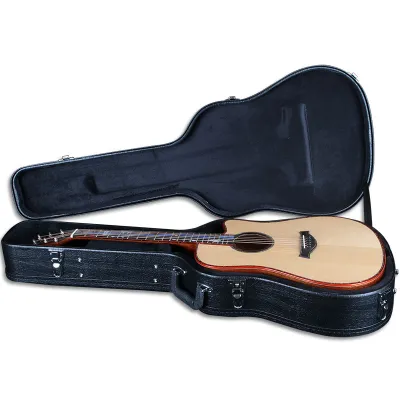

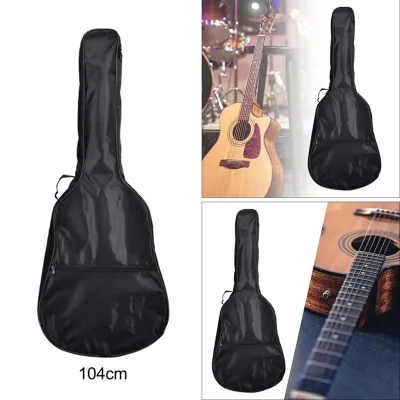
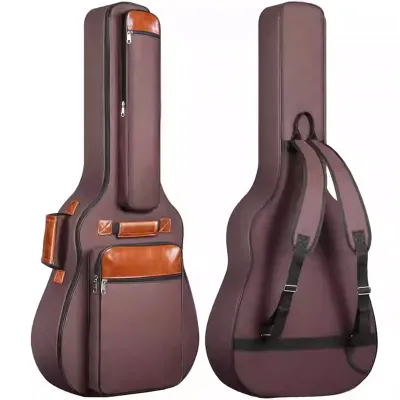
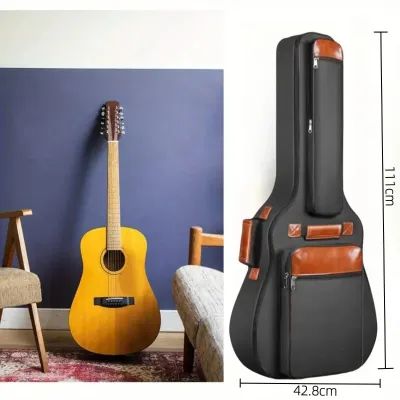
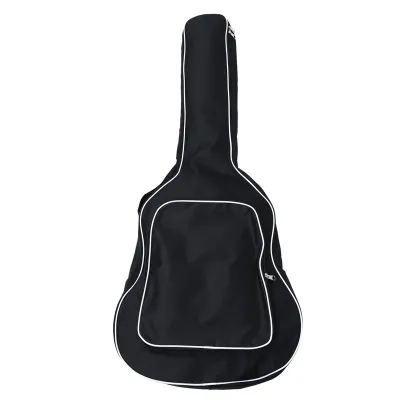
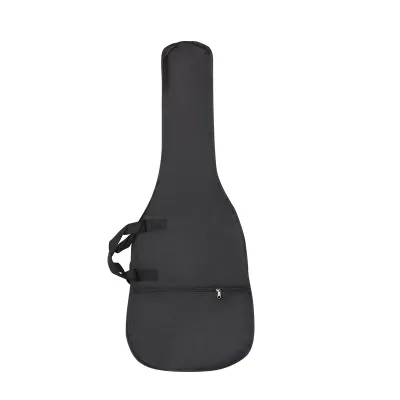
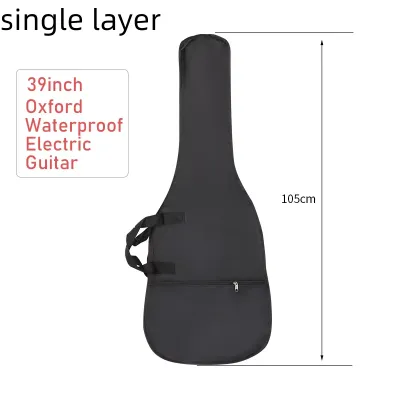
Prices are valid at publication and may change. Please refer to the product page for the latest price.
Portability and physical footprint also differ dramatically between the two types. Hard shell cases are inherently heavy and bulky, often weighing several kilograms even when empty. Their rigid dimensions do not yield, making them difficult to squeeze into tight spaces or carry comfortably over long distances on foot. Gig bags are lightweight and typically feature backpack straps, allowing you to distribute the weight evenly across your shoulders. This hands-free design is highly advantageous when navigating crowded spaces, though the soft exterior offers less defense against sharp objects or sudden downpours.
It is also vital to recognize that neither a standard hard shell case nor a gig bag guarantees absolute protection against extreme environmental shifts. In tropical climates with high humidity, such as the Philippines, moisture can easily penetrate standard zippers and non-gasketed latches. While a hard shell case slows down the rate of humidity exchange compared to a thin fabric gig bag, it is not airtight. To protect your guitar from warping, swelling, or mold, you must monitor the internal environment of your chosen case and use dedicated climate control accessories.
When a Hard Shell Case is the Right Choice
A hard shell case is the necessary standard whenever your guitar is subjected to high-risk transit scenarios where you lose direct physical control of the instrument. The most prominent example is air travel. If you are forced to check your guitar as baggage, it will pass through automated conveyor belts, baggage carts, and the hands of cargo handlers. In these environments, unpredictable stacking, shifting, and heavy impacts are virtually guaranteed. Only a rigid, heavy-duty hard shell case can withstand the crushing forces of other heavy suitcases piled on top of it.

Similarly, if you frequently ship your instrument via commercial couriers or transport it in the back of a band van packed with heavy amplifiers, drum hardware, and speaker cabinets, a hard shell case is non-negotiable. In a packed vehicle, sudden stops can cause heavy gear to slide and collide. A soft gig bag offers no defense against a heavy amplifier corner piercing through the fabric, whereas a rigid case distributes that impact across its entire outer surface.
High-value, vintage, or structurally fragile instruments also demand the constant protection of a hard shell. Guitars with angled headstocks, such as classic single-cut electrics or acoustic guitars with delicate spruce tops, are highly susceptible to headstock snaps and top cracks from minor drops. For these instruments, the rigid neck support and form-fitting interior of a hard shell case are essential, even when the guitar is simply resting at home. If you store your instruments in high-traffic household areas where children, pets, or guests might accidentally knock them over, keeping them locked inside a hard shell case provides peace of mind.
When a Gig Bag is the Better Option
For musicians with highly active, low-risk mobility routines, a gig bag is often the more practical and comfortable choice. If your primary method of travel involves walking, riding a bicycle, or commuting via public transportation like jeepneys, tricycles, or crowded trains, carrying a heavy, rigid hard shell case can quickly become physically exhausting. A gig bag with padded backpack straps allows you to carry your guitar comfortably on your back, keeping your hands free to hold handrails, carry sheet music, or navigate busy pedestrian walkways safely.
A gig bag is also ideal for quick, local trips where the instrument never leaves your sight or your direct physical control. When traveling to a weekly music lesson, a local rehearsal studio, or an intimate acoustic gig, you are the one handling the guitar at every step. Because you can actively prevent the bag from being bumped, dropped, or stacked under heavy items, the heavy-duty crush resistance of a hard shell is unnecessary. The lightweight shock absorption of a padded gig bag is more than sufficient to protect against minor scuffs and light bumps during these short trips.
Furthermore, gig bags excel in environments where storage space is extremely limited. In small apartments, shared dorm rooms, or crowded backstage areas, storing multiple bulky hard shell cases can be highly impractical. When empty, many gig bags can be folded, rolled, or hung in a closet, taking up minimal space. Additionally, when loading gear into a small passenger car, the flexible nature of a gig bag allows it to fit into tight corners or footwells where a rigid, unyielding hard shell case simply would not fit.
Essential Features to Verify Before Purchase
Before purchasing any guitar case, you must carefully verify its specifications to ensure it matches your instrument’s physical dimensions and your specific travel needs. First and foremost, check the interior dimensions, body contours, and neck support. Guitars come in a vast array of shapes, from traditional dreadnought acoustics to offset electrics and extended-range multi-scale models. A case that is too loose will allow the guitar to slide around inside, causing finish scratches or structural damage during transit. Look for a case that offers a snug fit around the body and features a dedicated neck cradle that supports the neck joint without putting pressure on the headstock.
Next, evaluate the padding thickness and material density, especially when selecting a gig bag. Low-cost bags often feature thin, open-cell foam that compresses easily under light pressure, offering minimal shock absorption. For reliable protection, look for high-density, closed-cell foam padding with a thickness of at least 15mm to 20mm. Additionally, verify that the interior has reinforced wear patches made of heavy-duty polyester or microfiber at the headstock and bridge areas. These patches prevent the sharp ends of cut guitar strings and metal tuning machines from tearing through the inner lining over time.
Finally, inspect the quality of the hardware and closure mechanisms, as these components dictate the actual lifespan of the case. For gig bags, look for heavy-duty, oversized zippers with smooth action and durable metal pulls, as zipper failure is the most common reason soft cases become unusable. For hard shell cases, examine the latches, hinges, and handle rivets. The latches should close securely with a positive snap, and the handle should be securely bolted or riveted to the main frame of the case rather than held by flimsy plastic brackets. If you live in a rainy or highly humid region, prioritize water-resistant exterior fabrics and rust-resistant hardware coatings. When budgeting for your purchase, verify the local retail prices in pesos (₱) at authorized music stores to find an option that fits your financial plan.
Decision Framework: Choose Based on Your Routine
To finalize your decision, evaluate your daily routine and identify the primary risks your guitar will face. Choose a hard shell case if your transit involves air travel, commercial shipping, or loading your gear into shared vehicles alongside heavy equipment. A hard shell is also the correct choice if you are storing a high-value or vintage instrument at home in an area where it could be knocked over or stepped on.
Conversely, choose a gig bag if your routine consists of walking, cycling, or using public transit, where minimizing weight and keeping your hands free are your top priorities. A gig bag is perfect if you always keep your instrument within arm’s reach and only need protection against light bumps, dust, and minor scratches during local trips.
If your needs fall somewhere in the middle, consider a hybrid or semi-rigid case. These cases combine the lightweight portability and backpack straps of a gig bag with the rigid, molded foam walls of a hard shell, offering an excellent compromise for active gigging musicians.
Regardless of the type you choose, always verify your guitar’s specific measurements before buying. If your instrument has an unusual body shape, a non-standard scale length, or unique hardware like a tremolo arm or locking nut, standard universal cases may not provide adequate support. Always consult the manufacturer’s sizing charts to ensure a secure, protective fit.
Frequently Asked Questions (FAQ)
Can I use a gig bag for air travel?
Checking a gig bag as standard under-plane baggage is highly risky and generally not recommended, as soft bags offer virtually no protection against the heavy, automated crushing forces of airport baggage handling systems. If you must travel with a gig bag, you should verify your airline’s specific cabin baggage limits and overhead bin availability beforehand. Many airlines allow small instruments to be carried into the cabin as carry-on luggage, provided they fit safely in the overhead compartments or under the seat in front of you, keeping the instrument under your direct care.
Do hard shell cases protect against humidity changes?
Standard hard shell cases are not airtight and do not automatically regulate internal humidity. While their rigid walls slow down the rate at which external air and moisture enter, they will eventually adapt to the surrounding climate. In highly humid tropical environments, moisture can seep through the seams and latches. To protect your guitar’s wood from warping or cracking, you should check the manufacturer’s instructions for using dedicated internal case humidifiers or dehumidifying packets, and use a small digital hygrometer inside the case to monitor the moisture levels.
Community discussion
Share your experience or ask a question. Comments are reviewed before publication.